Category: ★★★★
-
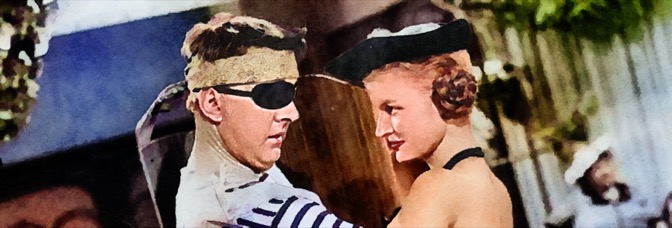
A certain amount of Mr. Hulot’s Holiday is pure slapstick. Except it’s slapstick through director Tati’s decidedly careful lensing. Tati holds the shot on the slapstick punchline a beat too long, giving the viewer time to consider the joke, the punchline, and his or her amusement. Far from condemning slapstick, Tati shows how it would…
-

Drunken Angel never hides its sentimentality. The film’s protagonist, an alcoholic doctor working in a slum (Shimura Takashi in a glorious performance), is well aware of his sentimentality. He resents it–Shimura has these great yelling and throwing scenes–but it’s what keeps him going. It also allows director Kurosawa to have intensely sentimental sequences without affecting…
-

In Citizen Kane, director Welles ties everything together–not just the story (he does wrap the narrative visually), but also how the filmmaking relates to the film’s content. Kane’s story can’t be told any other way. That precision–whether it’s in the summary sequences or in how scenes cut together–is absolutely necessary to not just keep the…
-

I’m hard pressed to think of a better comedy than Bringing Up Baby. Between Hawks’s direction, Dudley Nichols and Hagar Wilde’s script, the acting (particularly from Katharine Hepburn, who’s so funny, one just starts laughing when she starts talking to save the trouble of having to laugh after her line), it’s probably not possible to…
-

Paths of Glory takes place over four days, runs just under ninety minutes and has thirteen or so significant characters. It’s hard to identify the most significant character–Kirk Douglas’s protagonist the viewer’s way into the film, but he’s not the most significant. The film opens with George Macready (who, along with Wayne Morris, is my…
-

Even though Jack Nicholson gets top billing and the most bombastic role in The Last Detail, Otis Young has the harder job. He’s got to temper Nicholson, both for the sake of the audience and of the narrative. The film introduces the two men simultaneously–Robert Towne’s script almost immediately establishes an unspoken bond between the…
-

Mystery Train is a comedy. It’s many other things–an examination and comparison of various kinds of differentness–but it’s also a very funny comedy. In fact, Jarmusch keeps characters around for nothing else. Train is the interconnected story of seven people (across three chapters) all culminating at a Memphis hotel. Cinqué Lee is the suffering bellboy,…
-

Quiz Show is a story about pride and envy. The film’s main plot is about the quiz show scandals in the fifties–big media taking the American public for a ride–and I suppose it could be seen as a loss of innocence thing. But it isn’t. It’s about pride and envy. John Turturro’s working class Jewish…
-

Even though almost every moment of The Maltese Falcon is spent with Humphrey Bogart’s protagonist, director Huston keeps the audience at arms’ length. Most of the film’s more exciting sounding set pieces occur off-screen, but so does Bogart’s thinking. The audience gets to see him manipulating, often without context. His most honest scenes are with…
-

For the first act or so of All Quiet on the Western Front, director Milestone very gently puts the viewer amid the naïveté of the film’s protagonists, a group of students who drop out to enlist (in the first World War). He opens with this gorgeously complicated shot–brilliantly edited by Edgar Adams and shot by…
-
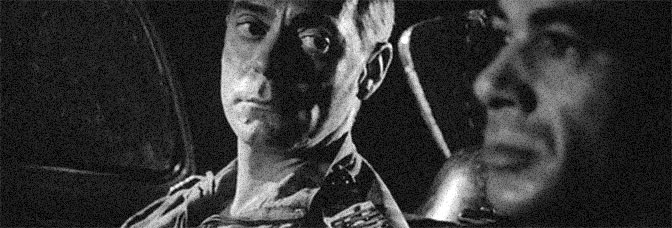
The Battle of Algiers is brilliantly constructed. Director Pontecorvo deceptively frames the film–he also gives most sequences a date and time, which shows the viewer how greater events are progressing, but Pontecovro also gives multiple times in a day, which puts the viewer on edge even though the exact time isn’t really useful. Pontecorvo and…
-

As good as the Marx Brothers are in A Night at the Opera–and George S. Kaufman and Morrie Ryskind’s strong script is important too–director Wood really brings the whole thing together. The film has its obligatory musical subplot and romantic leads. Wood knows how to balance those elements with the comedy; during long music sequences,…
-

The Treasure of the Sierra Madre often comes as a complete surprise, even though director Huston carefully foreshadows certain events. He’s playing with viewer expectations–both of having Humphrey Bogart as his lead and Walter Huston in a supporting role. Sierra Madre is a thriller, but a thriller set during an adventure movie. Bogart and Tim…
-
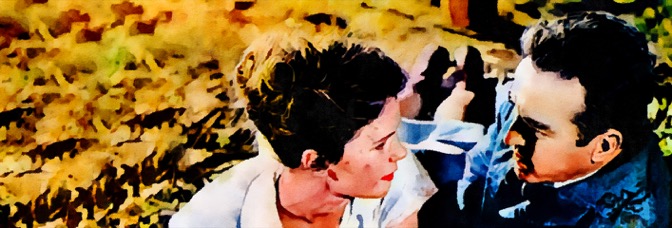
Director Kazan opens Wild River with newsreel footage of the Tennessee River at flood. The film is set in the 1930s, something else the newsreel footage establishes. Kazan and screenwriter Paul Osborn spend the least amount of time possible setting up the film. The newsreel takes care of setting, when lead Montgomery Clift starts his…
-

Everything director Moyle does in Pump Up the Volume builds the rest of the film. It’s not exactly he’s building good will, he’s shaping the possibilities of the film. It makes for a film where you can have a car chase, a comic relief moment, an inspirational message and a quiet character moment all in…
-

The More the Merrier is a wondrous mix of comedy (both slapstick and screwball) and dramatic, war-time romance. Director Stevens is expert at both–that war-time romance angle is as gentle as can be, with Stevens relying heavily on leads Jean Arthur and Joel McCrea to be able to toggle between both. And they do, ably.…
-
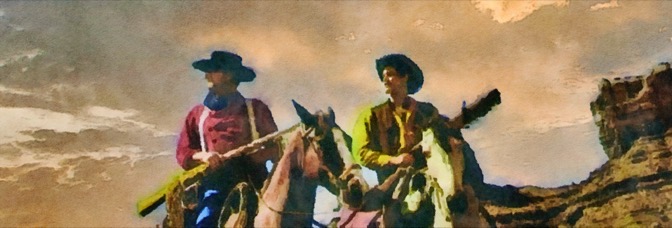
John Ford is never trying to be discreet with The Searchers, he’s just not willing to talk down to the audience. In the first ten minutes of the film, he and screenwriter Frank S. Nugent quickly establish John Wayne’s character and his relationship with his family. Ford, Nugent, Wayne and the rest of the cast…
-

Breakfast on Pluto starts with talking robins. They’re subtitled, but talking. Robins can talk–or these two robins can talk (they show up from time to time), in which case they just live a long time. Before the talking robins, who director Jordan uses to keep the viewer off balance, the film opens with Cillian Murphy’s…
-
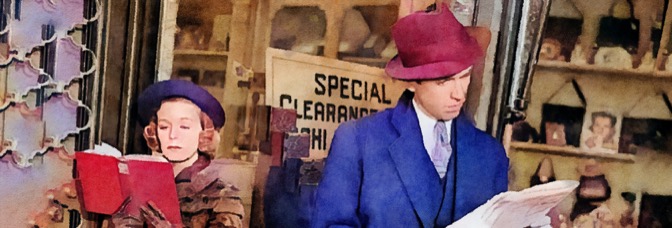
The Shop Around the Corner has a lot going on in a limited space. It’s not particularly long–under 100 minutes–and it mostly takes place in (or outside) the titular shop. And, while the present action is about six and a half months (there’s a big jump), the back story defines a lot of the characters…
-

While enough cannot be said about the efficiency of W.S. Van Dyke’s direction of the The Thin Man, the efficiency of the script deserves an equal amount of praise. Albert Hackett and Frances Goodrich get in so much little character stuff for the supporting cast, it’s hard to imagine how the film could possibly function…
-

Until the final scene, director Mann is still carefully plotting out Heat. The film’s narrative construction–when he introduces a character, when he returns to a character, how he transitions from one character to another–is magnificent. Heat is a delicate film, with Mann never letting a single element carry a scene. He’s always working in combination–sound…
-

As the dangerous mind in the title (Confessions of a Dangerous Mind), Sam Rockwell should be entirely unsympathetic. The film spends its first act mocking Rockwell and inviting the viewer to participate. With the exception of his chemistry with Drew Barrymore’s saintly character, there’s nothing redeeming about Rockwell’s character. Yet he’s tragically endearing. The film…
-

Every moment, every line of dialogue, every shot–every use of sound–is so precise in The Spanish Prisoner, it’s sometimes hard to comprehend of Mamet put it all together. There are not a handful of precise moments, or a few precise scenes. Minute after minute, from the first shot, everything in the film is precision. But…
-
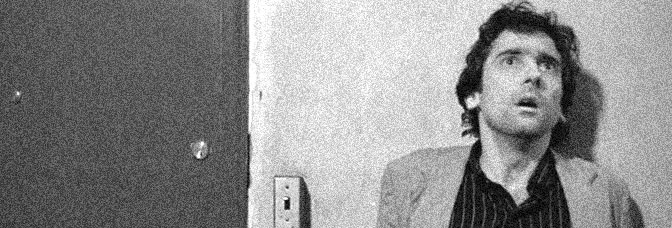
After Hours is meticulous. Director Scorsese, editor Thelma Schoonmaker and cinematographer Michael Ballhaus work with exacting precision throughout, with the first third of the film serving to prepare the viewer for the rest. The film follows boring, regular guy Griffin Dunne as he impetuously pursues an attractive mystery woman (Rosanna Arquette) in Soho in the…
-

One of the particularly amazing parts of The Last of the Mohicans is how quietly director Mann lays out big pieces of the film. The relationship between Daniel Day-Lewis, Russell Means and Eric Schweig–Day-Lewis as adopted son to Means and adopted brother to Schweig–is complex and moving and Mann spends almost no time establishing it…
-

The Old Dark House is a strange film about strange people doing strange things. Director Whale and screenwriter Benn W. Levy rarely let the film get a set tone–unless one counts the consistent mix of comedy and horror. It’s not straight comedy; the comic elements tend to be either absurdly strange or pedestrian. Husband and…
-

Liberty Heights is about protagonist Ben Foster's last year in high school. Levinson never puts it in such simple terms because the film is about quiet, deliberate, but perceivable life events. Every moment in the film's memorable because Levinson is going through these people's memorable moments of the year. Of course, he never forecasts the…
-

Bottle Rocket is such a masterpiece of narrative design, it eschews drawing any attention to that design. Somehow Anderson and Owen Wilson manage to tell a satisfactory long short film and affix an additional thirty minute postscript to the whole thing. It’s like a movie and a sequel all in ninety minutes. Or maybe they’re…
-

Enemy opens with an incredibly cruel and unpleasant scene. It's almost like a dare to the viewer to keep going. The film only runs ninety minutes and the first thirty or so minutes is summary. Sort of. Director Villeneuve and screenwriter Javier Gullón spend this first third encouraging the viewer to guess where Enemy is…
-
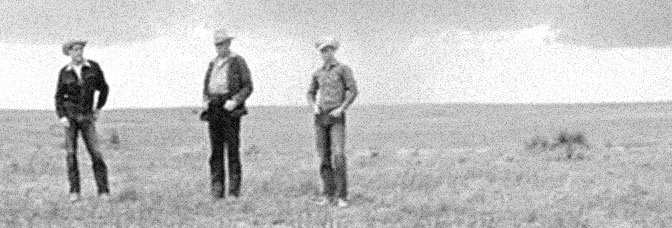
Every once in a while in Hud, it seems like Paul Newman's eponymous lead character might do something selfless. Not redemptive or nice, but selfless. It's not the point of the film and not one of its promises–it's just visible how significant it would be for Brandon De Wilde, playing Newman's orphaned nephew. Hud fires…
 The Stop Button