Category: ★★★½
-
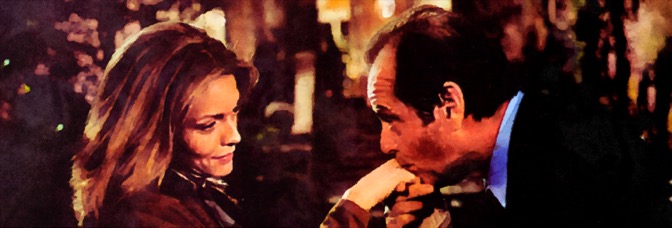
Mike Nichols has a very peculiar technique in Wolf. He does these intense close-ups, sometimes zooming into them, sometimes zooming out of them. He fixates on his actors–usually Jack Nicholson and Michelle Pfeiffer, but all of the actors get at least one intense close-up (except maybe Eileen Atkins). It’s like he’s drawing attention to the…
-
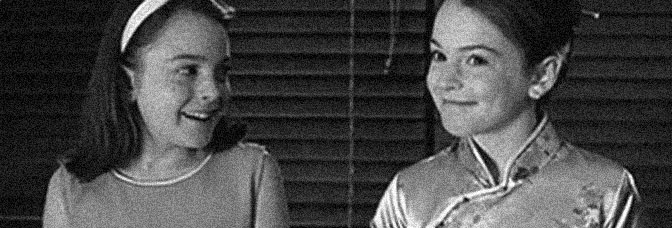
Where to start with The Parent Trap. There’s the structure–Nancy Meyers and Charles Shyer split their script into three distinct parts. Well, maybe even three and a half. There’s the opening where Lindsay Lohan goes to summer camp and meets her twin. Then there’s the part where the twins meet the opposite parents–I’m not explaining…
-

Director Corman and–probably more so–writer Howard Browne construct The St. Valentine’s Day Massacre as a docudrama. Paul Frees narrates the entire film, introducing characters, providing their backstories–Corman sometimes mutes the film’s dialogue (during boring parts) so Frees can explain a little about the person. Massacre might be mostly authentic in its portrayal of the titular…
-
Man of Steel is good. It’s really good. Not only is it really good, I like it enough for a 500 word special. There’s always a moment in a good action movie when it eventually runs out of steam and one has to give it some thought. There’s a breather scene, in other words. For…
-

Quite surprisingly, The Seventh Victim–in addition to being a disquieting, subtle thriller–is mostly about urban apathy and discontent. Though there aren’t any establishing shots of New York City (or of the small New England town protagonist Kim Hunter comes from), Robson and writers Charles O’Neal and DeWitt Bodeen are quite clear about it. There’s no…
-

I Married a Witch often seems too short. Director Clair rightly focuses the picture around leading lady Veronica Lake, with Frederic March getting a fair amount of attention too, but the narrative outside them blurs. And it shouldn’t blur, given the high stakes election backdrop. Clair’s focus also extends to troublesome plot points. Witch goes…
-
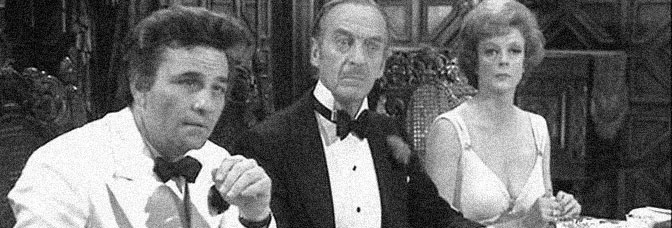
Writer Neil Simon did not adapt Murder by Death from one of his plays, which I’ve always assumed he did. While the film does have a more theatrical structure–a great deal of Death is the cast in one room–the action does follow the characters around and some of their experiences would be impossible without cinematic…
-

In Our Nature has an unfortunate title. The film concerns two couples from New York–Jena Malone and Zach Gilford and then Gabrielle Union and John Slattery–in a country home for the weekend. Slattery is Gilford’s estranged father, who arrives unexpectedly. Our Nature also, in the possessive sense, refers to the location. It’s dreadfully cute, but…
-

Dolores Claiborne isn’t just a mother and daughter picture… it’s not just a mother and daughter picture made by a bunch of men (directed by a man, produced by men, screenplay by a man based on a novel by a man), it’s Panavision visual experience mother and daughter picture. Director Hackford–ably assisted by Gabriel Beristain’s…
-
Raiders of the Lost Ark: The Adaptation clearly shows all you need for rousing adventure is enthusiasm, a willful abandon for one’s physical safety and John Williams music. The film is an attempt at a shot-for-shot adaptation of the original, made by and starring children (over approximately seven years). Their motive? Well, when they started,…
-

The Muppet Movie takes it upon itself to be all things… well, two things. It has to be appealing to kids and adults. The film is split roughly in half between the audiences, with the adults having more to appreciate in the star cameos–some cute, some hilarious (Steve Martin in short shorts)–and terrible puns and…
-

It’s always a surprise when I remember Innerspace wasn’t a hit (it was also the first movie I ever saw as a letterboxed VHS–it was letterbox only). It’s easily Dante’s most populist work–I don’t think a single Dante “touch,” except for Dick Miller, shows up in the film until the appearance of Kevin McCarthy. Before,…
-

Affleck’s directorial abilities are impressive. He’s got a great sense of composition–he seats his actors on either end of the Panavision frame, leaving this great space of emptiness between them. Except, of course, when he’s on screen with Rebecca Hall, as their bridging the gap is the whole point of The Town. But he’s got…
-
You Will Meet a Tall Dark Stranger is an unexpected surprise. Allen mixes a very black comedy with this light, almost absurd relationship comedy. But he never goes too dark. I’m trying to think of a example but will undoubtedly fail to explain. Anthony Hopkins marries his call girl, played by Lucy Punch. Funny situation.…
-

I’m having a hard time reconciling the Robert Rodriguez who made El Mariachi with the Robert Rodriguez who made anything after it. Obviously, some of the filmmaking choices are due to the low budget, but the film’s frantic style–something owed far new to early Sam Raimi than John Woo–creates a hyper-reality. It, and some of…
-
Young Frankenstein does not feel like a Mel Brooks film. It’s so startlingly well-directed, one could almost believe he didn’t direct it himself. Brooks, for the film, has this way of keeping the camera mostly stationary and letting his actors and the sets do all the work–one can’t forget Gerald Hirschfeld’s amazing cinematography either. Brooks–and…
-

At some point during this response, I’m going to say nice things about Eva Mendes. Just a warning. I used to hate on CG, starting in around 1996 and ending about six years later, when I just gave up caring. It wasn’t ever going to stop and it had gotten to a point where there…
-

So, people told me Shaun of the Dead was good, but they kept describing it as something akin to Hot Fuzz and whatnot. It’s not a spoof of a zombie movie though. It’s a zombie movie with a couple losers discovering their skill sets make them good at surviving a zombie holocaust, if not excelling…
-

Much of Double Wedding–around two-thirds of it–is a supreme comedy. It might feature William Powell’s best comedic performance, just because of the limitless opportunity it offers him. It’s hard to top Powell in a fur coat and a fake wig… with a German accent (and a walking stick). Or Powell going through a big demonstration…
-

With the exception of The Tales of Hoffmann, I’m not really familiar with any other efforts to adapt an opera to film. I guess there are those Andrew Lloyd Webber adaptations (right?), but I don’t think of them in the same sense–the artistic one. Branagh’s The Magic Flute has more in common with his Hamlet…
-

I Love You Again is such a confident success–the whole thing rests on William Powell and everything he does in the entire picture is fantastic–it’s hard to think of anything wrong with it. It moves beautifully, its ninety-nine minutes sailing by, the supporting cast is all excellent and every one of its big comic scenes…
-

I’m trying to imagine how Frankenstein looks on the big screen–maybe on one the size of Radio City Music Hall; James Whale fills the screen upward. He directs the viewer’s attention always up, starting with the first scenes in the tower laboratory. The frames are obviously filled with extensive detail, which video certainly does not…
-
Vicky Cristina Barcelona feels like old Woody Allen. The defining characteristic implying a throwback is the narration… which actually isn’t a throwback to old Woody Allen, but to Jules and Jim or Two English Girls. The film could practically be called Two American Girls, but I think then it’d be a little obvious. The only…
-

No studio picked up Guy X for a theatrical release. I kept seeing it in Jason Biggs’s filmography, kept waiting for it to show up in a theater and it never did. I assumed the worst from the lack of theatrical release–not to mention thinking Mena Suvari was in the film (it’s Natascha McElhone). After…
-

Maybe American cinema is okay after all, maybe it is evolving. Or maybe Pineapple Express is just an exception. It certainly seems like Seth Rogen’s finding the right mix for popularity and quality, but Express outdoes anything I thought it’d be. After a shaky prologue sequence–which overuses Bill Hader for some kind of a Superbad…
-

WALL·E might be the first major Hollywood production not to feature a speaking protagonist in a while. I can’t remember the last one. WALL·E, the robot, makes some emotive sounds and mispronounces his girlfriend’s name, but he communicates through action, not through verbalization. It’s rather effective, since the robot’s supposed to be adorable and Pixar’s…
-

Steve Gordon died the year after Arthur came out, so he never made any other films, which is an exceptional tragedy. Arthur is a singular comedy–it’s a mix of laugh-out-loud comedy, romantic comedy, sincere human relationships and genuine character development. The first two are not mutually exclusive, but I’m not even sure Woody Allen’s managed…
-

The Big Fix is a fundamentally different detective movie. While there are some elements updating it to time period, a lot of it is still a detective investigating in LA, meeting all sorts of people all around town and so on. It’s still Raymond Chandler to some degree–with Dreyfuss playing his (marginally) goofy, but caring…
-

The last time I saw a Luc Besson movie and thought it was really good, I tried watching Joan of Arc. Then I stopped exploring his filmography. This time, therefore, I’m prepared. I haven’t seen The Fifth Element in years and I’m not sure why. Considering its cast, it’s something of a breath of fresh…
-

Deliberate, somehow endless–it clocks in at ninety-five–Tristana is something of an anti-Buñuel or, at least, I was expecting something a little more uncanny. Tristana is so normal, it’s something of a surprise (the film occasionally seems ready to leap into the surreal, but it remains grounded throughout). But it’s very boring, in that good way…
 The Stop Button