The Stop Button
blogging by Andrew Wickliffe
Category: ★★★
-

Role Models is shockingly good. It fuses the inappropriately blunt comedy genre with a listless thirties white men growing up genre. The result is a constantly funny film–I mean, it’s Seann William Scott swearing at kids… from the two minute mark–with a solid emotional core. And it’s never artificial. Scott isn’t the lead (though he…
-

The Winning Season mentions Hoosiers at one point, which is good. It’s set in Indiana, it’s a basketball movie about an underdog team… there needs to be a Hoosiers reference. But it’s not Hoosiers with a girls basketball team, because it’s not really about the games. Strouse’s approach is traditional. Take a lovable alcoholic misanthropic…
-
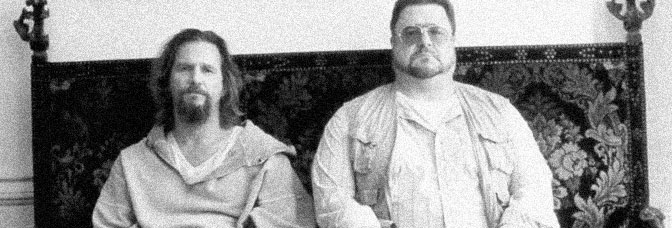
There are a lot of interesting things about what the Coens do with The Big Lebowski. The foremost thing has to be how, even though the film is incredibly thoughtful and complex in its homages, the Coens aren’t exclusionary about it. If you don’t know it’s Raymond Chandler, it’s okay. If you don’t know zero…
-

Even with the annoying narration from Mike Patton (maybe director Moshe cast him because he’s a big Faith No More fan because Patton doesn’t narrate well), Bunraku is seamless. Moshe’s initial artistic impulse carries through. Things sometimes don’t work—Josh Hartnett’s character is supposed to be a drifter in the Western tradition, but his wardrobe seems…
-

Much of Dangerous Partners‘s excellence comes from the script. Edmund L. Hartmann adapted Eleanor Perry’s story, which Marion Parsonnet then from wrote the screenplay from–in other words, it’s hard to know who’s responsible for the script’s brilliance. Partners has a complex, unpredictable plot–it constantly forces the viewer to reevaluate characters and situations. Added to that…
-

I can’t imagine not liking Galaxy Quest, but I suppose appreciating it does require on a certain level of previous knowledge. I can’t imagine how it plays to people who aren’t familiar with “Star Trek,” not to mention knowing William Shatner’s an egomaniac and “Trek” fans have big, weird conventions. Having some passing knowledge of…
-

Castaway on the Moon explores one of those great urban questions… could you ever get stuck on one of those conservation islands in a city’s river? Despite being a South Korean film, it’d be hard to find a more universal story—deeply indebted Jeong Jae-yeong throws himself off a bridge after his girlfriend’s dumped him and…
-

The Extraordinary Adventures of Adèle Blanc-Sec is almost too precious for its own good. It’s so enraptured with the world it creates–Paris in 1911, where pterodactyls and mummies can come back to life–it sometimes forgets to get the viewer as involved. Besson does a fantastic job bringing that world to life and a lot of…
-

Sidewalks of New York is Edward Burns embracing the idea of becoming the WASP Woody Allen. Well, Burns is Irish Catholic, so not exactly the WASP Woody Allen… but something nearer to it than not. It’s his attempt at making a quintessential New York movie while being aware he’s making a quintessential New York movie.…
-

I indistinctly remember the last time I saw Dead Again, I didn’t think much of it. I don’t know what I could have been thinking. Until the last act, which slaps a mystery conclusion onto an amnesia thriller without enough padding, the film’s utterly fantastic. Branagh’s direction is great, but the most striking thing initially…
-
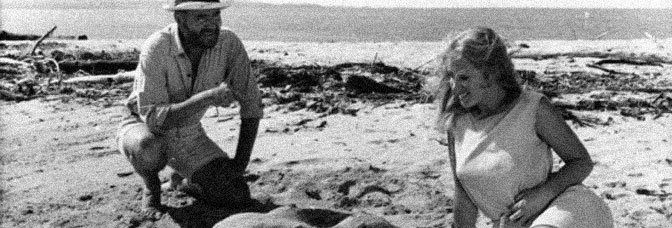
With Age of Consent, Powell bewilders. His approach to James Mason and Helen Mirren’s dramatic arcs is excellent, but then he includes this terrible comedy material. He’s got a bunch of slapstick in an otherwise very gentle drama. Mason is a successful artist who feels like a sellout so he runs off to isolate himself…
-
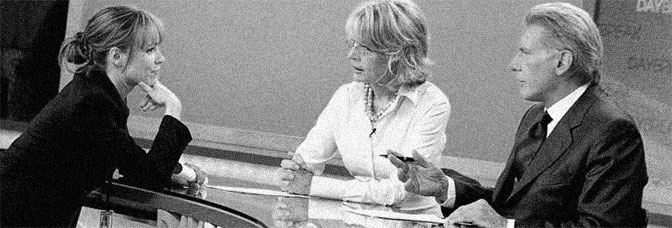
It’s been a long time since I’ve seen a good “Hollywood” New York comedy, even longer since I’ve seen a great one. Morning Glory is a good one. Though, at times, it reminds of a great one—I’m not sure if David Arnold’s score, which is lovely on its own, is supposed to remind of Sabrina,…
-

What makes The Haunting so good–besides Wise’s wondrous Panavision composition–is the characters. Yes, it succeeds as a horror film, with great internal dialogue (Julie Harris’s character’s thoughts drive the first twenty minutes alone and the device never feels awkward), but those successes are nothing compared to the character interactions. The Haunting chooses to be both…
-
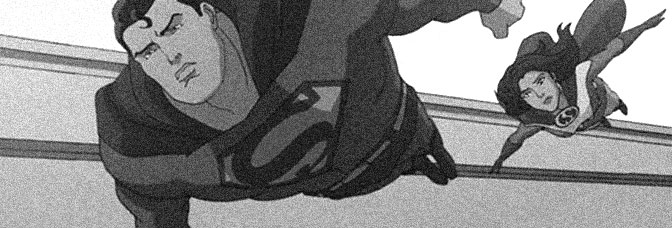
All-Star Superman, the comic book, is maybe the best Superman comic book. Based on empirical observation (i.e. the other animated DC Comics movies from Warner Premiere), I assumed All-Star Superman, the animated movie, would be awful. I was wrong. It’s wondrous. It’s not without its problems, of course. The movie is based on the comic,…
-

For a while, I almost thought White Zombie was going to feature a good Bela Lugosi performance. It does not. However, it does feature one of the best Bela Lugosi performances I’ve ever seen. He plays a zombie master who controls his helpless zombies (who mostly do manual labor for Lugosi at his sugar mill–I…
-
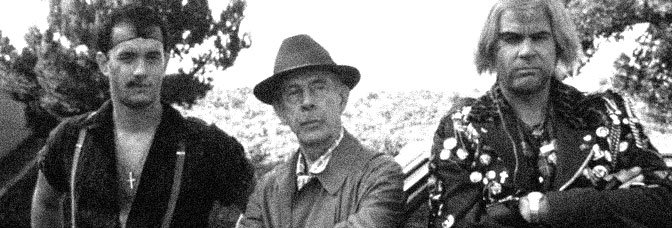
Dragnet was a hit. I’m always shocked when good comedies are hits. Good comedies haven’t been hits since I’ve been able to legally buy cigarettes. There are a couple things, right off, I don’t want to forget about. First is Tom Hanks. He’s such a good comedic actor, what he’s done since–the serious man bit–is…
-

In the Loop is a spin-off of a British show… I didn’t know about that connection when I watched it. I guess it doesn’t matter, since In the Loop is–apparently–something of a prequel. The show’s called “The Thick of It,” for those interested. Now, where to start. In the Loop is, without being specific with…
-

I don’t write a lot of responses to documentaries on The Stop Button. There are many reasons for it, with the primary one being I’m not sure what constitutes a documentary film. But Good Hair is definitely the kind of documentary I respond to here on The Stop Button. I first heard about it on…
-
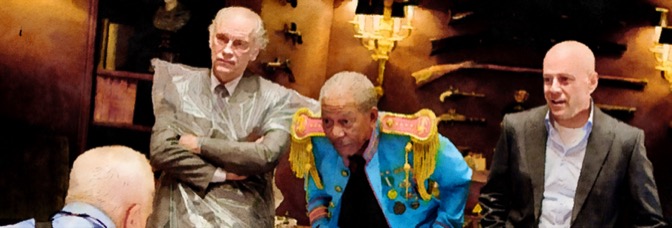
I was unhesitant to enjoy Red. It’s one of those ensemble feel-good pieces (like Sneakers or Ocean’s Eleven), but it’s not a particularly upbeat feel-good piece. But I was rather hesitant to approach it as a good movie. But it is a good movie. It’s smartly written, beautifully acted (Red’s casting is superior)… and impersonally…
-

The Brothers McMullen is filled with moments of brilliant filmmaking. More than enough. It just doesn’t finish off on one of them. The film needs to go out as strongly as it starts and it comes up short. Burns’s filmmaking is organic (undoubtedly a result of a long filming and imaginative editing) and the ending…
-
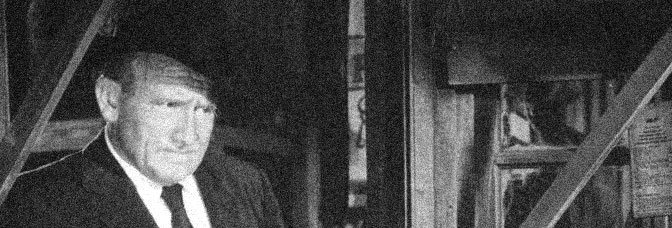
My reaction to Bad Day at Black Rock is a guarded one. It runs eighty-one minutes and is frequently long when it should be short and short when it should be long. The conclusion, for instance, is something of a misfire. Ironically, after abandoning him for fifteen minutes near the beginning, the film sticks with…
-

First SUPERMAN sequel (much of it filmed back-to-back with the original) has Terence Stamp leading a trio of supervillains on a worldwide takeover (aided by Lex Luthor Gene Hackman) while Superman and Lois Lane are busy having an ill-advised and ill-plotted (if singular) romance. Great performances from Margot Kidder and Christopher Reeve. Sometimes excellent, sometimes…
-

Sidney Poitier is the big (Northern) city Black detective, Rod Steiger is the Mississippi redneck sheriff, can they work together to solve a murder? One hopes so. Excellent direction from Jewison, excellent performances from Poitier and Steiger (Steiger even gets too much to do considering it’s Poitier’s movie), meandering Stirling Silliphant script (from the John…
-

Manhattan Tower opens with the Empire State Building and closes with it. I’m not entirely sure they ever call it by name in the film but it’s not supposed to be “real,” I don’t think. Tower‘s Empire State is a world onto itself, so much so, it’s a shock people leave it to go home…
-

So back in 1990, ignorant, bigoted book burning fundamentalist Christian psychopath women were screen villains on par with Norman Bates (by some accounts). Now they’re presidential candidates. Misery actually owes quite a bit, in its third act, to Psycho. Reiner is no Hitchcock and he doesn’t try to be. His success, directing the film, has…
-

For the majority of Brief Encounter, I had very little opinion of Lean’s direction. It’s incredibly dispassionate and functional, but very solid. I think I assumed it’d be innovative (along the lines of the Archers) but it’s not. Very realistic, very British. Until the second to last scene, when Lean has to essay the most…
-

What a strange film. I’d never really heard of it, past the title, so… I didn’t know what to expect, but even if I’d known something about it, I doubt I could have expected it. Collinson is a fantastic Panavision director, so the Italian Job is always watchable, even through the awkward opening. The first…
-

I didn’t read anything about The Four Seasons before watching it–I didn’t even know it was Carol Burnett in a dramatic role (she’s fantastic)–and if I had, maybe I would have had some idea where Alda was taking the film. Because he doesn’t take it where I was expecting, not from the narrative’s apparent intentions.…
-

Why can the British make better sensationalist telefilms than Hollywood can make non-sensationalist theatricals? Maybe because the acting is better. There isn’t a single not good performance–meaning, there aren’t any mediocre performances–in Whitechapel. Amid its sensationalist, what if someone copycatted the Jack the Ripper murders in the modern day (oddly, after the first mention of…
-
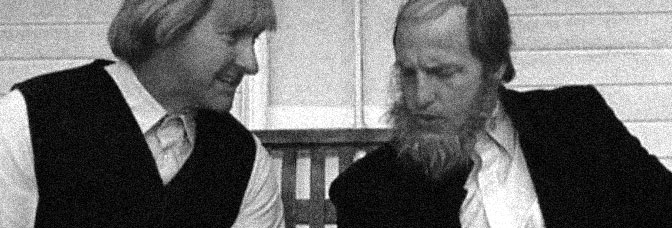
The Farrelly Brothers created the mainstream gross-out comedy here in Kingpin, with all the familiar trappings–a familiar, if somewhat independently minded cast (Chris Elliot is in Kingpin), the star in need of a hit (Bill Murray), the popular soundtrack, and the storyline entirely capable of being tame, then ramped up for the belly laughs. The…
 The Stop Button