Category: ★★★
-

Trance is extremely cute. It’s sort of Hitchcockian, with James McAvoy actually playing the female role and Rosario Dawson the male. Director Boyle and screenwriters Joe Ahearne and John Hodge figure out some neat ways to change up expectations of that relationship along the way. Besides being a technical marvel, full of good performances, Trance’s…
-

Detachment is not a message film. Kaye gives it a pseudo-documentary feel and does presents definite thesis about the public education in the United States. Except Detachment isn’t really about that message… it’s about how that setting specifically affects Adrien Brody’s protagonist. Until the final sequence anyway; it’s one sequence too many. Kaye flubs on…
-

As its title suggests, Murder on the Blackboard concerns a murder in a school, specifically an elementary school. Only one student appears; Blackboard concentrates on the rather shady goings-ons of the staff. There’s a drunk janitor, a lecherous principal, not to mention a love triangle between teachers. And, one mustn’t forget, Edna May Oliver’s Ms.…
-

So much of Romancing the Stone is perfect, when the film has bumps, they stand out. Even worse, it closes on one of those bumps. The finale is so poorly handled, one has to wonder if it’s the result of a rewrite. Anyway, on to the glowing stuff. The film’s a technical marvel. Zemeckis’s Panavision…
-

Tales of the Night is a visual masterpiece. It’s computer generated silhouette animation, usually two dimensional (though director Ocelot does branch occasionally into the third), about what seems to be a futuristic theatre company. Late one night, two young actors (and costume designers and writers) and the guy who seems to be their director, sit…
-

It’s hard to know where to start with Real Genius. It runs just over a hundred minutes, but gets so much done in the first forty, then so much different stuff done in the next thirty, the remainder is almost entirely separate. The plot evolves, expanding as events unfold. Genius isn’t its concept or MacGuffin.…
-

The Thieves doesn’t try to redefine the heist genre. Instead, it shows the genre’s possibilities. The film has the traditional flashbacks, double crosses, triple crosses and so on, but it also brings a tenderness. And it’s a sincere tenderness; the film resonates because of its characters, not its spectacles. However, director Choi does everything he…
-

Get Lamp is part history documentary, part modern examination, part something else. It changes throughout, which is only natural… director Sadofsky gives the viewer control of the documentary’s structure (but also offers a cruise controlled version). Lamp is an affectionate look at early computer games, specifically the text-based ones–so Zork, not King’s Quest. There’s a…
-

The Greek anti-defamation league, if it existed, mustn’t have had much power when Isle of the Dead came out. It’s a quarantine drama, a genre I’m unfamiliar with but certainly has a lot of potential, set on a small Greek island. There’s nothing on the island besides an amateur Swiss archeologist (Jason Robards Sr.) and…
-

Maverick is a lot of fun. In fact, it’s so much fun, when the film runs into problems in its second act, it’s impossible to be disappointed. It’s still so likable, one just feels bad it doesn’t maintain its quality. There are two major problems. The first is the music. When the film starts–and for…
-

I knew Emilio Estevez directed Bobby, but I didn’t know he also wrote it. From the dialogue and the construction of conversations, I assumed it was a playwright. There’s a certain indulgence to the dialogue, which some actors utilize well (Anthony Hopkins) and some not (Elijah Wood). Estevez’s an exceptionally confident filmmaker here. He changes…
-
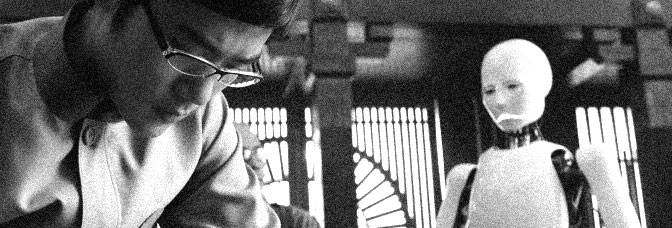
Doomsday Book is three stories about the end of the world. There’s no connection between the stories except the directors; the tone changes wildly between all three. The first story is a zombie tale with some humor, some religious allegory and some gore. There are a lot of Romero references in it and also the…
-
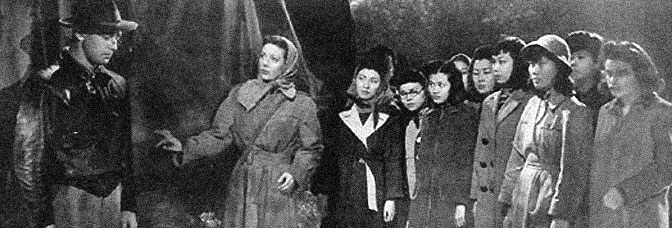
China has a lot to do. While it’s a propaganda picture meant to rally American support for the Chinese, it’s also propaganda for the future of China. Loretta Young plays a school teacher and her charges, in almost every one of their scenes, extol the virtues of Western democracy. There’s also the redemptive aspect for…
-

For a while during Suicide Forecast—in the first act and third—it seems like the film will be about protagonist Ryu Seung-beom discovering he doesn’t want to be a soulless business success and redeeming himself. But Forecast isn’t exactly about Ryu. A plot summary sounds like a perverse comedy—Ryu’s an insurance adjuster who discovers three people…
-

Penguin Pool Murder, besides the peculiar title (and lack of a definite article), opens like almost any other early thirties mystery. A possible unfaithful wife, Mae Clarke, has a swindling louse of a husband, Guy Usher. When he ends up dead, there are multiple suspects. Only the murder occurs at the aquarium (hence the title)…
-

Until about halfway through, I knew how to start talking Bedevilled. It was about a yuppie workaholic (Ji Seong-won) flipping out and going on a forced vacation. Only she goes to this remote island where she used to visit her grandfather as a kid. Instead of a vacation paradise (though the island is lovely), she…
-

One could say a lot about Seven Psychopaths and how McDonough teases the fourth wall to propel the plot. But such a discussion would distract too much from the film. McDonough gleefully avoids profundity with Psychopaths, though he does occasionally find it. At those moments, he allows the briefest pause before continuing with the relentless,…
-

Ingenious is a struggling artist picture, only the struggling artist in question (Dallas Roberts) is a tchotchke designer, not a painter. The film mostly centers on Roberts, but also his sidekick (Jeremy Renner as the somewhat dangerous comic relief) and long-suffering wife (Ayelet Zurer). It’s a little unclear why director Balsmeyer and writer Mike Cram…
-

Almost all of Creature from the Black Lagoon is a compelling mix of science fiction, workplace drama and horror. The Creature makes a great “villain” because there’s nothing human about him (except maybe his fixation on leading lady Julie Adams) so it’s possible to both fear him and to understand leading man Richard Carlson’s scientific…
-

To Rome with Love is sort of hostile to its viewer. Allen sets up three (or four, depending on how you want to count) plots and plays them all concurrently. However, these three (or four) plots don’t necessarily coexist in the same Rome, certainly not at the same time they linearly play out in the…
-

Ted has a number of successes; it’s a little hard to identify its most extraordinary one. Is the CG teddy bear, voiced by director MacFarlane, who seems entirely real throughout? Or is it the script, which makes it feasible for a magical, living teddy bear to exist in the real world? Or is it simpler–Ted…
-
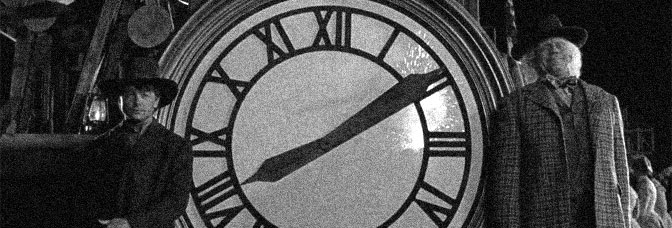
Apparently, all Robert Zemeckis and Bob Gale needed for a Back to the Future sequel was a story. Part III, unlike the second installment, has a lot going on and it’s not all tied into the original’s storyline. Instead, Michael J. Fox finds himself in the Old West, trying to save Christopher Lloyd. Zemeckis and…
-

What’s Eating Gilbert Grape does something very unscrupulous… it relies on the viewer’s affection for its characters to get away with being a wolf in sheep’s clothing. In terms of narrative honesty, I mean. Gilbert Grape is, for the majority of its run time, a lyrical character study. Yes, it takes place in a summer…
-

Despite all Danny DeVito’s vulgar innuendos–though there are a couple missed opportunities–Other People’s Money is a rather chaste film. Director Jewison’s model for it is a Hollywood classic, with exquisite gowns for DeVito’s love interest slash rival, Penelope Ann Miller, and hats for the men. With photography from Haskell Wexler and Alvin Sargent’s thoughtful, deliberate…
-

I love Goldeneye’s plotting. It’s clear they plotted the film to be most enjoyed the first time through, but in terms of reveals and action sequences. The opening sequence doesn’t work particularly well in the end, though, a problem I had the last time I watched the film as well. It’s simply not interesting on…
-

Dirty Rotten Scoundrels manages to have a full, three act plot–with all the twists necessary for a confidence picture–but it also is constantly funny. Oz juggles his two leads but mostly relies on Steve Martin for the more immediate humor. With Michael Caine, Oz and the screenwriters tend to be a lot quieter… letting the…
-

Gance is very ambitious with La roue, only not so much technically. Even the second half of the film, which opens up considerably (the first half takes place in a train yard, mostly on one set, while the second half moves the action to a idyllic mountaintop), Gance is far more concerned his protagonist’s internal…
-

I was expecting The Rains Came to be a standard soap–with some ethnic flair, of course (Tyrone Power’s an Indian doctor, Myrna Loy’s a British lady). Instead, it’s a little like… Maugham-lite. Neither Loy nor Power is the lead (in fact, Power’s in it so little he should get a “special guest star” credit). The…
-

There are two significant problems with The Ghost and the Darkness. Its other primary problem corrects itself over time. The score–from Jerry Goldsmith–is awful (he basically repeats his terrible Congo score). It makes the film silly, like a commercial. A great deal of the film is about the wonderment of Africa, something Hopkins and cinematographer…
-

Big ensemble adaptation of Arthur Hailey novel about a grand (albeit failing) New Orleans hotel and how hotel manager Rod Taylor tries to keep things afloat while also dealing with difficult guests. Quine occasionally makes some poor choices, but he’s got a fine handle on the material–especially keeping the serious fun and vice versa. Strong…
 The Stop Button