The Stop Button
blogging by Andrew Wickliffe
Category: ★★★
-

Part of Willy Wonka & the Chocolate Factory’s greatest successes is the plotting–how top-billed Gene Wilder doesn’t show up until almost halfway into the film–but it’s also one of the film’s problems. It needs another five or ten minutes with Wilder; probably not at the very end, but somewhere before it. There’s so much going…
-

Where The Postman succeeds, besides with the performances, most of its technical aspects, is with director Costner’s ability to find each character’s emotional reality in a scene. He achieves a sort of alchemist’s miracle, but not with lead into gold, but with saccharine into sublime. With one unfortunate exception, every emotional moment in the film…
-
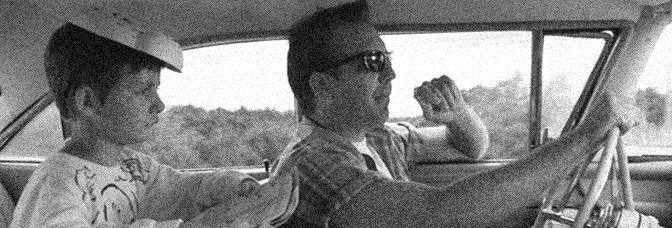
A Perfect World runs almost two hours and twenty minutes (it does with end credits). The last act of the film is a seventeen or so minute showdown in real time. Until that point in the film, John Lee Hancock’s script flirts with occasional sequences in real time, but there’s a lot of summary, a…
-

Woody Allen opens Café Society himself, with a voiceover. It’s a deeper voice mix than usual for Allen–who doesn’t appear in the film–and even though he’s doing expository narration, there’s an intentional distance in that deeper voice. Allen’s not the star of the film. In some ways, even lead Jesse Eisenberg isn’t the star. It’s…
-

There’s a lot of great moments in Pulp Fiction. There’s not a lot of great filmmaking–the taxi ride conversation between Bruce Willis and Angela Jones is about as close as director Tarantino gets to it–but there are definitely a lot of great moments. There’s the chemistry between John Travolta and Samuel L. Jackson. There’s the…
-

Keanu. Keanu is a movie about a missing kitten named Keanu. Keanu is so cute, no one can see him without falling in love with him; Keanu isn’t just the world’s cutest kitten, he’s the world’s sweetest kitten too. You might wonder why I’m almost fifty words in and haven’t talked about the movie yet,…
-
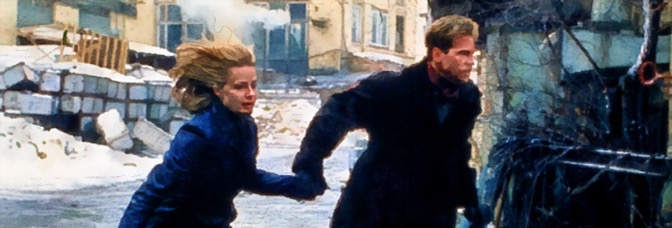
The Saint is a delightful mess of a film. Director Noyce toggles between doing a Bond knock-off while a romantic adventure picture. Val Kilmer’s international, high-tech cat burglar falls for one of his marks, Elisabeth Shue’s genius scientist. Jonathan Hensleigh and Wesley Strick’s script, even when it puts Shue in distress, never actually treats her…
-

The Great Muppet Caper is rather easy to describe. It’s joyous spectacle. The film has four screenwriters and not a lot of story. Instead, it’s got some fabulous musical numbers. Director Henson really goes for old Hollywood musical, complete with Miss Piggy doing an aquatic number. It also has a bunch of great one-liners and…
-

The Program does not tell a particularly filmic story. It doesn’t have a rewarding dramatic arc. Telling the story of disgraced cyclist Lance Armstrong, with Ben Foster in the role–and as the film’s main character–does not offer many moments of joy. Foster’s spellbinding. He humanizes the sociopath enough to make him understandable in his cruelty.…
-
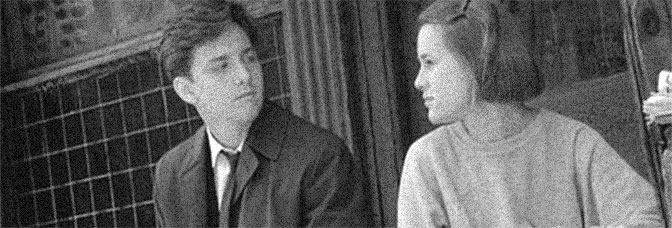
In its hundred minute run time, Heaven Help Us does a number of things well. It’s beautifully edited, photographed, directed, acted. Charles Purpura’s screenplay offers a number of fantastic scenes, which director Dinner does a great job with. Overall, however, the screenplay is where there’s a significant problem. The film doesn’t have an ending and…
-

Eddie the Eagle is charming. It’s assured–great script from Sean Macaulay and Simon Kelton–and a wonderful sense of time and place (eighties UK and Europe, then Canada) from director Fletcher. Fletcher’s got some problems I’ll get to in a bit but Eddie’s got a phenomenal feel. It’s a deft homage to eighties popular filmmaking, with…
-

Penthouse is a lean mystery masquerading as a class melodrama. Most of that class melodrama stuff comes at the front–and is only really ever alluded to later–making the film front-heavy. Unfortunately, so much time goes towards the melodrama, the mystery suffers. Luckily, there’s a whole bunch of charm–from the cast, from the script, from director…
-

Director Wong crafts Days of Being Wild as a series of vignettes, only with the film’s principal character never the protagonist of any of these vignettes. Wong and editors Kai Kit-wai and Patrick Tam go for lyrical transitions (or none at all); combined with the emptiness of Wild’s Hong Kong (busy places at times they…
-

Star Trek: Insurrection has a lot of problems, but they’re peculiar ones. None of them affect the film’s overall quality. Sure, it’d be nice if the sci-fi action sequences worked out better, but they aren’t the point. Even though director Frakes clearly has some set pieces in the film, he always relies on his actors…
-

The Wicker Man can never decide on a tone. Director Hardy and writer Anthony Shaffer are both interested in minutiae of the film’s fictional setting, but never the same minutiae at the same time. Hardy is more interested in how the people live, cut off from the mainland, while Shaffer is more interested in how…
-

Creed is something special. It’s an entirely sincere, entirely reverential sequel to the Rocky movies, but one trying to do something different with the “franchise.” Sylvester Stallone’s Rocky, while extremely important in the film, isn’t the protagonist. He’s not even lead Michael B. Jordan’s sidekick. He’s a cute old man who doesn’t understand cloud computing.…
-

Every question director Bell raises in Sons of Ben–passively, because he never lets himself have a presence in the film; Sons of Ben isn’t an active documentary (which makes it all the more impressive)–Bell addresses all of those questions, even the difficult ones, even the somewhat off-topic ones. An example of the latter is the…
-
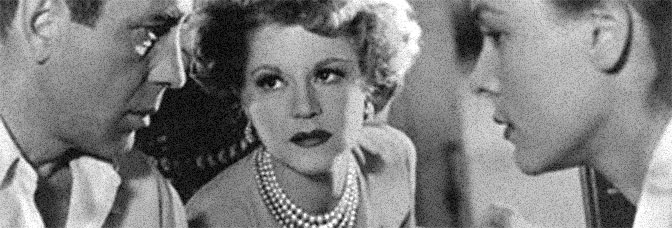
Key Largo is a grand affair. Humphrey Bogart versus Edward G. Robinson with Lauren Bacall and Claire Trevor in the wings. Not to mention Lionel Barrymore. The film plays beautifully. Director Huston and co-screenwriter Richard Brooks give Bogart and Bacall some lovely, ever so gentle; Bogart’s a vet, Bacall’s the widow of one of his…
-

Re-Animator. A romantic comedy about wacky med students who contend with vindictive deans, lecherous professors and student loans. With some good, old-fashioned decapitation thrown in. No. That description is way too reductive. Even though it’s technically correct. Director Gordon recognizes that camp possibility for the film, but he never lets the camp overwhelm the characters.…
-
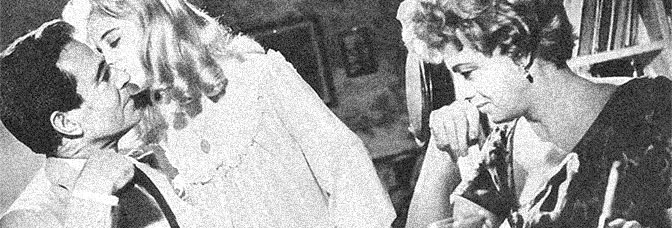
The first half of Lolita is a wonderful mix of acting styles. There’s James Mason’s very measured, very British acting. There’s Shirley Winters’s histrionics; she’s doing Hollywood melodrama on overdrive but director Kubrick (and Winters) have it all under perfect control. And then there’s Sue Lyons as the titular character. She’s far more naturalistic than…
-

XX/XY would be easier to talk about if it were a little bit better or a little bit worse. Director Chick’s structure for the film–a lengthy flashback opening the film, a flash forward with its own three act structure–seems like an enthusiastic mistake and conversation fodder. Only its not. It’s a calculation on Chick’s part.…
-

The Circus has a melancholic tone it doesn’t need and one director Chaplin is never fully invested in. The first half of the film is a series of fantastic gags–well, except the stuff with ring master Al Ernest Garcia being abusive to his daughter, played by Merna Kennedy. But the rest of it is hilarious.…
-

Until the halfway point or so, A Day at the Races moves quite well. Sure, it gets off to a slow start–introducing Chico as sidekick to Maureen O’Sullivan and setting up her problems (her sanitarium is going out of business), which isn’t funny stuff. I think Allan Jones even shows up as her nightclub singing…
-

Ace in the Hole moves while the script–from director Wilder, Lesser Samuels and Walter Newman–never races. In fact, it’s deliberate and methodical, maybe even redundant at times (especially in the first act). The redundant moments aren’t actually a problem since Kirk Douglas is in almost every scene of the film and, even when he doesn’t…
-

Diary of a Country Priest is a somewhat trying experience, as so much of the viewer’s experience watching the film requires him or her to empathize with the titular protagonist, something that character is apparently incapable of doing. Much in the film is made of the protagonist’s inexperience–something Claude Laydu plays perfectly–and director Bresson does…
-

To Be Takei is unexpected, even though everything it presents about its subject’s life is somewhere between common knowledge and readily accessible knowledge. Even though director Kroot opens the film on a jovial note–George Takei (the titular Takei) and his husband, Brad Takei (sort of also the titular Takei), taking their morning walk and bickering…
-

In the Name of the Father falls into most true story adaptation traps. It has a really long present action, which is unevenly distributed through the runtime. There’s a framing device introducing Emma Thompson’s appeals lawyer first thing–with her popping in from time to time to remind the viewer of the device. That device helps…
-

Perfect Sense goes out of its way to be an atypical disaster movie. Director Mackenzie and writer Kim Fupz Aakeson’s only significant acknowledgement of genre standards is having one of the protagonists pursue a solution. Except it’s never clear what epidemiologist Eva Green actually does–her job is clear, but what she does in pursuit of…
-

Shadow of the Thin Man has a healthy mix of comedy and mystery. The resolution to mystery is a little lacking at the end, but the film moves so smoothly until then it’s easily forgivable. And there is one amusing final twist (along with a good final joke). Most of the comedy comes from William…
-
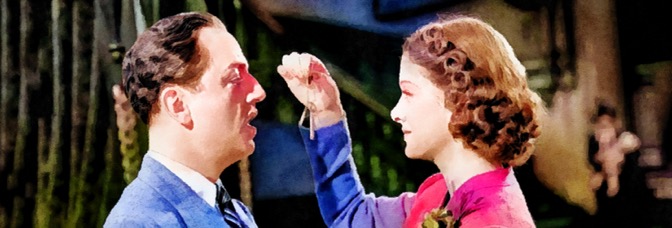
Another Thin Man is a peculiar blend of old dark house mystery and the Thin Man style of murder mystery. Most of the first half of the film is the old dark house mystery, with healthy doses of humor thrown. Frances Goodrich and Albert Hackett’s screenplay brings William Powell and Myrna Loy to New York…
 The Stop Button