Category: ★★½
-

Funny People plays a little like Judd Apatow wrote two-thirds of something he really loved so he decided to keep going… adding another two-thirds. So he ended up with four-thirds of a movie and because he’s Judd Apatow, he got to make it without skinning it down. I don’t think I’d even call him on…
-

Oh, okay… it’s less than ninety minutes. I was wondering why The Naked Gun felt so fast. It’s because it’s short. That observation isn’t a negative one—the film is a constant delight, with Zucker, Abrahams, Zucker (and Pat Proft) coming up with a good laugh or gag every thirty to forty seconds. Someone should sit…
-

Berlin Express is a postwar thriller. In the late forties and early fifties, there were a number of such films—most filmed either partially or totally on location in the ruins of Germany. I was expecting Express to be more of a noir, but it’s not. With its pseudo-documentary approach, down to the narration (an uncredited…
-
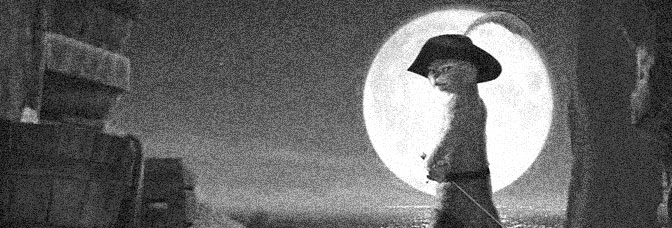
CG animation has, much to my surprise, gotten to the point of disquieting reality. In Puss in Boots, Zach Galifianakis’s Humpty Dumpty has such real facial expressions, it makes the entire experience uncomfortable. The face, on the alien form, is too real. Galifianakis is Puss’s weakest casting choice. In fact, he might be the only…
-

The Other Guys ends with an animation explaining the financial bailout in terms of what it means to the average American (i.e. the viewer). It tangentially relates to the movie’s plot. It might be the “best” use of a mainstream film’s end credits ever. Someone will soon ruin it I’m sure. Otherwise, The Other Guys…
-

Can you even watch Alien if you have epilepsy? After about a hundred minutes of elegant direction, Scott relies on this strobe effect for the remainder of the film’s running time. Yes, it makes a disquieting effect, but it gets old in a few minutes and he uses it for at least fifteen. And, strobe…
-

I’m not sure where to start with Captain America. There are two obvious places. First is Chris Evans. His earnest performance is unlike any other superhero movie of the last few decades (because the character is fundamentally different). Second is Joe Johnston. I think I’ll start with Johnston. Captain America is very well-directed. Johnston manages…
-

Total Recall opens with some of the best music Jerry Goldsmith has ever scored. It then moves on to a sci-fi sequence, set on Mars, and Verhoeven soon gets in his first animatronic head. There are a lot of animatronic heads, which get exposed to atmosphere and explode or get turned into grenades and so…
-

Deadhead Miles is a piece of great seventies filmmaking. It’s not a great film, but a great piece of filmmaking. The distinction’s important. Most of the film is about a peculiar truck driver, played by Alan Arkin, and his adventures after picking up a hitchhiker, played by Paul Benedict. Arkin’s truck driver is not particularly…
-

I’ve always found A Knight’s Tale’s lack of popular (or critical) success surprising. Besides the obvious–Heath Ledger when he was still doing the young Mel Gibson thing, only mixed with a more mature Gibson’s consciousness of his charm–it’s absolutely hilarious. Helgeland had a problematic relationship with Gibson, but certainly knew how to write for him…
-

Most of Green Zone is the best film I’ve seen about the Iraq war, simply because Greengrass is often satisfied with letting the film just be concrete situations (he opens with Matt Damon and his crew having to deal with a sniper and it establishes a great tone). However, Green Zone isn’t just a war…
-

How can Cohen do such amazing New York location shooting, but not be able to direct whatsoever? His composition is a disaster, but so is every dolly and pan. Luckily, his script is decent and his cast is phenomenal. So, even with the direction, The Ambulance is outstanding. While Cohen’s dialogue is occasionally a tad…
-

My Thin Man affection aside, I’m not against sobriety. However, Russell Brand movies integrate the glory of AA to the point it hurts the film (Get Him to the Greek made a similar move at a similar time). The development hurts Arthur, somewhat significantly. It’s good the film has Greta Gerwig, as she pulls it…
-
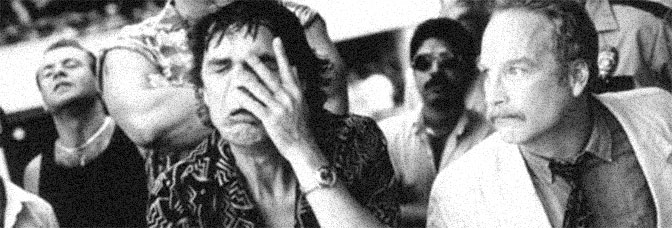
I wonder how Let It Ride would play if it were competently made. Pytka’s not a terrible director, but he’s not any good either. His mediocre composition is undone by the absolutely atrocious song choices for the soundtrack. The film would probably be better with no changes other than that track excised. Not that Giorgio…
-

Danny the Dog is better than it should be–it’s not as good as it could have been, but it’s definitely better than it should be. The film finally gives Jet Li an appropriate English language role. Here, he can turn in a decent performance while doing his physical stuff. Li’s very likable (maybe because he’s…
-

After destroying the future trying to save the environment, scientist John Hurt goes into the past where he finds the events of Frankenstein (the novel) unfolding around him, with Mary Shelley (Bridget Fonda) witnessing Dr. Frankenstein’s descent into madness. Raul Julia’s an amazing Frankenstein, Nick Brimble’s an amazing monster. Hurt’s a tad passive but very…
-

Pichel does such a good job with the majority of O.S.S., it’s a surprise how ineptly he handles the jingoistic last scene. It’s a WWII patriotism picture (is there a proper term for this genre?), so that last scene is requisite, but Pichel could have at least made it work. Instead, he hangs the film…
-
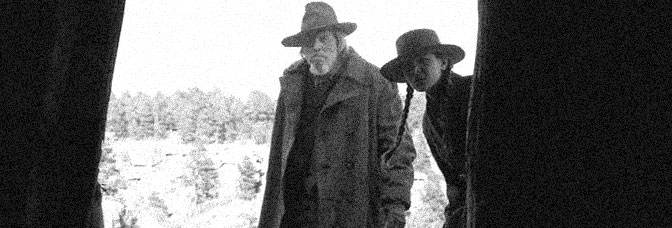
By doing a faithful adaptation of the source novel, the Coen brothers ignore what True Grit does really well. It’s the incredible adventure of a girl, told without any gloss and at times rather harsh. It features one of those great child actor performances (from Hailee Steinfeld). And with their faithful adaptation, the Coen brothers…
-

I suppose if someone wanted to think really hard about it, there’s something to be said about adapting short stories for Hollywood. Jeffrey Eugenides’s source short story was in The New Yorker. Is it ripe for mainstream Hollywood adaptation? Given the adaptation, The Switch, failed at the box office, one might say no. But then…
-

As a Muppet fan, the thing I miss most about Muppet Treasure Island is the Muppets. Oh, they’re around, but in neither of the film’s principal roles. Instead, it’s Tim Curry and Kevin Bishop–and their performances both have ups and downs. But neither is wholly responsible–in Bishop’s case, the script changes his character quite a…
-

I really wanted Nice Guy Johnny to be Ed Burns’s best film. It’s his best made film. His composition of the Hamptons landscapes are singular. The incorporation of PT Walkey’s music is sublime. Burns even uses sped up film (or video) to great effect. If Burns did shoot Johnny on digital video, he and cinematographer…
-

Aja opens Piranha with a pretty deft reference to the original film and follows it immediately with a rather big Jaws reference. The original, ostensibly a parody of Jaws, is absent any kind of reference… so it’s strange to see here. But it’s hilarious. And it might be the funniest of Aja’s other homages to…
-

Given Korean film sort of resurrected the melodrama as a viable genre (I can’t believe I’m arguing for melodrama, but I guess if you like cinema, you sort of have to accept it–and I mean melodrama in a neutral sense… not as a guaranteed pejorative), I was curious to see how they’d do a disaster…
-

From Nicholas Stoller’s writing credits, I wouldn’t have thought him capable of such a funny movie. I hadn’t realized he’d directed Forgetting Sarah Marshall. Get Him to the Greek is a spin-off more than a sequel (though Kristen Bell shows up for a cameo). Stoller’s third act problems–when Greek becomes painfully unfunny and life affirming–aside,…
-

Even with its problems, Iron Man 2 is leagues better than the original. There’s some awkward plotting to catch the viewer up with the characters and it all makes for a wonderfully boring superhero movie. That open’s a showcase for Downey’s acting abilities, given he’s on a slow burn as everything around him explodes–for the…
-

I wonder if Tim Blake Nelson has read Disgrace. Cheap, cheap, cheap comment. One-liner even. It’s a one-liner. Leaves of Grass is not–if I underlined, I would here–an American Disgrace. It’s something different from that sort of attempt, but also something different from a mainstream or independent attempt… it’s a comedy drama unlike most others…
-

Q is sort of ripe for a remake. Not because this version has shoddy special effects–while the film’s still effective with them, they look like something out of the 1925 Lost World–but because there are three great roles in the film and nearly a fourth. Michael Moriarty’s top-billed and definitely gives the film’s most sensational…
-

One joke–just to start. One. Was anti-Semitism a requirement for appearing in Edge of Darkness? Ok. I’m done. Mel’s return to the screen (pause–people actually saw Signs) tries hard to not be the return of a movie star. He’s got a lot of scars (the two on his forehead, are those really his?) and he’s…
-

Huh. Either blockbuster comedies are getting better or I’m getting stupider. The Hangover is actually a rather neat narrative–it’s kind of like Memento if Memento wasn’t like a concept episode of “Miami Vice.” There are some questions of the film’s sexual politics–apparently going to Vegas and carousing with strippers is okay for certain married men…
-

The espionage genre has gotten so stupid over the last couple decades, it’s hard to even imagine how a mediocre entry could be good. Now, it’s watching the least worst. Three Days of the Condor is such a peculiar film, even though it’s wholly commercial–I mean, Dino De Laurentiis produced it. It’s not just a…
 The Stop Button