Category: ★½
-

Cameron Diaz only gets to be unbearably obnoxious–her usual persona–when Tom Cruise is off screen during Knight and Day, which, luckily, isn’t often. Amusingly, Cruise’s absence coincides with supporting cast member Maggie Grace’s principal scene and seeing her and Diaz together is chilling… Attack of the content-less blondes. Luckily, Cruise is around for most of…
-

Another remake where they credit the original screenwriter as a contributing writer in order not to call it a remake. Halsted Welles wrote the original 3:10 to Yuma’s screenplay… not sure why Mangold and the producers thought Michael Brandt and Derek Haas, writers of some vapid action movies, would match him. I assume Brandt and…
-

Antal’s composition is so strong, I would have thought Armored could get away with almost anything and still be a solid diversion. The action direction is good but not anything special–the chase sequences are boring, for example. But Antal’s composition for conversations? It’s amazing; sort of a cross between Michael Mann and seventies Steven Spielberg.…
-

How’s this one for a double standard? When director Robert Rodriguez made Desperado, he demanded a Mexican actress (Salma Hayek) play a Mexican character (against studio wishes). When producer Robert Rodriguez made Predators, he cast a Brazilian actress (Alice Braga) as an Israeli character… Braga’s fantastic in Predators, but really… why isn’t anyone crying foul?…
-

I wonder if there’s not a better version of Love Potion No. 9 out there somewhere. The film only runs ninety minutes and feels anorexic. Launer’s writing–even his narration for Tate Donovan–has these moments of incredible strength. It’s so strong, in fact, it and Donovan make Love Potion a fine diversion. Well, those aspects and…
-

Man Made Monster, at least for the first fifteen minutes (of an hour), gives Lon Chaney Jr. one of his best roles. He gets to be the affable guy his other performances from the forties often hint he’s capable of being, but never gets to be. Not surprisingly, Monster takes that aspect of his character…
-
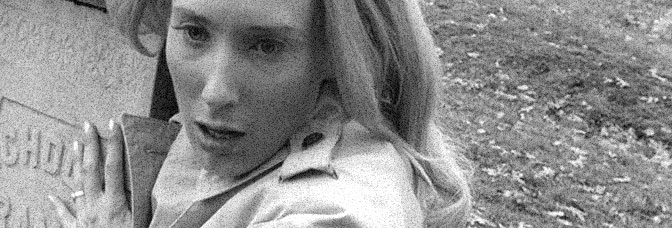
What a lame ending. If it weren’t for the sufficiently uncanny end credits, I’d finish Night of the Living Dead thinking it was supposed to be a comedy. Actually, if it weren’t for that lame ending, I’d be starting this response much differently. Night of the Living Dead has one of the most sublime opening…
-
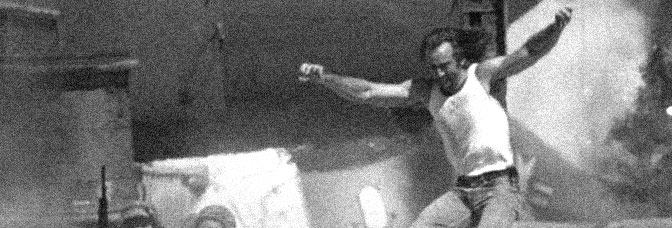
I loathed Con Air back when I first saw it. I’ve only seen it that one time, opening night thirteen years ago. And many of my complaints at the time still hold true–Nicolas Cage is awful, John Cusack is awful (worse, his jokes fall flat), Simon West is a terrible director (but thirteen years later…
-

I think The Speckled Band is a period piece but maybe not. There aren’t any exterior establishing shots in London, so no automobiles. It’s a question because the Sherlock Holmes in this film isn’t some recluse… he’s got an office and three secretaries. The film has a very episodic feel to it, but not in…
-

The Mummy’s Ghost is, with a couple problems, really good for a monster movie (and leagues ahead of Universal’s other 1940s Mummy features). It’s not so much about the Mummy as the victims and the investigation (but the police investigation, not the scientific–and everyone believes in mummies walking around animate, so there’s no convincing to…
-

As Return of the Scarlet Pimpernel enters its third act, there’s this startling suggestion… one of the good guys has been sleeping with Robespierre to get in his good graces. I’m unaware of such an overt implication in any Hollywood films of 1937. Unfortunately, that singularity is about all Pimpernel has going for it. Otherwise,…
-
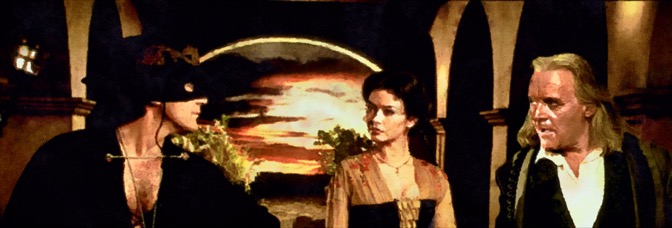
The last time I saw Zorro (which would have also been the first time), it didn’t impress me much. I don’t remember hating it, but I do remember disliking it. This time through, however, I find myself mellowed. It’s an enjoyable adventure picture, the kind Hollywood doesn’t make anymore. The amount of Zorro swashbuckling alone…
-

Tarantino will probably never make a film as good as the good parts of Inglorious Basterds again. Possibly because the good parts of the film–even with the Sam Jackson narration–seem so unlike Tarantino, it’s impossible to imagine him making them. It’s like, all of a sudden, an adult magically appeared and took his place. Unfortunately,…
-

I just went back and reread my response to the theatrical release of Rambo. I haven’t seen it since the theater and, while I could pick out some added scenes (Stallone’s director’s cut, titled John Rambo, runs about ten minutes longer), I couldn’t remember if my problems with the director’s cut are the same as…
-

I don’t get it. When I watched the film, I had no idea The Innocents was considered some masterpiece of British cinema. I’m actually rather surprised by the acclaim. Similarly, I’m shocked Deborah Kerr considered her performance in this film her best. It’s not a bad performance by any means; the plotting constrains it a…
-
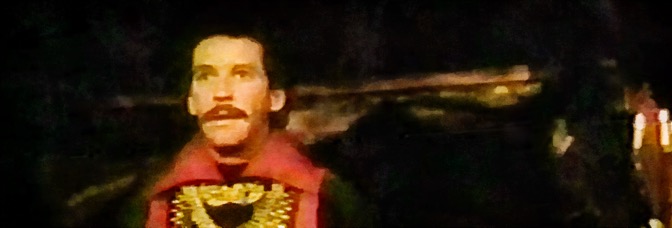
Dr. Strange aired in September, Superman came out in December… and they both have the same flying techniques, at least for couples, though Superman does have a longer flying sequences… Dr. Strange just kind of hints at it. A number of things put Dr. Strange above the standard seventies television movie. First, it rarely has…
-

I don’t know if I’d say I’ve been waiting ten years to see the director’s cut of Payback, but I guess I’ve been interested in it for ten years–it’s supposed to be the meaner version. Too bad Mel Gibson, even a good Mel Gibson, is Mel Gibson. Even when he’s being tough and mean, he’s…
-
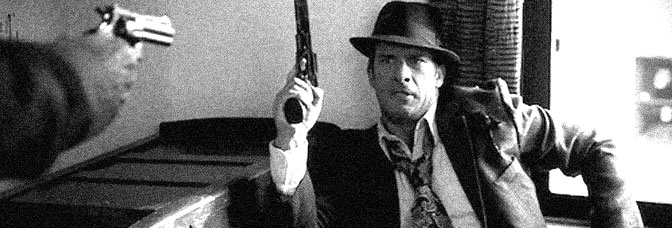
I’ve read some reviews describe Give ’em Hell, Malone‘s genre as a mix of noir and action. Genre assignations are utterly useless, but in this case, it might actually be an amusing diversion. It’s hard to assign a genre to a picture where a bunch of characters acting like they’re in a film noir while…
-
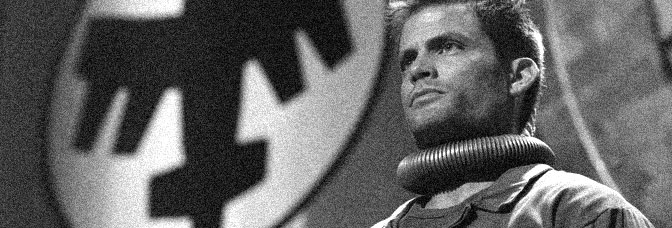
I love this movie. Seriously. Not just because it features the most idiotically jingoistic song since Grease 2‘s “Do It For Our Country.” There’s a fair amount of political commentary (instead of going for the easy Bush jugular, Neumeier’s a lot more complicated, particularly when it comes to how religion is sellable as war propaganda)…
-

I’m a little upset. Anthony Perkins only directed two pictures and one of them–this one–was written by Charles Edward Pogue. Pogue’s a bit of punchline, but at least most of Psycho III is well-plotted. His dialogue, especially at the beginning, is iffy, but it might also have been Perkins getting used to directing actors. Psycho…
-

I’m not sure when everyone in New York being an actor became general knowledge, but The Definition of Insanity might be the first film I’ve seen to explore it… or pretend to explore it. But why I say pretend to explore it is because the film’s got some major problems. It’s really amusing for a…
-
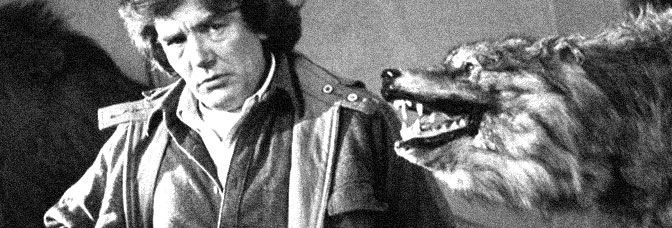
Even with Albert Finney’s hair style, which seems to be inspired by a drag queen who just doesn’t care, Wolfen is a beautifully made film. The big action sequence at the end (the film’s genre progresses from police procedural to horror to thriller–Finney’s investigation leads the way) is a fantastic sequence. I’d actually forgotten it…
-
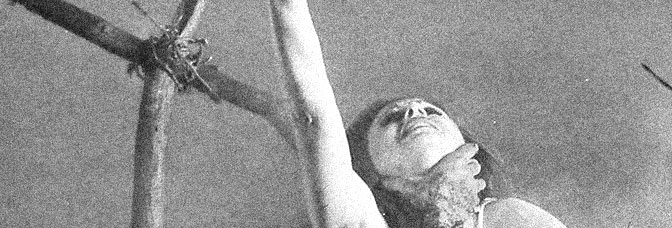
For whatever reason, Sam Raimi now has The Evil Dead released in a matted version (to 1.85:1 from 1.37:1). It looks awful. Raimi’s strength as a director comes from his constantly agitated camera; his static shots are–well, I guess the shots of the sun setting and the moon rising in Evil Dead are cool–mediocre at…
-

Ok, so… is Robert Downey Jr. ever going to be in a serious movie again? He’s the new Johnny Depp (serious indie actor turned blockbuster star for hire). Anyway. Sherlock Holmes. Let’s see. Guy Ritchie can direct. Who knew? Maybe he just needed Joel Silver to rein him in. Good Hans Zimmer music. Good Jude…
-
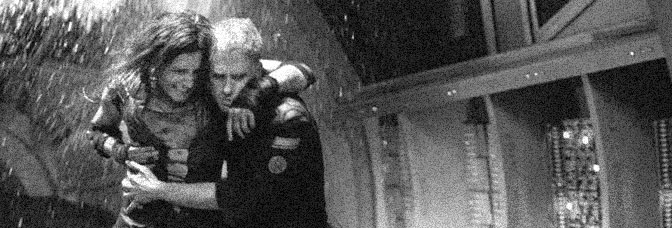
A lot of Pandorum is the best thing producers Jeremy Bolt and Paul W.S. Anderson have ever had their names on. It falls apart, after a weak open no less, at the end. The very end. It reminded me of Outland, the exit is so stupid. It totally invalidates the trials the protagonists went through…
-

Of all the crap Millennium Films has released theatrically, it’s shameful they let Streets of Blood go straight to DVD. Sure, there’s an absolutely ludicrous Sharon Stone (playing a faded Southern belle Ph.D., the worst Ph.D. casting since Will Smith), but it’s a solid cop thriller slash character study slash Katrina exploitation film. It’s even…
-

They really should have cast Rosario Dawson as Wonder Woman. Never thought I’d be typing those words–even if it is just voice casting–but Dawson is so much better than Keri Russell, whose Wonder Woman comes off as dependent on Nathan Fillion’s male for everything down to pseudo-feminist banter. Russell’s voice defers and doesn’t suggest any…
-

One of the more impressive things about Lethal Weapon is Danny Glover convincingly playing a fifty year-old at, approximately, the age of forty. It’s never a problem in a film rife with problems. First, Lethal Weapon‘s plot doesn’t really make any sense. There are huge jumps in logic as Glover and Mel Gibson’s “investigation” proceeds.…
-

I had no idea Heather Graham was ever a lead in such a high profile project. I knew she was in From Hell, but she’s got a lot to do–and with an Irish accent. I suppose it’s the best performance I’ve ever seen her give, maybe because her character isn’t a twit and Graham tends…
-

I unintentionally watched the Roger Ebert cut of Kate & Leopold. I originally saw it at a sneak preview with the plot intact. Ebert saw it around the same time and threatened to complain or whatever if they didn’t cut it. It works all right, but the original cut is available on DVD. I thought…
 The Stop Button