Category: ★½
-

When Mannequin is at its best, it makes one forget about its worst. There’s a lot of weak writing–and some strong writing–and director Gottlieb is terrible with actors. What’s so strange about his inability to direct them (most visible with Carole Davis) is how well other performances turn out. Both James Spader and G.W. Bailey…
-

For The Bride of Frankenstein, director Whale takes a contradictory approach. It's either more is more, or less is less. More music, all the time. Franz Waxman's frequently playful music rarely fits its scenes, unless Whale is going for a melodramatic farce, which he really doesn't seem to be doing. I kept hoping he would…
-

Nothing Sacred is an idea in search of a script. It’s a little surprisingly they went forward with Ben Hecht’s script, which plays like he wrote it on a bunch of napkins and left director Wellman to piece together a narrative. Fredric March–who has shockingly little to do in the film–is a newspaper reporter who…
-

Besides a truly excellent real time (or very close to it) sequence where Maggie Grace avoids being kidnapped in order to help already kidnapped parents Liam Neeson and Famke Janssen, there's not much to Taken 2. Even the action-packed finale is a disappointment. I had been hoping it'd match that long sequence–which goes from a…
-

Detour should be episodic, but it's not. The film chronicles the misadventures of Tom Neal's night club pianist, who's stuck not being good enough for Carnegie Hall and having a fickle fiancée (Claudia Drake) from the outset. When he does decide to follow her out to her dreams in California, instead of saving bus fare,…
-

Every so often, Labyrinth plays like an episode of “Fraggle Rock” with special guest star David Bowie. Oddly, the film starts Bowie heavy but pretty soon he’s just popping in to remind the viewer he’s still around. His performance is terrible; his singing sequences are fine, especially how capably he acts with all the puppets.…
-

Honey, I Shrunk the Kids is a constant battle between trite and sincere. Except the special effects stuff; the special effects are astounding, especially the sequences where there's a mix of styles, between practical and optical, and a mix of sizes. Director Johnston does such an exceptional job making the fantastic palatable, it's too bad…
-

Madison Avenue somehow manages to be anorexic but packed. It only runs ninety minutes and takes place over a few years. There’s no makeup–which is probably good since Dana Andrews, Eleanor Parker and Jeanne Crain are all playing at least ten years younger than their ages. Director Humberstone doesn’t do much in the way of…
-

Now, when a fan of something writes a sequel to that something… it tends to be called “fan-fic.” Death Comes to Pemberley is based on fan-fic from an extremely well-regarded author. P.D. James is even a baroness. But she hasn’t got anything to say about Pride and Prejudice. Worse, unless screenwriter Juliette Towhidi really screwed…
-

The extended version of The Wolverine adds some twelve minutes to the theatrical version. I can’t quite remember the differences, but mostly it just makes the film seem longer. Mangold hasn’t got a good pace for it; the fault for that problem, however, lies with the screenwriters. The film opens with a flashback, moves on…
-

Basic Instinct somehow manages to be smart and stupid at the same time. The direction and the production are impeccable. Verhoeven sort of does a nouveau Hitchcock thing–ably aided by Jerry Goldsmith’s score–while mixing in a bit of film noir. He does this thing with establishing shots; the focus is always on character, never the…
-

There’s always something to be said for a new approach to a standard genre. The Silence is a murder mystery, kind of a cold case one, kind of not, kind of serial killer, kind of not. Director bo Odar tries really hard in the end to give the film a singular ending and he fails.…
-

Before it stumbles through its third act, I Walked with a Zombie’s biggest problem is the pacing. It’s exceedingly boring during the second act. Its second biggest problem is it’s too short. The second act plays so poorly because there’s not enough going on, there’s just not time for it in sixty-eight minutes. Otherwise, the…
-

Bedlam is about a third of a good picture. It’s like writers Val Lewton and (director too) Robson didn’t quite know how to make it work, what with having to have Boris Karloff in it. Karloff’s the villain, the head of a mental institute in the eighteenth century. Karloff’s so evil–and surrounded by so many…
-

I’m trying to imagine The Heat without Melissa McCarthy. Even though she gets second billing–the film opens introducing Sandra Bullock’s character, a superior FBI agent with no personal skills (and an odd klutziness the film never actually deals with)–McCarthy’s the only reason to watch the film and she’s the only consistently good thing in it.…
-

The first half of Dementia 13 is surprisingly good. From the first scene–pre-titles even–Coppola establishes some great angles to his composition. He keeps it up throughout with close-ups jump cutting to different close-ups; excellent photography from Charles Hannawalt makes it all work. During that first half, the film is basically an old dark house picture,…
-

At a certain point during The Way, Way Back, it became clear the film was never going to do anything interesting. Then, all of a sudden, writer-directors Faxon and Rash get to their “realistic” ending–by realistic, I mean it doesn’t resolve the most important story lines–and even though the film isn’t going to reward the…
-
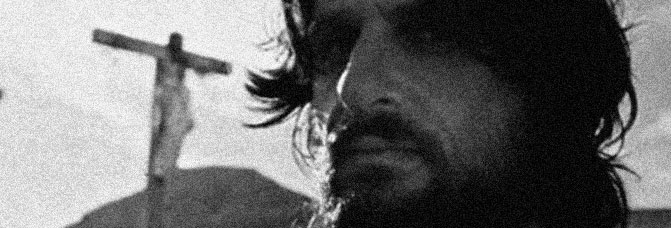
For the first few scenes, Alex North definitely composes The Passover Plot like a big Biblical epic of the fifties. It’s not, of course, and not just because Plot’s from the seventies. It’s cheap and director Campus uses that reduced budget interestingly. Maybe not well, but definitely interestingly. Actors get close-ups when they don’t need…
-
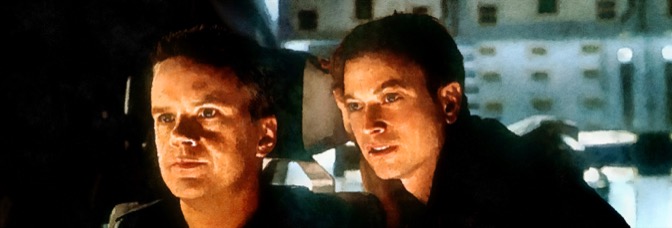
If it had been made earlier–even with the same flawed script–Mission to Mars would probably have been more successful. Many of its failings relate to the CG special effects. Stephen H. Burum is incompetent at lighting them, but they also bring an artificiality to the film’s tensest sequences. So, while Ennio Morricone might have a…
-

Invaders from Mars, while it’s occasionally obvious it’s a comedy, can’t seem to decide. For a while, Hooper directs it absolutely straight–which doesn’t do the film any favors. Hooper’s composition is excellent (he and cinematographer Daniel Pearl have some great Panavision shots) but there’s no menace. Hunter Carson plays a kid convinced aliens have landed…
-
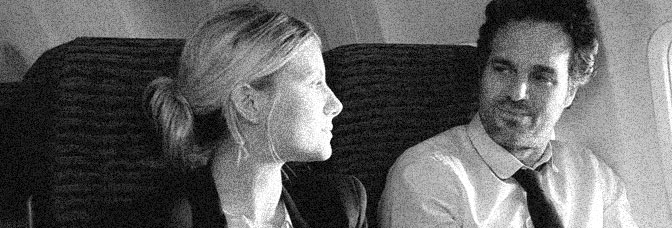
Now You See Me plays a little like Ocean’s Eleven without Steven Soderbergh and a great cast of supporting character actors instead of lead actors doing an ensemble. Except maybe Jesse Eisenberg. He acts like he’s running See Me, even though he’s not in it very much. And his character’s supposed to be acting like…
-

Besides an utterly absurd title–and one nowhere near as clever as the film itself–A Werewolf Boy is something of a success. Jo proves one can successfully marry science fiction, werewolf romance, class bigotry and… I don’t know, ageless romantic melodrama. He doesn’t cop out at the end either, but turns the picture into some kind…
-

The Wolverine suffers from too many pots on the stove, a director in Mangold who can’t manage said pots and some really, really silly things. Like giant monsters silly. The film’s at its best during a long chase sequence–both in terms of run time and story time–when Hugh Jackman is protecting Tao Okamoto throughout Japan.…
-

The Leopard Man has such beauteous production values–one would never think it was a low budget picture, not with Robert De Grasse’s lush blacks and he and director Tourneur’s tracking shots–it’s a shame the acting fails the film. A lot of the problem the script. Co-screenwriters Ardel Wray and Edward Dein try hard to show…
-
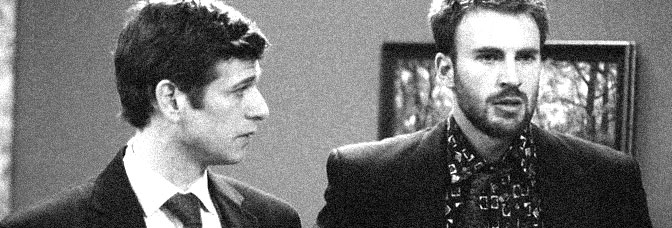
Puncture is a crusading attorney picture with a couple twists. First, there’s no trial and, specifically, no eureka moment in the trial. Second, the crusading attorney in question–played by Chris Evans–is haunted by more than demons or the bottle, he’s a rabid drug fiend. Oddly, Puncture never condemns the character’s drug use. In fact, he…
-

When Crocodile Dundee starts, it’s deceptively bold. For roughly the first half of the picture, Linda Kozlowski–without any previous theatrical credits on her filmography–is the protagonist. She’s not really believable as a tenacious newspaper reporter, but she works as Jane to Paul Hogan’s Tarzan. Sorry, Mick Dundee. During that first half, when Dundee is the…
-

Phenomenally well-made but exceptionally racist thriller about a Caribbean voodoo cult brainwashing Dorothy Burgess into a sleeper agent. Jack Holt’s her unknowing husband, Cora Sue Collins is their daughter. Second-billed Fay Wray is the good White lady versus suspected race traitor Burgess. Like I said, racist; really, willfully racist. Holt’s great, so’s Collins. Great finale…
-

I think Guy Ritchie has to be the last blockbuster director who still likes bullet time. Sherlock Holmes: A Game of Shadows has so much bullet time, one would think it’s from the late nineties. Sometimes Ritchie uses it pointlessly–there are some fight scenes with it and it doesn’t work so well. In contrast, Ritchie…
-

An adaptation of something like Dangerous Liaisons–where the ending isn’t just assured, but probably familiar to the viewer–requires good actors and an interesting approach. This version of Liaisons has both. It takes place in 1931 China; the Japanese have started attacking and there’s unrest. Director Hur has a great sense of style for this era…
-

If it weren’t so predictable, The Greene Murder Case would be a little better. Not much better–part of the film’s charm is the obvious foreshadowing, since director Tuttle’s obviously on a limited budget and he couldn’t do much anyway. There are no natural exteriors, which is fine; the one artificial exterior–Tuttle’s establishing shots tend to…
 The Stop Button