Category: ★
-

Is John Goodman doing an impression of Bill Murray from Caddyshack? Arachnophobia is so all over the place, it wouldn’t be a surprise to find out Frank Marshall directed him along those lines. The movie’s a mix between The Birds and a little Gremlins. Not to mention some proto-Jurassic Park. Unfortunately, Marshall doesn’t bring these…
-
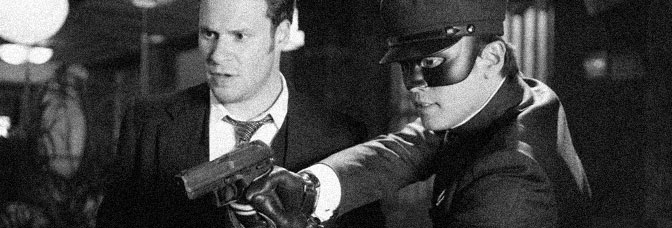
Of the Seth Rogen films I’ve seen—those he’s written, I mean—The Green Hornet is the weakest. It’s only partially Rogen and cowriter Evan Goldberg’s fault. The concept does not present them with the best opportunities. At its most amusing, it’s usually Rogen and costar Jay Chou bickering. Rogen and Goldberg’s strength is when the film…
-

While Petrie’s a decent director, it’d probably be hard to screw up Toy Soldiers. The movie mostly relies on Sean Astin, who’s more than capable of carrying it, so long as one likes Astin. So, if you like Astin and think Keith Coogan’s funny… it works. I’m not sure how one’s supposed to respond to…
-

The Muppets is confused. The screenplay from Jason Segel and Nicholas Stoller oscillates between being this lame story about Segel and his brother, a Muppet named Walter (indistinctly performed by Peter Linz), and his girlfriend (Amy Adams) and a better story of the Muppets reuniting. The better story is, unfortunately, not exactly good. There are…
-
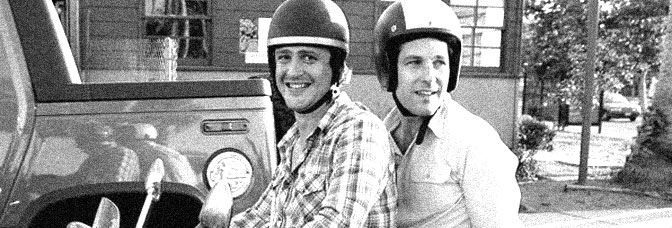
Could Paul Rudd make less of an impression in I Love You, Man? Even before Jason Segel shows up, Rudd is completely ineffectual. He’s supposed to be ineffectual, of course, but he’s also the protagonist of the movie. He doesn’t garner sympathy, he garners pity. But Hamburg’s whole approach is peculiar. He opens the movie…
-

Batman: Year One should be much, much better. As it stands, as animated adaptation of Frank Miller and David Mazzucchelli’s comic books, it’s a fantastic proof of concept. It’s no surprise, given much has already been adapted, albeit uncredited, into Batman Begins. I guess Christopher Nolan doesn’t know how to cite. But co-directors Sam Liu…
-

Until the third act, when it painfully changes course, Paper Mask is excellent. Hospital employee—it’s never clear his exact position—Paul McGann assumes the identity of his ex-girlfriend’s dead doctor boyfriend and heads off to practice medicine. The events don’t unfold as simply as that sentence suggests, but the process McGann goes through is what makes…
-

Watching The Naked Gun 2½, its’s almost immediate clear the missing Z-A or is it A-Z (being Jerry Zucker and Jim Abrahams) are the ones who made the first film funny. They don’t contribute to this one’s script—instead it’s just the other Z, David Zucker (who also directs) and Pat Proft. The script is so…
-

The majority of Sundown is excellent. Hathaway sort of mixes the Western and British colonial adventure genre with a World War II propaganda piece. New Mexico stands in for Kenya—it’s an interesting war film because there aren’t any Americans. Lead Bruce Cabot is playing a Canadian. Cabot does well throughout. He handles the colonial scenes…
-

The Mating Season is an awkward social comedy of errors. I say awkward because to make the plot work, Gene Tierney has to act selfishly every time she’s supposed to be garnering sympathy. Thinking about it now, the film never even resolves her flirtations with the guy out to ruin her husband (and their marriage).…
-
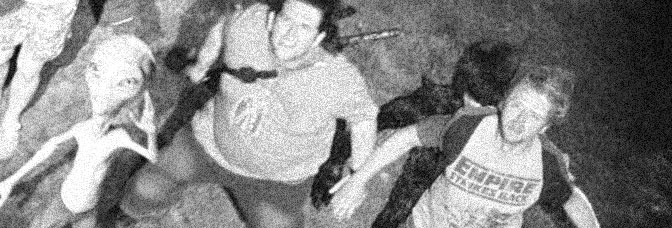
Maybe Simon Pegg needs Edgar Wright or maybe Nick Frost just shouldn’t be writing because Paul should be great and it’s not. Some of the problem comes from having Seth Rogen voice the titular, CG alien. Rogen does a fine job but he’s such a dynamic presence, Pegg and Frost sort of fade into the…
-
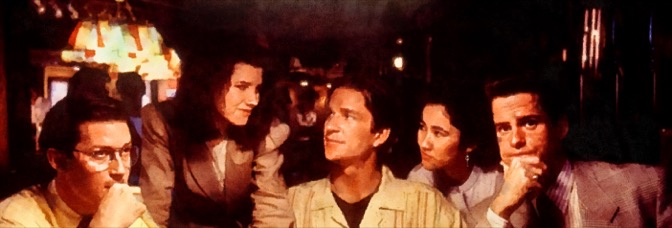
Gross Anatomy is harmless and diverting. It’s got some good performances–Christine Lahti is fantastic, Matthew Modine barely does any work and is solid as the lead. The supporting cast has some bright points (Alice Carter and John Scott Clough), but it’s also got Daphne Zuniga. Now, Anatomy is a big bright Touchstone movie. It’s less…
-

Memphis Belle runs just around an hour and fifty minutes. It takes the film about a half hour before it’s even clear the titular plane is going to have a mission in the narrative. It opens with a masterful introduction to the characters and the situation (a bomber has one more mission before the crew…
-

I’m loathe to say it, but The Rock isn’t bad. Its good qualities are questionable, but it’s not bad. Besides some of the acting, what’s best about the film is how it fuses the action and adventure genres. Bay does his action stuff in traditional adventure settings—there’s a setting straight out of Indiana Jones and…
-

I wonder how long it takes Luc Besson and Robert Mark Kamen to script their action movies. None are ever very long (or very good—for the most part) and they’re all exceptionally simple. Maybe they have some kind of fun method to it, like they get a Domino’s pizza and write one in a night,…
-

Tron: Legacy is a little better than the first one (though the first one is so bad, it would be hard not to be). It does, however, share a very common trait–it’s best when the music is blaring. The Daft Punk score is wondrous and when the music’s going, Tron: Legacy works. Another asset is…
-

According to IMDb, Larry Cohen cut about a half hour out of The Stuff. It’s entirely possible with that added footage, the movie might have made sense. As it’s cut now, it’s a somewhat diverting–at least until the third act–cross between The Blob and Invasion of the Body Snatchers. Unfortunately, Cohen’s direction is weak throughout,…
-

I didn’t know what to expect from The Adventure of Sherlock Holmes’ Smarter Brother, other than some of the principals of Young Frankenstein to reunite. As it turns out, Smarter Brother is Frankenstein’s younger brother. For his first directorial outing, Wilder basically just mimics Brooks’s direction of Frankenstein. There are the constant fadeouts and the…
-

It’s sort of amazing how little personality Kevin Reynolds brings to Robin Hood. I suppose his direction is adequate, but his shots are absent any creativity. Of course, maybe the shots were very creative and then Michael Kamen’s score–a combining, for the most part, of his Die Hard and Lethal Weapon scores–came in and ruined…
-
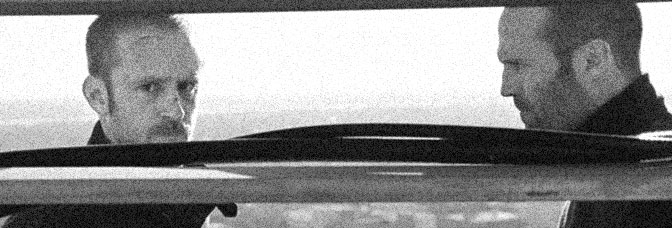
It would be going far to say The Mechanic almost succeeds. There’s not very much it could succeed at–while a remake, the film could have been another in star Jason Statham’s Transporter franchise; there’s nothing distinctive about it. Except maybe Mark Isham’s awful score. The film opens with some of director West’s worst work. Luckily,…
-

Spies Like Us ought to be better. The problem is the length. Well, the main problem is the length. Donna Dixon having a big role is another problem. The movie’s just too short. At 100 minutes, it actually should be just the right length, but there’s a lot Landis skirts over because he doesn’t have…
-

I’d forgotten John Guillermin directed Death on the Nile. The opening credits, a static shot of the river, suggest a much different experience then the film delivers–between Guillermin directing, Jack Cardiff shooting it and Anthony Shaffer handling the adaptation. I suppose I should have remembered Shaffer also adapted Christie’s Evil Under the Sun to similar…
-

When he’s doing good work, Luc Besson makes these transcendent films, but even some of his lesser works often have some moments with that quality. Léon does not. Many of the elements are there–but something’s off. Maybe it’s something simple, like Jean Reno is supposed to be playing an Italian immigrant who, apparently, just acts…
-
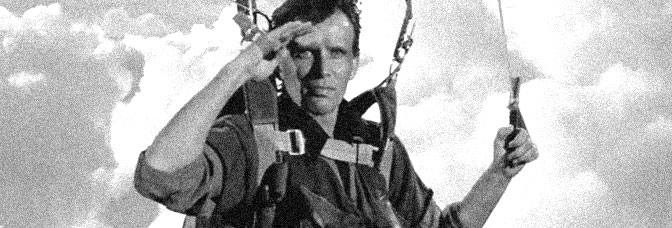
Buckaroo Banzai‘s greatest contribution to cinema–well, if it didn’t get Peter Weller the Robocop role at least–is as a warning against trying to adapt authors like Thomas Pynchon to motion pictures. Banzai goes out of its way–the Pynchon references are well-known, to the point Pynchon even referenced Banzai in a novel (Vineland)–and it’s not hard…
-

Inception is a moderately engaging, globe-trotting adventure. On any reflection, it’s also mind-numbingly dumb. What’s brilliant is how Nolan packages it. He takes a heist film, with all its inherent engagement, and triples it. Three times the things going wrong and the characters having to figure out new, CG-aided solutions. Another smart move is making…
-
The importance of the director, in cinema, used to be a topic of discussion for me. It hasn’t been lately, because it’s hard to find good examples of well-scripted, well-acted, but terribly directed motion pictures. Thank goodness for The Trollenberg Terror and Quentin Lawrence. Lawrence might be the most boring bad director I’ve ever seen.…
-

Ralph Bellamy gets top billing here, but he doesn’t deserve it. I’m always stunned when, with a reasonably early feature motion picture like Before Midnight, the filmmakers are clearly exhausted with the genre. Midnight‘s a big house mystery (enclosed setting, certain number of suspects) but the opening establishes the majority of the film is set…
-

Superman III–deservedly–gets a lot of flak, but it’s actually the most faithful to the comics in a lot of ways. It plays out like a late sixties, early seventies Superman comic–“The Man Who Killed Superman,” turning out to be a bumbling, generally well-meaning guy like Richard Pryor, or “Superman Versus the Ultimate Computer.” Superman III…
-

Murder at Glen Athol should be just a little bit better. The script has a number of twists, with Strayer handling them ably, but it’s just too short as it turns out. The film runs under seventy minutes, which would be fine for a B mystery, but Glen Athol (the title is problematic–Glen Athol is…
-

The Mummy’s Curse feels like a Universal attempt at a Val Lewton picture. It’s from 1944, so Lewton’s modern horror pictures had already come out. It’s hard to believe Universal changed their approach to monster movies so radically between this picture and the previous Mummy entry. Curse is set on the bayou in Louisiana (Lewton…
 The Stop Button