Category: Star Trek movies
-
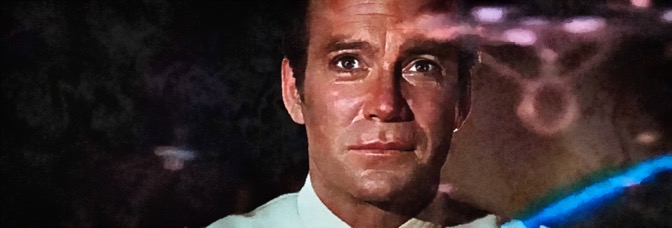
Star Trek: The Motion Picture: The Restored Director’s Edition occasionally feels like a fan project. Or at least a temp project. Like the new opening titles, set in gold. They look like they were done using an iPhone app. Then there are shots where they couldn’t find the original materials, so the picture suddenly looks…
-

I want to like Star Trek Beyond more than I do. I want to be able to look past its problems. It has a whole lot of problems. Michael Giacchino’s music is awful. Stephen F. Windon’s photography is rather wanting. The four editors don’t do any particularly good work, though they’re not working with the…
-

Even though Star Trek: Nemesis is pretty dumb–and it is dumb, not just as a Star Trek movie, but as a movie in and of itself–and it has a lot of problems, the cast gets it through. The cast, the vague “train wreck” quality to some of its missteps (like Jerry Goldsmith either recycling his…
-

Star Trek: Insurrection has a lot of problems, but they’re peculiar ones. None of them affect the film’s overall quality. Sure, it’d be nice if the sci-fi action sequences worked out better, but they aren’t the point. Even though director Frakes clearly has some set pieces in the film, he always relies on his actors…
-

Star Trek: Generations has one good sequence in it. The Enterprise has a space battle with the Klingons. It’s too short, paced wrong, but it’s good. Peter E. Berger’s editing for the film is never better and director Carson manages to shoot it well. He doesn’t manage to shoot a lot of Generations well (he’s…
-

From the second scene of the Star Trek VI: The Undiscovered Country, it's clear director Meyer is going to be somewhat merciless in how he presents the film. It's not just a story about a sea change in the franchise's mythology or about the familiar cast members retiring, it's also about it being the final…
-

In some ways, Star Trek V: The Final Frontier is an ambitious movie pretending to be popcorn entertainment pretending to be an ambitious movie. There's a lot of nonsense about self-help, not to mention the whole God thing, and none of it works. Partially, it doesn't work because David Loughery's script is too thin, but…
-
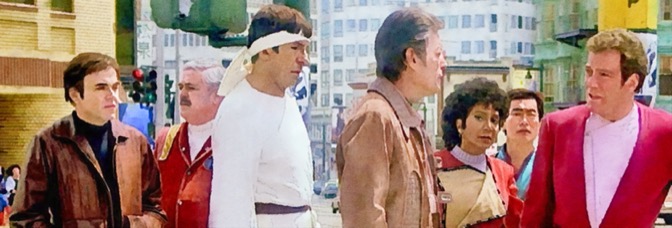
In Star Trek IV: The Voyage Home, director Leonard Nimoy establishes a light-hearted, but very high stakes, action-packed environment. Voyage Home is in no way an action movie–the action sequences mostly consist of chases and comedic subterfuges–but there’s a new one every few minutes. The screenwriters came up with a scenario where there’s always danger,…
-

First Contact works out well for a number of reasons. The script’s structured beautifully, it’s well-cast, Frakes knows how to direct for both humor and action… but also because it’s not a possessive picture. The film involves time travel, sending the “Star Trek: The Next Generation” crew into the past (but still the future) and…
-

Star Trek: The Motion Picture is one of those imperfect films. No matter how many versions, there’s no way to fix one thing without breaking another–or it might just be broken all together. For example, I don’t know if I’d ever realized how focused director Wise is–during the first hour–on William Shatner’s slightly dangerous desire…
-

For Star Trek Into Darkness, J.J. Abrams operates with an “if it ain’t broke” mentality. It serves him–and the film–fairly well. Except Michael Giacchino’s music. While Abrams goes for sensationalism every time, he does it competently. The Giacchino music, however, is never competent. This Trek tries hard to create mainstream post-modern; it’s a sequel to…
-

There really isn’t anything to dislike about Star Trek. Well, maybe the music, which isn’t bad, just isn’t as good the rest of the music in the series. There’s a lot to like–Chris Pine (though the wife disagrees), J.J. Abrams’s direction is outstanding, there’s some nice little stuff (Zoe Saldana’s Uhura and her romance, Leonard…
-

In addition to being one of the more intentionally boring films ever made, Star Trek: The Motion Picture features some of the more amazing science fiction special effects. The work Douglas Trumbull does in this film is without equal–he makes the unimaginable visual. It’s astounding (and I was watching the pan-and-scan only “Special Longer Version”…
-

Well-made but problematically scripted sequel has William Shatner and the gang gallivanting across the galaxy to try to resurrect a fallen comrade. Along the way, the Klingons (led by an enthusiastic but underwhelming Christopher Lloyd) go after Shatner’s kid (Merritt Butrick, back from II) and Robin Curtis (taking over from II’s Kirstie Alley). It’s a…
-

Layered, complex TREK outing has William Shatner and company dealing with aging in the 23rd century, but also with Ricardo Montalban returning (from the original show) and going after the good guys. Beautifully produced, with fantastic direction, and a gorgeous James Horner score. Excellent acting from pretty much everyone. DVD, Blu-ray.Continue reading →
 The Stop Button