Category: Horror
-

I’ve long held there are no good filmic Dracula adaptations. I’m now going to say there aren’t any good Mummy pictures after the Karloff one. This Hammer production was an officially licensed remake of the Universal production… only not the Karloff title, instead the inferior Universal follow-ups, The Mummy’s Hand and The Mummy’s Tomb. These…
-

Q is sort of ripe for a remake. Not because this version has shoddy special effects–while the film’s still effective with them, they look like something out of the 1925 Lost World–but because there are three great roles in the film and nearly a fourth. Michael Moriarty’s top-billed and definitely gives the film’s most sensational…
-
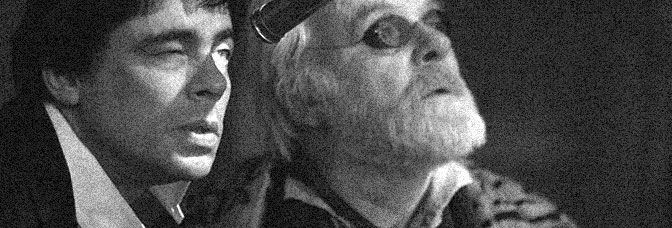
If someone had told me Anthony Hopkins was going to have a major role… he’s so laughably bad, it’d be funny–if the joke of The Wolfman wasn’t on me. Universal Studios doesn’t have any comic book properties so they’re apparently going to go through their horror catalog and churn out more turds like The Wolfman.…
-
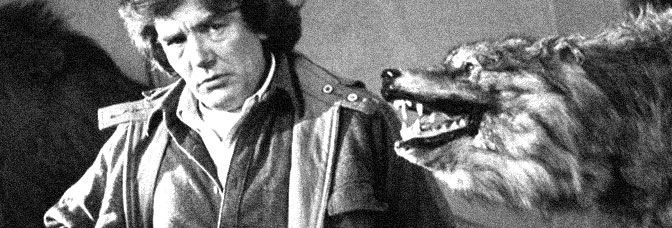
Even with Albert Finney’s hair style, which seems to be inspired by a drag queen who just doesn’t care, Wolfen is a beautifully made film. The big action sequence at the end (the film’s genre progresses from police procedural to horror to thriller–Finney’s investigation leads the way) is a fantastic sequence. I’d actually forgotten it…
-
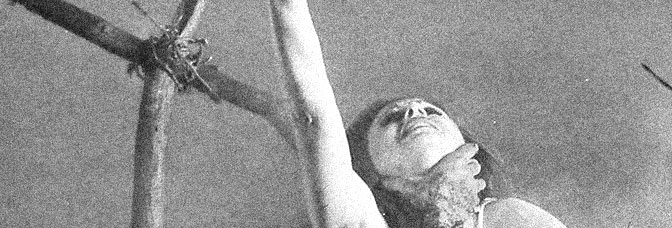
For whatever reason, Sam Raimi now has The Evil Dead released in a matted version (to 1.85:1 from 1.37:1). It looks awful. Raimi’s strength as a director comes from his constantly agitated camera; his static shots are–well, I guess the shots of the sun setting and the moon rising in Evil Dead are cool–mediocre at…
-
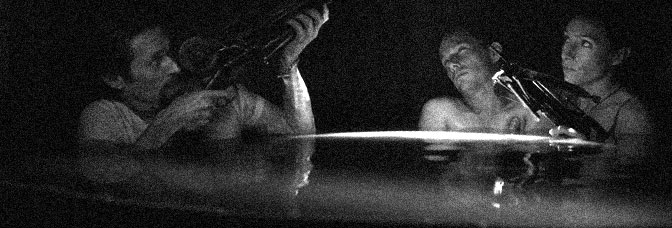
According to the gaggle of morons who saw the film in the same theater I did, the end of Daybreakers is stupid. Why anyone would release what’s essentially a film noir slash action slash vampire movie in American theaters is beyond me… at least outside of areas with high literacy rates (I live in a…
-

Hellraiser III is one of the first “horror” movies I’ve seen where they seemed concerned with action figure tie-ins, with the Cenobites having gimmicks (they shoot CDs, blow fire and so on). It’s also one of those absurd movies set in New York but clearly filmed somewhere else, in this case North Carolina. It gets…
-
So, Hellbound is a British production, but it dubs over the British cops (who are dressed like American cops and carry guns and don’t know how to use them–because they’re British?) with American accents. It’s a lame decision and one of the few gaffs in the film not related to the story itself. Even with…
-

So, Hellraiser is supposed to be scary, right? Because it seems like a poorly directed, completely illogical (if a wall split open in front of you, would you walk into it?) mess. It’s only ninety-four minutes, including credits, but it’s this exceptionally boring “scary” movie. The scariest thing in the movie might be the off-screen…
-

Not being a girl, I never really got The Lost Boys. I didn’t even see it until I was in my late teens, hunting down Jeffrey Boam’s screenwriting credits. Seeing it now, it’s not just clear how much the film wastes wasted Michael Chapman’s cinematography or how Schumacher makes Corey Haim the only gay leading…
-
What a disaster. It seems like it should be a good idea… wait, no, it doesn’t. The only time Blood: The Last Vampire works is when it’s a homoerotic romance between Jun Ji-hyun and Allison Miller. The film never recognizes this element, but there’s so much of it, it must have occurred to someone. Jun…
-

There’s a lot to mock about The Thaw. It’s shot on some kind of cheap DV and framed Panavision–the cheap DV isn’t even consistent–and the cinematography is atrocious. It’s also a global warming horror film–indestructible bugs from earth’s past threaten our future unless we stop with the global warming business. Director Lewis misses the humorous…
-

The last time I tried to watch Near Dark, I failed miserably. This time I suppose I made it through the running time–I think that still image at the end is supposed to be some profound statement–but not all of my brain cells made it with me. They abandoned ship as the film progressed. The…
-
The best thing about A Nightmare on Elm Street is the font in the opening titles. It’s something sans serif and it’s slightly off and it looks good. To be fair to the movie’s reputation, I did jump twice, both times at the end; maybe because it was waking me up. As opposed to encouraging…
-

Maybe it’s James Horner’s score–which is solid, if a little too Jaws inspired–but if you squint your eyes and turn off your brain, Humanoids from the Deep almost seems like a real movie. It’s not, of course, it’s a New World picture. It’s got to be hard for a film to waste Doug McClure, but…
-

I don’t know what I was expecting from Friday the 13th, but whatever it was, I didn’t get it. It’s not particularly gory, it’s not at all scary, it’s not stupid enough to be funny; I do understand why producer Michael Bay walked on it due to the level of sex. It’s like they traded…
-

Looking over his filmography, one could argue John Frankenheimer stopped making significant films at some point in the late sixties or early seventies (I haven’t seen Black Sunday so I don’t know about that one). But by the eighties, he was already someone whose best work was clearly behind him. By the nineties… well, it’s…
-

Halloween II–if it isn’t the worst film John Carpenter ever worked on in some capacity–certainly features Carpenter’s worst script. There isn’t a single well-written conversation in the entire picture–the closest one is a couple young women talking; presumably co-writer Debra Hill wrote that conversation–and then it’s one of the handful of scenes Carpenter himself directed.…
-
From the director of MC Hammer’s greatest hits. Seriously. I wasn’t even going to open mocking Rupert Wainwright, but then I saw his filmography. Instead, I was going to open wondering how, with two people credited with the score (Billy Corgan and Elia Cmiral), it could be so terrible. Not really, I knew when the…
-
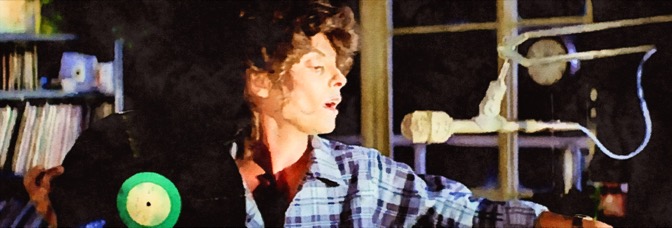
It’s not just Janet Leigh being in the film or all the trouble–visibly–starting when Jamie Lee Curtis arrives in town, it’s everything about The Fog–it’s an aware Hitchcock homage. The list can continue with the setting, the reference to The Birds, but it’s even more. There’s a definite feel to the film; Carpenter seemingly (he…
-
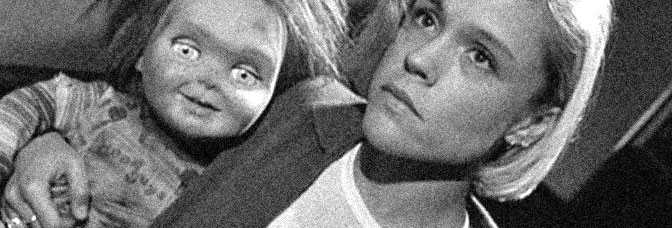
When George Miller made the third Mad Max, he got someone else to direct the kids. John Lafia had directed one movie prior to Child’s Play 2—maybe someone should have made a similar suggestion. Under Lafia’s direction, ten-year old Alex Vincent’s performance is an abject disaster. The performance is so terrible, it isn’t even amusing.…
-
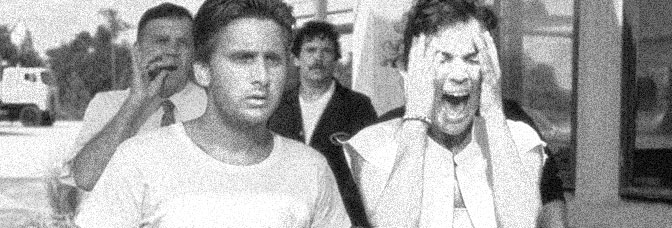
Maximum Overdrive confuses me a little. I thought–given the movie opens with the writer and director being insulted by a cash machine–Stephen King wasn’t going for anything… well, artistic is a stretch, so maybe genuine. Almost immediately following is a scene where a bunch of watermelons crash into car windshields to humorous effect. It certainly…
-
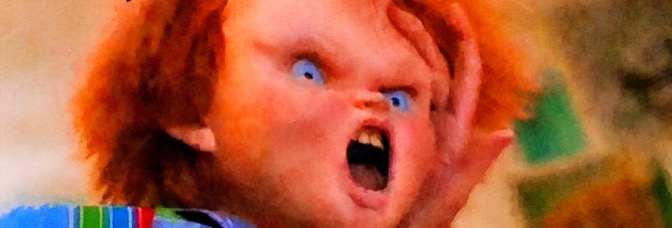
Child’s Play barely makes any sense. Or maybe some of it does, but there’s a big voodoo component and it gets used as a crutch for the more fantastical elements (with its own problems with rationality). But the film opens with a shootout in downtown Chicago–Child’s Play uses its Chicago locations very well, never excessive–between…
-
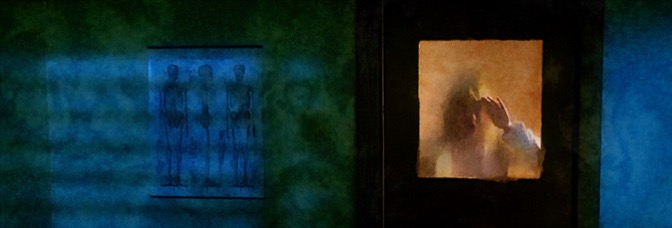
All due respect to Rick Baker, but Rob Bottin’s werewolf transformation in The Howling is superior. The transformation lasts so long it’s no longer shocking, just interesting. It’s so deliberate, it got me wondering what the werewolf would do if he needed to change in a pinch… if he didn’t have three or four minutes…
-
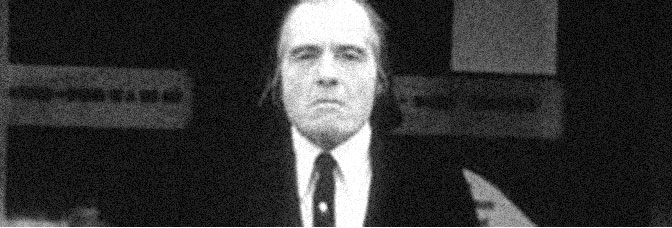
Don Coscarelli’s Phantasm is not any kind of cinematic wonder. Coscarelli is a decent director in terms of composition and his screenplay has some inventive moments. Mostly, the writing credit is due because of his enthusiasm for the content. There’s nothing like seeing adults defer to the wisdom of a teenage boy–and A. Michael Baldwin…
-
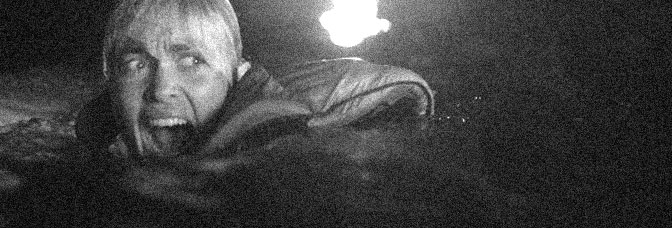
Rogue isn’t just hard to describe, it is–as I try–impossible. While the box cover (it didn’t get a U.S. theatrical release) certainly identifies it as a giant crocodile movie, it’s a lot more. Starting with that description–the giant crocodile movie–Rogue‘s already unique. It’s the only movie of its type (the larger than previously believed possible…
-

Halloween is a technical masterpiece. It’s absolutely spectacular to watch. Carpenter’s composition is fantastic, but Dean Cundey’s cinematography and the editing–from Tommy Lee Wallace and Charles Bornstein–creates this uneasy, surreal experience. The way Carpenter uses the wind in the film is probably my favorite, since he establishes it early on and keeps it going until…
-
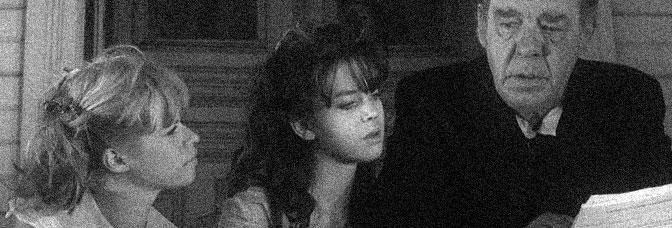
Spider Baby might not be “the maddest story ever told,” but it comes somewhat close. The film’s a strange mix of haunted house, 1950s sci-fi and cartoon humor–I don’t think I’ve ever seen such a live action cartoon; it’s like “Scooby Doo” on expired sleeping pills. It opens with that 1950s sci-fi introduction, the erudite…
-
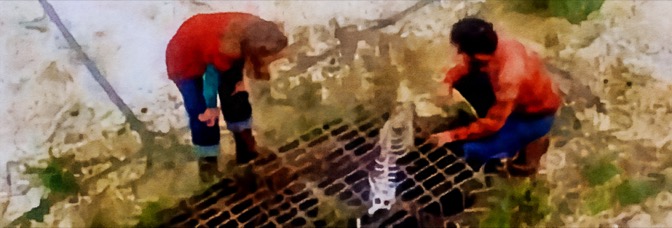
More than anything else, I think Pino Donaggio’s score sets Piranha apart. Initially, anyway. The film’s a very self-aware Roger Corman Jaws “homage,” but Donaggio’s score very quickly establishes it on firm ground. The score’s delicate, without any spoof-related cynicism (there’s no attempt to mimic the famous Jaws theme, Donaggio has some piranha attack music,…
-

I’d forgotten Prince of Darkness‘s more fanciful notions–Jesus the space alien, still sent to Earth to save us from the Devil, but this time, the Devil’s kind of a space alien too (or not)–and its less creative ones (the Devil uses projectile vomit to posses people). It’s Carpenter at his strangest, the late 1980s period,…
 The Stop Button