Category: Mystery
-

Rob Thomas loves the "Veronica Mars" television show fans. He must. He pretty much wastes the first act of the feature film (also titled Veronica Mars) thanking them for funding the film's production through Kickstarter. It's worse for star Kristen Bell than the film–both recover, but the film first–as the script's moving her around like…
-

Moody lightning, false endings, a Pino Donaggio score–Passion is De Palma’s return to his overcooked Hitchcock homages and a gleeful one. More, De Palma’s aware of its place in his filmography–the film opens with a playful piece of music from Donaggio, preparing the audience for a pitch black comedy. And, for a long while–even through…
-

It’s kind of amazing what Fractals doesn’t have going for it. At best, it has really interesting location shooting around Scranton, Pennsylvania. Tomasz Magierski doesn’t seem to have the best film stock to deal with, but he shoots the daytime exteriors well. Even if the film doesn’t have any personality, it seems–on these rare occasions–like…
-

Sliver is a beautiful film. It’s got Vilmos Zsigmond photography, it’s got Phillip Noyce directing, it’s got a great score from Howard Shore–it’s just a bad movie. The story has two things going on. First is Sharon Stone’s recent divorcee moving into a high rise apartment building where she discovers there have been a bunch…
-

Basic Instinct somehow manages to be smart and stupid at the same time. The direction and the production are impeccable. Verhoeven sort of does a nouveau Hitchcock thing–ably aided by Jerry Goldsmith’s score–while mixing in a bit of film noir. He does this thing with establishing shots; the focus is always on character, never the…
-

Jennifer Eight ought to be a lot more tolerable, but writer-director Robinson hinges everything on Andy Garcia being likable. Garcia starts out all right, but he can’t sell–or doesn’t even try to sell–his police detective (or crime lab technician, it’s unclear). Garcia becomes obsessed with a case. It’s his first case at a new job,…
-

Best Seller either isn’t sleazy enough or it isn’t glitzy enough. Larry Cohen’s script about a cop who writes true crime books teaming up with a hitman desperate to be the subject of such a book needs something distinctive about it. Leads Brian Dennehy and James Woods are okay, but Cohen’s script doesn’t give them…
-

Director Villeneuve takes a very interesting approach to how a thriller works with Prisoners. He ignores it. During the first act, there are quite a few flirtations with thriller standards. But the film almost always immediately dismisses them–like Villeneuve and writer Aaron Guzikowski are holding up a standard, tossing it away. Jóhann Jóhannsson’s music helps…
-

Now You See Me plays a little like Ocean’s Eleven without Steven Soderbergh and a great cast of supporting character actors instead of lead actors doing an ensemble. Except maybe Jesse Eisenberg. He acts like he’s running See Me, even though he’s not in it very much. And his character’s supposed to be acting like…
-

Trance is extremely cute. It’s sort of Hitchcockian, with James McAvoy actually playing the female role and Rosario Dawson the male. Director Boyle and screenwriters Joe Ahearne and John Hodge figure out some neat ways to change up expectations of that relationship along the way. Besides being a technical marvel, full of good performances, Trance’s…
-

Tedious and unexceptionally bad “heist gone wrong” movie about a bunch of robbers on the run has strong performances–Ving Rhames is a solid de facto lead, Donnie Wahlberg, David Caruso, and John Leguizamo are all good. Linda Fiorentino as the hitchhiker/femme fatale the gang picks up, however, is surprisingly mediocre. But because the script’s bad…
-

Orphan‘s a peculiar failure. The script isn’t particularly good; it’s layered with foreshadowing upon foreshadowing and some very predictable turns. But it has these occasionally strong dialogue scenes between Vera Farmiga and Peter Sarsgaard. It runs out of them after a while, but they leave a positive memory. Then there’s director Collet-Serra. He really likes…
-

While The Tailor of Panama is on firm ground in and of itself, it’s difficult not to think about in the context of James Bond. Pierce Brosnan plays a brutal, womanizing British secret agent and sort of gives cinema it’s only realistic Bond movie. Of course, mentioning James Bond is something to get out of…
-

Snapshot is one half middling coming of age melodrama and one half not scary thriller. The picture opens with a burnt-out building and a corpse, then goes back to explain. Director Wincer isn’t playful with the flashback–the opening is only there so the viewer is suspicious throughout the entire film. The coming of age aspect…
-

The Man Who Knew Too Much is Hitchcock’s only remake and, as such, it probably ought to be a whole lot better. The resulting film suggests he really wanted to make a Moroccan travelogue and symphony picture… assuming he didn’t set out to make a turgid thriller. There’s also something else awkward about Man–Doris Day.…
-

Black Widow is an odd film. Ronald Bass’s script starts being about Debra Winger as a Justice Department analyst who can’t get her male colleagues to take her seriously when she discovers a woman (Theresa Russell) killing her rich husbands. The film never discusses Russell’s motive, though one can assume they’re awful guys since every…
-

I thought Drowned Out about young American yuppies (circa 1985 based on their clothes), but it’s actually about young German yuppies. Maybe they just dress twenty years behind. Out is in English, which is a funny choice as the actors stumble over their dialogue–they’re German, after all. Directors Claussen and Lory should have given their…
-
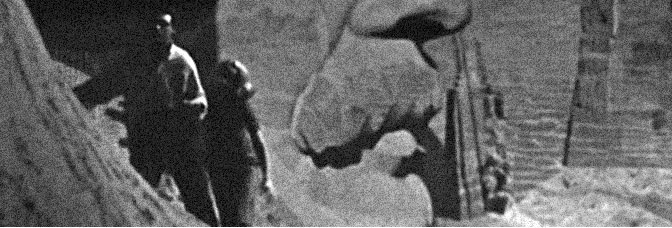
North by Northwest seems a little like a Technicolor version of an early Hollywood Hitchcock–the regular man combating the bad guys against incredible odds (at an American monument no less), but it’s a lot more. The film’s a tightly constructed proto-blockbuster; there’s not a bad frame in the film, not an imperfect scene. North moves…
-

Lassiter suffers from a definite lack of charisma. Not from leading man Tom Selleck, who looks a tad too tall to be a jewel thief, but from his leading ladies, Jane Seymour and Lauren Hutton. Seymour plays the girlfriend, which should give Lassiter an edge–if Seymour and Selleck had any chemistry together. Sadly, they don’t.…
-

Desire is supposedly to be an erotic thriller, which means the title should have some plot significance. It does, but not really. The title refers to a perfume, Desire, which is at the center of the murder mystery. McDonald quickly establishes the murder sequences as disturbing, not erotic, so having three of them just means…
-

D-Tox is a messy film with way too high a concept. Sylvester Stallone–who’s good when he’s actually in the film, which isn’t much–is a FBI agent who becomes a drunk following a bad result in a big case. He ends up in a rehab for cops. It’s in an old missile silo (or something along…
-

House of Games is a very small film, but Mamet and cinematographer Juan Ruiz Anchía manage to make it appear a lot bigger. When there’s no one in a shot, in a public place, except a principal, Mamet makes it seem stylistic instead of budgetary. It’s only during the final fifteen minutes, when there’s a…
-

Dolores Claiborne isn’t just a mother and daughter picture… it’s not just a mother and daughter picture made by a bunch of men (directed by a man, produced by men, screenplay by a man based on a novel by a man), it’s Panavision visual experience mother and daughter picture. Director Hackford–ably assisted by Gabriel Beristain’s…
-

Besides an absurd reliance on flip and pan transitions, director Armitage does an often excellent job directing Miami Blues. His script–adapting a novel, so who knows how much is his fault–is a different story. Blues is the story of a charismatic psychopath (Alec Baldwin) fresh from prison who wrecks havoc in the Miami area. The…
-

Besides being bewildered at how low Barbet Schroeder’s fortunes have sunk for him to be involved with this film and seeing Ryan Gosling in an early role, all Murder by Numbers offers is a look at Sandra Bullock’s seemingly limitless egomania. Bullock’s police detective isn’t just so beautiful even high schooler Gosling can’t resist her,…
-

The scariest thing about Mr. Brooks, ostensibly a serial killer thriller, is what if it’s not an absurdist comedy. What if we’re really supposed to believe Demi Moore is a millionaire cop who’s out to get the bad guys…. Thankfully, between William Hurt’s performance (he gleefully chews scenery like his omnipresent gum) as Kevin Costner’s…
-

It’s not hard to identify the problem with White Sands. Daniel Pyne’s script is terrible. His characters often act without motivation and the double and triple crosses he writes into the plot never have any pay-off. It doesn’t help director Donaldson sees himself–and not incorrectly to a point–doing a desert noir in the vein of…
-

It would be nice to have one positive thing to say about The Deadly Trap. Clements’s direction is so odd, Paris doesn’t even look good. Clements barely shows it; he tries hard to stylize–extreme close-ups on random objects, no establishing shots. Actually, wait, Andréas Winding’s photography isn’t bad. It’s the only competent technical effort present.…
-

Unknown is not a bad continental thriller. Liam Neeson is an American scientist in Berlin who wakes from a coma to find no one remembers him. As often happens in these situations, he finds himself a pretty sidekick (Diane Kruger) and a sympathetic native (Bruno Ganz) who try to help him unravel the mystery. The…
-

The Lincoln Lawyer is—in addition to being, besides the cast, a great pilot for a cable series—a standard legal thriller. It’s been a while since I’ve seen a new one of these, probably because there are so many decent old ones to go through. Nothing in the film is a particular revelation, which might explain…
 The Stop Button