The Stop Button
blogging by Andrew Wickliffe
Category: Foreign
-
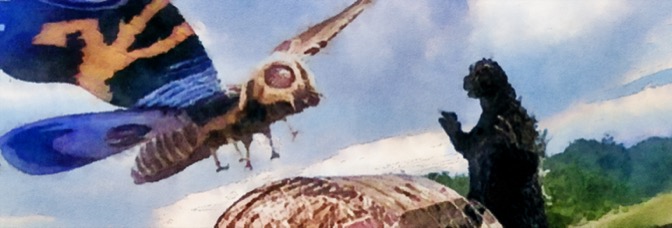
I’m not sure if Mothra vs. Godzilla should be much better, but it certainly should be somewhat better. There are constant problems with the film; little things, big things, but clearly fixable things. Like the composite shots. They’re terrible. Director Honda, seemingly overwhelmed with all the landscape sets, relies on occasional composite shots to give…
-
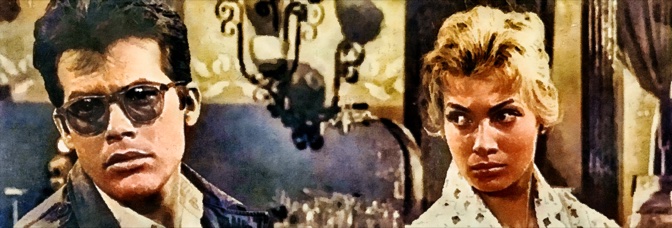
Ashes and Diamonds is unexpectedly on the nose. There’s even a scene where protagonist Zbigniew Cybulski taps his nose; I had no idea it meant director Wajda was going to go for not just narrative obviousness in the third act, but also visual obviousness. In just a few minutes, Wajda and co-screenwriter Jerzy Andrzejewski (adapting…
-

Strangely enough, Son of Godzilla ends well. It’s a surprise because the film loses a lot of steam throughout. Whether it’s the human plot or the Godzilla plot, the scene inevitably fails because of director Fukuda. Unless it’s one of the multiple times writers Sekizawa Shin’ichi and Shiba Kazue completely fail. Son of Godzilla constantly…
-

Northern Limit Line opens connecting the historical events portrayed in the film directly to the World Cup. Frustratingly, in 2015, I can’t determine whether or not Chol Soon-jo’s source book also has the connection to the World Cup. As literary flourish–and to make the book resonate (it’s also unclear if it’s a novel or book)…
-

I’m not sure what’s strangest about An Actor’s Revenge, but my leading two candidates are Ichikawa’s direction, which intentionally tries to make it feel stagy, or Mochizuki Tamekichi and Yagi Masao’s score, which alternates between jazzy and melodramatic. Both make Revenge a peculiar viewing experience and, while Ichikawa definitely has some talent as a director,…
-
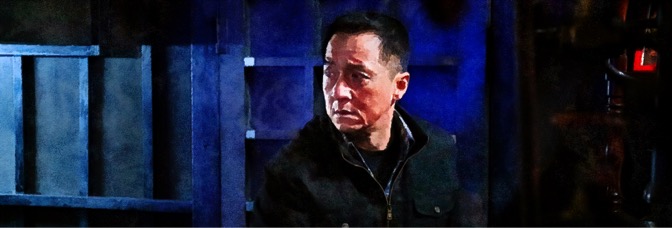
If it didn’t star Jackie Chan–and if it wasn’t released in 2013–Police Story: Lockdown might seem like a late eighties cheap Die Hard knock-off. Chan’s a gritty bad dad, super cop who finds himself held hostage by his daughter’s new boyfriend (Liu Ye). Of course, the daughter didn’t know her boyfriend was a supervillain, she…
-

Despite good performances and direction, Godard’s examination of the bourgeois out of their element–and in the purview of communal cannibals and people out of novels–is rarely effective. Godard immediately puts the audience on guard, then tries to shock with violent misogyny, animal cruelty, and sight gags involving car accidents. He’s not interested in connecting with…
-

In An Autumn Afternoon, director Ozu has a peculiar approach to how he presents his cast delivering dialogue. They stare just off camera and speak calmly, gently, no matter what. Ozu and photographer Atsuta Yûharu are incredibly precise with the composition; while Hamamura Yoshiyasu’s editing needs that precision, it also creates a distance. And Autumn…
-
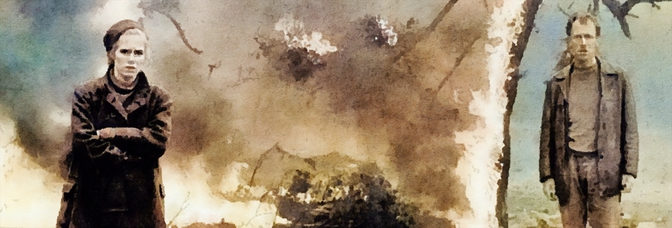
Shame has three or four sections. Director Bergman doesn’t draw a lot of attention to the transition between the first parts, he hides it in the narrative. Liv Ullmann and Max von Sydow are a married couple living on an island following a war. Not much information about the war, but they’re concert violinists turned…
-
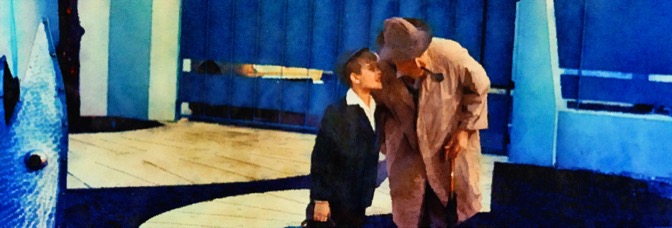
Mon Oncle has a concerning amount of narrative. Way too much of the film is about Jean-Pierre Zola and Adrienne Servantie’s bourgeois ultra-modern couple fretting over their son’s affection for his uncle, played by writer-director Tati. Tati’s protagonist does not live in the automated home of Zola and Servantie, but in a quainter, more traditional…
-

For the Emperor is a combination of bloody and pointless. Director Park is sort of impersonal about the violence–even though it’s usually very personal (knife fights)–as though giving it some distance will make the characters seem less reprehensible. Lee Yong-soo’s screenplay barely shows any of the victims of the gangsters; it’s all just tough bad…
-
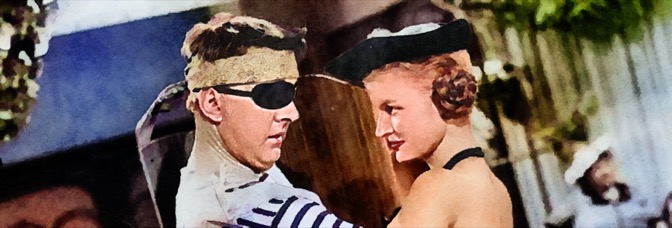
A certain amount of Mr. Hulot’s Holiday is pure slapstick. Except it’s slapstick through director Tati’s decidedly careful lensing. Tati holds the shot on the slapstick punchline a beat too long, giving the viewer time to consider the joke, the punchline, and his or her amusement. Far from condemning slapstick, Tati shows how it would…
-

Drunken Angel never hides its sentimentality. The film’s protagonist, an alcoholic doctor working in a slum (Shimura Takashi in a glorious performance), is well aware of his sentimentality. He resents it–Shimura has these great yelling and throwing scenes–but it’s what keeps him going. It also allows director Kurosawa to have intensely sentimental sequences without affecting…
-

Forza Bastia chronicles a day in Bastia (France). A Corsican island. It’s an important day because it’s April 26, 1978, when Bastia (the soccer team) played PSV Eindhoven. Bastia was an obscure team and the first leg (I had to learn soccer terms) was a tie at zero. Jacques Tati shot Bastia at the time,…
-

House Specialty chronicles the last few minutes of a day at a pastry shop in a small French town. The short’s credits are incomplete, but it appears the lead–the clerk–is played by Dominique Lavanant. She’s an attractive young woman surrounded either by old men or almost old men. The difference is the almost old men…
-

Evening Classes is a bit of a surprise; without Jacques Tati’s involvement, the short would almost work more as an examination of his films. With his involvement, Classes certainly has some outstanding moments, but director Ribowski and Tati (who also wrote the short) don’t really have a point. The film opens with Tati as M.…
-

Diary of a Country Priest is a somewhat trying experience, as so much of the viewer’s experience watching the film requires him or her to empathize with the titular protagonist, something that character is apparently incapable of doing. Much in the film is made of the protagonist’s inexperience–something Claude Laydu plays perfectly–and director Bresson does…
-

Keep Your Left Up is a genial little short set in a small French country town. The arrival of the postman sets off the short, which eventually has local do-nothing Jacques Tati in the ring against boxer Louis Robur. The charm comes mostly from the setting, Clément’s excellent composition and Jean Yatove’s oddly mismatched score.…
-
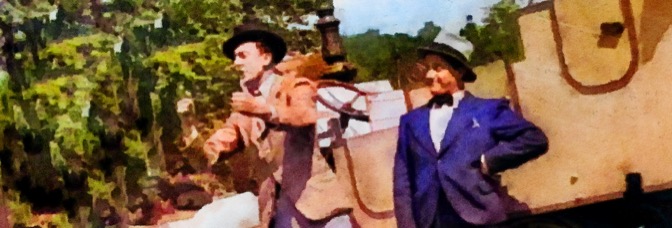
It takes Fun Sunday! almost the entire short film to find its footing. The problem is director Berr; he has no comic timing. Sunday cuts a couple corners as far as budget–the sound cuts in and out, going over to music and not the background noise–but it’s rather ambitious stuff. Except for Berr. He doesn’t…
-
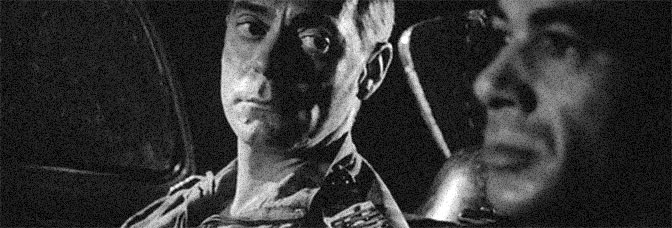
The Battle of Algiers is brilliantly constructed. Director Pontecorvo deceptively frames the film–he also gives most sequences a date and time, which shows the viewer how greater events are progressing, but Pontecovro also gives multiple times in a day, which puts the viewer on edge even though the exact time isn’t really useful. Pontecorvo and…
-
Quite a bit of Brute Wanted is rather funny. The whole idea is funny–dimwitted, failing actor (Jacques Tati) goes for an audition and it turns out he’s agreeing to wrestle a musclebound Russian grotesque. Tati’s got a nagging wife (Hélène Pépée) who also manages him. A lot of the short is spent on the fight…
-

The Human Condition I: No Greater Love is about, you guessed it, the human condition and the problems with being a humanist when you’re working in a foreign country your country has invaded and occupied. The film takes place in 1943, in Japanese-controlled Manchuria. It’s a desolate spot, but lead Nakadai Tatsuya doesn’t want to…
-

From the first few minutes of Blue, the entire thing seems conventional. Not exactly predictable, though it’s often somewhat predictable, but definitely conventional. And when it veers away from being conventional, it soon returns to it. Director Kieslowski figures out punctuation marks to draw the viewer’s attention to lead Juliette Binoche’s conflict and reuses them…
-
Until about eighty minutes into Rust and Bone, the film resists predictability. Director Audiard has a couple moments of Marion Cotillard bouncing back after a tragedy to pop music, but they’re punctuated with fantastic postscripts. The postscripts make up for any melodramatic shorthand. Well, until the eighty minute mark. And then Rust and Bone becomes…
-

How do you follow up Nazi zombies? Nazi zombies fighting Russian zombies. Sort of. That aspect of Dead Snow 2 comes near the end, with director Wirkola first having to deal with the fallout from the first movie. But Russian zombies don’t really have the bite of Nazi zombies, so Wirkola just amps up everything…
-

The Devil’s Backbone takes place at an orphanage during the Spanish Civil War (in Spain, obviously). The film follows Fernando Tielve as he arrives and has conflicts with the other boys, before everything gets worked out. For about half the film, one of the other boys, Íñigo Garcés, is the antagonist. But everything with the…
-
The most important action in My Sassy Girl takes place off screen–the film takes place over a few years (though the main action is over three and a half months), with listless Cha Tae-hyun home from compulsory national service and back in school and having no idea what to do with his life. Enter Jun…
-
The Suspect isn’t just another action thriller where the director never lets up the pace; it’s also one where the filmmakers constantly force the viewer into one emotional response–a negative one–before relieving the tension a little and creating a hopefulness, then repeating an even more negative situation. It’s expertly manipulative and director Won seems to…
-

Godzilla is a peculiar picture. It’s intensely serious, with director Honda never letting the viewer get a moment’s relief. This approach is all throughout the film, which opens with a documentary feel. Honda and co-screenwriter Murata Takeo set up their main characters quickly and without a lot of fanfare–Takarada Akira and Kôchi Momoko’s first scene…
-

The Bohemian Life is almost a farce. Kaurismäki is doing a version of the La bohème story–though he’s not concerned with it being a modernization as much as filming it in modernity–and his use of symbolism is exaggerated. He’s making sure the viewer knows what he’s doing and why. These moments of exaggeration don’t come…
 The Stop Button