Category: Japanese film
-

Sky High has got to be one of the stupider movies I’ve ever seen. There are other factors contributing to it being bad, as stupidity doesn’t necessarily undo a film, but it’s real stupid. Shockingly, the screenwriter worked on Kitamura’s perfectly fine Azumi. Sky High‘s a prequel to a TV series, which is an adaptation…
-
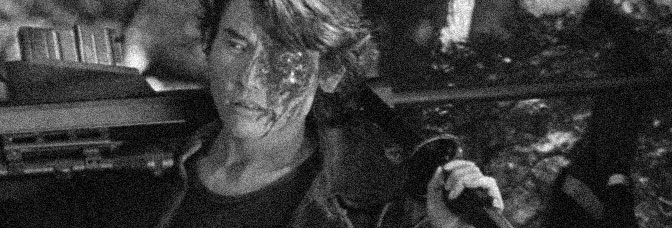
I’m worried I’m tired. The last time I watched Versus, I gave it one. This time I give it three. There’s a slight difference in the version I watched–this time I watched the “Ultimate Version,” which has about the same running time, but ten minutes of reshot scenes. I guess there were some music changes,…
-
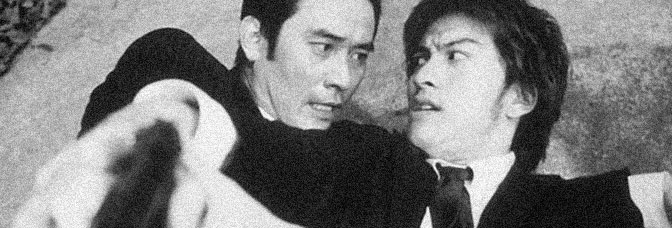
An action slash thriller requires a couple things… action set pieces and, well, thrills. Seoul‘s got a couple action set pieces, beginning and end, and not much in the way of thrills. There’s a mystery angle and there are scenes with the cops inspecting crime scenes, but there’s no real investigation at any point. Both…
-
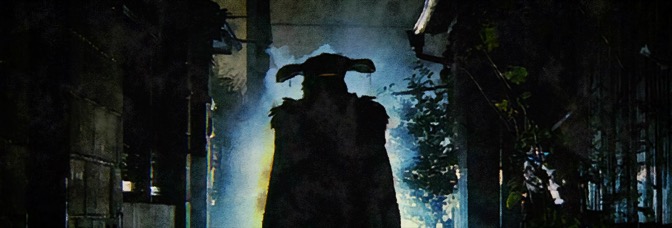
Zeiram is a Japanese low budget sci-fi action film. Except it also has a strong slapstick vibe and a real minimalist feel to it. While, visually, the budget might be responsible for some of that minimalism–certainly in concept–the film takes it even further. It’s fight scenes set to Philip Glass, which one needs to see…
-
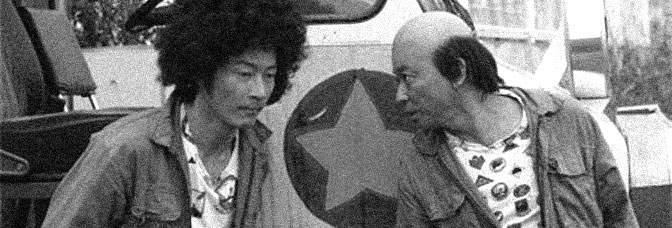
It’s probably impossible to describe Tokyo Zombie’s wackiness. It is a comedic zombie movie, but the zombies themselves aren’t comedic. They’re really not a part of the film except as… I don’t know. They’re not villains or monsters. They’re just silly. The center of Tokyo Zombie is love. Specifically, the love of jujitsu. The story…
-
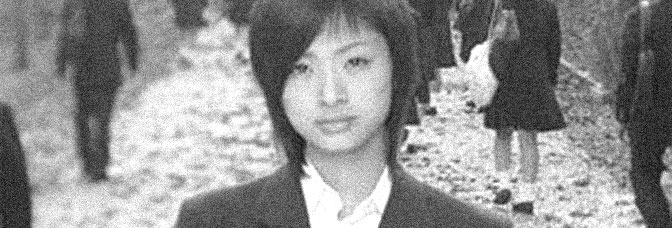
I watched Install because I was curious to see Ueto Aya in a non-Azumi role. She’s good in Install, though it’s impossible to determine whether or not she could have been bad. The film’s constructed very carefully not to put her–or any of the actors–in difficult situations. Acting situations. Ueto narrates the film and the…
-

On a few levels–like the one with the giant monster–Godzilla fails. On some other ones, like the production values, the acting, and the approach, it succeeds. It’s a peculiar film and it should have been better. Apparently, the Japanese film industry had some trouble in the 1970s and the Godzilla series took a nine year…
-

Novelists make interesting screenwriters (though maybe not as much any more). When they adapt their own work, however, it might not be the best idea. The adaptation allows them to package their interpretation of themselves, as opposed to actually adapting a work from one medium to the next. The Face of Another, adapted by Abe…
-
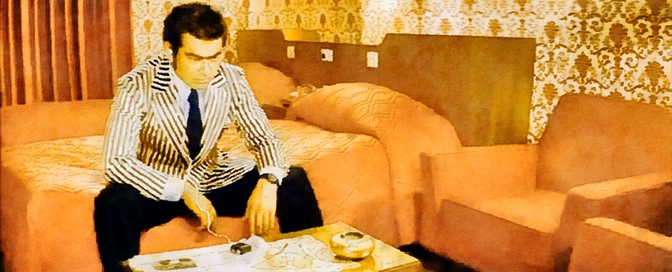
Okay adaptation of Saitô Takao adaptation about invicible hit man Sonny Chiba being a happening seventies guy in happening seventies Hong Kong. Can detective (and producer) Leung Callan catch him? Hopefully not because Chiba’s at least likable whereas Leung isn’t good or likable so it’s fun watching Chiba outsmart Leung. There’s also a fight scene…
-

Excruciatingly boring tale of a young orphan and the hooker with a heart of gold who takes her in. Set in a dystopian future Japan, despite always being boring, the film doesn’t get too bad until about forty minutes into the two hour and thirty minute (!) run time when the future mobsters show up.…
-

Scandal presents an incredibly humane side of Kurosawa, one his historical pictures don’t convey. He shows the desperate sadness of people and offers little visible hope throughout. There’s one scene, when the protagonist (played by Mifune Toshirô) and the main character (Shimura Takashi) come across a pond reflecting the stars and Mifune comments about the…
-
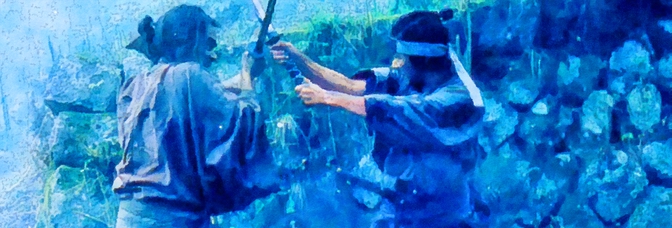
Tedious samurai picture about honor and obligation; director Yamada tells it all in summary and set pieces, with thinly contrived manipulative actions to connect those set pieces and drive that summary. Nagase Masatoshi gives an excellent performance but it’s a depthless part. Based on stories by Fujiwara Shuhei, just like Yamada’s immediately previous film THE…
-

Great procedural about a police investigation into government corruption with a phenomenal lead performance by Mifune Toshirô in the lead. Intricate, complex screenplay–inspired by HAMLET no less–but tender and playful in a very un-HAMLET way. Kurosawa’s got a deliberate focus as the film follows multiple characters through the run time, with salient events often coming…
-

Beautiful, dialogue-free film about a family living on a desolate island without any potable water (the daily trips to the mainland for water figures in). Director Shindô zooms out the narrative distance so far the people are just living creatures as opposed to human beings. Lots of successful elements, both generally (wonderful score by Hayashi…
-

Good, if impersonal, Kurosawa epic about thief (Nakadai Tatsuya) getting recruited to impersonate a warlord (also Nakadai). Complications, obviously, ensue. Kurosawa seems beholden to historical accuracy at the expense of natural drama. The film’s so packed with information, it could even use some more run time (as is, it’s over two and a half hours).…
-

Initially derivative, then good story of Korean teenager Kubozuka Yôsuke growing up in Japan and suffering racism. Lots of good stuff with the family and the friends, with the romance and the comedy coming in a distant third (and fourth). But then all of a sudden the romance gets good. Sometimes rocky–even through the denouement–but…
-

Toho’s last Godzilla entry before an extended break is homage to the seventies take on the monster with lots of monsters, lots of wrestling, lots of monsters wrestling. Sadly very long fight scenes and way too much reliance on wanting CGI. Director Kitamura doesn’t seem to have any interest in the giant monsters, which is…
-

Predictable teenage love story with some tragedy and a “present day” framing device thrown in. Osawa Takao has gotten engaged but he’s still not over teenage love Nagasawa Masami. What makes the film work–in addition to some truly wonderful direction from Yukisada–is the acting from Nagasawa and Moriyama Mirai (as the teenage version of Osawa).…
-
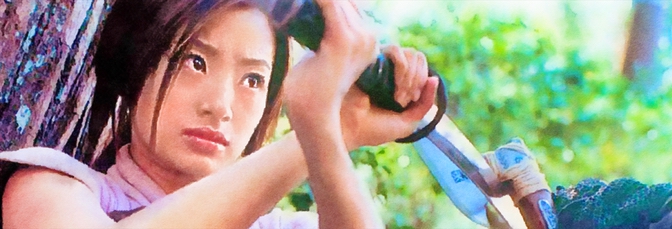
Direct continuation sequel is probably incomprehensible if you haven’t seen #1. Ueto Aya is a master assassin in Tokugawa Japan; everyone underestimates her because she’s a girl. Low budget, bad villains, and Kaneko’s mostly unimaginative direction don’t help, neither do the sillier aspects of the script. Ueto’s good and Kaneko does an amazing job with…
-

Widowed samurai Sanada Hiroyuki has given up the warrior life to take care of his kids. Then childhood love Miyazawa Rie comes to town and things start changing. Good performances–especially from Sanada–but the narrative’s disjointed and suffers from a constant lack of focus. DVD, Blu-ray.Continue reading →
-
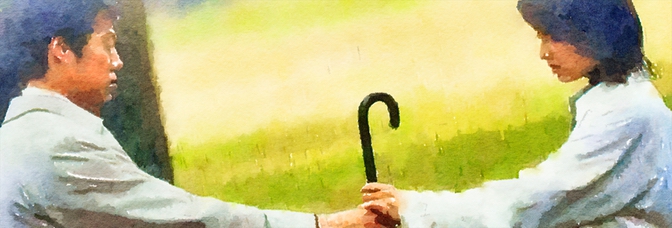
Tsutsumi Shin’ichi is an introvert professor, Uchiyama Rina is his long-lost (and completely unknown to him) daughter. She tracks him down and starts influencing his life for the better. Amazing performance from Tsutsumi can’t save the film, which has serious script problems. DVD (R2).Continue reading →
-

Technically magnificent action/horror picture has Sakaguchi Tak fighting zombies with a samurai sword while wearing an ultra cool black leather trench coat. The writing is always iffy, but Kitamura’s direction tends to compensate enough. DVD, Streaming.Continue reading →
-

The modern Japanese drama tends to be emotive. Even when they aren’t good, they succeed in making the viewer care for the characters. Turn is, ostensibly, a Japanese Groundhog Day. Only not funny. Where Groundhog Day was about Bill Murray interacting with people with no consequence, the character stuck in turnover in Turn is alone.…
 The Stop Button