Category: French film
-
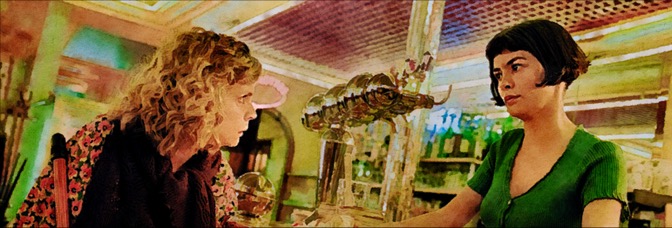
I’m hesitant to call Amélie whimsical, though it’s the closest adjective. The film’s kind of a French New Wave-inspired fairy tale, except instead of being about magic magic, it’s about the magic of the everyday and, especially, its residents. There’s also something decidedly not fairy tale about protagonist Audrey Tautou’s quests. Broadly, Amélie is about…
-
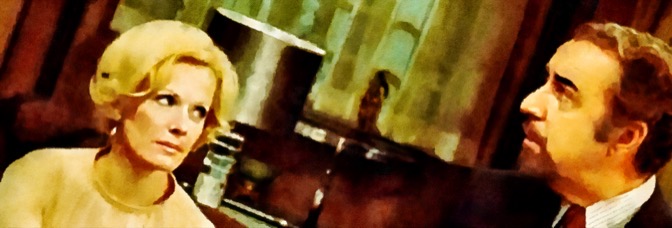
Buñuel arranges The Discreet Charm of the Bourgeoisie as a series of vignettes. Occasionally there will be a surreal bridging device—the cast walking in search of a meal on a highway in the country—sometimes it will turn out to be a dream, sometimes it will be another layer (a narrated flashback, a dream-in-a-dream), sometimes it…
-

Parade somehow loses the plot after intermission. Given the plot is just a night at the circus, usually showcasing director Tati’s pantomiming, it shouldn’t be possible to lose such a thing. But Parade does. Maybe intermission not coming halfway through the film should be a sign. And at least the post-intermission material sails by relatively…
-

For the first hour, Trafic has a lot of gems. The film opens with a car manufacturing plant with a lot of nice, precise composition and editing, and director Tati maintains an interest in the goings-on of cars and their drivers. The action centers around an auto show in Amsterdam (presumably filmed at a real…
-

L’Atalante begins with a wedding procession; village girl Dita Parlo has married commercial barge captain Jean Dasté and is going off to live with him on the barge. The wedding guests drop all these details through exposition—we’re not privy to the newlyweds’ conversations as they walk through the village to the barge. Juxtaposed, first mate…
-
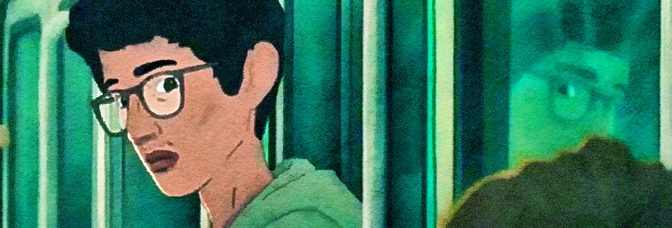
I Lost My Body is the profoundly vapid tale of a man (Hakim Faris) and his hand. The hand has been chopped off and as it travels through a computer animated Paris, the film flashes back to Faris’s tale and, presumably, how he lost his hand. Along the way, the hand kills a young mother…
-

De facto physical comedy showcase for Michel Simon, something director Renoir isn’t anywhere near as interested in as trying for a social commentary. Based on the René Fauchois play, the limited cast (four principals) and location (a book shop and attached apartment), it is stagy without necessarily feeling stagy, a success for Renoir. Unfortunately, it’s…
-
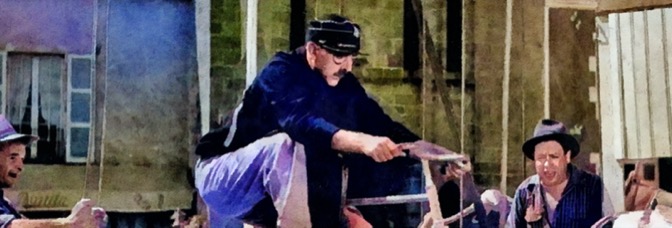
It’s about fifteen minutes before lead (and director) Jacques Tati appears in Jour de fête. The film opens with a travelling fair arriving at its destination and starting to set up. Paul Frankeur and Guy Decomble are the two main fair workers–actually they’re the only fair workers with anything to do except Santa Relli as…
-

Delicatessen is often adorable. There’s a romance between Dominique Pinon and Marie-Laure Dougnac; they’re both adorable, so Delicatessen is often adorable. They’re star-crossed, though Pinon doesn’t know it (Dougnac does), living in a post-apocalyptic future where people eat people (though there are some vegetarians, but they’re considered terrorists). I suppose they’d actually be vegan, give…
-

Director Malle sets up The Fire Within as a series of events. They don’t feel like events–or even vignettes–because protagonist Maurice Ronet is so transfixing. As the film progresses and the viewer gets to know Ronet better, gets to understand him better, Fire changes. The film is always about Ronet’s plans, Ronet’s actions and how…
-

There are two big sequences in Rules of the Game. There’s the hunting sequence, which concentrates on the rabbits and pheasants before–and as–they are killed for sport. The animals are hunted without motive or enjoyment. Until a line in the third act connects events, the hunt is mostly just a way to inform Nora Gregor…
-

Despite good performances and direction, Godard’s examination of the bourgeois out of their element–and in the purview of communal cannibals and people out of novels–is rarely effective. Godard immediately puts the audience on guard, then tries to shock with violent misogyny, animal cruelty, and sight gags involving car accidents. He’s not interested in connecting with…
-

Forza Bastia chronicles a day in Bastia (France). A Corsican island. It’s an important day because it’s April 26, 1978, when Bastia (the soccer team) played PSV Eindhoven. Bastia was an obscure team and the first leg (I had to learn soccer terms) was a tie at zero. Jacques Tati shot Bastia at the time,…
-

House Specialty chronicles the last few minutes of a day at a pastry shop in a small French town. The short’s credits are incomplete, but it appears the lead–the clerk–is played by Dominique Lavanant. She’s an attractive young woman surrounded either by old men or almost old men. The difference is the almost old men…
-

Evening Classes is a bit of a surprise; without Jacques Tati’s involvement, the short would almost work more as an examination of his films. With his involvement, Classes certainly has some outstanding moments, but director Ribowski and Tati (who also wrote the short) don’t really have a point. The film opens with Tati as M.…
-

Diary of a Country Priest is a somewhat trying experience, as so much of the viewer’s experience watching the film requires him or her to empathize with the titular protagonist, something that character is apparently incapable of doing. Much in the film is made of the protagonist’s inexperience–something Claude Laydu plays perfectly–and director Bresson does…
-

Keep Your Left Up is a genial little short set in a small French country town. The arrival of the postman sets off the short, which eventually has local do-nothing Jacques Tati in the ring against boxer Louis Robur. The charm comes mostly from the setting, Clément’s excellent composition and Jean Yatove’s oddly mismatched score.…
-
It takes Fun Sunday! almost the entire short film to find its footing. The problem is director Berr; he has no comic timing. Sunday cuts a couple corners as far as budget–the sound cuts in and out, going over to music and not the background noise–but it’s rather ambitious stuff. Except for Berr. He doesn’t…
-
Quite a bit of Brute Wanted is rather funny. The whole idea is funny–dimwitted, failing actor (Jacques Tati) goes for an audition and it turns out he’s agreeing to wrestle a musclebound Russian grotesque. Tati’s got a nagging wife (Hélène Pépée) who also manages him. A lot of the short is spent on the fight…
-

From the first few minutes of Blue, the entire thing seems conventional. Not exactly predictable, though it’s often somewhat predictable, but definitely conventional. And when it veers away from being conventional, it soon returns to it. Director Kieslowski figures out punctuation marks to draw the viewer’s attention to lead Juliette Binoche’s conflict and reuses them…
-
Until about eighty minutes into Rust and Bone, the film resists predictability. Director Audiard has a couple moments of Marion Cotillard bouncing back after a tragedy to pop music, but they’re punctuated with fantastic postscripts. The postscripts make up for any melodramatic shorthand. Well, until the eighty minute mark. And then Rust and Bone becomes…
-

The Bohemian Life is almost a farce. Kaurismäki is doing a version of the La bohème story–though he’s not concerned with it being a modernization as much as filming it in modernity–and his use of symbolism is exaggerated. He’s making sure the viewer knows what he’s doing and why. These moments of exaggeration don’t come…
-
Gance has a real problem with Lucrezia Borgia… none of his characters are likable. Even Antonin Artaud, playing a friar who rallies against the Borgia regime, is unlikable and he’s the film’s closest thing to a good guy. Gance shoots Artaud like a lunatic. It’s also not a film about Lucrezia Borgia, it’s a film…
-

Gance is very ambitious with La roue, only not so much technically. Even the second half of the film, which opens up considerably (the first half takes place in a train yard, mostly on one set, while the second half moves the action to a idyllic mountaintop), Gance is far more concerned his protagonist’s internal…
-
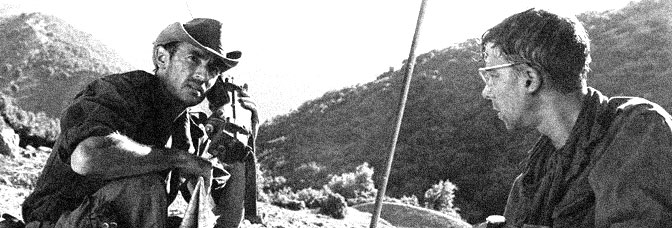
Intimate Enemies, quite unfortunately, follows the American Vietnam war movie formula. There’s the world-weary sergeant (Albert Dupontel), the green and idealistic new lieutenant (Benoît Magimel)–will the lieutenant eventually become just the thing he hates in all the other men? Of course. It isn’t even interesting when he gets there, since Enemies doesn’t just make the…
-

I can’t figure out who Renoir had in mind when he made Grand Illusion. It goes without saying he placed incredible trust in his audience, but his expectations are somewhat beyond anything else I’ve seen. Grand Illusion is a film with events–momentous, important events–but they pass without comment, without any recognition or identification. The events…
-

Taxi benefits greatly from its length–eighty-six minutes–and from Besson’s general understanding of how to amuse an audience. He does it to some success in his American films (a rather limited one, but he manages to create likable characters and not bore the viewer), but with Taxi, he does a lot better. The main selling point…
-

The fabulous, “has to be a set” of a small business district adjacent a canal is not the best thing about Hotel du Nord, but it’s uncomfortably close. The film’s solidly directed, with some nice composition and some nice camera movement, but it’s nowhere near enough to pluck the film from the tub of melodramatic…
-
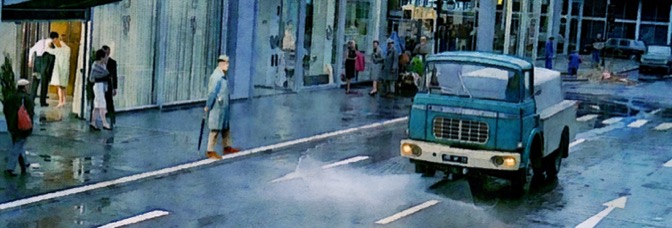
Play Time opens as an attack on modernity worthy of George Amberson Minafer, dealing with the personality-free office place populated by cubicles, to the lines of similarly dressed men on their ways home after work or the same type of men all getting into the same kind of car after their work day. There’s some…
-

I can’t believe I’m about make this statement… Angel-A would be better if it were American. Besson could still direct, still write the base story (someone else would have to come in and add… you know… subplots), still have his lead Rie Rasmussen (who’s Danish, not French, as IMDb informs… which makes sense–I’ve never seen…
 The Stop Button