Category: Family
-
The Book of Life has a very nice style once the story starts. Everything looks like it’s a miniature, like Life is a CG Rankin/Bass “Animagic.” Not quite as good, but there’s a charm to it. To the style. Not to the movie. Life’s oddly and relentlessly charmless. It begins with the first bookend device:…
-
Buddy is in desperate need of some contextualizing. The film takes place—roughly—between 1928 and 1933. Given that timeline, it’s a little weird the Great Depression doesn’t start, but Buddy’s also really strange about when it decides to be grown-up and when it doesn’t. The film tells the story of eccentric socialite Gertrude Lintz, who raised…
-
A Whale of a Tale is very much not a “whale” of a tale. The film’s about a little kid (Scott C. Kolden) who spends a summer working at Marineland of the Pacific. While Marineland clearly let the film production shoot on location, it also feels very much like the whole venture is Marineland-produced. At…
-
There’s only one adult referenced in Race for Your Life, Charlie Brown. When the bus leaves Charlie Brown (voiced by Duncan Watson) stranded, they’ve established the driver’s silhouette. Not having any adults makes a lot of sense since, somehow, the Peanuts parents all decided to send their kids to a camp on the other side…
-

Snoopy, Come Home’s parts are better than their sum. The film’s a number of vignettes, usually set to music, sometimes with songs. Sometimes there’s connective material between the vignettes, sometimes the circus shows up, and it’s time for a new scene. Also, sometimes, the vignettes have a rough cut between them. Not too rough, there’s…
-
The Black Stallion is two separate, subsequent narratives. The filmmakers utilize two different but related styles for them. The first narrative, with 1940s tween Kelly Reno, shipwrecked on a desert island off the coast of North Africa with a wild Arabian stallion. The second is after Reno’s rescue when he and the stallion have to…
-

Life is profoundly cheap in Ewoks: The Battle for Endor. The film’s ostensibly about little human orphan Aubree Miller’s adventure with her Ewok buddy Warwick Davis and the old man (Wilford Brimley) who takes care of them after a group of bad guys appear out of nowhere and destroy the Ewok village and pew pew…
-

Flora & Ulysses is a perfectly functional multi-quadrant family movie. Khan’s direction is good—sometimes really good—and kid lead Matilda Lawler is good so, you know, it’s fine. I mean, it’d be better if Lawler actually got to be the lead in the movie instead of it splitting between her separated parents, blocked romance novelist Alyson…
-
There’s a lot great about Muppet Christmas Carol: obviously the Muppet performers (their first outing after Jim Henson died—Rowlf is silent in memorial), Brian Henson’s fine direction, Jerry Juhl’s inventive script, strong special effects, Val Strazovec’s production design, Michael Jablow’s editing, the Paul Williams songs (the repetition even helps); but what makes it so special…
-

Farmageddon has so many sci-fi TV and movie references it’s hard to keep track. The whole thing feels like an homage to E.T. as far as the story—an alien (“voiced” by Amalia Vitale; voicing means making noises in Farmageddon, there’s no dialogue) gets stranded on Earth and makes friends with a local who helps them…
-

Cheaply animated family-targeted KING KONG adaptation, complete with (recycled?) original songs from famous Disney songwriters the Sherman Brothers. Sadly none of the songs are for Kong; all of them (all three of them) are pretty generic and have nothing to do with the movie’s specifics. The bad script is more damaging than the cheap animation.…
-

A Boy Named Charlie Brown gets by on a lot of charm. It takes writer and creator Charles M. Schulz forever to get to the story. It takes Schulz so long to get to the story–Charlie Brown, spelling bee champ–it seems like there isn’t going to be a story. Schulz lays the groundwork for the…
-

Seven credited writers on Sleeping Beauty and none of them could figure out any dialogue to give the prince. Though, notwithstanding some cute banter between the three fairies, there’s not much good dialogue in Sleeping Beauty anyway. Villain Maleficent doesn’t even get any. Eleanor Audley’s great in the part, but it’s not because of the…
-

Moana takes a while to find its stride. Directors Clements and Musker and Hall and Williams aren’t at ease until the movie’s on the water. The film starts on a Polynesian island, with a young chief-in-training (Auli’i Cravalho) secretly longing not to be stuck on the island paradise, but out exploring the ocean. Grandmother Rachel…
-

For most of The NeverEnding Story, director Petersen’s ability, the special effects, and active lead Noah Hathaway keep the whole thing going. It’s a gorgeous looking film, with great photography from Jost Vacano and exceptional editing from Jane Seitz. Hathaway’s character, a boy warrior, gets a fantastic characterization–simultaneously sensitive and brave–he’s a fantastic protagonist. Except…
-

Flight of the Navigator works on a principal of delayed charm; eventually, it’s got to be charming, right? No, no, it doesn’t. The film’s a series of false starts. The only thing approaching a pay-off is Paul Reubens–voicing an alien spaceship–going into a riff on his “Pee-Wee” routine. It’s not even a good routine. Worse,…
-

Burt Ward is really bad in Batman: The Movie. Sure, he’s just around to parrot Adam West, who’s a horny, kind of dumb, know-it-all. The problem is it doesn’t seem like anyone else is in on the joke because director Martinson does such a bad job. There are some okay scenes in Lorenzo Semple Jr.’s…
-

Part of Willy Wonka & the Chocolate Factory’s greatest successes is the plotting–how top-billed Gene Wilder doesn’t show up until almost halfway into the film–but it’s also one of the film’s problems. It needs another five or ten minutes with Wilder; probably not at the very end, but somewhere before it. There’s so much going…
-

There are a lot of excellent things in Batman: Mask of the Phantasm, but maybe my favorite thing is the end credits music. It’s smooth jazz. It’s this smooth jazz love song over the cast and when you see names like Abe Vigoda and Dick Miller and John P. Ryan in an animated Batman movie,…
-
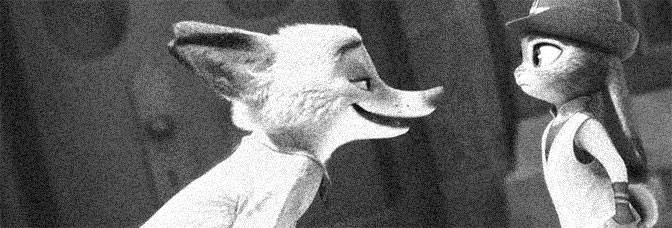
Ah, the socially responsible children’s movie, or: the progressive soulless capitalism of the Walt Disney Corporation, twenty-first century iteration. I went into Zootopia waiting for it to be great–I assumed the filmmakers would take responsibility for the big questions they imply–then I waited for it to be good, then I waited for it to be…
-

The Great Muppet Caper is rather easy to describe. It’s joyous spectacle. The film has four screenwriters and not a lot of story. Instead, it’s got some fabulous musical numbers. Director Henson really goes for old Hollywood musical, complete with Miss Piggy doing an aquatic number. It also has a bunch of great one-liners and…
-
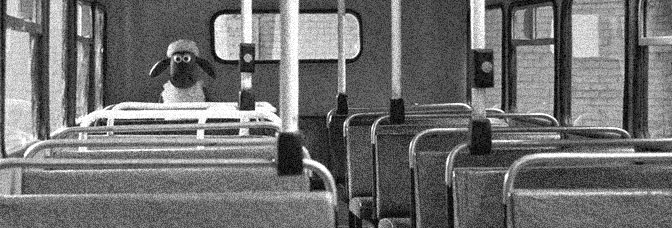
Shaun the Sheep Movie runs just under ninety minutes. There’s a lot impressive about the film (not least being writer-directors Burton and Starzak never using dialogue, just vocal inferences), but the second half moves at a startlingly great pace. Shaun is the finest physical comedy in years, with the directors figuring in not just inventive…
-
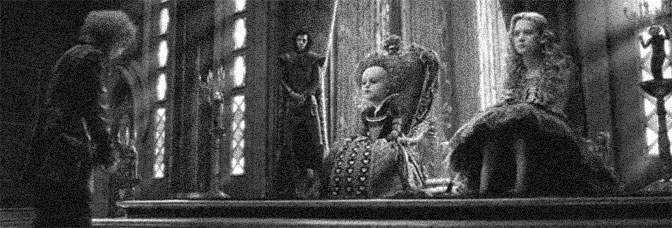
Alice in Wonderland has a number of balls in the air at once and director Burton–though he does show a good sense of them each while in focus–can’t seem to bring them together successfully. The potentially unifying elements–like Danny Elfman’s score or Mia Wasikowska in the lead–both fall short. For whatever reason, Burton doesn’t have…
-

There’s a lack of consistent mood to The Goonies. The film has its phases and the mood and tone change from phase to phase, but Chris Columbus’s script changes characterizations between these phases as well, which is rather disconcerting. For example, while the film introduces the villains–Anne Ramsey as the mother, Robert Davi and Joe…
-
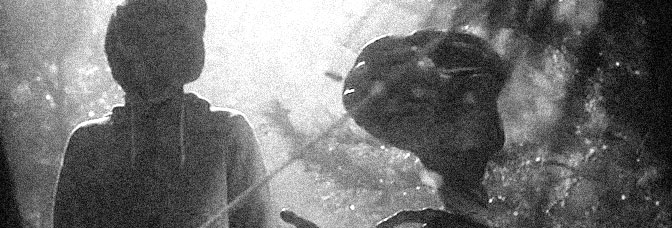
For E.T., Spielberg takes an incredible approach–every scene has to be iconic, every scene has to create a sense of nostalgia for it. It requires absolute control of the viewer and Spielberg’s only able to accomplish that control thanks to John Williams’s score. Every note in the score–and its corresponding image on screen–is perfect. As…
-

Every so often, Labyrinth plays like an episode of “Fraggle Rock” with special guest star David Bowie. Oddly, the film starts Bowie heavy but pretty soon he’s just popping in to remind the viewer he’s still around. His performance is terrible; his singing sequences are fine, especially how capably he acts with all the puppets.…
-

Honey, I Shrunk the Kids is a constant battle between trite and sincere. Except the special effects stuff; the special effects are astounding, especially the sequences where there's a mix of styles, between practical and optical, and a mix of sizes. Director Johnston does such an exceptional job making the fantastic palatable, it's too bad…
-
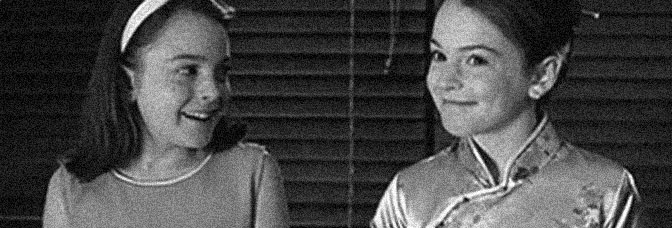
Where to start with The Parent Trap. There’s the structure–Nancy Meyers and Charles Shyer split their script into three distinct parts. Well, maybe even three and a half. There’s the opening where Lindsay Lohan goes to summer camp and meets her twin. Then there’s the part where the twins meet the opposite parents–I’m not explaining…
-

Who Framed Roger Rabbit, even with the absolute mess of a final act, would have really benefited from a better director. Oh, Zemeckis isn’t bad. With Dean Cundey shooting the film, it’d be hard for it to look bad and it doesn’t. But Zemeckis doesn’t–apparently–know how to bring all the elements together. The film opens…
-

The Muppet Movie takes it upon itself to be all things… well, two things. It has to be appealing to kids and adults. The film is split roughly in half between the audiences, with the adults having more to appreciate in the star cameos–some cute, some hilarious (Steve Martin in short shorts)–and terrible puns and…
 The Stop Button