The Stop Button
blogging by Andrew Wickliffe
Category: Comedy
-

Born in East L.A. is a much lighter comedy than expected. Maybe not more than writer-director-star Cheech Marin portends—and a lot of the film’s ineffectiveness isn’t first time feature director Marin’s fault, he needed one of his four editors to have some clue about creating narrative continuity. And while his cinematographer—Álex Phillips Jr.—isn’t at all…
-

If you had told me there was a movie with John Cleese in funny fake teeth and Smash Mouth as a plot point (a positive one), I don’t know I would’ve believed it. But if there is going to be a movie with John Cleese in funny fake teeth and Smash Mouth as in a…
-

Sorry to Bother You has four endings. Well, more like three and a half. They’re all good enough endings, except the last one, which is truncated and just reminds how iffy the entire third act has been. Until the third act, the film is going strong. Underdeveloped but affable lead Lakeith Stanfield–the character is underdeveloped…
-

Sensitivity Training is… an easy (but not in a pejorative way) comedy with winning (but not in a sarcastic way) lead performances. It’s never daring, but it has some good laughs. It’s better than middle of the road but it there’s not much exciting about it. Director Finell does a great job with a low…
-

The first hour of Mikey and Nicky is trying to decide if you’re going to like either of them. Because they don’t deserve sympathy, it’s just whether you’re going to like them. It’s possible to be sympathetic to Peter Falk (Mikey) while still liking John Cassavettes (Nicky). The movie runs two hours, there’s maybe fifteen…
-
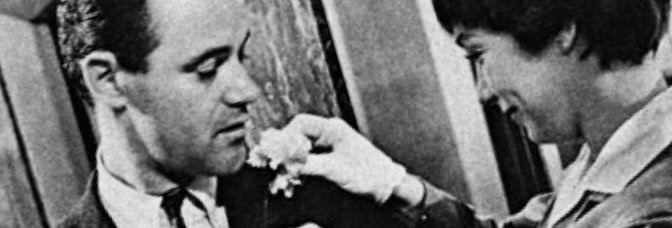
The Apartment does whatever it can to remain a dramatic comedy when it shouldn’t be anymore. And sort of isn’t. When the film shifts into real drama, there’s no going back. Director Wilder gets it too. The film has a good comedy opening, a breathtaking dramatic middle, and a decent comedy end. The comedy in…
-

It was until after The Cheap Detective was over I realized there’s never anything about Peter Falk’s fee. It’s not clear whether he’s cheap or not. It’s never addressed. It’s one of the many things Neil Simon’s screenplay never gets around to addressing, like if the third act is all a scheme or if it’s…
-

Smiley Face is something of an endurance test. How long can the film keep going before falling apart due to its own flimsiness. Thanks to star Anna Faris, it pretty much does make it to the finish. The third act–thanks to the bookending device (the film is told in flashback, narrated by Roscoe Lee Browne,…
-
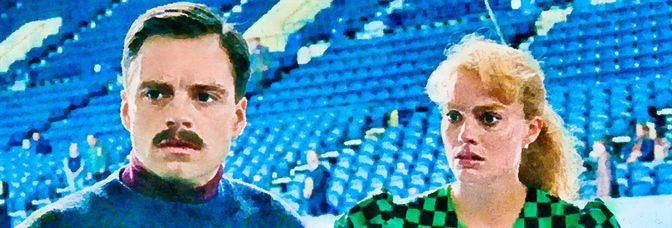
Despite the rather declarative I in the title, I, Tonya, Margot Robbie’s Tonya Harding is not the protagonist of the film. Writer Steven Rogers avoids making her the protagonist as long as he can–really, until the third act–and instead splits it between Robbie and Sebastian Stan (as her husband). Allison Janney, as her mother, has…
-
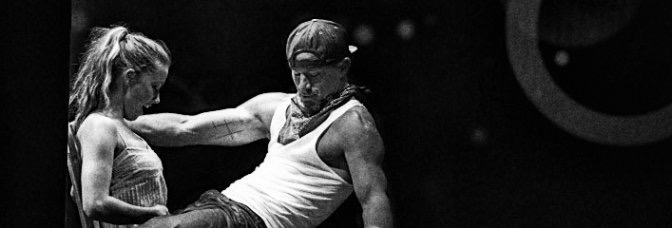
Every once and a while, Magic Mike XXL throws in some vague nod towards having character development. It doesn’t. And the movie knows it doesn’t need any, but it still pretends it does. All of the characters have the same arc, with the exception of “lead” Channing Tatum. He’s only the lead because he’s Magic…
-

The best thing about Fun Mom Dinner is the soundtrack. It’s all mainstream early-to-mid eighties hits–some Cars, 99 Luftballons, the song from the end of Sixteen Candles because a Jack Ryan crush is a major plot point (which is a little weird since it’s lead Katie Aselton was six when Sixteen Candles came out and…
-
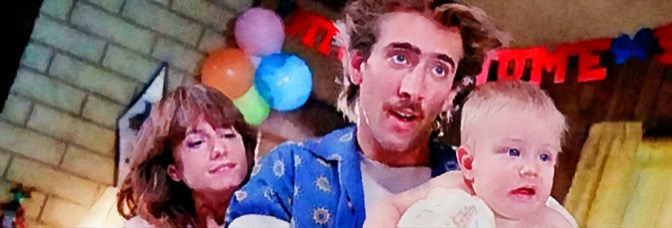
Halfway through Raising Arizona is this breathtaking chase sequence. Until this point in the film, while there’s been a lot of phenomenal direction, it’s all been brief. Raising Arizona starts in summary, with lead Nicolas Cage narrating, and it doesn’t start slowing down the narrative pace until just before the chase sequence. But then the…
-

Johnny English runs just under ninety minutes, which is one of the film’s secret weapons–nothing ever goes on too long, not the good stuff, not the bad stuff, not the mediocre stuff. There’s not a lot of bad stuff–more varying degrees of mediocre; when things then get better, when things finally pay off, it’s a…
-

The Station Agent is not a character study. It does try, at almost exactly the one hour mark (it runs a breezy, but deliberate eighty-nine minutes), to become a character study, but it is not a character study. It is actually a perfect example of how to not make a character study. Writer-director McCarthy spends…
-

Frances Ha relies on exposition but depends on summary. Or it depends on exposition but relies on summary. One or the other. Director and co-writer Baumbach and star and co-writer Greta Gerwig move Frances in the summary. Even when the film slows down for a longer scene, the style and tone don’t really change, so…
-

The Goodbye Girl is excessively genial. Usually at the expense of lead Marsha Mason. It’s her movie too. Not hers to lose, because it’s so much her movie–she’s The Goodbye Girl–instead hers to be taken away. And take it away writer Neil Simon does. The film starts being about single mom Mason getting dumped by…
-

In the Bleak Midwinter is a sweet movie. It’s kind of a Christmas movie–it takes place at Christmas–and it’s this gentle, thoughtful, sweet but never saccharine or even really acknowledging its sweetness sweet movie. Writer and director Branagh puts a lot of work into the plotting of the film, without ever appearing to be putting…
-

Tin Men is expansive. So expansive writer-director Levinson can’t get everywhere. He doesn’t have time in 112 mintues, he doesn’t have the structure for it either. Tin Men establishes its narrative distance firmly, deliberately, and usually hilariously in the first act. When Levinson gets to the end of the second act, he’s way too interested…
-

The Invention of Lying is a 100 minute exploration of a gag. In a world without lying–or any fictive creativity whatsoever–co-director, co-writer, and star Ricky Gervais one day spontaneously mutates and lies. He lies for personal gain, only to discover exploiting people doesn’t make him feel good, so he lies to make himself and others…
-

As a musical, The Adventures of Rocky and Bullwinkle might have worked. When there’s the big Pottsylvanian national anthem scene, director McAnuff finally seems comfortable. He needs a stage; Rocky and Bullwinkle is a road movie. There aren’t any stages. The occasional set piece hints at potential for the format–CGI animated moose and squirrel opposite…
-

But I’m a Cheerleader is too short. It runs eighty-five minutes, which would be fine if the narrative fit into director Babbit’s affected, aspirationally camp style. But Brian Peterson’s script is front heavy. And Jules Labarthe’s cinematography is too flat. Rachel Kamerman’s production design is loud, but Labarthe shoots it too shallow. He’s also not…
-

There are a lot of things going on in Muriel’s Wedding, so many writer-director Hogan’s script gets to the point he’s constantly raveling and unraveling foreground and background threads. The threads are all wrapped around the film’s center–lead Toni Collette’s complicated desire to change herself. She mostly accomplishes it through various lies, though cheque fraud…
-
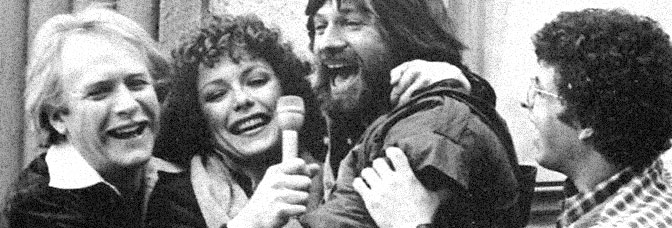
After a somewhat linear, pratical first act, FM begins to meander through a series of vingettes. Occasionally these end in a fade to black, usually when there’s supposed to be some deep meaning to the scene, but occasionally just when it’s time to move an interminate period into the future. A day or two. Or…
-

Waiting for Guffman is a story of dreams and dreamers. Director (co-writer and star) Guest opens the film with shots of a small American town, Blaine, Missouri. It’s a town with a lot of history and a lot of heart. Sure, it’s all absurd history, but those absurdities just make the heart beat stronger. Guffman…
-
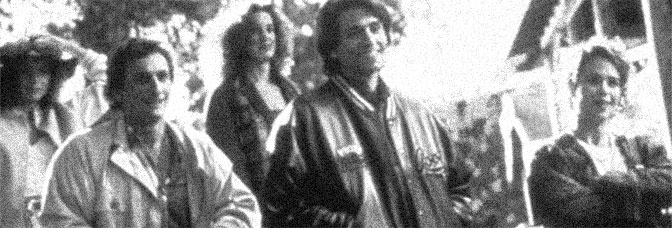
Genial and life-affirming–but never trite, which is an accomplishment–story about a bunch of broken-dreamed, WASPy thirtysomethings returning to summer camp of their youth (camp owner Alan Arkin invited all his favorites) and recapturing their mojo. Beautiful Newton Thomas Sigel photography, good performances–including a great extended slapstick cameo from Sam Raimi. Writer-director Binder just plays it…
-

Making Mr. Right feels a little incomplete. It’s not entirely unexpected as Floyd Byars and Laurie Frank’s script plays loose with subplots–even after the film forecasts its basic structure, it loses track of a lot, and some essential scenes happen offscreen. The subsequent reveals in the narrative (to other characters and the audience) never play…
-

Excluding prologue and epilogue, Oscar has a present action of roughly four hours. The movie runs just shy of two hours. A lot happens with a lot of characters. And, while the film’s based on a play–which explains the limited setting–and even though it’s not like director Landis does anything spectacular except keep the trains…
-

Love & Friendship opens with some non-traditional portrait cards for its cast of characters. The actors all appear in the opening titles, but then director Stillman breaks out introductions to the characters. Along with some narration. There’s some narration early on, which goes away almost immediately. Because narration might show a little too much of…
-

Terry Jones’s The Meaning of Life is a seven-part rumination on The Meaning of Life. At least the title cards for each part suggest its a seven-part rumination on the Meaning of Life. Not to spoil anything, but if the film does get around to addressing said meaning… well, it acknowledges you don’t need to…
-

Quite a bit works in Private Benjamin, which makes all the creaky parts stick out more. Even though the film runs 109 minutes, a lot seems cut out. Characters just fade away, especially as the film rushes in the second half. But even lead Goldie Hawn just ends up staring in various montages–happy and sad…
 The Stop Button