Category: Drama
-

With all the monologues–there aren’t any conversations, just one character talking while another listens–in The Fourth War, it feels like an adaptation of a play. It’s not. It’s based on a novel, which must be a brief read since War is plodding at ninety minutes. Given Frankenheimer got his start in television–adapting plays–one might think…
-
I’m not sure what’s more incredulous, director Kim thinking she’s Bob Rafelson or her thinking her For Ellen lead is Jack Nicholson. Besides the inept, predictable rip-off (or homage) of one of Nicholson and Rafelson’s more famous moments, the only thing distinctive about For Ellen–besides some great photography and location shooting–is Shaylena Mandigo as the…
-

While Tom Hanks, Bill Paxton and Kevin Bacon’s characters are the only ones in danger in Apollo 13, they remain calm for almost the entire runtime. There’s no point to panicking, something Hanks points out in dialogue. Instead, director Howard focuses on an exceptional assortment of character actors–as the NASA Mission Control–for the dramatic parts.…
-

I knew Emilio Estevez directed Bobby, but I didn’t know he also wrote it. From the dialogue and the construction of conversations, I assumed it was a playwright. There’s a certain indulgence to the dialogue, which some actors utilize well (Anthony Hopkins) and some not (Elijah Wood). Estevez’s an exceptionally confident filmmaker here. He changes…
-
The Fitzgerald Family Christmas is going to be frustrating to talk about. Burns contrives a melodrama and then proceeds to remove all the melodramatic fluff. During the scenes when–after the first act concludes–more of these melodramatic events occur, there’s a brief recognition of what he’s achieved. At some point in the second act, after three…
-

Ingenious is a struggling artist picture, only the struggling artist in question (Dallas Roberts) is a tchotchke designer, not a painter. The film mostly centers on Roberts, but also his sidekick (Jeremy Renner as the somewhat dangerous comic relief) and long-suffering wife (Ayelet Zurer). It’s a little unclear why director Balsmeyer and writer Mike Cram…
-

It would be wrong to call The Master a self-indulgent masterpiece, as it’s not a masterpiece (except maybe for Mihai Malaimare Jr.’s photography and Mark Bridges’s costumes… oh, and the sound design) but it’s also not self-indulgent. Anderson shows no personality until the end credits, when he sends shouts out to family members. Well, I…
-
Besides Mark Wahlberg, it’s hard to say where Traveller goes wrong. There are some problems with Jim McGlynn’s script, but they’re mostly little ones. Julianna Margulies’s character’s name isn’t repeated enough, leaving her as “Carol from ‘ER’” for a lot of the movie. And even Wahlberg improves somewhat. He’s utterly incapable of humility; sometimes it’s…
-

What’s Eating Gilbert Grape does something very unscrupulous… it relies on the viewer’s affection for its characters to get away with being a wolf in sheep’s clothing. In terms of narrative honesty, I mean. Gilbert Grape is, for the majority of its run time, a lyrical character study. Yes, it takes place in a summer…
-

Spaltro tries to do a lot with Things I Don’t Understand. The film starts with confrontational narration from protagonist Molly Ryman. The first twenty minutes feel like an extended trailer rather than the film itself, establishing Ryman as an unlikable, insincere egotist. It turns out there’s a logic to the first person exposition, but it…
-

While The Artist is a silent film about the silent film era, it quickly moves into the talking era. Probably in the first third of the film. Hazanavicius technically engages the transition a little–a dream sequence for protagonist Jean Dujardin–but for the majority of the film, it’s set in the late thirties and still told…
-

The actor playing Josh Hartnett’s mother (and Martin Sheen’s wife) doesn’t get a credit in O. She doesn’t have any lines, doesn’t really make any noise, just looks down at the dinner table during a scene. But she’s a perfect example of how Nelson paints subtlety and sadness into the film’s canvas. She’s mentioned once…
-
Funny People plays a little like Judd Apatow wrote two-thirds of something he really loved so he decided to keep going… adding another two-thirds. So he ended up with four-thirds of a movie and because he’s Judd Apatow, he got to make it without skinning it down. I don’t think I’d even call him on…
-

Big ensemble adaptation of Arthur Hailey novel about a grand (albeit failing) New Orleans hotel and how hotel manager Rod Taylor tries to keep things afloat while also dealing with difficult guests. Quine occasionally makes some poor choices, but he’s got a fine handle on the material–especially keeping the serious fun and vice versa. Strong…
-

While it did start the seventies disaster genre, Airport barely qualifies. The first hour of the film is excruciating soap opera melodrama—airport chief Burt Lancaster is stuck in a loveless marriage with harpy Dana Wynter, so he’s got a flirtation going with widowed Jean Seberg. His sister, played by Barbara Hale, is stuck in a…
-

Maybe there’s a longer version of Blindness where they explain what happens to all the cast members who fall away from the film. Or what happens to them while the film’s busy on other stuff—like Danny Glover, who disappears for a large portion of the film, only to return in an integral part at the…
-

Until the third act, when it painfully changes course, Paper Mask is excellent. Hospital employee—it’s never clear his exact position—Paul McGann assumes the identity of his ex-girlfriend’s dead doctor boyfriend and heads off to practice medicine. The events don’t unfold as simply as that sentence suggests, but the process McGann goes through is what makes…
-
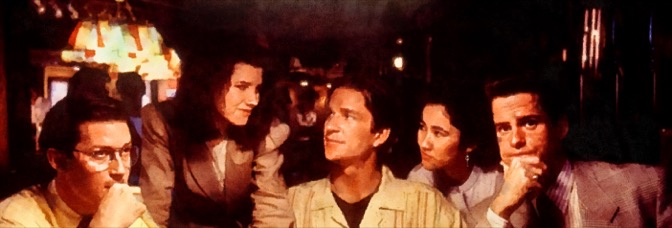
Gross Anatomy is harmless and diverting. It’s got some good performances–Christine Lahti is fantastic, Matthew Modine barely does any work and is solid as the lead. The supporting cast has some bright points (Alice Carter and John Scott Clough), but it’s also got Daphne Zuniga. Now, Anatomy is a big bright Touchstone movie. It’s less…
-

Historical fact, or even the attempt at paying lip service to it, is so inconvenient. If there’s a better example than The New World, I’m not familiar with it. Malick struggles to make it all fit together and he can’t quite make it sync. He has to move from Colin Farrell being the protagonist to…
-

Malick shot The Tree of Life in a variety of formats, but it displays at 1.85:1. It’s his first 1.85:1 since the seventies and, somehow, it feels like the film would be more intimate wider. Somewhere in Tree of Life, there’s a great film. Not the best film Malick’s ever made or anything along those…
-

I’ve been avoiding seeing Purple Violets for almost four years–I thought it was going to be one of Burns’s lesser works. So, obviously, it shouldn’t be a surprise it’s his best film (it’s also his best film as a director). I’m having some trouble trying to figure out how to start talking about it. It’s…
-

One Night Stand is such an emotionally exhausting film, one of the few moments of relief comes when Wesley Snipes, Ming-Na (as his wife), Nastassja Kinski (she and Snipes had a one night affair) and Kyle MacLachlan (as Kinski’s husband) go out to dinner together. It’s awkward in a far more comfortable way than the…
-
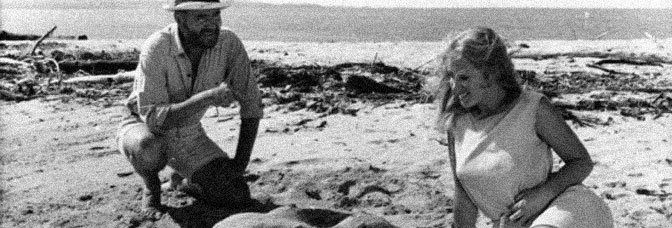
With Age of Consent, Powell bewilders. His approach to James Mason and Helen Mirren’s dramatic arcs is excellent, but then he includes this terrible comedy material. He’s got a bunch of slapstick in an otherwise very gentle drama. Mason is a successful artist who feels like a sellout so he runs off to isolate himself…
-

I suppose it would be possible for Trees Lounge to be more depressing. It’s a character study; the epical part of the narrative forces the protagonist (writer, director, star Buscemi) to realize he does not just dislike himself, he’s never really liked himself, and he’s not just hurting people now, he’s always been hurting people.…
-
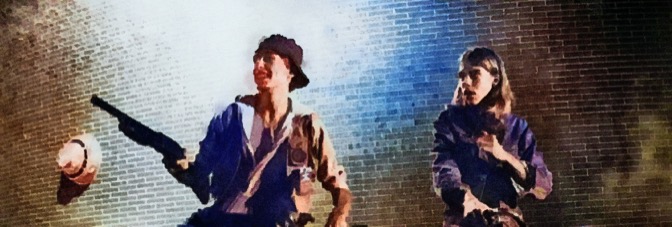
Over the Edge is explosive. Sorry, maybe that statement is a little glib–but it is literally explosive. More cars blow up in Over the Edge than a season of “The A-Team.” I think Kaplan was going for dramatic effect, but it’s hard to say. Kaplan’s actually the least interesting technical component of the film. Whenever…
-

Leonard Maltin calls Hustle pretentious. I think he’s referring to the spotlights Aldrich shines in people’s faces for close-ups. I think Maltin’s wrong about those shots and their pretense. Aldrich isn’t being pretentious, he’s just totally incompetent when it comes to directing a movie like Hustle. But I’m not talking about the story content–it’s a…
-
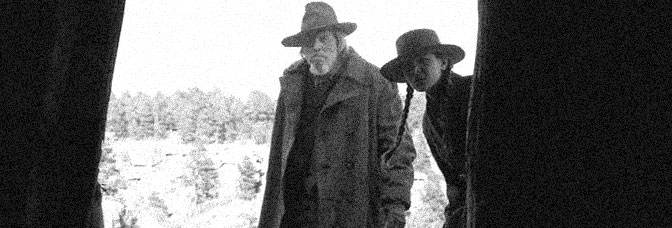
By doing a faithful adaptation of the source novel, the Coen brothers ignore what True Grit does really well. It’s the incredible adventure of a girl, told without any gloss and at times rather harsh. It features one of those great child actor performances (from Hailee Steinfeld). And with their faithful adaptation, the Coen brothers…
-

I hate responding to films like Black Swan because I don’t know where to start. From the first sequence, Aronofsky defines his approach as singular. Except for that first sequence, he never tries to film a ballet. He’s always filming a ballet performance. But he manages, filming those performances, which he tends to shoot in…
-

Affleck’s directorial abilities are impressive. He’s got a great sense of composition–he seats his actors on either end of the Panavision frame, leaving this great space of emptiness between them. Except, of course, when he’s on screen with Rebecca Hall, as their bridging the gap is the whole point of The Town. But he’s got…
-

If someone had told me, I don’t think I would have believed Anton Corbijn got his start directing music videos. His direction of the American is so gentle and deliberate–so forcibly detached from his characters–it just doesn’t seem possible. Maybe they were all really well-directed music videos. I hadn’t originally planned on rushing to see…
 The Stop Button