Category: Drama
-

When Doctor Zhivago got to its intermission, I assumed director Lean would keep things moving as fast in the second half as he did in the first. These expectations were all high melodrama. Instead, the post-intermission section of Zhivago feels utterly detached from the first, even though there are a lot of returning faces. But…
-

There’s no hope in Tangerine. It’s not a completely negative film–and it’s often quite funny–but there’s no hope. Director Baker leaves the most devastating part of the film in the viewer’s mind. The movie ends. The lives of the characters do not; Baker goes out of his way with these beautiful montages set to a…
-

There Will Be Blood. I don’t know where to start. Daniel Day-Lewis’s performance is biggest thing in the film–it’s the film, after all. Without Day-Lewis, the film’s not possible. Director Anderson gives Day-Lewis some quiet at the beginning of the picture to establish himself; there’s nothing to do but stare as the music comes up,…
-

The Road Within is a story about finding yourself. Every guy in the movie finds himself. The women don’t find themselves but they help the guys find themselves. How do you find yourself? By rebelling. Except Road is about people with mental disorders. Lead Robert Sheehan has Tourettes, his romantic interest (Zoë Kravitz) has anorexia…
-

Gangs of New York is a really big, really bad epic. Director Scorsese pays so much attention to the scale of the film, with sweeping crane shots and intense (and terrible) action sequences, he doesn’t pay much attention to the other elements of the film. Like the acting. And the script. First, the acting. It’s…
-
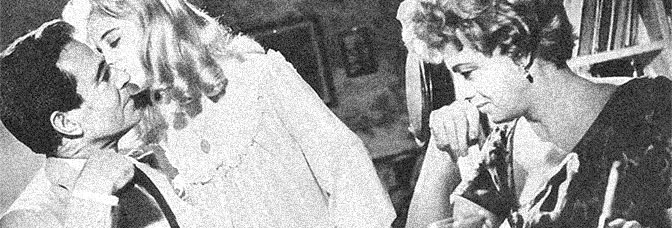
The first half of Lolita is a wonderful mix of acting styles. There’s James Mason’s very measured, very British acting. There’s Shirley Winters’s histrionics; she’s doing Hollywood melodrama on overdrive but director Kubrick (and Winters) have it all under perfect control. And then there’s Sue Lyons as the titular character. She’s far more naturalistic than…
-
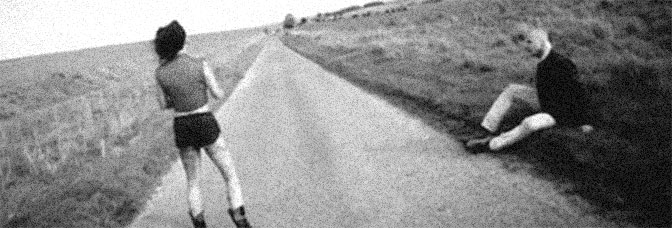
The Last Road refers to limbo. Literal limbo. Except it’s also a real place where the newly dead protagonist, played by Aaron Long, spent time while he was alive. Writer-director-photographer-editor-many other hats Wheeler never explains the rules of limbo very well. At times it’s a wonderfully imaginative spin on post-apocalyptic stuff. At other times, it…
-
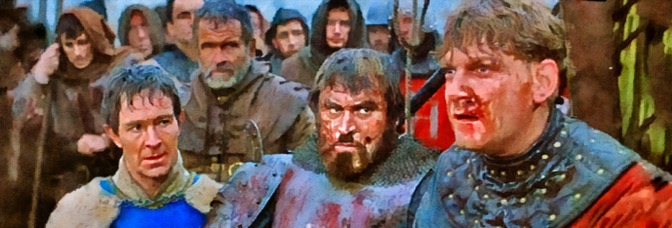
Director (and adapter) Branagh splits Henry V into three sections. They aren’t equal, they don’t match the act changes (usually); Branagh lets photographer Kenneth MacMillan open up the film to (outdoor) light while Patrick Doyle’s score becomes essential. The first outside, daylight sequence–Branagh (as Henry) gives his troops a rousing speech–defines the rest of the…
-

Little Big Man is episodic. It has to be. Director Penn knows he can’t reveal the tragedy of the film right off because it’d be unbearable but he also can’t avoid it. The film starts in a bookend with an incredibly aged Dustin Hoffman beginning to recount the story; he do so out of anger.…
-

XX/XY would be easier to talk about if it were a little bit better or a little bit worse. Director Chick’s structure for the film–a lengthy flashback opening the film, a flash forward with its own three act structure–seems like an enthusiastic mistake and conversation fodder. Only its not. It’s a calculation on Chick’s part.…
-

The Passenger is an odd mix of existential crisis and globe-trotting thriller. Director Antonioni does far better with the former than the latter, which has Jenny Runacre trying to discover what happened to husband Jack Nicholson. What happened to Nicholson is he assumes a dead man’s identity for no particular purpose in the film’s otherworldly…
-

Director Peirce makes an interesting choice with Boys Don’t Cry–she never gives the viewer enough information about Hilary Swank’s protagonist. As a result, it’s occasionally difficult to think of Swank as the protagonist. For the first eighty or so minutes of the film, Swank is just this skinny little guy who falls in with a…
-

James Crabe’s photography gets The Karate Kid through the rough patches. The film’s incredibly uneven–Bill Conti’s score initially seems like it’ll be a plus, ends up being a minus, and the editing is strange. Director Avildsen, with two other editors, can’t seem to figure out how to cut the climatic fight sequence. Like many sequences…
-

Paths of Glory takes place over four days, runs just under ninety minutes and has thirteen or so significant characters. It’s hard to identify the most significant character–Kirk Douglas’s protagonist the viewer’s way into the film, but he’s not the most significant. The film opens with George Macready (who, along with Wayne Morris, is my…
-

Even though Jack Nicholson gets top billing and the most bombastic role in The Last Detail, Otis Young has the harder job. He’s got to temper Nicholson, both for the sake of the audience and of the narrative. The film introduces the two men simultaneously–Robert Towne’s script almost immediately establishes an unspoken bond between the…
-

At around the seventy minute mark, Repulsion finally gives Catherine Deneuve some personality. Sure, she’s gone completely insane at this point, but she sings a little lullaby to herself. And Deneuve is in at least sixty-five of those seventy minutes without any personality (she loses it again soon after). She is the subject of the…
-

Quiz Show is a story about pride and envy. The film’s main plot is about the quiz show scandals in the fifties–big media taking the American public for a ride–and I suppose it could be seen as a loss of innocence thing. But it isn’t. It’s about pride and envy. John Turturro’s working class Jewish…
-
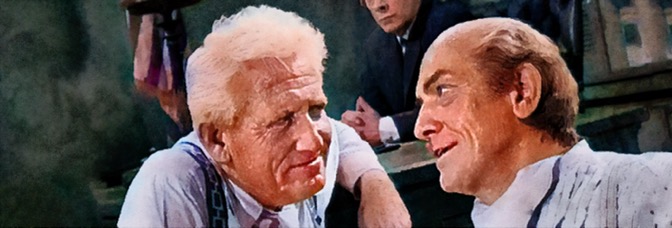
A lot of Inherit the Wind is about ideas and not small ones, but big ones. Director Kramer is careful with how big he lets the film get with these ideas, because even though Inherit the Wind is about Darwin vs. the Bible as its biggest idea, the smaller ideas are the more significant ones.…
-
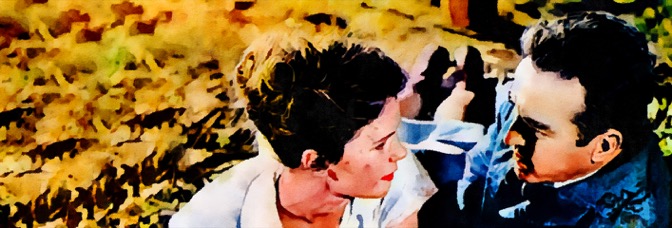
Director Kazan opens Wild River with newsreel footage of the Tennessee River at flood. The film is set in the 1930s, something else the newsreel footage establishes. Kazan and screenwriter Paul Osborn spend the least amount of time possible setting up the film. The newsreel takes care of setting, when lead Montgomery Clift starts his…
-

Everything director Moyle does in Pump Up the Volume builds the rest of the film. It’s not exactly he’s building good will, he’s shaping the possibilities of the film. It makes for a film where you can have a car chase, a comic relief moment, an inspirational message and a quiet character moment all in…
-

In the Name of the Father falls into most true story adaptation traps. It has a really long present action, which is unevenly distributed through the runtime. There’s a framing device introducing Emma Thompson’s appeals lawyer first thing–with her popping in from time to time to remind the viewer of the device. That device helps…
-

Breakfast on Pluto starts with talking robins. They’re subtitled, but talking. Robins can talk–or these two robins can talk (they show up from time to time), in which case they just live a long time. Before the talking robins, who director Jordan uses to keep the viewer off balance, the film opens with Cillian Murphy’s…
-

Perfect Sense goes out of its way to be an atypical disaster movie. Director Mackenzie and writer Kim Fupz Aakeson’s only significant acknowledgement of genre standards is having one of the protagonists pursue a solution. Except it’s never clear what epidemiologist Eva Green actually does–her job is clear, but what she does in pursuit of…
-

Even though it’s terrible, Flashdance at least sticks with protagonist Jennifer Beals for most of the film. She’s a steel worker who dances at a club and starts dating her boss (at the steel mill, not the club, which is actually a bar). For a while, director Lyne and screenwriters Thomas Hedley Jr. and Joe…
-
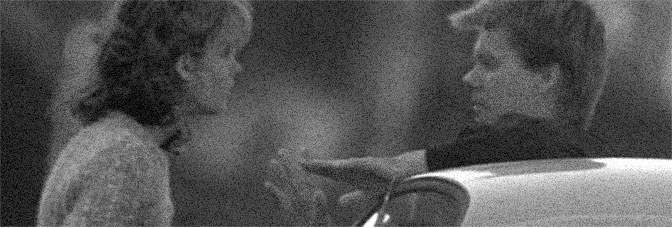
Footloose isn’t so much awful as dumb and obvious. Some of it is awful–the scene where Kevin Bacon, fed up with the small town getting him down, just has to go to an abandoned mill and dance it out–that scene is awful. So are most of the courtship scenes between Bacon and Lori Singer. But…
-
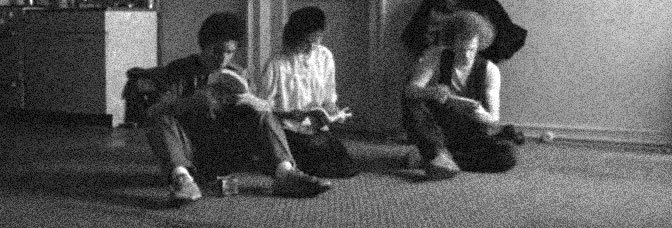
It’s sort of amusing how Fame, a film about high school, gets an incomplete. The film is rigidly structured–the four years of high school, plus the auditions at the beginning for the characters to get into said high school, a performing arts school in New York. The characters’ stories develop throughout the film in a…
-

Until the final scene, director Mann is still carefully plotting out Heat. The film’s narrative construction–when he introduces a character, when he returns to a character, how he transitions from one character to another–is magnificent. Heat is a delicate film, with Mann never letting a single element carry a scene. He’s always working in combination–sound…
-

As the dangerous mind in the title (Confessions of a Dangerous Mind), Sam Rockwell should be entirely unsympathetic. The film spends its first act mocking Rockwell and inviting the viewer to participate. With the exception of his chemistry with Drew Barrymore’s saintly character, there’s nothing redeeming about Rockwell’s character. Yet he’s tragically endearing. The film…
-

Moneyball is the traditional American sports movie with all the excitement sucked out of the accomplishment. The excitement isn’t gone because of the story–about how the Oakland A’s applied a statistical theory to how to win baseball games, but more because director Miller wants to make sure everyone is paying attention to the symbolism in…
-

Nearly seventy percent of Captives is a fantastic romantic drama. Julia Ormond is a newly divorced dentist who starts working part-time at a minimum security prison, where she begins a liaison with inmate Tim Roth. Frank Deasy's script concentrates primarily on Ormond and her experiences–with occasions scenes for Roth amongst the inmates, but that first…
 The Stop Button