Category: Comedy
-
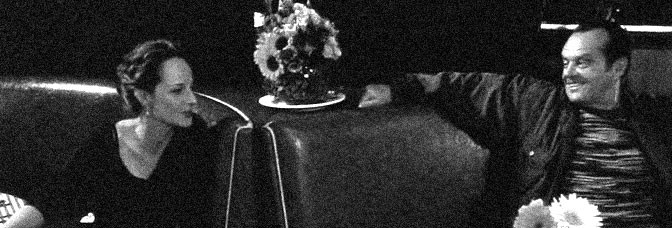
As I recall, there were lots of production issues with As Good as It Gets, specifically in terms of boosting Cuba Gooding Jr.’s role (after winning his Oscar) and maybe shortening Skeet Ulrich’s. It all shows, as does the uneasy rewrite Brooks did of Mark Andrus’s script. I have no idea what Andrus’s original script…
-
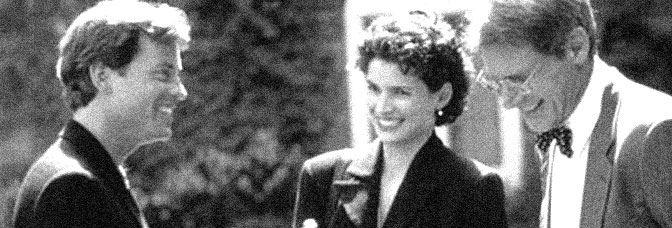
I remember the back of the laserdisc for Sabrina said something about how, going in to the film, one knows what’s going to happen, but the film’s about enjoying it happen. For a back of the disc blurb, it’s incredibly accurate. Sabrina is a joy from start to finish, mostly because Sydney Pollack has put…
-
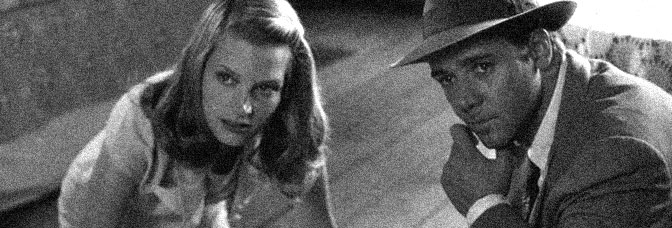
Rough Magic isn’t a bad idea, it’s just poorly plotted. Most of the movie takes place in Mexico, where it’s mildly engaging and generally amusing (except when Paul Rodriguez shows up to annoy and he is incredibly annoying). Notice all the qualifiers? The movie starts strong and even gives the impression of ending strong (it…
-
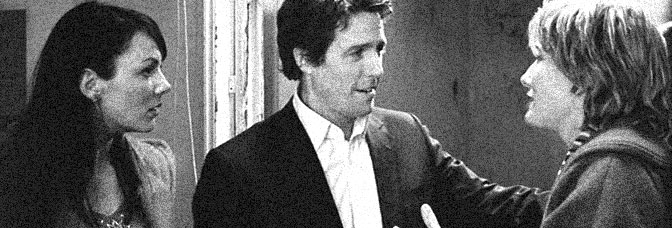
Richard Curtis–I think–said he wrote Love Actually from all his unused ideas. Just threw them into the oven and baked them together. To some degree, it shows. Unlike the usual big cast films, with lots of incidental meetings and relationships (as P.T. Anderson wrote, these things “happen all the time”), Love Actually is very loose.…
-

So, Now You Know is an odd mix. It’s one part romantic comedy (where the problems between Jeremy Sisto and Rashida Jones aren’t just conveniently solved, but shallowly too), one part talking comedy a la Clerks, and one part low budget inventive movie. The last part is the most interesting–Jeff Anderson gets some familiar faces…
-
There’s a certain tragedy about All Night Long. Not the film’s story or anything, but the film itself. It’s a debacle–Barbara Streisand is unbelievably terrible and the cuts made to the film (twenty minutes) significantly damage it–a painful to watch debacle. It’s such a chore to get through, I can’t imagine trying to watch it…
-

It’s kind of amazing how much of Spaceballs is actually funny–pretty much everything with Rick Moranis and Mel Brooks as the Spaceballs president–given how everything with Bill Pullman and Daphne Zuniga falls flat. It doesn’t even fall… it’s a zero degree plane. Some of it has to do with the writing of that portion–Brooks and…
-
Paul Newman can’t play stupid. Harry Frigg is, for the first thirty to forty minutes of the movie, stupid. Even after he’s not stupid anymore–Sylva Koscina, quite believably, inspires him to improve himself–Newman’s stuck with the dumb, New Jersey from a Planters Peanut commercial accent. It doesn’t bother much in the scenes with Koscina, since…
-

Meandering comedy about the lives and times of the staff of a Boston alternative newspaper. Director Micklin Silver gets a lot of raw, “real” moments but it usually feels like a “very special [and serious] episode” sitcom episode. Some good performances from the recognizable cast help–Jill Eikenberry’s great, Jeff Goldblum’s funny, and how can you…
-

Clocking in at a whopping ninety minutes, Ruthless People feels a tad undercooked. Lots of trailer-ready sequences, lots of memorable moments, nothing to really connect them. The ZAZ directing team (it’s probably been sixteen years since I’ve thought about them) is adequate, but they don’t really direct actors very well here, so the casting goes…
-

It’s amazing anyone could screw up The Bonfire of the Vanities–and I’m only making that statement based on the movie and the material in it (never having read the book)–but if anyone was going to do it, adapter Michael Cristofer is the one to do it. When the movie started–it has a beautiful opening title…
-

I think home video–tape and disc–has done a great disservice to John Badham and his legacy… as in, with this digital (or analog) evidence, one has easy access. Instead of coming across Stakeout at 11:30 P.M. on a Thursday night, pan and scanned, cut for content, and full of commercials, I can sit and watch…
-

I was going to start this post with a comment about how, even with all its problems, Clerks II is easily Kevin Smith’s best film. I guess I’ll still start with some of those remarks–Smith’s editing is excellent here, not to mention the traditional romantic comedy between Brian O’Halloran and Rosario Dawson–which is incredibly movie…
-

The first sequence in The Darjeeling Limited suggests a far worse film than Anderson actually delivers. A frantic taxi race to a train station with Bill Murray suggests Anderson has become–well, I really don’t know who, but someone who miscasts incredibly. Besides the Murray cameo coming off like Anderson fulfilling his image, the taxi race…
-

Avenging Angelo plays like a Sandra Bullock comedy from the late 1990s, except it’s Madeleine Stowe in the Bullock role and… I don’t know Stallone in the Keanu Reeves role, if Keanu Reeves did romantic comedies. Maybe still-on-“ER” George Clooney or someone. There aren’t any Italian movie stars in Hollywood right now… oh, obviously, Antonio…
-

All through Pleasantville, I kept wondering how–for a film with so many problems–it could have not only some of the most emotionally affecting (not effective) scenes I can remember seeing, but also an overwhelming ending, which makes the whole film seem like it was better than it was… Then I saw Steven Soderbergh’s name at…
-
Short movies–under ninety minutes–are having a creative resurgence of late. I’m thinking primarily of Ed Burns’s Looking for Kitty as the model (and it was well under ninety), but The Oh in Ohio is another fine example. The way the filmmakers keep Ohio short is very interesting. They end the movie during the last five…
-

As Our Man in Havana opened, I couldn’t help thinking of Touch of Evil. Reed uses a cock-eyed angle a few times throughout the film and it looks like Evil. The music doesn’t hurt either. Except, I hadn’t realized it was Reed–the opening titles start a few minutes in to the film–and then all I…
-

There’s got to be some kind of story behind Nadine, one explaining why it makes no sense in its plotting, why the ending makes no sense and why it only runs seventy-eight minutes. Unfortunately, I can’t find any reference online to those issues, so I guess they’ll remain a mystery. As it stands, Nadine is…
-

Soldier in the Rain is a peculiar film. It’s one of Steve McQueen’s odder performances–his character is a doofus, both the protagonist and the subject of the audience’s (intended) laughter. Jackie Gleason gives an excellent performance, though his scenes with McQueen compare poorly to the ones with Tuesday Weld. Their scenes really bring something special…
-

Chilly Scenes of Winter (the title of the 1981 director’s cut of Head Over Heels) painfully chronicles the year in a man’s life after he loses his girlfriend. Painfully is my chosen word for a couple reasons. First, because Joan Micklin Silver doesn’t disguise how messed up John Heard’s character is over the break-up and…
-
Hilarious teen comedy with an amazing script by Seth Rogen and Evan Goldberg, who perfectly plot every single joke. They’re not as good with the actual plot, which turns out to be way too simple and way too sentimental, but the constant belly laughs carry it. Mostly. Great performance from Jonah Hill as the raunchy…
-

I think I made a mistake before watching Willie and Phil. I went looking for its running time and, in addition to that information, I also found some mention of the film satirizing the 1970s, referencing all sorts of little details in dialogue and such. They were really distracting–not just in dialogue, but also in…
-

Crazy Moon appears to be a Canadian attempt at a John Hughes movie. In order to differentiate, they make the female lead deaf, which then makes Crazy Moon no longer in the Hughes vein–Kiefer Sutherland’s lead is also weird in a very non-Hughes way–and for much of the film then, they’re failing to meet that…
-

Not too long ago, I used to get excited when good actors would make movies together. They didn’t have to be great movies, Barbet Schroeder could have directed them or Sandra Bullock could have starred in them–I’m fairly certain this period was known as the 1990s. It’s taken me three years to see Piccadilly Jim,…
-

As low-budget, semi-amateur films go… A Fistful of Fingers is on the low-end. It’s certainly not as accomplished as Desperado in terms of visual storytelling, it doesn’t have enough narrative content to fill its eighty minutes (like Clerks) and it appears just a little bit cheaper than The Evil Dead. Edgar Wright apparently spent most…
-

Last Resort is not a bad movie in any traditional way. It’s incompetent to the degree I don’t understand–nor can I imagine–how Charles Grodin ended up starring in it. Julie Corman–Roger’s wife–produced the film and, maybe, her attention to detail is why it looks like the film shot in Southern California for most of its…
-
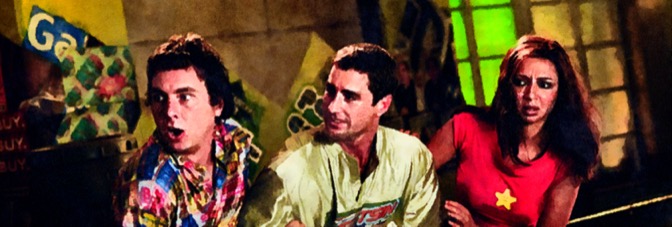
Idiocracy has one fundamental flaw–and plenty of little ones, but the fundamental one is too glaring and too fixable–the two leads do not have a romance and the film pretends they do. Foul-mouthed prostitute Maya Rudolph all of a sudden starts talking without slang and doing sweet things. Then, at the end, there’s supposed to…
-
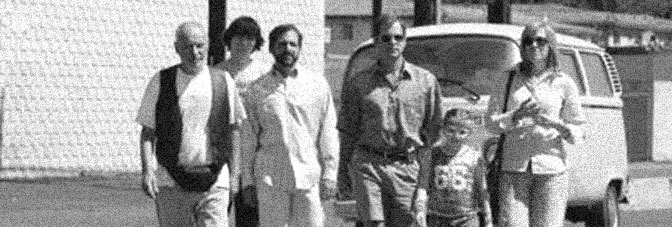
Calling Little Miss Sunshine an independent film–regardless of its Fox Searchlight banner at the front–is a misnomer. While the financing might not have come through the traditional channels, it’s got a very high profile cast and its content is about on par with, say, Miramax films of the late 1990s, which means it’s on par…
-

Supposedly, Magicians came out on DVD (pan and scanned), then disappeared as the releasing company went under. Merendino shot it Panavision, so there was some painful cropping. It’s still possible to see some of what Merendino was doing, but sometimes I just had to imagine how much more effective it would be. Merendino’s a filmmaker…
 The Stop Button