Category: Classics
-
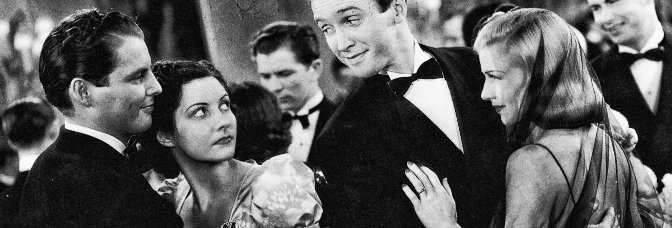
Vivacious Lady strengths easily outweigh its weaknesses, but those weaknesses have a way of compounding on each other as the film moves to its conclusion. The most obvious–and usually forgiveable–problem is how the film can’t decide what to do with Ginger Rogers, the Vivacious Lady. Not the film, sorry, the script. Director Stevens, photographer Robert…
-

There’s a lot to The Sound Barrier. Outside the truly magnificent aerial photography, not much of it has to do with the film itself. Other than director Lean and writer Terence Rattigan rewriting actual history to make it so a private British aircraft company “broke” the sound barrier some five years after Chuck Yeager did…
-

For most of its eighty minute runtime, Petticoat Fever operates entirely on charm and technical competence. The charm of its cast, not the charm of Harold Goodman’s screenplay (from Mark Reed’s play). Robert Montgomery is the sole operator of a wireless station in arctic Canada (save Otto Yamaoka as his Inuit servant; the film’s moderately…
-

The only stand-out sequence in The Cocoanuts comes at the end, when Chico is playing the piano. One of the directors–or both of them–finally had a good instinct and cut to a close-up of Chico’s hands playing. It overrides the first shot of the piano playing, which doesn’t show Chico’s hands at all and barely…
-
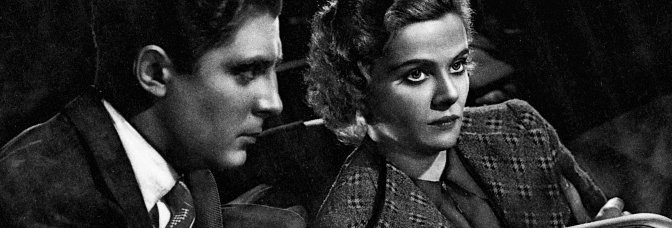
Young and Innocent is about Nova Pilbeam (Young) and Derrick De Marney (Innocent). She’s a county police constable’s daughter, he’s an escaped murder suspect. They first meet during his interrogation, when he faints at discovering he’s not just accused of murdering a woman, but that woman has also left him some money. Pilbeam nurses De…
-
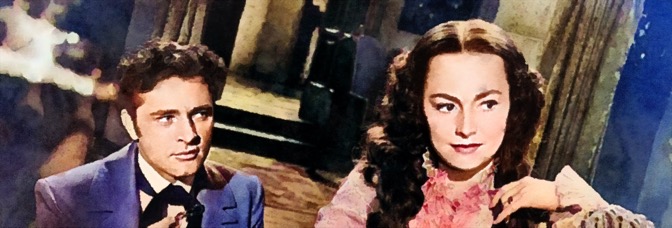
Olivia de Havilland is top-billed on My Cousin Rachel, but Richard Burton’s the star. For better or worse. Burton’s a young English gentleman, de Havilland is his cousin. And his cousin–and guardian’s–widow. She doesn’t appear for the first twenty-five minutes of the film, which instead have Burton becoming more and more concerned for his missing…
-
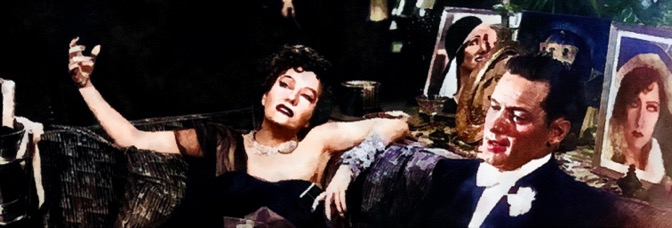
The third act of Sunset Boulevard just gets darker and darker. The film digs down into one level, then finds another, then another, then maybe even another. Director Wilder and co-writers Charles Brackett and D.M. Marshman Jr. find a way to fully condemn the film’s setting–Hollywood, with Paramount Pictures (Sunset’s producer) being the generalized stand-in–while…
-

The first half hour of Naked Alibi–the film runs just under ninety minutes so the entire first third–is separate from the remainder. Set in a small city (shot on the backlot, but rather well thanks to Russell Metty’s glorious photography), chief of detectives Sterling Hayden has been getting a lot of heat over police brutality.…
-
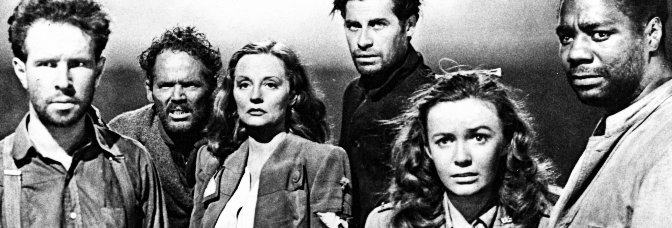
Lifeboat never feels stagy, which is one of the film’s greatest successes. The entire thing takes place in a single lifeboat, with director Hitchcock not doing many medium or long shots of the lifeboat exterior. All the action is with the actors, Hitchcock using distinctive composition–Glen MacWilliams’s glorious photography helping quite a bit, of course–to…
-

The Gay Falcon answers a question I never thought to ask. Can George Sanders flop a part? The answer is yes. There are extenuating circumstances to be sure, but Sanders flops the lead in Falcon. He’s a skirt-chasing, playboy criminologist, which ought to be a natural fit for Sanders. Instead he comes off as a…
-

It’s hard to have worse written characters than dialogue. Like, how can character motivation be worse than what the characters speak to show their motivation. The Sin of Nora Moran shows what it’s like to have worse characterizations than dialogue. It’s not pretty. What’s sort of frustrating is the occasional bursts of interest. They seem…
-

William Holden never seems out of place in The Moon Is Blue, but occasionally the film seems out of place having William Holden in its lead role. He’s not mundane, he’s a star. The film isn’t about the mundane but it needs to acknowledge the possibility of it. Holden ain’t it. He’s top-billed but not…
-
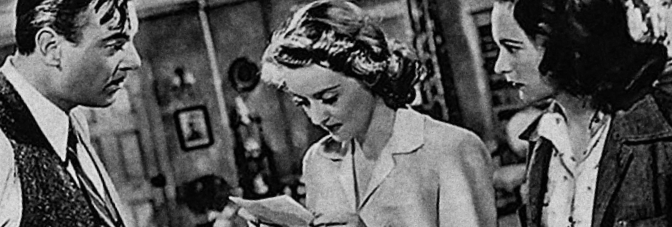
Bette Davis and George Brent never kiss in Dark Victory. He’s a brilliant neurosurgeon, she’s a mysteriously ill young socialite. He saves her, they fall in love. But does he really save her…. Victory gives Davis an excellent part, right up until the end of the film. It’s a somewhat bumpy ride–in the first act,…
-
Power of the Press runs a thin–not slim, but thin–sixty-four minutes. It’s paced better than expected (publicity stills suggest quite a few cut scenes); scenes never seem rushed, scenes never seem truncated. Instead, they’re just deliberate. Otto Kruger is a blue blood New York City newspaper publisher who dabbles in fascism. He couldn’t buy his…
-
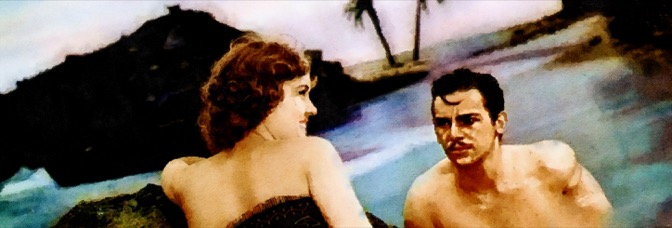
The Narrow Corner runs seventy minutes; it speeds along. Robert Presnell Sr.’s script has somewhat lengthy, complicated scenes where he tries to fit in information. The movie doesn’t need all that information–the subplot about Reginald Owen translating a Portuguese epic poem–because director Green isn’t going to do anything with it. The film has a somewhat…
-

If it weren’t for the first half of the film, The Best Years of Our Lives would be a series of vingettes. The film runs almost three hours. Almost exactly the first half is set over two days. The remainder is set over a couple months. Director Wyler and screenwriter Robert E. Sherwood don’t really…
-

Giant has a fairly good pace for running three hours and twenty minutes. Even more so considering almost the entire second act is told in summary, with stars Elizabeth Taylor, Rock Hudson, and James Dean gradually getting more and more old age makeup. At his “oldest,” Hudson has a bulk harness, which is simultaneously obvious…
-

For most of An American in Paris, Gene Kelly’s charm makes up for his lack of acting ability. Even after it turns out the story’s about him stalking Leslie Caron until she agrees to go out with him. It’s okay after that point because she falls immediately in love with Kelly once she does. He…
-

Double Indemnity is mostly a character study. There’s the noir framing device–wounded insurance salesman Fred MacMurray stumbling into his office and recording his confession on a dictaphone. Turns out he met a woman and things didn’t work out. MacMurray narrates the entire film. Occasionally the action returns to him sitting in the office, bleeding out.…
-
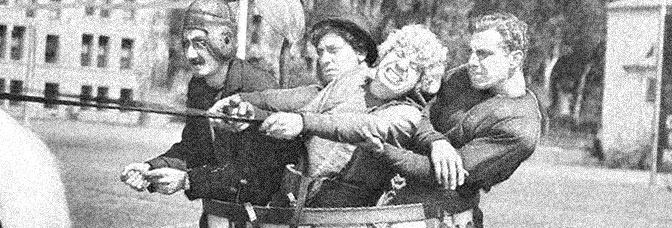
Horse Feathers finally finds its funny sometime in the second half. The film plays like the main plot has been removed and just a subplot remains, so it’s impressive it ever does. And when it does, it’s depressing–director McLeod and (wow, four) writers Bert Kalmar, Harry Ruby, S.J. Perelman, and Will B. Johnstone know how…
-

The Day the Earth Stood Still opens with these sensational titles. 3D text jumping out, set against the backdrop of space, Bernard Herrmann’s score at its loudest; the titles suggest the film is going to be something grandiose. It is and it isn’t. For the first act, director Wise moves quickly, short scenes setting up…
-
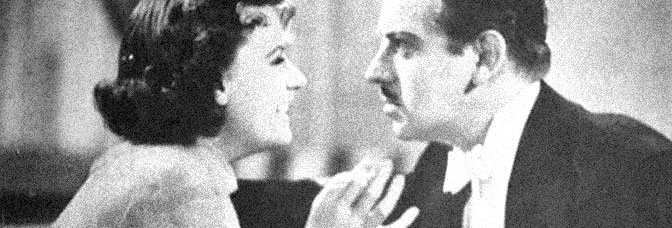
Two-Faced Woman is the story of a successful New York magazine editor, played by Melvyn Douglas, who marries his ski instructor (Greta Garbo) while on vacation. It’s a whirlwind courtship, with one condition of the marriage (for Garbo) being Douglas is giving up New York. Turns out he’s not and off he goes to New…
-
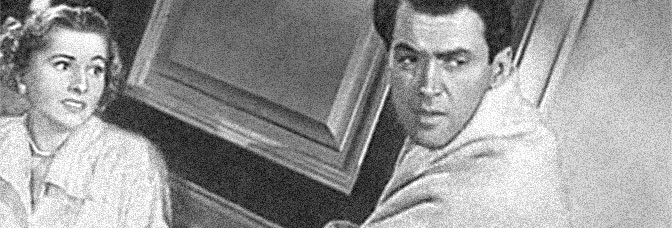
It takes You Gotta Stay Happy a while to get there, but it’s actually a road movie. Well, it’s flying movie. Owner-operator James Stewart flies his cargo plane from New York to California with a number of paying passengers (a no no), with co-pilot Eddie Albert doing most of the ticket sales. The film’s title…
-

Dracula’s Daughter starts as a comedy. With Billy Bevan’s bumbling police constable, there’s nothing else to call it. Sure, the opening deals with the immediate aftermath of the original Dracula–returning Edward Van Sloan arrested for driving a stake through a man’s heart–but it’s all for smiles, if not laughs. Bevan’s terrified expressions carry the movie…
-

Despite being an adaptation of a stage play and having one main set, Desk Set shouldn’t be stagy. The single main location–and its importance–ought to be able to outweigh the staginess. Desk Set does not, however, succeed in not being stagy. It puts off being stagy for quite a while, but not forever, which is…
-

The Black Cat has a lot going on. It’s the story of two American honeymooners–David Manners and Julie Bishop–who, for whatever reason, decide Hungary is better than Niagara Falls. It’s also the story of a recently freed Hungarian soldier Bela Lugosi, who went into the war a happily married psychiatrist, only to lose his family…
-
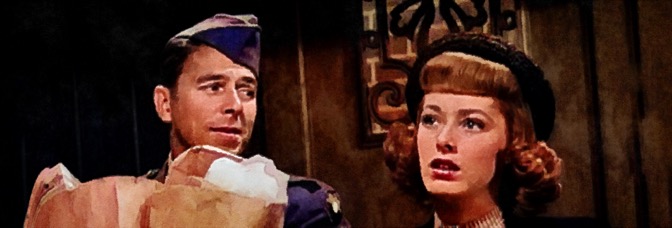
The Voice of the Turtle runs an hour and forty minutes. There’s a split about forty minutes in and, in the second hour, leads Eleanor Parker and Ronald Reagan are playing slightly different characters. Screenwriter John Van Druten adapted his play (with additional dialogue from Charles Hoffman) and had to “clean things up.” The play…
-

The Seventh Sin has three problems. The first is the third act; it’s too rushed. Given the constraints of the film production–a shot-in-Hollywood production about a cholera outbreak in a rural Chinese town–there’s not so much to be done about it. The film has a limited cast, especially once the action moves from Hong Kong…
-

Last (after QUARTET and TRIO) and most successful entry in trilogy of anthologies of W. Somerset Maugham adaptations. Three stories, all of them well-directed, at least one of them well-written, and all of them rather well-acted even when the writing’s not there. Great performances from Nigel Patrick, Roland Culver, Glynis Johns, and others. Maugham pointlessly…
-
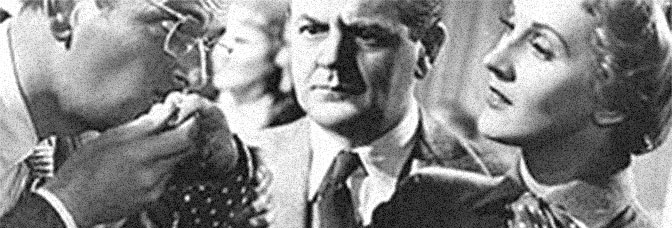
Second (after QUARTET) in a trilogy of anthologies adapting W. Somerset Maugham short stories has good acting, okay writing, and some excellent direction (from Annakin not French) but just doesn’t quite work out due to its lopsided attentions. Maugham introduces the stories, sometimes getting cut off mid-sentence, which is sort of funny, sort of not.…
 The Stop Button