Category: 1987
-
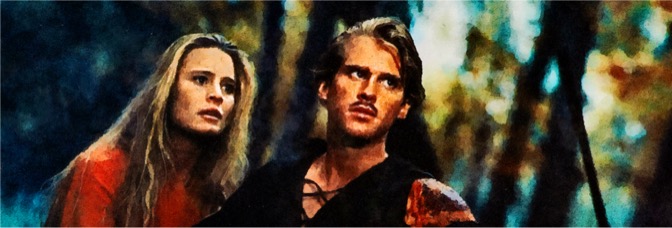
I’m undecided on how to discuss The Princess Bride’s second act. It’s a misstep but an intentional one. Instead of being the story of reunited lovers Robin Wright and Cary Elwes, the film becomes an action comedy for Mandy Patinkin and Andre the Giant, which is fine; they’re great. But the film entirely ignores Wright’s…
-
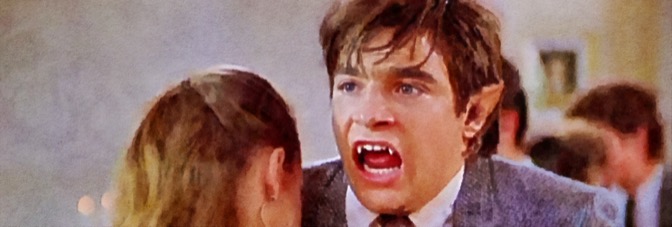
There are worse movies than Teen Wolf Too. There have to be worse movies than Teen Wolf Too. It’s a mantra you can use when watching Teen Wolf Too. Of course, given the era, there may be even a worse theatrically released movie from the same year (1987). But Teen Wolf Too is just the…
-
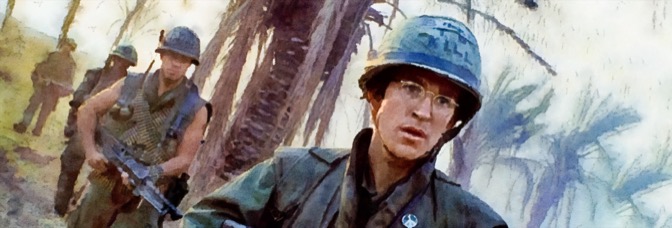
Full Metal Jacket is a film of big swings. Director and co-writer Kubrick hits them all. The three most prominent are the structure, the character study, and the whole arc. The structure and arc are different because the film's got two distinct sections. Minutes one to forty-five or so is a "We're in the Marines…
-

The Sicilian is based on a Mario Puzo novel about a real person and real events. The director’s cut runs about thirty minutes longer than the original theatrical version, which no doubt desperate distributors and financiers took away from director and co-producer Cimino in hopes of recouping some of their cost. Alas, no luck. It…
-

My initial impulse as I sat through the droning minutes of Personal Foul was to give the film a pass. Not give it any stars, but a pass. Also, when I say droning, I mean droning. The film’s music is a set of three or four songs by folk singer Greg Brown (and friends) on…
-

During High Tide’s final twist, I began to wonder just how different the film would be with different music. Sometimes Peter Best’s score is fine—or even good—sometimes it’s very much a product of its time and using way too much saxophone. The film’s biggest melodrama beat, where it commits to just being a melodrama about…
-

Roxanne is a charming romantic comedy. Wait, I think it might need an additional qualifier—it’s a charming romantic situational comedy. I’m not one to sit around and debate stakes with romantic comedies, but even for a romantic comedy… Roxanne’s got some low stakes. Maybe because of how closely screenwriter (and leading man) Steve Martin followed…
-

Born in East L.A. is a much lighter comedy than expected. Maybe not more than writer-director-star Cheech Marin portends—and a lot of the film’s ineffectiveness isn’t first time feature director Marin’s fault, he needed one of his four editors to have some clue about creating narrative continuity. And while his cinematographer—Álex Phillips Jr.—isn’t at all…
-
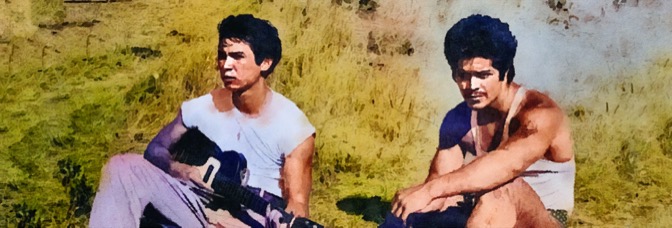
La Bamba is a perfectly adequate biopic of fifties rock and roll singer Ritchie Valens, who died at seventeen in a plane crash. Very twenty-five year-old Lou Diamond Phillips plays Valens. He’s adequate. He lip-synchs all right, though the performances (Los Lobos covers Valens’s songs) almost never sound right acoustically. When Phillips shows off his…
-

Beto gets one story this issue, Jaime gets three but really two. It’s an interesting three stories; two are Maggie (and Ray) stories, one is a Hopey story. The Maggie story is about, well, The Night Ape Sex Came Home to Play. Maggie, Daffy, and Kiko (how long has it been since Kiko has been…
-

Right off, Beto makes up for last issue’s Palomar installment with this one’s. It’s the third part (and not the conclusion) of Human Diastrophism, which–among other subplots–has a serial killer loose in Palomar. Last time Beto sputtered around, trying to figure out how to pace the various plot threads–the serial killer seems to be working…
-

Both Beto and Jaime are in the second chapters of multi-issue stories in Love and Rockets #22–including a Jerusalem Crickets (starring Hopey and the band) two-page entry. It’s strange because it doesn’t quite work out like usual. Meaning Beto doesn’t knock it out of the park. But he’s second. I’ll wait this time for him.…
-

I misunderstood last issue when the letter page said it was the last Heartbreak Soup story for a while. It might have been the last Heartbreak Soup but not the last Palomar. Palomar is going strong, with a very creepy–while still very funny at times–story about a serial killer coming to town as Archie proposes…
-
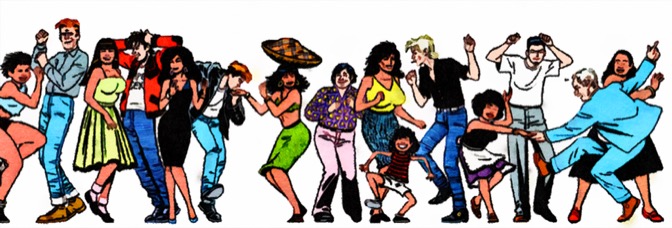
I’m getting my Carmen story. I knew I was getting my Carmen story last issue because the “next issue” thing said, it’s time for the long-awaited Carmen and Heraclio story. So apparently reading the book thirty years ago, people had the same anticipation for a Carmen story. Shame it’s not a Carmen story. It’s a…
-
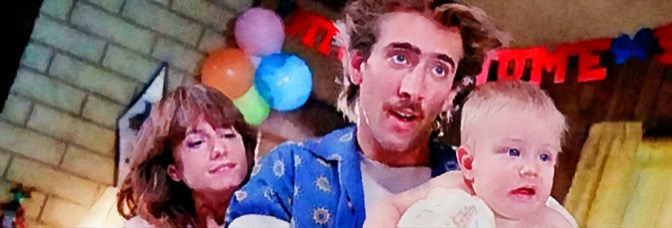
Halfway through Raising Arizona is this breathtaking chase sequence. Until this point in the film, while there’s been a lot of phenomenal direction, it’s all been brief. Raising Arizona starts in summary, with lead Nicolas Cage narrating, and it doesn’t start slowing down the narrative pace until just before the chase sequence. But then the…
-
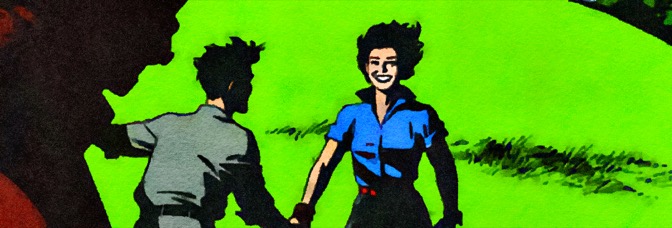
Most of this issue of Love and Rockets is Beto’s. Jaime has three stories, but none of them are long ones. The Locas story, which starts the issue, is six pages. It’s mostly a flashback story, framed in the present with Hopey and Terry talking reminiscing. Though reminiscing has some positive connotations and there probably…
-

Somewhere around the halfway point in Street Smart, when both female “leads” get reduced to a combination punching bag–figuratively and literally–and damsel, the movie starts to collapse. It doesn’t collapse in a standard way. It doesn’t give too much to either of its dueling stars, Christopher Reeve and Morgan Freeman; instead, it gives them less.…
-

Tin Men is expansive. So expansive writer-director Levinson can’t get everywhere. He doesn’t have time in 112 mintues, he doesn’t have the structure for it either. Tin Men establishes its narrative distance firmly, deliberately, and usually hilariously in the first act. When Levinson gets to the end of the second act, he’s way too interested…
-
Masters of the Universe is almost charming in its lack of charm. Its plot is a kitchen sink–a little Conan sword fighting here, a little Superman opening credits, a lot of Star Wars stuff (like all black “troopers” with laser guns, the skiffs from Jedi), but also lots of other popular eighties things. There’s some…
-

The Hidden opens with a shock. Then there’s another shock, then another, then another. The first act of the film races through them. Chris Mulkey is on a killing spree, the cops are in pursuit–including Michael Nouri’s soulful supercop–only it turns out Mulkey can’t be killed. Enter oddball FBI agent Kyle MacLachlan, who teams with…
-

Making Mr. Right feels a little incomplete. It’s not entirely unexpected as Floyd Byars and Laurie Frank’s script plays loose with subplots–even after the film forecasts its basic structure, it loses track of a lot, and some essential scenes happen offscreen. The subsequent reveals in the narrative (to other characters and the audience) never play…
-

There are few constants in The Untouchables. Leading man Kevin Costner comes in after nemesis Robert De Niro (as Al Capone) opens the movie; only the Chicago setting and Ennio Morricone’s grandiose, bombastic, omnipresent score are unabated. Director De Palma embraces the film’s various phases, sometimes through Stephen H. Burum’s photography, sometimes just through how…
-

Perry Mason: The Case of the Scandalous Scoundrel is a bit disappointing. It’s got a really lame script from Anthony Spinner. Spinner doesn’t have a good mystery, he doesn’t write characters well, he writes dialogue something awful. So there are no expectations from the script. However, Scoundrel has a great cast. A great cast who…
-

I’m going to say something I never expected to say. Ron Satlof does a good job directing Perry Mason: The Case of the Murdered Madam. He’s a regular director on the series and he’s never directed one as well as this one. The showdown between Raymond Burr and guilty party is fantastic. Satlof does well,…
-

Satisfactory PERRY MASON TV movie has Raymond Burr, Barbara Hale, and William Katt in a haunted hotel. Perry (Burr) has to defend old pal Robert Stack (who phones it in). Actually good Kim Delaney figures into the suspect pool, along with annoyingly awful Dwight Schultz. Burr gets a lot to do but Hale doesn’t. An…
-

The Case of the Lost Love is a rather charmless Perry Mason outing. Jean Simmons is an old flame of Raymond Burr’s and he ends up defending her ungrateful husband (Gene Barry). Simmons and Burr have some chemistry as Lost Love establishes their history, but the movie’s so technically inept, it never quite comes across…
-

There’s an almost magical competency to Summer School. It starts with the opening titles, which are expertly edited to showcase the eventual primary cast members. Not the adults–outside lead Mark Harmon–rather the students. There’s no audible dialogue, just a rock song playing, but there’s enough performance from the actors to give personality to their characters…
-

The first half of Baby Boom is this incredibly efficient story about career woman Diane Keaton deciding she wants to be a mom to a baby she inherits. Is inherit the right word? Probably not, but Keaton’s character can’t figure out how to change a diaper (though she can later milk a cow on the…
-

Mundanely terrible Rocky rehash but with arm wrestling, dead moms, deadbeat dads, truck driving. And a Stallone (who also co-wrote with Stirling Silliphant) completely detached from all the picture’s machismo. Boring and bad in every way. Stallone’s terrible with onscreen son, David Mendenhall, who’s also terrible. Technically speaking, the film’s bad too. The direction, editing,…
-

If only there were something remarkable about Jaws: The Revenge. Just one thing terrible enough about it to make it somehow interesting. Jaws: The Revenge is unremarkably bad in its unremarkable badness. As the opening titles rolled, with shark POV of a New England harbor, I wanted it to be some kind of strange close…
 The Stop Button