Category: Drama
-

Kiss of Death takes place over four years, has eight to ten significant characters, and runs an hour and forty minutes. It skips ahead three years at the forty-five minute mark. And the last twenty minutes could have their own movie, as David Caruso returns to the city to face Nicolas Cage, who knows Caruso…
-

Midnight Cowboy gets to be a character study, but doesn’t start as one, which is an interesting situation. About forty-five minutes into the film, which runs just shy of two hours, Midnight Cowboy chucks the narrative urgency. Maybe not chucks, maybe just shuts down, because it does take the film a while to lose that…
-
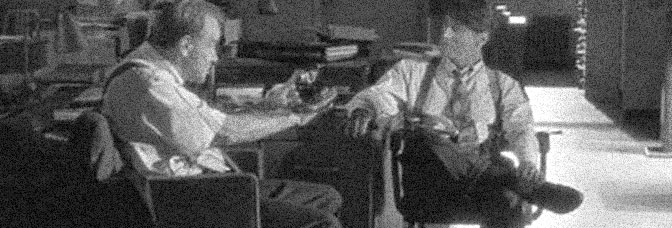
The first half of Glengarry Glen Ross is phenomenal. David Mamet’s screenplay is lightning fast during this section, moving its characters around, pairing them off for scenes or moments–the brevity is astounding. Half the movie is over and it feels like just a few minutes. Then the second half hits and the pace is still…
-

Just over half way into Inside Llewyn Davis, there’s a moment where lead Oscar Isaac looks into the face of responsibility–weighs it, weighs the consequences of not accepting it, makes his decision. Until that moment, the Coen Brothers hadn’t candidly identified the film as a character study. It happens in the middle of an epical…
-

From the opening credits, Andrew Dickson’s score sets the tone for Secrets & Lies. It’s going to be severe. I don’t think there’s a light moment in the score–any of the film’s lighter moments, usually involving Timothy Spall’s ability to make people smile (he’s a photographer, so it’s a good ability), are mostly silent. The…
-
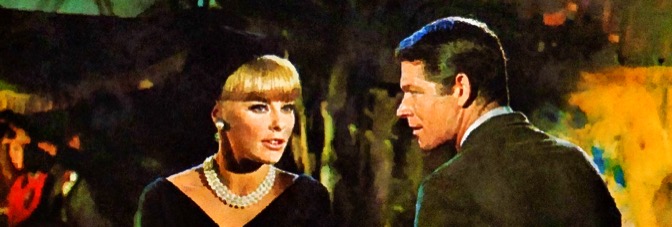
The Oscar is a spectacular kind of awful. It’s the perfect storm of content, casting and technical ineptitude. Director Rouse probably doesn’t have a single good shot in the entire film. It might not even be possible with Joseph Ruttenberg’s photography and the maybe studio television level of the set decoration. Though there is this…
-
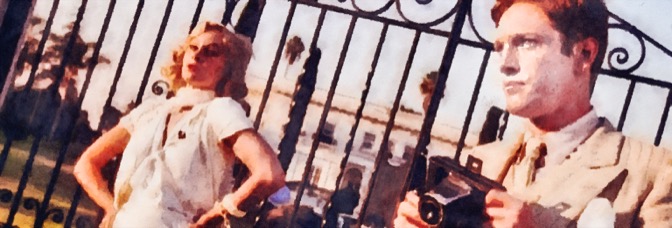
The Day of the Locust is a gentle film, at least in terms of Schlesinger’s direction, Conrad L. Hall’s cinematography and John Barry’s score. The film’s softly lit but with a whole lot of focus. Schlesinger wants to make sure the audience gets to see every part of the actors’ performances. He also wants the…
-
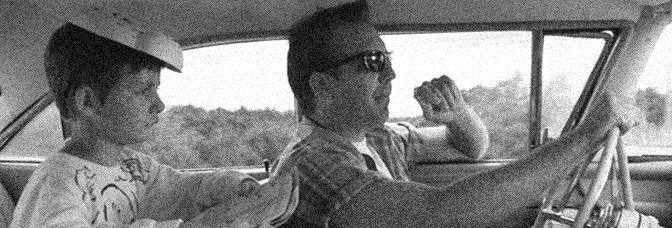
A Perfect World runs almost two hours and twenty minutes (it does with end credits). The last act of the film is a seventeen or so minute showdown in real time. Until that point in the film, John Lee Hancock’s script flirts with occasional sequences in real time, but there’s a lot of summary, a…
-

Three Kings ought to appeal to every one of my liberal affections–director Russell very seriously wants to look at the Gulf War and how it failed the people it should have been protecting. Over and over, Russell goes out of his way to make the American soldiers take responsibility. Not for the war itself, but…
-
From the start, director Costner embrues Dances with Wolves with melancholic tragedy. Even as Costner’s protagonist–a Union soldier reassigned to the frontier–travels west, seeing startling natural beauty, which Costner and cinematographer Dean Semler visualize carefully, enthusiastically, perfectly, there’s dread. Most of it comes from John Barry’s lush and haunting score, but Costner does make sure…
-

JFK is a protracted experience. It runs over three hours, it has no real narrative structure–the film opens with the Kennedy assassination and an introduction to the principal characters (and some of the possible conspirators, always played quite well by a guest star), then jumps ahead three years where it starts chronicling lead Kevin Costner’s…
-

There’s a lot of great moments in Pulp Fiction. There’s not a lot of great filmmaking–the taxi ride conversation between Bruce Willis and Angela Jones is about as close as director Tarantino gets to it–but there are definitely a lot of great moments. There’s the chemistry between John Travolta and Samuel L. Jackson. There’s the…
-
A couple immediate thoughts occurred to me as Bed of Roses started. First, is it a good idea to be watching Bed of Roses? (Spoiler: no, it’s not). Second, what’s going on with Mary Stuart Masterson’s performance? It’s not a movie saving performance because it’s a terrible part. Only director Goldenberg (who also wrote the…
-

Mundanely terrible Rocky rehash but with arm wrestling, dead moms, deadbeat dads, truck driving. And a Stallone (who also co-wrote with Stirling Silliphant) completely detached from all the picture’s machismo. Boring and bad in every way. Stallone’s terrible with onscreen son, David Mendenhall, who’s also terrible. Technically speaking, the film’s bad too. The direction, editing,…
-

The least violent part of Reservoir Dogs is the bloodiest. One of the characters is in a pool of blood, slipping on it as he delivers his dialogue. Director Tarantino finds a moment of Shakespearian tragedy and builds a film to it. He uses stylish ultra-violence, Dogs is visceral with the blood, but the action…
-

The Program does not tell a particularly filmic story. It doesn’t have a rewarding dramatic arc. Telling the story of disgraced cyclist Lance Armstrong, with Ben Foster in the role–and as the film’s main character–does not offer many moments of joy. Foster’s spellbinding. He humanizes the sociopath enough to make him understandable in his cruelty.…
-

Two really big things to talk about with Ordinary People. The technical filmmaking–John Bailey’s beautiful, muted photography, Jeff Kanew’s actually peerless editing, Redford’s direction in general–and then Timothy Hutton’s performance, his place in the film, Redford’s direction of Hutton in particular. I just as easily could’ve included the treatment of Donald Sutherland and Mary Tyler…
-

Steve Jobs is unexpected. It is a parody of itself, it is a parody of being an “Oscar-worthy” biopic about a topical, zeitgeist figure. Down to having Seth Rogen in a dramatic part. Steve Jobs feels very conscious. In Michael Fassbender’s Jobs, the film gets to create a world where Steve Jobs doesn’t just get…
-

Lizzie is about lead Eleanor Parker’s struggle with multiple personality disorder. More accurately perhaps, Lizzie is about Parker’s multiple personality disorder. As a protagonist, Parker disappears fairly quickly into the film’s eighty minute runtime. She doesn’t even get to open the film; it introduces her through other characters’ expository conversation. Screenwriter Mel Dinelli, quite unfortunately,…
-

For a film with quite a bit of grounded violence, Atlantic City is pretty genial. Director Malle shoots in close medium shots; there’s not a lot of grandeur to his shots. Atlantic City has grandeur, as a setting, but Malle doesn’t go out of his way to stylize it. Cinematographer Richard Ciupka shoots the whole…
-

The King of Marvin Gardens is an extremely quiet film. Jack Nicholson’s protagonist is a radio monologist, which suggests the viewer should listen to the content of his dialogue, but the secret of Marvin Gardens is that content’s unimportance. After a brief introduction to Nicholson’s job and life, the film immediately moves him into an…
-

Trainspotting moves. More than anything, director Boyle concerns himself with the film’s pace, whether through Masahiro Hirakubo’s glorious editing or lead Ewan McGregor’s narration, the film immediately sets a fast pace and keeps it throughout the film. Nothing can slow the film down, not even big events, because there’s no real plot. It’s sort of…
-
Take Shelter is relentless; sort of an anti-Field of Dreams. Michael Shannon is a husband and father, respectable, employed member of a somewhat rural community. There’s not tons of money (wife Jessica Chastain pays for their summer vacations by selling her sewn goods) and daughter Tova Stewart has lost her hearing and needs expensive implants,…
-

Creed is something special. It’s an entirely sincere, entirely reverential sequel to the Rocky movies, but one trying to do something different with the “franchise.” Sylvester Stallone’s Rocky, while extremely important in the film, isn’t the protagonist. He’s not even lead Michael B. Jordan’s sidekick. He’s a cute old man who doesn’t understand cloud computing.…
-
The Beast has a lot going for it, so its failure to connect–which is wholly director Reynolds’s fault–is a bit of a disappointment. The second half of the film has an accelerated pace. While the whole thing takes place over a couple days, the second half is an odd combination of summary and real time.…
-

Peerless tale of real person John Merrick, played by John Hurt, who suffered Proteus syndrome (which causes severe deformities), who went from English freak shows to London society thanks to a doctor. Anthony Hopkins plays the doctor. Simultaneously tragic and uplifting; real beauty of the human heart stuff here, sincerely and deliberately conveyed by director…
-

The Thin Red Line is about fear, beauty, solitude, loneliness. Director Malick’s approach is, frankly, staggering. Thin Red Line is an odd film to talk about because in most ways, it’s my favorite film. One of the great things about a good movie–not even an excellent or an amazing movie, but a good movie (and…
-
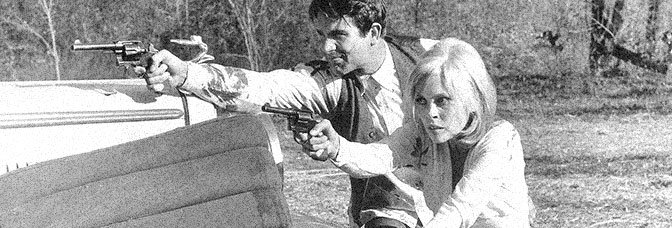
Bonnie and Clyde opens with two immediate introductions. First, in the opening titles, photographs from the 1930s set the scene. Second, in the first scene, with Faye Dunaway (as Bonnie) and Warren Beatty (as Clyde) meet one another and flirt their way into armed robbery. Okay, maybe in the latter, director Penn does start with…
-
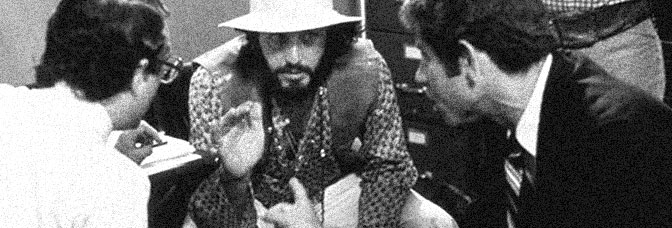
There’s a strange disconnect between director Lumet and actor Al Pacino on Serpico. The film, at least in how Pacino plays it, is a character study. Yes, it’s a character study of someone in a great deal of transition–Pacino’s cop, over twelve rather poorly paced years, goes from idealism to resignation at the corruption he…
-
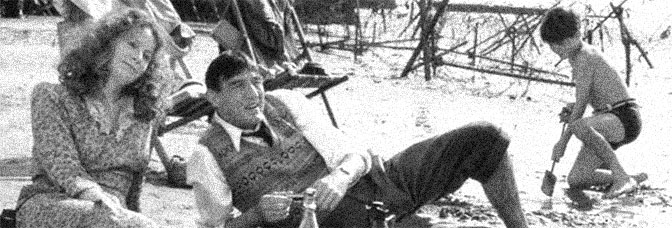
Director Boorman presents Hope and Glory as a series of vignettes. It opens with England declaring war on Germany in 1939 and goes until the next summer. The film concerns pseudo-protagonist Sebastian Rice-Edwards, who is nine. He obviously does not age over the film’s present action, which is more of a problem with his younger…
 The Stop Button