Category: Drama
-

The Green Mile takes place in a world where racism wasn’t really a big problem in 1930s Mississippi—not even grieving father Nicholas Sadler is going to say something racist to the Black convicted murderer of his daughters, Michael Clarke Duncan—but it also takes place in a world where the Christian God is real so… I…
-

Three Billboards Outside Ebbing, Missouri needs a lot of passes. On one hand, writer and director McDonagh writes really shallow female characters outside protagonist Frances McDormand (well, part-time protagonist). On the other, he’s got a really shallow way of characterizing racists—they’re literally too dumb to know better. And then he’s got this weird way of…
-
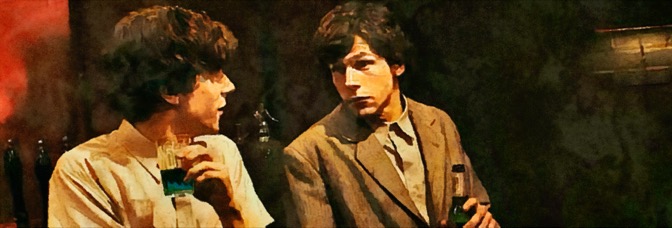
The Double opens with a look at lead Jesse Eisenberg’s monotonous, solitary life. He takes the train to his job, where he’s worked for seven years and only one person has bothered to learn his name, he’s got a crush on a girl (Mia Wasikowska) at work who doesn’t seem to know he exists, and…
-

Once I’m Thinking of Ending Things makes it painfully, obviously clear what’s actually going on with nondescript Oklahoma intellectual artsy girl Jessie Buckley, her pseudo-intellectual, experience matters more but wait is actually smart or is he boyfriend Jesse Plemons, his weird parents—Toni Collette (who somehow manages to be the only person in the not-untalented cast…
-
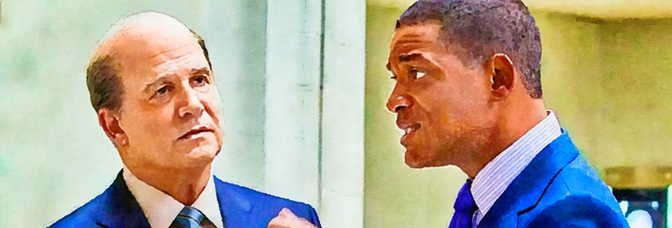
Most of Concussion is inoffensive Oscar bait. Only for the dudes though. And only for the actors. None of the technicals. Will Smith is the main Oscar bait; he’s a crusading African immigrant coroner who’s a medical super genius who wholesomely communes with his cadavers before respectfully cutting them up. The film shows Smith talking…
-

Valley of the Gods is a cautionary tale. If you’re going to make a combination of Citizen Kane—with either actual footage or a recreated shot—and then a bunch of vague Kubrick nods, including Keir Dullea (arguably in the film’s best performance) as a snippy butler and a HAL while doing a retelling of the Navajo…
-

Maybe a third of the way into Cool Hand Luke, the film all of a sudden starts getting really good. It’s when Jo Van Fleet makes her appearance, which provides the film both its single best acting—Newman and Van Fleet are exquisite in the scene—and also director Rosenberg showing he’s actually got a handle on…
-

It’s impossible to overstate what a profoundly, risibly bad movie Shyamalan has made with Signs. As the end credits started rolling, after the most disappointing “epilogue” Shyamalan could’ve come up with—it’s not just disappointing, it’s also pointless (pointless is the probably the best adjective to describe scenes in Signs)—my wife joked the movie took two…
-

It’s an hour into The Hustler before the film offers any real information about protagonist Paul Newman. We’ve seen Newman and mentor slash manager Myron McCormick pool hustle their way across the North American continent, getting Newman to New York City so he can play the best pool player in the world, Minnesota Fats (Jackie…
-

During High Tide’s final twist, I began to wonder just how different the film would be with different music. Sometimes Peter Best’s score is fine—or even good—sometimes it’s very much a product of its time and using way too much saxophone. The film’s biggest melodrama beat, where it commits to just being a melodrama about…
-

The first half of Barry Lyndon, very nicely delineated on screen with a title card and then an intermission, is a black comedy. The second half is a tragedy. The epilogue explicitly reconciles the two, but there’s also Michael Hordern’s narration, which does the most expository work of anything in the picture. For the most…
-

A Safe Place tracks the relationship of apparently financially secure but listless hippie Tuesday Weld and her square of a new boyfriend, Phil Proctor. Weld spends her time presumably stoned—though we don’t see her smoke, her friends are always rolling a joint or smoking one—and dwelling on the past. She can’t get over the lack…
-
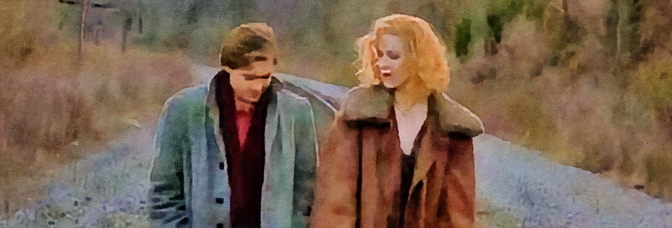
The surprise tragedy of Fresh Horses is Molly Ringwald could’ve been good in it. Even though she’s top-billed, she doesn’t get a scene without Andrew McCarthy until almost halfway through the movie—she’s the white trash object of his working-to-middle class sexual lust—but she’s not good in that scene. Actually, it’s her only scene without McCarthy…
-
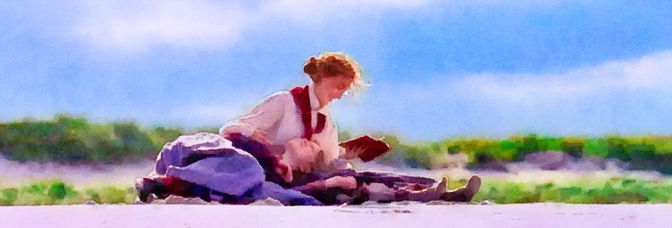
Little Women has two parallel timelines. There’s the present, starting in post-Civil War New York City with teacher and pulp writer Saoirse Ronan living in boarding house (where she also teaches). Then it flashes back to Ronan’s life seven years earlier, at home in rural Massachusetts; she’s the second oldest of four sisters; oldest is…
-

The disconcerting part of The Irishman’s actually never-ending CGI isn’t the aging and de-aging, it’s star Robert De Niro’s creepy blue eyes. For the first half hour of the (three and a half hour runtime), I was trying to get used to De Niro’s CGI… makeup, but kept having problems with it, which didn’t make…
-

Inherit the Viper is an unfortunately titled but acceptably mediocre crime drama about rural siblings Margarita Levieva, Josh Hartnett, and Owen Teague running an opioid business. Levieva’s the merciless boss, Hartnett’s the reluctant muscle, Teague’s the enthusiastic but uninvolved teenager. Everything’s going fine—well, outside the occasional fatal overdose for customers—until Teague decides he’s got to…
-

During To Kill a Mockingbird’s exceptional opening titles, I wondered how it was possible the film was going to look so amazing yet had no reputation for being some exquisitely, precisely directed piece of cinema. Then up came Stephen Frankfurt’s credit for title design, which kind of dulled my excitement for a moment. Could Mulligan…
-

Restoration is two parts period drama, one part character study, one part comedy. It’s often tragic, both because of events occurring and because it takes place in 1665 England and 1665 wasn’t a great time to be alive given the state of medical knowledge versus, you know, disease. Or mental health. The general complete misunderstanding…
-

Becket has some genre constraints. Significant ones. It’s a king-sized 70mm Panavision English history epic only it doesn’t feature any big battles. In fact, it goes out of its way not to show battles. It’s also an early sixties historical epic and it’s trying to be a little edgy in how it shows the relationship…
-

What’s so incredible about A Man for All Seasons is how big director Zinnemann makes it while keeping it small while keeping it big. The settings are big—palaces, estates, and so on—but Zinnemann keeps the set pieces small. He and cinematographer Ted Moore will do big establishing shots, but only after they’ve gotten into the…
-
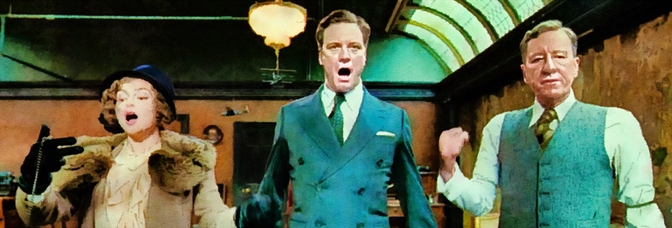
There’s a lot of fine direction in The King’s Speech. Hooper does exceedingly well when he’s showcasing lead Colin Firth’s acting or showing how Firth, who starts the film as Duke of York and ends it King of England, moves through the world as this sheltered, unawares babe. Of sorts. These successful sequences would stand…
-

Singular Shakespeare adaptation from Welles. Based on Shakespeare’s HENRY plays, focusing on the Falstaff character (played by Welles), the film tracks the boisterous relationship between Falstaff and Prince Hal (someday Henry V), played by Keith Baxter. Henry IV (John Gielgud) strongly disapproves of the friendship, which distracts Baxter from warring like pretender-to-the-throne Norman Rodway. Truly…
-

Probably rather confusing sequel to successful television show (made four years after the show finishes, but set a couple years later) about a troubled but surviving country house at the end of the 1920s. The family and staff have to prepare for a royal visit. Drama, action, romance, and comedy ensue. Good acting, brilliantly constructed…
-
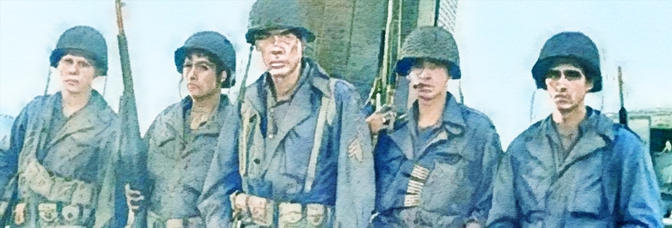
Outstanding WWII picture based on writer-director Fuller’s personal experiences. The film’s a series of vignettes, either battles or downtime with the main cast. Fuller follows four privates in the 1st Squad, led by nameless sergeant Lee Marvin. There’s writer (and narrator) Robert Carradine, Italian Bobby Di Cicco, artist and possibly coward Mark Hamill, and regular…
-

Part special effects spectacular, part protracted romantic melodrama has Navy nurse Kate Beckinsale coming between best buds and Army fliers Ben Affleck and Josh Hartnett. Will they have time to resolve the love triangle as World War II looms and they all get stationed at, you guessed it, Pearl Harbor? Really bad script (by Randall…
-

Reasonably charming “real story” of CINDERELLA has a likable lead performance from Drew Barrymore, a decent (though not charming) performance from Dougray Scott as her prince, and a great one from Anjelica Huston as her wicked stepmother. It’s never quite as realistic as it pretends, because the script’s a mess. Tennant’s direction is a little…
-
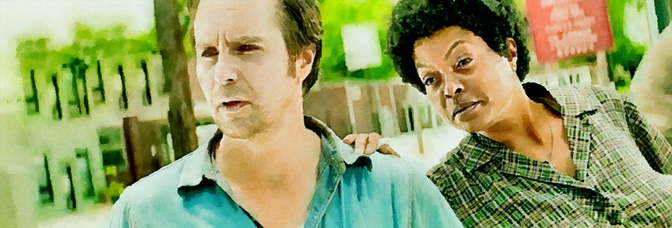
Could be worse, but should be a lot better based on a true story about a 1971 North Carolina school desegregation crisis. Sam Rockwell is the Klan leader, Taraji P. Henson is the (Black) community organizer. Will they somehow work together to make the world a better place? Henson and Rockwell have real thin parts–courtesy…
-
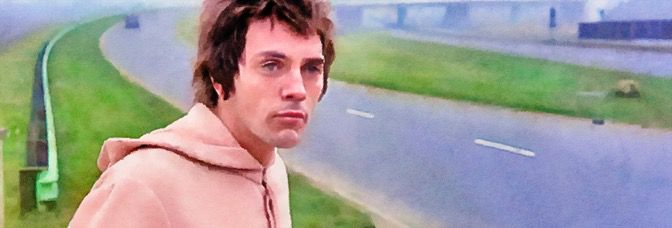
Part sci-fi, mostly drama gem about a thirty-year old man (Terence Stamp) who’s been in a coma since birth. Modern medical science allows surgeon Robert Vaughan to wake him up, but Stamp’s regular doctor (Nigel Davenport) has some unscientific (in the name of science, of course) “childrearing” expectations, leading to tragedy. Exquisite performance from Stamp.…
-

When Richard Farnsworth’s estranged and offscreen brother suffers a stroke, Farnsworth wants to reconcile but can’t drive and stubbornly has to go see him on his own. So he hopes on his riding mower and off to Wisconsin (from Iowa) he goes. He has some problems along the way, runs into some wayward folk who…
-

Painfully uncomfortable comedic drama/dramatic comedy about police officer Cummings (who stars in addition to writing and directing) breaking down after the death of his mother, leading to serious consequences regarding his job, his impending divorce proceedings, and his relationship with his daughter. Phenomenal showcase by Cummings for Cummings, who just doesn’t have any interest in…
 The Stop Button