Category: Directed by Martin Scorsese
-
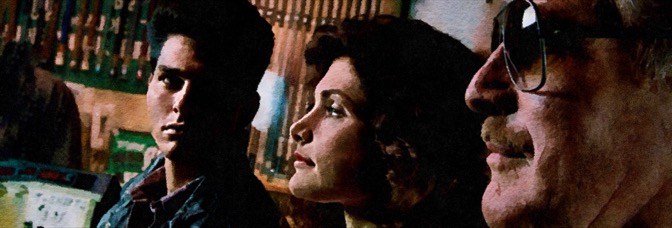
The Color of Money opens with a brief narration explaining the pool game variation nine-ball. Director Scorsese does the narration, which is the most interest he ever shows in the game of pool for the rest of the movie. The narration serves a straightforward purpose—it lets the audience know when to know the game is…
-
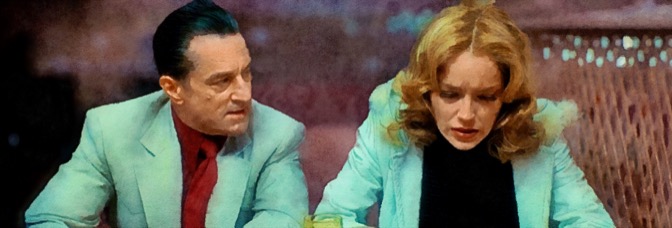
The best part of Casino isn’t my favorite part of Casino because the best part is James Woods bickering with Erika von Tagen. It’s mainly in the background, and it’s the only time anywhere in the film anyone shows any personality not expressly required for their scenes. Director (and co-screenwriter) Scorsese doesn’t believe in background…
-
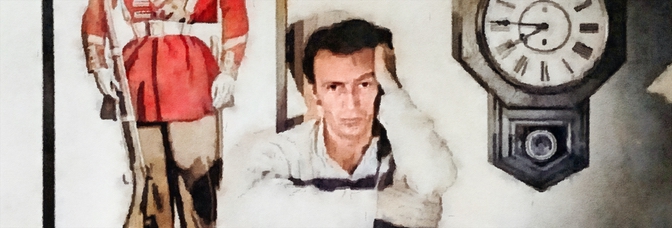
What's a Nice Girl Like You Doing in a Place Like This? is an absurd but arty comedy short. Director Scorsese mixes full motion video with stills, which sometimes do stand-ins for scenes—like protagonist Zeph Michaelis marrying Nice Girl Mimi Stark—sometimes just for expository stuff. See, Michaelis is a writer who gets a new studio…
-

The disconcerting part of The Irishman’s actually never-ending CGI isn’t the aging and de-aging, it’s star Robert De Niro’s creepy blue eyes. For the first half hour of the (three and a half hour runtime), I was trying to get used to De Niro’s CGI… makeup, but kept having problems with it, which didn’t make…
-
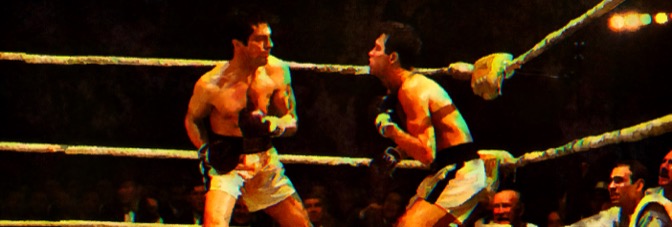
Most of Raging Bull is about boxer Jake La Motta’s quest for the middleweight championship belt and takes place in the forties. The film opens with La Motta (Robert De Niro) in the sixties–out-of-shape, nose disfigured from the boxing; it’s a brief introduction then a fast cut to De Niro in shape and boxing in…
-

Most of Goodfellas is told in summary. After an opening scene introducing leads Robert De Niro, Ray Liotta, and Joe Pesci, the action flashes back to Liotta’s childhood. Liotta narrates. Christopher Serrone plays the younger version. Liotta’s narration guides Serrone around the neighborhood, letting the film introduce all the mobsters Serrone is enamoured with. Scorsese…
-

Gangs of New York is a really big, really bad epic. Director Scorsese pays so much attention to the scale of the film, with sweeping crane shots and intense (and terrible) action sequences, he doesn’t pay much attention to the other elements of the film. Like the acting. And the script. First, the acting. It’s…
-
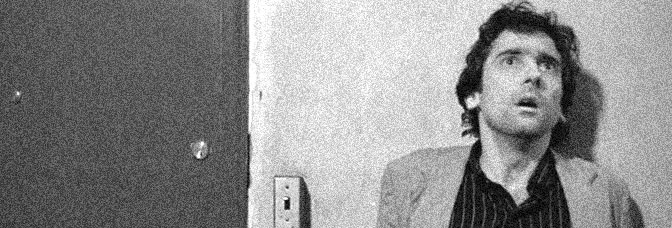
After Hours is meticulous. Director Scorsese, editor Thelma Schoonmaker and cinematographer Michael Ballhaus work with exacting precision throughout, with the first third of the film serving to prepare the viewer for the rest. The film follows boring, regular guy Griffin Dunne as he impetuously pursues an attractive mystery woman (Rosanna Arquette) in Soho in the…
-

The Last Temptation of Christ opens with a passage presumably from the introduction to the novel, as it’s the novel’s writer talking about his own feelings. It’s an odd choice, since it somehow removes the drive for the picture from the filmmakers and puts it on someone else. It’s a very intentional move from Scorsese;…
-

It’s hard not to watch It’s Not Just You, Murray! without keeping Scorsese’s subsequent career in mind. The film’s got some moments out of Goodfellas, but also a couple where one wonders if Francis Ford Coppola saw the short before he made the Godfather films. Not to mention Scorsese ends the film with a Fellini…
-
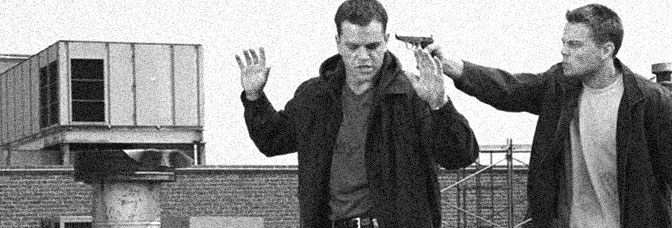
It’s hilarious, of course, Scorsese finally won an Oscar for the film least like his work. The Departed is the really serious movie Mel Gibson and Richard Donner never got around to making in the late 1990s… but Scorsese–I don’t know if Scorsese adds something to the mix or if he just knew how to…
-
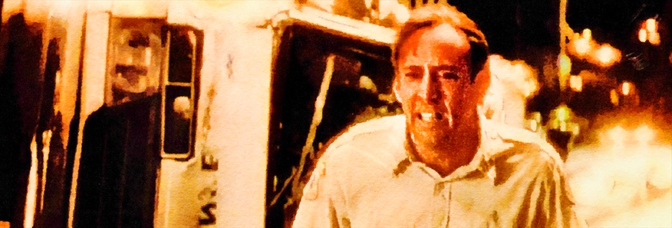
Singular motion picture recounting three nights of New York paramedic Nicolas Cage’s life and experiences on the job. Amazing on all counts–the lead performances from Cage and Patricia Arquette, the showy supporting ones from everyone else. Marc Anthony stands out as a frequent “customer.” Once frequent Scorsese scripter Paul Schrader adapted Joe Connelly’s novel, which…
 The Stop Button