Category: Directed by Ernest B. Schoedsack
-

The Last Days of Pompeii opens with a disclaimer. Despite sharing a title, it is not based on Edward Bulwer-Lytton’s 1834 novel. That disclaimer should be read as a warning. The film runs ninety-six minutes. The last days of Pompeii are the third act; the first two acts… wait, no. The timeline doesn’t even work…
-
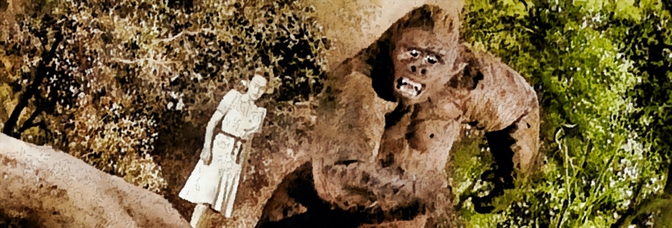
From the first scene, Mighty Joe Young is concerning. There’s a nice establishing shot of an Africa plantation, with some great matte work, then little White girl on the plantation Lora Lee Michel sees a couple African men passing with a basket. She wants what’s in the basket, so there’s a nice lengthy barter sequence…
-
From the first scene, Mighty Joe Young is concerning. There’s a nice establishing shot of an Africa plantation, with some great matte work, then little white girl on the plantation Lora Lee Michel sees a couple African men passing with a basket. She wants what’s in the basket, so there’s a nice lengthy barter sequence…
-
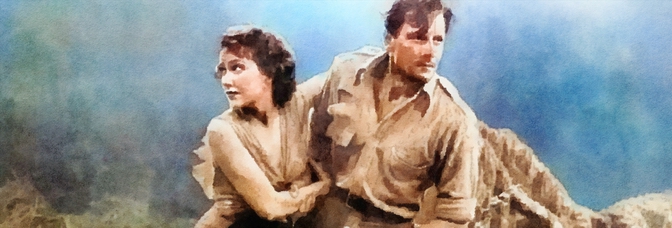
Running about an hour, The Most Dangerous Game shouldn’t be boring. But it somehow manages. Worse, the boring stuff comes at the end; directors Schoedsack and Pichel drag out the conclusion with a false ending or two. The film doesn’t have much to recommend it. That laborious ending wipes short runtime off the board, leaving…
-

Blind Adventure is a genial, nearly successful comedy thriller. Robert Armstrong, playing an unexpectedly wealthy working class American who’s vacationing in London, heads out into the fog and finds himself on a wild night. He encounters espionage, British society, a damsel in distress (Helen Mack) and trifle. Armstrong and Mack are wonderful together (they soon…
-

King Kong opened in April 1933, The Son of Kong opened for Christmas 1933. The rush shows. The special effects really suffer–for whatever reason, when Robert Armstrong and Helen Mack are added to the little Kong’s shots, it’s fine, but when little Kong is added to Armstrong and Mack’s… it’s not. It’s like the focus…
-

King Kong is a perfect film. I don’t think I’d realized before. It’s always hard to talk about films like Kong, influential standards of American cinema. I want to talk about how its structure still sets the tone for modern films–the gradual lead-in (it’s forty-some minutes before Kong shows up), the non-stop action of the…
 The Stop Button