Category: Directed by Roger Corman
-
If Creature from the Haunted Sea weren’t atrocious, it’d have to be fantastic. There’s no possible in between for the film, which is high concept, no budget. The film starts as a political spoof about Cuban generals fleeing the revolution with gold. They enlist the aid of gambling gangster Antony Carbone, who has a yacht.…
-
The Terror is not camp, which is bewildering, not just because it’d be better if it were camp, but because, based on its vitals, it seems like it can’t not be camp. The film stars Jack Nicholson as a Napoleonic officer—he does not attempt an accent, thank goodness—who gets involved with some supernatural goings-on involving…
-
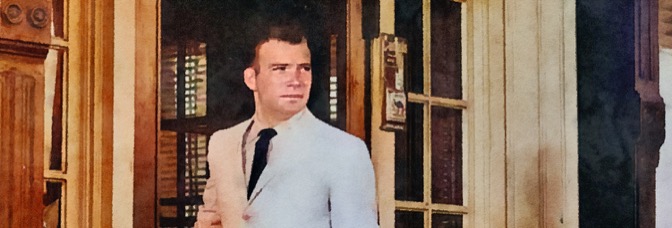
The Intruder has third act problems of the deus ex machina nature, and they’re actually welcome. If the film figured out how to finish better, it’d be more challenging to talk about. It’s already an exceptionally unpleasant experience. William Shatner gets top-billing as the title character. He’s a slick, charming, clean-cut Northern (well, Western—he’s originally…
-

Oddly engaging Roger Corman/Vincent Price take on 15th century British monarch Richard III, who goes mad as he kills his way to the throne. Price’s overwrought monologues–Shakespeare through the less talented screenwriters–would be a glorious disaster if only the rest of the cast weren’t taking their jobs seriously. At the same time, it’s awesome to…
-
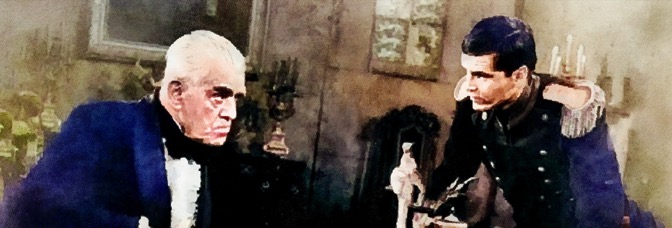
It might be too easy just to call The Terror terrible or to go into the various puns one could make with “terrible” and the title. It’s not a surprisingly bad film at all. It’s an expectedly bad film, given it opens with a pointless scare attempt. Boris Karloff shows up in the first scene-walking…
-

Until the unfortunate deus ex machina finish, A Bucket of Blood is a small wonder. Even with the finish, the film manages to succeed; the performances are just too strong. Dick Miller plays a simple, well-meaning bus boy–who also takes drink orders, apparently for no tips–at an art café. The beatnik patrons condescend to him,…
-

Director Corman and–probably more so–writer Howard Browne construct The St. Valentine’s Day Massacre as a docudrama. Paul Frees narrates the entire film, introducing characters, providing their backstories–Corman sometimes mutes the film’s dialogue (during boring parts) so Frees can explain a little about the person. Massacre might be mostly authentic in its portrayal of the titular…
-

The filmmaking economy in The Little Shop of Horrors is astounding. Most of the film takes place in one set–the titular shop–and Charles B. Griffith’s script works hard to imply the world outside that set. My favorite bit in the script is probably when leading man Jonathan Haze is shocked to discover peanut butter and…
-

The best thing in Ski Troop Attack is a forty or fifty second conversation between two characters about mortality. Writer Charles B. Griffith has a few other good observations in the dialogue, but they don’t resonate. Nothing in Ski resonates except that one conversation. And the acting isn’t even good. I guess Wally Campo isn’t…
-
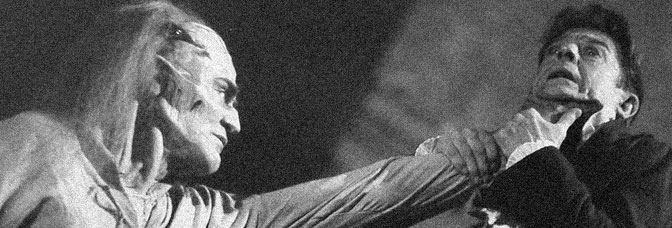
After destroying the future trying to save the environment, scientist John Hurt goes into the past where he finds the events of Frankenstein (the novel) unfolding around him, with Mary Shelley (Bridget Fonda) witnessing Dr. Frankenstein’s descent into madness. Raul Julia’s an amazing Frankenstein, Nick Brimble’s an amazing monster. Hurt’s a tad passive but very…
 The Stop Button