Category: Directed by John Carpenter
-
I’m not sure John Carpenter’s The Thing was a pinnacle of realistic practical special effects—I think it must’ve been one, but I’m not sure; I am confident, however, he and Dean Cundey pioneered SteadiCam (at least according to them) with Escape from New York. So watching his second (and, thankfully, final) “Masters of Horror” entry,…
-
Did anyone read the script for Cigarette Burns before they started shooting? Udo Kier’s got a line about Norman Reedus following him, then Kier follows Reedus. Not to mention Reedus’s inability to open doors convincingly, much less regurgitate Drew McWeeny and Rebecca Swan’s startlingly insipid dialogue. It’s terrible when it’s Kier and Reedus delivering the…
-

Captain Voyeur starts better than it finishes, which is too bad since it gets better as it goes along. Writer and director Carpenter opens the short with a long tracking shot of some boring workplace. Excellent black and white photography from Joanne Willens (save two shots later on) makes the opening an observation on professional…
-

Ghost of Mars has a lot of earnestness going for it. Director Carpenter needs quite a bit his cast and he supports them even when they’re clearly not able to succeed–especially lead Natasha Henstridge. He takes the project seriously, his cast takes it seriously. Sure, it doesn’t exactly work out, but it’s not from lack…
-

In the Mouth of Madness is a rarity. It’s a film with some terrible, terrible parts, yet it needs to be longer. There needs to be more terribleness for it to be better. And it can’t even be much better, because those terrible parts break it, but it would be somewhat better. It would definitely…
-
Maybe a third of They Live is amazing. The film has three distinct parts. The first, where Roddy Piper arrives in L.A.–Piper never gets a name and L.A. never gets identified, though director Carpenter obviously expects the viewer to recognize it and understand its use–is the best. It’s a Western, sort of. Piper’s the Man…
-

Starman’s first forty or so minutes speed by–director Carpenter gets as much information across as quickly as he can to discourage the viewer from paying too much attention. There aren’t exactly plot holes, but there’s a lot of silliness in the script. For example, Charles Martin Smith–who’s perfectly good in the film–has an entirely pointless…
-

Memoirs of an Invisible Man is pointless. Most of its problems stem from the film’s lack of focus–in some ways, given Chevy Chase is a stockbroker and leads a life of extreme comfort, it ought to be an examination of eighties yuppies. Only a few years late. Except it’s obvious director Carpenter doesn’t want to…
-
Although Big Trouble in Little China takes place in modern day San Francisco and has a whole bunch of awesome special effects, it’s really just John Carpenter doing another Western. This time he’s doing a light comedy Western and he’s got the perfect script for it. W.D. Richter (credited with an adaptation no less) has…
-

Escape from L.A. is an action movie without any real action until the final set piece. And that final set piece is excellent–lots of hang gliders and practical effects. But the rest of the action? It’s terrible CG. Instead of imagining real set pieces, director Carpenter (and co-writers Kurt Russell and Debra Hill) fall back…
-

The television version of Halloween has an interesting story–the original film ran so short, when the network wanted to run it on TV, there wasn’t enough film after they cut out the violence. Carpenter was producing Halloween II at the time so he came back and filmed some more scenes to pad it out. Most…
-

Village of the Damned has three major problems. In no particular order… I’ll start with the stunt casting. Christopher Reeve, Kirstie Alley, Mark Hamill and Michael Paré are all–to varying degrees–genre actors. While Reeve and Paré are both fine, Alley’s out of her depth and Hamill’s just terrible. Some of Alley’s failings–and some of Hamill’s…
-

The titular assault in Assault on Precinct 13 doesn’t start until just over halfway through (and not at Precinct 13, but whatever). Until that point, Carpenter methodically lays out the elements to synthesize at the sieged police station. He introduces a tense gang situation, a new lieutenant (Austin Stoker), a convict being transferred to death…
-

John Carpenter does some amazing work on Christine. He’s got help from his cinematographer, Donald M. Morgan, but the first forty-five or fifty minutes of the film are simply masterful. Carpenter has a wide variety of scenes–high school, ominous, family scenes, conversations–and all of them are magnificent. It’s just too bad Bill Phillips’s script falls…
-
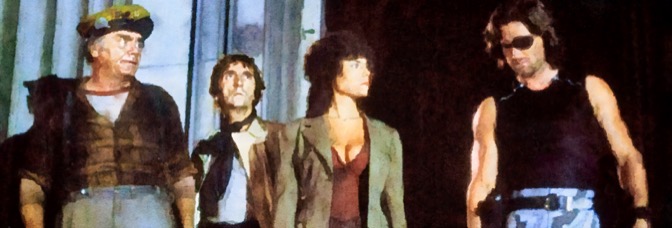
Man and boy, I’ve probably seen Escape from New York ten times. This viewing might be the first where I noticed the film’s quietness. Carpenter uses the relative silence to make the first third (even before Isaac Hayes shows up), the most memorable parts of the film. Some of that memorable quality has more to…
-

Vampires is a mess. I mean, there’s some good stuff in it, but it feels like the least interesting parts of the characters’ stories. There’s a little bit of sequel setup–and the never happened sequel seems a lot better–but so does a prequel to the film’s events. It takes place over a couple days and…
-
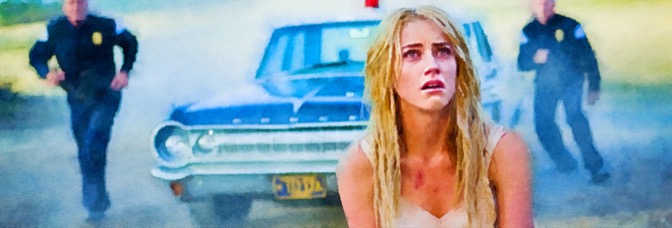
The Ward takes place in an Oregon mental institution in the late 1960s and doesn’t have a single good Cuckoo’s Nest reference. I’m not sure one would have helped—writes Michael and Shawn Rasmussen are fairly tepid (they play toward director Carpenter’s eighties weaknesses in fact). Maybe if they’d modeled the film on Cuckoo’s Nest, things…
-
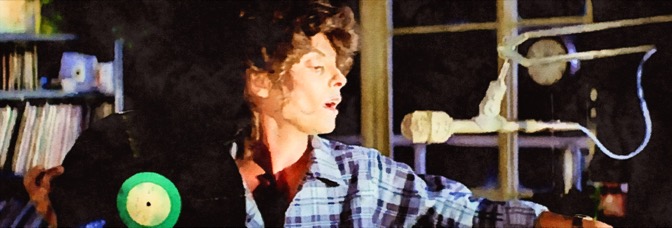
It’s not just Janet Leigh being in the film or all the trouble–visibly–starting when Jamie Lee Curtis arrives in town, it’s everything about The Fog–it’s an aware Hitchcock homage. The list can continue with the setting, the reference to The Birds, but it’s even more. There’s a definite feel to the film; Carpenter seemingly (he…
-

Halloween is a technical masterpiece. It’s absolutely spectacular to watch. Carpenter’s composition is fantastic, but Dean Cundey’s cinematography and the editing–from Tommy Lee Wallace and Charles Bornstein–creates this uneasy, surreal experience. The way Carpenter uses the wind in the film is probably my favorite, since he establishes it early on and keeps it going until…
-

I’d forgotten Prince of Darkness‘s more fanciful notions–Jesus the space alien, still sent to Earth to save us from the Devil, but this time, the Devil’s kind of a space alien too (or not)–and its less creative ones (the Devil uses projectile vomit to posses people). It’s Carpenter at his strangest, the late 1980s period,…
-
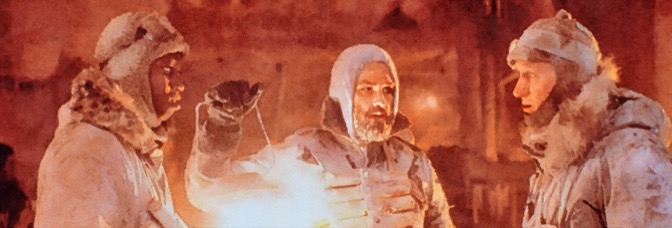
I always say John Carpenter needs to direct something else, something non-genre. A romantic comedy perhaps or a family drama. I guess it never occurred to me, but with The Thing, Carpenter is directing something else. It’s kind of too bad, his best film is the one–in some ways–least like his others. In The Thing,…
-

Dark Star is probably John Carpenter’s second finest film (after The Thing). It’s the John Carpenter film I’ve always been saying he should make–a funny one. I have seen Dark Star before, probably nine years ago, back when it was somewhat rare (it got picked up, a year after I saw it, by a video…
 The Stop Button