Category: Directed by Kenneth Branagh
-
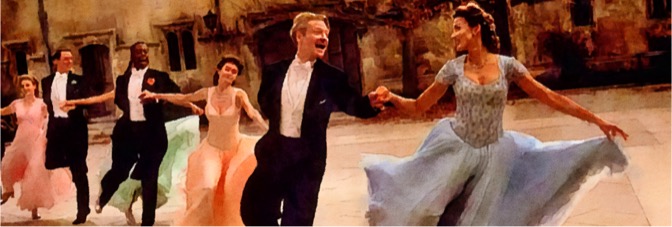
It’s a funny idea, and it would explain a lot about Love’s Labour’s Lost, but I don’t think screenwriter, director, and co-producer Branagh cast Alicia Silverstone on a bet regarding whether or not he could get her to deliver an okay monologue. He succeeds and she succeeds, but just okay, and it takes most of…
-
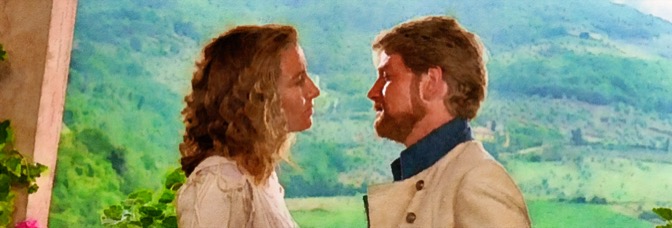
Much Ado About Nothing has a machismo problem. It’s not writer, director, and star Branagh’s fault; it’s just the historical patriarchy. Though Branagh does try to do some initial counterbalancing, opening the film with a quote about the sexual dynamics. Still, that moment only carries through the first scene, setting up Emma Thompson’s character… And…
-

In the Bleak Midwinter is a sweet movie. It’s kind of a Christmas movie–it takes place at Christmas–and it’s this gentle, thoughtful, sweet but never saccharine or even really acknowledging its sweetness sweet movie. Writer and director Branagh puts a lot of work into the plotting of the film, without ever appearing to be putting…
-
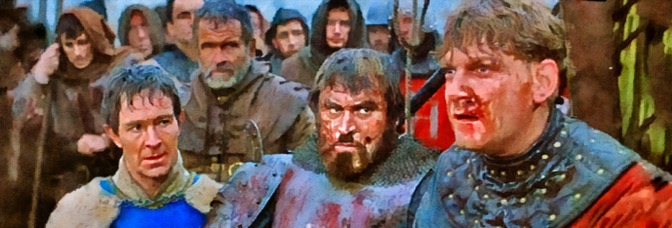
Director (and adapter) Branagh splits Henry V into three sections. They aren’t equal, they don’t match the act changes (usually); Branagh lets photographer Kenneth MacMillan open up the film to (outdoor) light while Patrick Doyle’s score becomes essential. The first outside, daylight sequence–Branagh (as Henry) gives his troops a rousing speech–defines the rest of the…
-

I indistinctly remember the last time I saw Dead Again, I didn’t think much of it. I don’t know what I could have been thinking. Until the last act, which slaps a mystery conclusion onto an amnesia thriller without enough padding, the film’s utterly fantastic. Branagh’s direction is great, but the most striking thing initially…
-
I’m trying to think of good things about Mary Shelley’s Frankenstein. It starts off poorly, with an opening title seemingly made on a cheap video editor from the late 1970s, then moves into the Walton framing sequence. Apparently, no one involved with the film—Branagh, the screenwriters, the producers—understood the point of these frames in the…
-

Thor has two problems to overcome. Director Branagh is successful at one of them. The first problem is half the film takes place in mythological Asgard, which is an ancient place, but very modern with all the latest streamlined architecture—think if Art Deco molded with neon, some magical stuff and then inexplicable horse-based transit. For…
-

With the exception of The Tales of Hoffmann, I’m not really familiar with any other efforts to adapt an opera to film. I guess there are those Andrew Lloyd Webber adaptations (right?), but I don’t think of them in the same sense–the artistic one. Branagh’s The Magic Flute has more in common with his Hamlet…
 The Stop Button