Author: Andrew Wickliffe
-

Hot Pursuit is the second of two season seven “Frasier” episodes credited to writer Charlie Hauck. Considering the job he got on this one, it’s understandable he wouldn’t be back. It doesn’t seem fair to give a new writer an episode about Kelsey Grammer and Peri Gilpin wondering if maybe they ought to just get…
-
Whine Club is half a regular “Frasier” episode, half a “mythology” episode, meaning working on the season’s low-burning arc about Niles (David Hyde Pierce) and Daphne (Jane Leeves) getting serious about other people when they should (?) be getting serious about each other. It’s also got an excellent subplot for John Mahoney where he and…
-
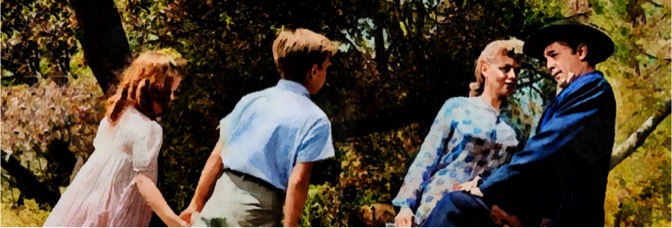
Night of the Hunter is a singular experience. Definitionally. It’s the only film Laughton ever directed, which makes sense. The film’s visuals are decades too early for the composites they can do; Laughton did direct plays, which also makes sense. Hunter feels “stagy,” but not. Laughton directs his actors for close-up without ever losing track…
-
I just got the final reveal in the Deneaus conclusion. Not like I just finished reading it and got the reveal; a few hours later, sitting down to write about Shadows on the Grave’s finish, I got it. I should’ve gotten it earlier. Maybe I would in a single sitting reread (I mean, probably not,…
-

I’m hesitant to call anything “Doom Patrolling,” a la “Westworlding,” but this episode comes close. The team is recovering from their trip to the future and discovering they bring about the “Butt-pocalypse;” one of the zombie butts from last season has survived to destroy the world. April Bowlby’s all set to lead the team to…
-

Last season, “Doom Patrol” had to recover from a Covid-19-induced shortened second season, then get the show into a decent spot for HBO Max to cancel them. Thankfully, HBO Max did not cancel them, and now the show gets to do, presumably, at least this fourth season. You never know with HBO Max, however. Anyway.…
-
I’m not sure where to start with this episode. Jay Kogen’s got the writing credit, and he’s had his name on some good episodes in the past. But why they ever thought they ought to do an episode like Dr. Mary. Dr. Mary is played by Kim Coles, a Black woman (and possibly the first…
-
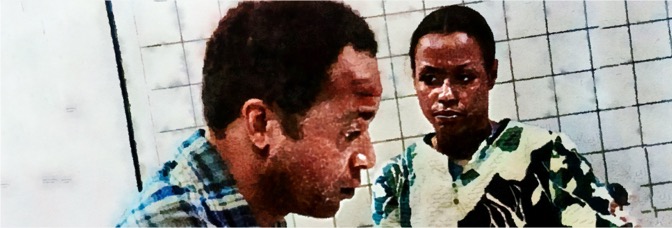
Killer of Sheep is a series of vignettes, usually connected with a sequence at the slaughterhouse (though not always slaughter, but sometimes, so be ready), always connected with a piece of music. Sometimes the music recalls a previous scene or musical selection, creating a narrative echo between the sequences. And even though Sheep is incredibly…
-
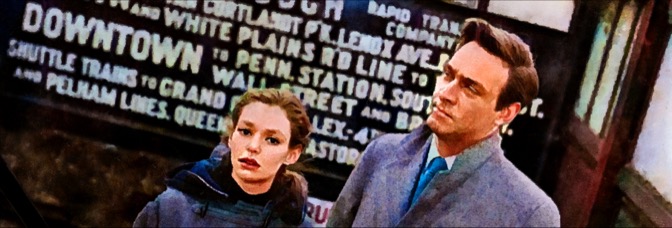
Conservatively, Stage Struck has six endings. They start about fifty-eight minutes into the film, which runs ninety-five minutes. Actually, wait, there are probably—conservatively—seven. I forgot how many there are mid-third act before the actual (ending-laden) finale. For a while, the false endings add to the film’s charm. Maybe if the third act hadn’t reduced lead…
-
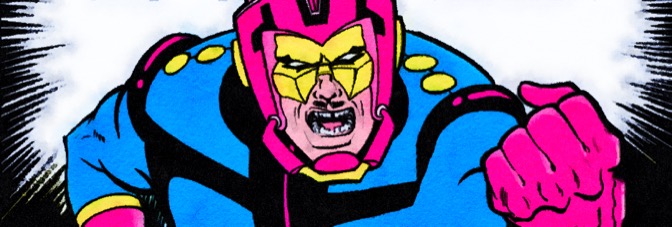
James Sherman is back on art after an extended period, now going by “Jim.” His style’s simplified, with a lot less detail. He’s still got fantastic composition and his people—again, simplified—have a lot of personality in what he does give them. Last time he was on the series, he was doing these lush, expansive sci-fi…
-
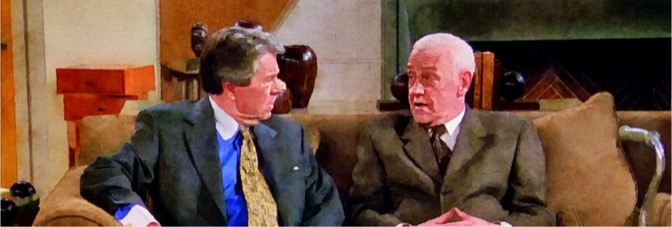
As usual, I regret not keeping better track of writing credits. Joe Keenan gets the credit this episode; he’s been writing “Frasier” since season two with numerous big successes, but based on Out with Dad, I’d have thought him a newbie. The episode picks and chooses plot points from outstanding—and memorable—episodes and mixes them a…
-

I can’t believe how well writer Marv Wolfman ends up doing with this issue. It very much should not work, yet it ends up working (in no small part due to Gene Colan and Tom Palmer’s superb artwork; it’s one of their best issues). But the story… wow wee. Dracula starts the issue attacking a…
-
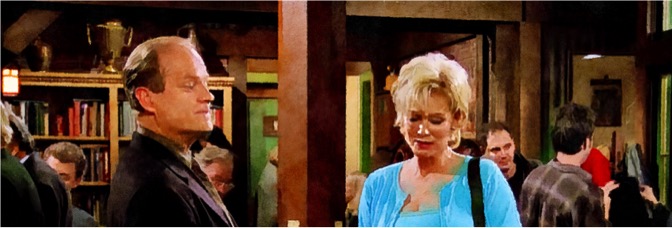
Oh, “Frasier: Season Seven,” why do you continue to taunt me? This episode has Jane Leeves and David Hyde Pierce cooking together and being adorable for the first time since Leeves found out about Hyde Pierce crushing on her. It’s a good scene, with Hyde Pierce getting to more fully participate—previously and problematically, these scenes…
-

I’m going to assume Dan Dare had a future-sword in the original comics or whatever, because otherwise, writer Garth Ennis has even more to answer for. This final issue is oversized, which I’d been gleefully anticipating, but it turns out it’s too long. It’s fluffed up with lots of double-page spreads and it’s still too…
-
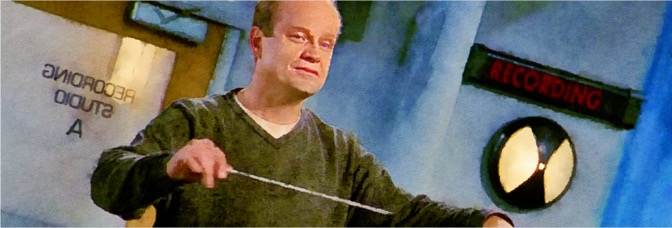
I’m feeling a little like the boy who cried wolf, on the lookout for “Frasier”’s inevitable, impending fall; the show’s two episodes away from the “mythology” two-parter, and those two episodes have been excellent. This one’s all about Kelsey Grammer going overboard while composing a theme song for his show. Station manager Tom McGowan wants…
-
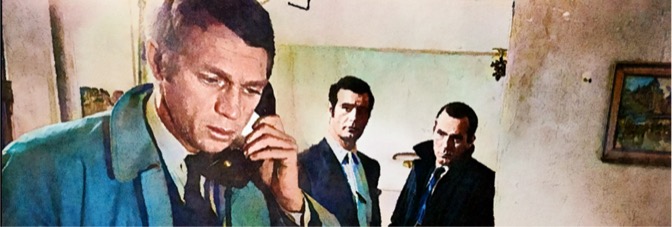
Bullitt is from the period when Hollywood wasn’t calling the Mafia the Mafia yet—it’s “The Organization” here—and none of the mobsters had Italian names, but they are mostly Italian (heritage) actors. It’s especially funny because part of Bullitt’s conceit hangs on WASPs like up-and-coming senator Robert Vaughn not being able to tell Italians apart. But…
-
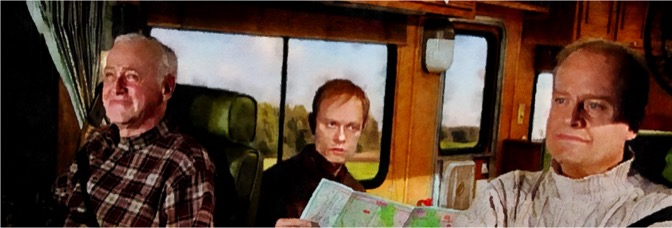
Despite the unfestive title, RDWRER is the third “Frasier” in a row to do a holiday. Two episodes ago, it was a birthday episode (sort of) for Kelsey Grammer, then last episode was a Christmas episode, and now this episode is the New Year’s. There’s no specific mention of the new elephant—Jane Leeves knows David…
-

Artist Don Perlin keeps himself busy this issue. Each page has at least seven panels, usually with Perlin doing the action in small, vertical panels, in long-shot. As detail isn’t Perlin’s strong suit, the composition choices help. I have to be honest and admit I dug this issue so much I’m worried about myself. There’s…
-
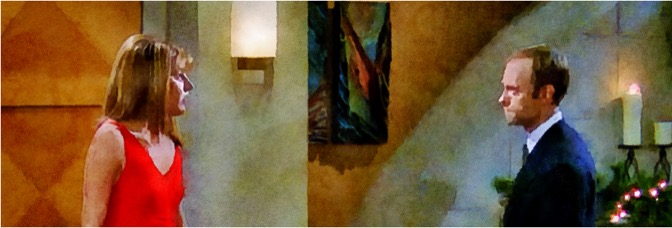
“Frasier” does indeed run into immediate problems with Jane Leeves finding out David Hyde Pierce has a crush on her (and has had one for quite some time). Leeves has her first moment of romantic interest—post finding out—and it’s when Hyde Pierce puts his jacket on her. They’re standing out on the balcony unraveling the…
-
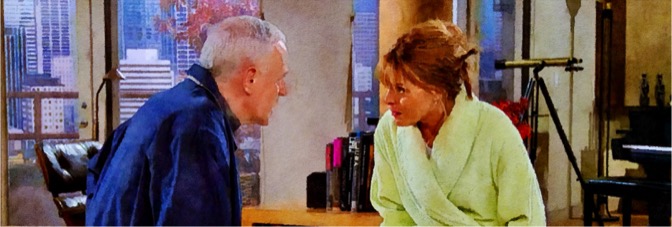
This episode is the first entry in a two-parter, but one of those loose sitcom two-parters where it’s just so they keep them together in syndication. Whatever comes after Back Talk will be inevitably different because, after over a hundred and seventy episodes, “Frasier”’s going to deal with one of its longest-running story arcs. Not…
-

Emergency Declaration is a disaster movie made like a horror movie. It’s not just any disaster movie, either; it’s Airport meets Airplane but with bioterrorism. The bioterrorism doesn’t have to do with the horror movie; it’s all the investigation procedural. The horror movie experience is entirely reserved for the victims (and the audience). Declaration doesn’t…
-

New art team Brad Rader and Cameron Stewart take over for this done-in-one, which brings Slam Bradley into the series proper—he appeared in a Detective Comics backup setting up Catwoman (or at least tying in enough to be reprinted in the first trade… I think). But he and Selina team up this issue, which is…
-

I’m back to wondering if they commissioned a bunch of stories from the same prompt, and now it’s creator Richard Corben’s turn to do them himself. There aren’t any co-writers this issue, not even on the one-page strips. It’s just Corben, and it’s a triple. Unfortunately, there are four stories, but the first three more…
-

Black Adam opens with kid narration. At first, it seems like the narrator kid is Ancient Kahndaqi Jalon Christian, who’s sick and tired of living under a tyrannical king who has his people mining eternium for him. Eternium is not a “Masters of the Universe” thing; it’s more like the DC Universe version of vibranium.…
-

Ric Estrada takes over on pencils—John Calnan still inking—and I guess I hope he takes over from Joe Staton. Estrada’s not great on distance or action shots, but his close-ups are okay. And his not-great stuff fits with writer Gerry Conway’s Silver Age-y Legion. For example, this issue has the Legionaries hitching a ride on…
-

Writer Marv Wolfman starts this issue with a…. Okay, here’s a welcome to the future moment. Wolfman starts the issue with a quote about a Hindu king, making me think this issue was the third in his “religion” trilogy of issues (beginning with the Jewish issue, then a generally religious one) with Hinduism. But not…
-

As I feared, Gary Erskine continues to fall apart on the art this issue. As I assumed, it doesn’t really matter. Writer Garth Ennis is doing such a phenomenal job with the script, Erskine gets a pass. He’s got exceptional problems with depth—I don’t even know how to describe it but somehow, although Erskine’s figures…
-

Lady Bird is a loving tribute to Sacramento, California, specifically growing up there as a teenager, from the perspective of a main character who hates Sacramento. Writer and director Gerwig opens the film with a travelogue of Sacramento streets and locations, a device she repeats sparingly (only significantly in the fantastic finale); Lady Bird is…
-
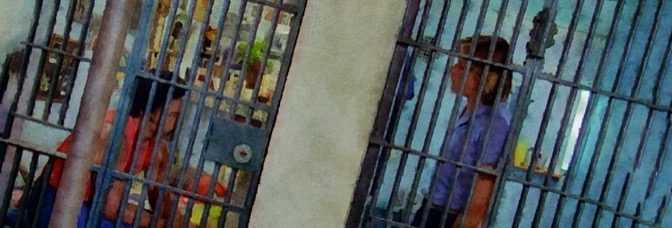
The Jericho Mile plays a little like a truncated mini-series. The first hour of the film introduces the characters, the ground situation, and does an entire arc for six characters. There’s a minimal subplot about prison psychologist Geoffrey Lewis trying to convince seemingly super-fast-running inmate Peter Strauss to open up in therapy. Lewis then gets…
-

I can’t imagine Werewolf will keep it going, but somehow they find themselves this issue. I mean, it’s Doug Moench’s surfer bro pulp and Don Perlin’s “what if I just page layout like it’s 1952” penciling and inking, but still. They’re in sync here, and it’s… fine? Or at least closer to fine than I’d…
 The Stop Button