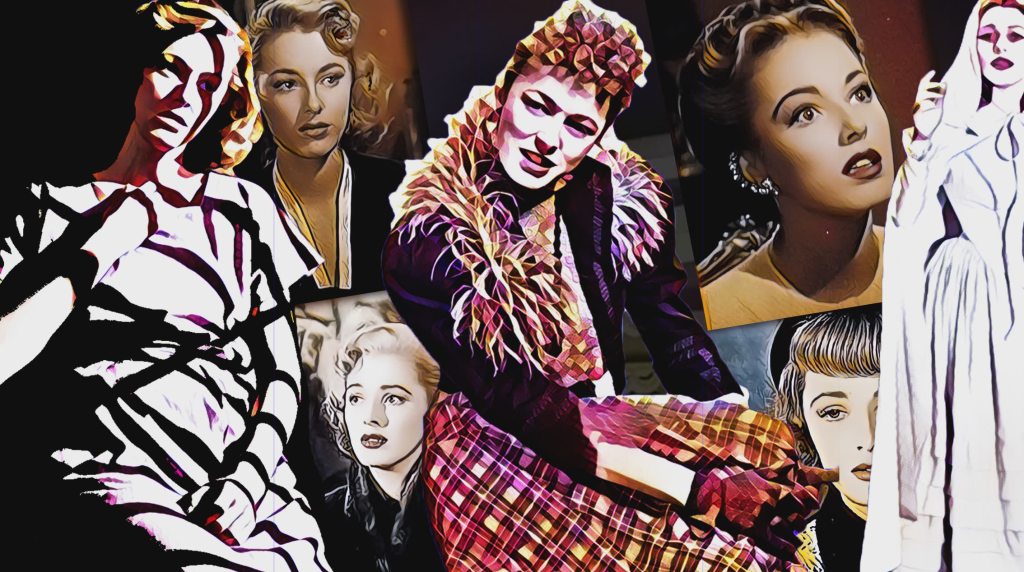
In June 1941, right before turning nineteen years old, Eleanor Parker signed on as a contract player at Warner Bros. She had just finished a year at the Pasadena Playhouse. Parker started acting in high school and had been dodging studio screen tests since she was fifteen; she wanted to continue developing her craft on stage. Warner made an offer two days after Parker’s screen test. The studio was so enthusiastic about Parker they cast her in what would be their second-biggest hit of the year, They Died with Their Boots On.
Unfortunately, Parker’s part in Boots ended up on the cutting room floor.
The studio then put her in a couple of its Technicolor shorts, which, post-Pearl harbor, were now focused on propaganda. The first, Soldiers in White, came in February 1942, just over two months after Pearl Harbor. The second, Men of Sky, arrived in July. Parker played a nurse in the former and a war widow in the latter. Even with only two lines in Sky, she easily gives the best performance (as she also does, but with more material, in Soldiers). B. Reeves Eason directed both the shorts and Owen Crump contributed their unfortunate screenplays.
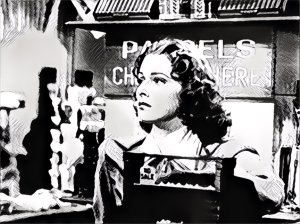
Parker’s feature debut came in September 1942, with B-picture Busses Roar; it came out fifteen months after Parker signed with the studio (and almost a year since her A picture “debut” in Boots).
Like most of Parker’s 1940s films, Busses Roar is a home front picture. Fourth-billed (of five), Parker plays a bus terminal candy girl. The story concerns Axis saboteurs using a Greyhound bus to bomb an oil field. Richard Travis is the lead, with Julie Bishop his love interest. D. Ross Lederman directs the fifty-eight minute film.

Busses Roar is a busy picture; most of it takes place in the bus terminal, introducing various travelers and their subplots. Screenwriters George Bilson and Anthony Coldeway need to pad out the short run time as the film doesn’t have the budget for its action-packed finale. The terminal scenes are solidly produced however. Bishop’s not bad and Travis is likable. He’s not good, but he is likable. Parker doesn’t get a significant enough character to make any impression–despite her being higher billed than actors who get better material.
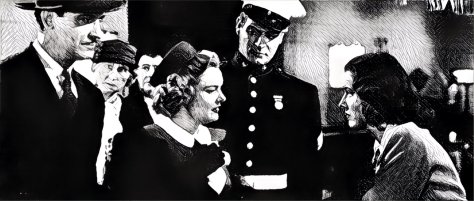
In general, critics liked Busses Roar. Though definitely not The New York Times. Warner’s B-picture wartime propaganda pictures are mostly forgotten–at least by the studio’s home video department. Busses Roar has never had any home video release, though it does show up from time to time on Turner Classic Movies. It’s an inglorious, but not embarrassing, start to Parker’s feature filmography.
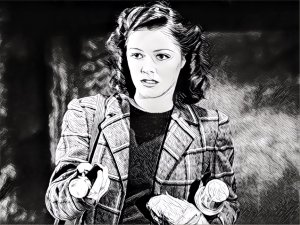
Parker’s next film, The Mysterious Doctor, came out in March 1943. Another home front picture–though this time the British home front–Doctor combines propaganda with horror thriller. It’s a ghost story, with a (headless) ghost terrorizing tin miners to keep them from providing His Majesty’s Armed Forces with that valuable wartime material. Parker’s character is the practically the only one in the town who keeps her head (figuratively) when confronted with the supernatural. Benjamin Stoloff directs from a Richard Weil script. Also starring John Loder and Bruce Lester, Mysterious Doctor clocks in just under an hour. Another B picture for Parker.

With its American actors in its British setting, not to mention the foggy moor scenery, Mysterious Doctor at first glance seems like a Warner B riff on the Universal horror classics. It’s got more going on than just that riff, however. Second-billed Parker turns out to be the lead, getting a lot to do in the film and doing it all quite well. The finale’s problematic–director Stoloff actually does worst on the thriller aspects–but Doctor’s a nice, nimble B, with a good dash of humor.
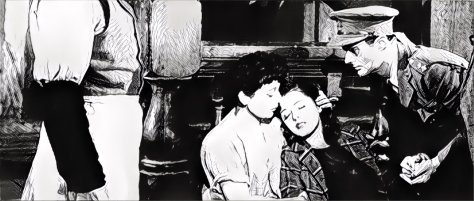
While at least one contemporary critic liked Mysterious Doctor–and Parker enough to single her out in the review–the film was not a breakout hit. Just like Busses Roar, The Mysterious Doctor has had no home video release. Turner Classic Movies airs the film. While better known than Busses Roar, Doctor seems to suffer an unduly harsh reputation, emphasizing its failures over its successes.
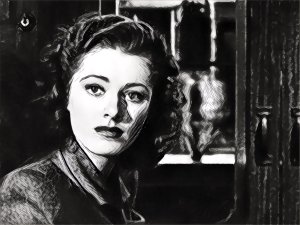
In May 1943, Parker finally got a part in another A picture and she didn’t end up on the cutting room floor. In Mission to Moscow–director Michael Curtiz’s first film after Casablanca–Parker plays lead Walter Huston’s daughter. The film’s an adaptation of Joseph E. Davies’s memoir about his time in the Soviet Union as United States ambassador. Davies’s book had been a big hit and expectations were high for the film.
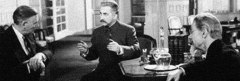
Curtiz’s direction is excellent, Huston’s performance is excellent, Howard Koch’s script is fine. It’s just too much of a propaganda piece–Huston, wife Ann Harding, and (sometimes) Parker tediously tour the Soviet Union (as shot in Hollywood U.S.A.)–there’s nothing else to it. No subplots, no drama, no nothing. It’s an artificial marketing travelogue. Parker is fine and appealing in a minuscule part. The film occasionally even forgets about her. Fellow Warner contractee Richard Travis (from Busses Roar) shows up as Parker’s occasional chaperone.
Upon release, Moscow was far from a success. Despite the Office of War Information signing off on the finished product, the United States public had changed its mind about the Soviet Union in the year and few months between the release of the book and the film. Contemporary critics particularly disliked the overt propaganda as well as the historical inaccuracies. In the late forties, the film and its producers would come under fire from the House Committee on Un-American Activities.
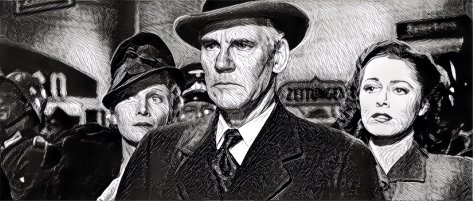
The film remained out of circulation until the 1970s, when it started airing on television. It has had some critical reevaluation since, though it still remains more a curiosity than anything else. Warner Archive released the film on DVD and it airs on Turner Classic Movies. Another inglorious propaganda picture for Parker, though at least this one is on home video.
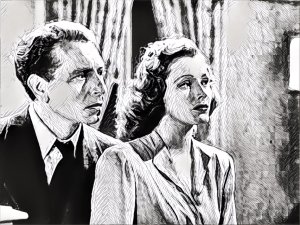
The following year, 1944, would be Parker’s busiest of the forties. She would appear in four films before it was over, starting with May’s Between Two Worlds. Directed by Edward A. Blatt and costarring John Garfield, Paul Henreid, and Sydney Greenstreet, Parker got the last of the four top billings. She plays top-billed Henreid’s wife, though second-billed Garfield’s the real star.
While the film’s based on Sutton Vane’s 1924 play, Outward Bound, Daniel Fuchs’s screenplay updates the story to the modern day. A group of travelers are on a ship escaping the bombings in World War II London and headed to the United States. Or are they? Are they perhaps headed somewhere else entirely? With Warner notables in the supporting cast–Edmund Gwenn, Faye Emerson–Between Two Worlds might not have had the street cred of Mission to Moscow but it’s an A picture and Parker’s in a big part.

Between Two Worlds runs too long–almost two hours and it’s a bumpy voyage throughout. Henreid, who anchors Parker, can’t keep up with Garfield, who takes over the film despite coming in late. Parker has some good scenes, a solo one towards the end in particular. The supporting performances are good. Sydney Greenstreet’s real good. Between Two Worlds is lucky to have a built in character winnowing, which propels it when Fuchs’s script and Blatt’s direction don’t.
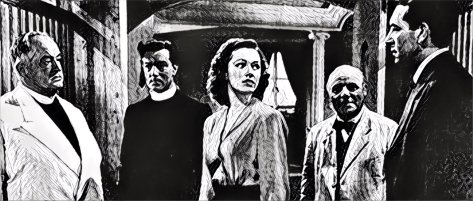
Until Warner Archive put it out on DVD, Between Two Worlds had never had a home video release. Turner Classic Movies has played it regularly over the years and the film’s gotten itself an audience. When I was first discovering Eleanor Parker movies, Between Two Worlds was the only one of her early films anyone else was familiar with.
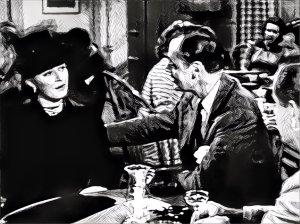
Parker’s next film, Crime by Night, arrived in September. It was back to B pictures for Parker and Two Worlds costar Faye Emerson; it’s also one of Parker’s smallest Warner parts. She plays ex-wife to lead Jerome Cowan, a New York detective who’s in a small town investigating a case. Jane Wyman plays Cowan’s secretary and sidekick. William Clemens directs the seventy minute picture–so a longer B anyway–from a script by Richard Weil and Joel Malone. Weil wrote The Mysterious Doctor, which mixed home front propaganda with a horror picture. Crime by Night is also another Warner mixer–this time murder mystery and home front propaganda.
Crime by Night is a serviceable B mystery. Not all of the performances are good–Faye Emerson and Charles Lang aren’t–but Jane Wyman’s a great lead. Cowan’s drunken, corrupt, philandering detective occasionally amuses. Parker does quite well implying a lot more depth to her character than ends up on screen (she and Cowan have a child together, who inexplicably never shows up). Even with Crime’s problems, Wyman’s so incredibly appealing, it’s too bad Warner didn’t do a series with she and Cowan’s characters.
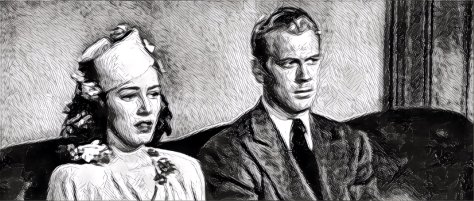
Contemporary critics received Crime by Night well enough. It had been in the can for two years before its theatrical release and was not a major box office success. No home video release for Crime by Night. It too shows up on Turner Classic Movies. Hopefully Jane Wyman fans are familiar with it. It’d be a fine finish to Parker’s B days at Warner–her performance, loving mother slash femme fatale, is neat. There’s one more B to go though.
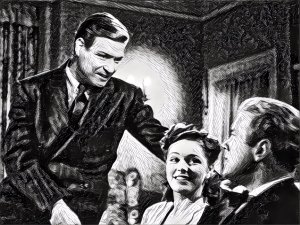
Parker’s final B-picture, The Last Ride, came out a month after Crime by Night and fittingly culminates her filmography to this point. D. Ross Lederman, who directed Parker’s first film, Busses Roar, directs The Last Ride. Parker is third-billed, after Busses Roar’s Richard Travis and Crime by Night’s Charles Lang. They’re brothers–one’s a cop, one’s a rubber runner (wartime rubber shortages, so another home front picture)–and Parker’s the girl they both love. Jack La Rue and Cy Kendall costar.

The Last Ride’s not an abject failure, but it’s got a clunky script from Raymond L. Schrock. There are constant continuity problems, which is should be impossible in a fifty-six minute movie but Last Ride manages. Parker had Lang for a love interest in Crime by Night and Travis in Mission to Moscow so the love triangle should register. Except Parker only gets two scenes; hardly time for reunions or anything else. Travis is all right. There’s nothing anyone could really do to improve Last Ride… the tires are just too low.

The film apparently didn’t make much impression on release and has never been out on home video. None of the aforementioned B pictures are on home video and nothing makes The Last Ride stand out. Sorry, Richard Travis and Charles Lang. More, of all Parker’s early films (her sixth after starting three years before), The Last Ride doesn’t even manage to be a curiosity. And if you do watch it hoping for a nice early role for Parker, you’ll be disappointed when she’s barely in the film, regardless of billing.
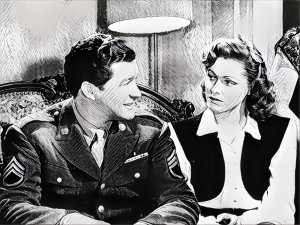
Just a few weeks later, Warner released The Very Thought of You, featuring Parker’s first leading role in an A picture. It’s a home front picture, with more drama, less propaganda. Parker’s a munition factory worker who has a whirlwind romance with GI on leave Dennis Morgan, culminating in marriage. Her family doesn’t support Parker or the marriage; dating soldiers is a no no. The timely subplots include wartime infidelity and temptation. Dane Clark and Faye Emerson play the sidekicks (Clark to Morgan, Emerson to Parker). Very Thought would be Parker and Emerson’s last Warner film together, after Between Two Worlds and Crime by Night.

The Very Thought of You is a deliberate family drama. Director Delmer Daves and Alvah Bessie’s script is better than Daves’s direction, but the cast is first-rate. Save leading man Dennis Morgan, who looks his part but doesn’t have any depth. Parker’s good but her part’s a bland “good girl”. Everyone else gets more, whether it’s being awful, unfaithful, or just funny. The film drags–mostly because its not dramatic enough–but it’s still quite good.
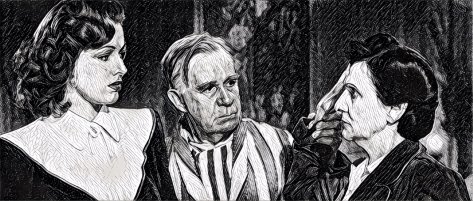
Very Thought of You also isn’t out on home video. Apparently Warner–not even Warner Archive–thinks there are enough Parker or Dennis Morgan fans out there to warrant a release. Like all of Parker’s film’s to this point–feature and B–Very Thought does show up on Turner Classic Movies.
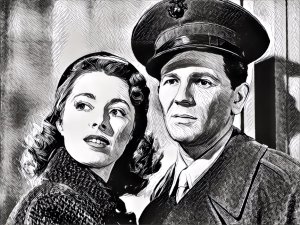
After the four film year of 1944, Parker slowed down. Her one film in 1945, Pride of the Marines, arrived almost exactly a year after Very Thought of You. Marines, based on a true story, pairs Parker with John Garfield; while they shared scenes in Between Two Worlds, they didn’t share story arcs. In Marines, Parker again plays the good girl. This time she cures Garfield of his aversion to romance and commitment. Then Pearl Harbor happens and Garfield joins up, distinguishing himself in the Pacific. He comes home wounded and lashes out at everyone, Parker included. The film reunites a lot of Very Thought of You principals, including director Delmer Daves, producer Jerry Wald, and main costar Dane Clark.
Overall, Pride of the Marines isn’t successful. There’s some excellent work from Daves–the sequences in the Pacific Theatre are a spellbinding nightmare–but Albert Maltz’s script is thin. It’s thin on Garfield’s character, then it’s thin on his rehabilitation. As a result, Garfield’s nowhere near as effective as he needs to be and the film itself doesn’t have enough heft. Parker’s good, of course, having played this kind of part most of her career to this point. Sidekick Clark also does well, mixing dramatic with comedic.
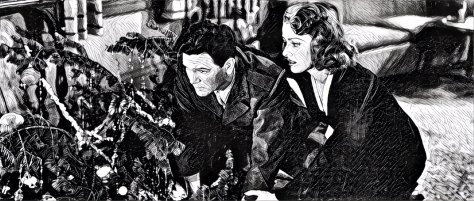
The film was well-received on release–lots of praise for Garfield and Maltz’s script was Oscar-nominated–but Marines fell into obscurity. Well, more forced into obscurity after the House Committee on Un-American Activities went after both Maltz and Garfield. The film never had a VHS release, but aired somewhat regularly on Turner Classic Movies. The film finally got its first home video release on DVD from Warner Archive, one of that label’s first releases.

Parker’s next film–her first of 1946–was Of Human Bondage. It came out about a year after Marines and introduced audiences to an Eleanor Parker much different than the Warner home front ingénue. As a cruel, vulgar Cockney waitress, Parker inadvertently bewitches medical student Paul Henreid, who’ll do anything to win her. Once she realizes how much she can profit from his lust, she takes full advantage. Within some limits. He does disgust her after all. Director Edmund Goulding wasn’t sure about Parker for the part (he’d wanted Ida Lupino) and tested Parker three times before casting her. Bondage sat on the shelf for a couple years. It was in the can in 1944 and could have provided a far more immediate contrast to Parker and Henreid’s devoted lovers in Between Two Worlds. Another Two Worlds cast member–Edmund Gwenn–is in Bondage, but never onscreen with Parker.

Of Human Bondage, much like the source novel, is a slow moving affair. Parker’s magnificent. Henreid’s good–especially since he’s never trying to make himself likable–but it’s all about Parker, who sadly doesn’t get as much attention as she should. She’s not the protagonist, after all, just his main foil. Goulding gives Henreid and Parker a whole lot of room to work. His direction is patient and deliberate (though apparently much of the composition is the result post-production tinkering at Henreid’s request). Gwenn’s great in his supporting role, imbuing Of Human Bondage with a most unlikely quality–hopefulness.
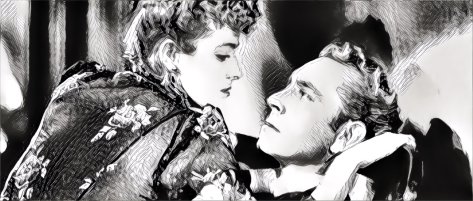
Contemporary critics didn’t think much of the film, though Parker got good reviews. When MGM adapted the novel again in 1964, they bought up the rights to the 1946 version and kept it off television, effectively letting it become lost. Turner Classic Movies has been airing Of Human Bondage for many years, though apparently it’s never gotten enough viewers to get a Warner Archive release. That lack of release is unfortunate; Of Human Bondage is Parker’s first dramatic role of depth and the first time it’s clear there’s no way to cast her against type; she doesn’t have one.
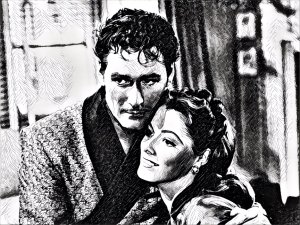
Four months after Of Human Bondage came out and fizzled, Parker’s next film arrived. Never Say Goodbye, a romantic comedy, with Parker and Errol Flynn playing a divorced couple with a great daughter (Patti Brady) who both maybe want to fall in love again. With each other. James V. Kern directs the film, which is one of those late forties post-war screwball comedies.
Never Say Goodbye has a strong open and a charming cast. Not just Parker and Flynn, but S.Z. Sakall and Hattie McDaniel. After the strong open, things aren’t as good. Parker and Flynn don’t have much to work with and despite both being charming, they don’t have much chemistry. Both are quite glamorous, however. And Brady’s adorable. It’s a perfectly okay comedy. Nothing more.
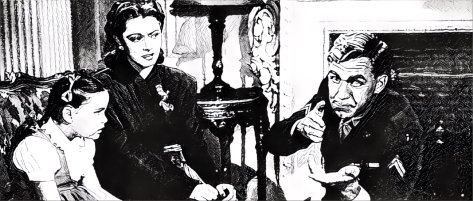
Contemporary critics were lukewarm but positive in their reviews of Never Say Goodbye, though it wasn’t a hit on release. No doubt thanks to Flynn’s presence, the film actually had a VHS release. It was Parker’s earliest film to be released on that format. Like everything else, it airs on Turner Classic Movies. Warner Archive has also got a DVD out. So Never Say Goodbye is reasonably accessible. Or, at least, it’s been accessible for longer.
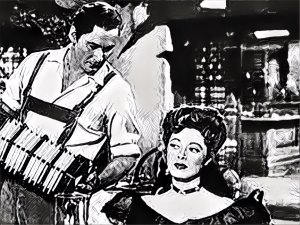
The following year, 1947, Parker appeared in two films. The first, reuniting her with Goodbye costar Errol Flynn, was Escape Me Never. Parker is third-billed–behind Flynn and Ida Lupino–and plays the other woman to Lupino; they both want Flynn’s attentions. Flynn’s a struggling composer. Lupino’s a broke single mother. Parker’s a wealthy bachelorette. Gig Young is Parker’s other romantic interest and Flynn’s boring brother. The action takes place in turn of the century Europe. Peter Godfrey directs from Thames Williamson’s script.

Escape Me Never is terrible. Lupino’s annoying, Flynn’s bad, Parker’s lost, Young’s probably the best. Williamson’s script is awful. Terrible dialogue–which can’t help the actors any–but also terrible characterization. The parts are too thin. It’s impossible to take Flynn seriously as moody, broke, and irresistible to all women. It’s additionally impossible to take him seriously as a composer. The film’s a complete misfire; no one can survive it.
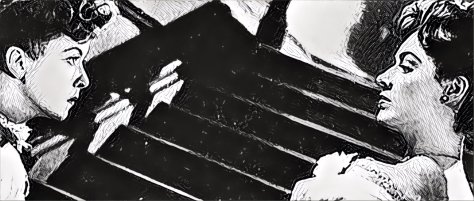
Contemporary critics were not kind to Escape Me Never, though Bosley Crowthers of The New York Times did take a moment to send his “deepest sympathy” to Parker for having to be involved in the picture. Also presumably thanks to Flynn’s presence, the film did get a VHS release. Warner Archive has out a DVD as well. And Turner Classic Movies plays it. So it’s been accessible over the years, it’s just no one should ever see it.
Though Parker is probably at her most glamorous in the Escape Me Never; definitely of her Warner forties roles.
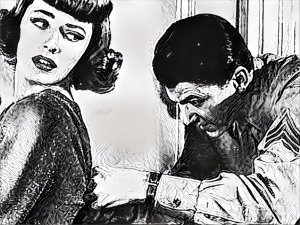
Parker’s second film of the year, The Voice of the Turtle, came out on Christmas Day (in New York, it went wide in early 1948). Irving Rapper directs the picture, an adaptation of John Van Druten’s extremely popular stage play. Parker plays a variation of her “good girl” home front role. Instead of being all good, she’s having an affair with Kent Smith (though, thanks to the Code, it’s never clear Smith’s married). He dumps her and Parker mopes until her free-living pal Eve Arden sticks her babysitting soldier-on-leave Ronald Reagan. Will he and Parker fall in love before their weekend is over?

Turtle’s screenplay, from Van Druten and Charles Hoffman, neuters the original stage play, which was all about Parker’s character not wanting to get horizontal with Reagan after her affair went badly. The result is a strange mix of screwball comedy and muted melodrama. Director Rapper doesn’t seem to know how to do either. Parker’s good, but the film gives a lot more material to Reagan (and Arden and even Smith). Reagan’s fine. The film’s got excellent production values, so it always looks like it ought to be better, even when it isn’t. Without knowing about the stage play, Turtle is a kind of confusing, talky romantic comedy. Knowing about the stage play… well, it’s a shame Parker didn’t get to play the role as written for stage.

Voice of the Turtle was well-received on release. Good box office, good reviews. It was sold to television in the fifties under the title One for the Book and remained identified with that reissue title for decades. So long, in fact, it aired on Turner Classic Movies under that title (and is still listed as such in their database). The Warner Archive DVD release restores the original, Voice of the Turtle title. The film never had a VHS release. Despite its contemporary popularity–and quick sale to television–Turtle’s mostly a footnote in Parker’s filmography. As in, she made a movie with Ronald Reagan.
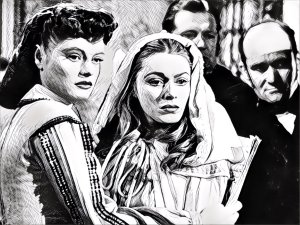
The Woman in White, released in May 1948, reunited Parker with two Escape Me Never principals–director Peter Godfrey and actor Gig Young. The film’s set in the nineteenth century on an English country estate, making it one of Parker’s three Warner films not set in modernity. Alexis Smith, who costarred in Of Human Bondage but never shared a scene with Parker, is second-billed. Parker, after six years and twelve films, finally gets top-billing for Woman in White. And she definitely earns it, playing two roles in the film. Sydney Greenstreet, who was sympathetic in Between Two Worlds opposite Parker, plays her scheming, odious nemesis in Woman. The only times he isn’t plotting against or tormenting Parker, he’s tormenting his own wife, played by Agnes Moorehead. John Emery, who had a small part in Turtle, appears in the film as well.
For the most part, The Woman in White is a phenomenal film. Great performances, particularly from Parker (who you get to see toggle between two different yet intricately tied roles) and Greenstreet. Moorehead’s excellent as well. Godfrey brings some humor to the dark psychological terrors. After opening with a fine romance for Parker (in one of her roles) and Young, Woman skips ahead to Young romancing Smith with far less chemistry. Even Max Steiner’s outstanding score takes some hits as the film winds down. Shakiness aside, The Woman in White is a success, with exquisite performances and filmmaking.
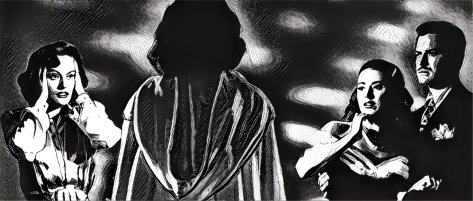
The film wasn’t well-received–at least, not by The New York Times–in 1948. The Woman in White never had a VHS release. For a long time, Turner Classic Movies was the only way to see it. Now, however, Warner Archive has put the film out on DVD, allowing people to see one of Parker’s finest forties performances. Sorry, two of Parker’s finest forties performances. She’s superb in both roles.
A couple months before Woman in White, Parker had her first child; she took time off to be a mom, indifferently racking up suspensions from Warner for refusing roles. As a result of the break, she didn’t have any movies come out in 1949. She was supposed to do The Hasty Heart, which would’ve reunited her with Turtle’s Ronald Reagan; Patricia Neal took the role instead.
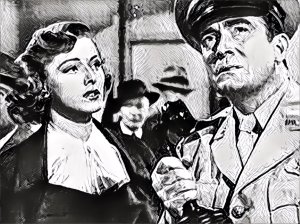
When Parker did return, it was for a role opposite Humphrey Bogart in 1950’s Chain Lightning. Bogie is a WWII bomber pilot who goes from running a flight school to testing a top secret new fighter jet. Parker plays the love interest, who knows Bogie from during the war and they never resolved their romance. Now they find themselves in a love triangle with fellow test pilot Richard Whorf. Raymond Massey plays Bogart’s demanding boss. Stuart Heisler directs the film, Bogart’s final picture for Warner Bros.
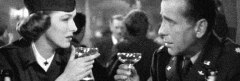
Lightning has a lazy script and runs too short–ninety-five minutes–but it’s perfectly fine. Good special effects, solid direction from Heisler, good acting from Bogart, Parker, and Massey. There’s little character development and the whole thing hinges on Bogart’s star power. He delivers, with Parker holding her own opposite him; it’s a shame their only pairing is such wanting material. The action-packed ending is particularly tense thanks to the filmmaking (and Bogart’s performance).
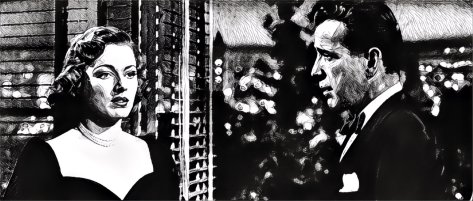
Even on release, critics recognized Chain Lightning’s general competence, lack of ambition, and passable quality. It doesn’t appear to have made much impression at the box office, however. While both Bogart and Parker were nearing the end of their time with Warner Bros., Bogart’s career was slowing as Parker’s was about to pick up. Thanks to it being a Bogart movie–albeit a lesser one–Chain Lightning got a VHS release in the early nineties. The film airs on Turner Classic Movies, like all of Parker’s Warner movies. Warner Archive has put out a DVD. Chain Lightning has been readily accessible for years, though it seems to still make as slight an impression as it did on release.
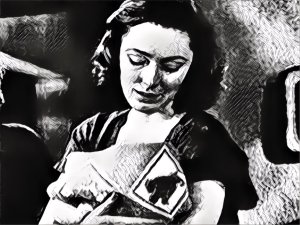
Four months after Chain Lightning, Warner released Caged, featuring Parker’s first Oscar-nominated performance. She plays a naive, pregnant young widow who ends up in a woman’s penitentiary. Parker’s top-billed (with Woman in White costar Agnes Moorehead getting second). Moorehead’s the understanding warden. Parker finds sympathetic fellow inmates, but runs afoul of Hope Emerson’s corrupt, vicious matron. John Cromwell directs the film, Jerry Wald produces; five years earlier, Parker starred in Wald productions Very Thought of You and Pride of the Marines.

Caged is a phenomenal film. Parker’s performance is exhilarating as the prison slowly and irrevocably crushes her. Cromwell’s direction is outstanding, the supporting performances are outstanding. The film smartly works social commentary into its constraints–the entire thing takes place in the prison, except maybe the opening titles. Excellent script from Virginia Kellogg; it circles Parker as it regards her, then closes in to make her protagonist. It’s great.
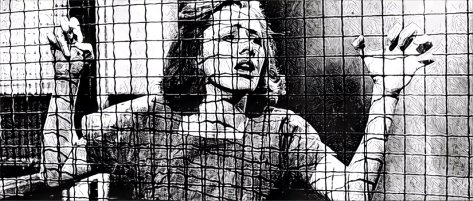
So it’s unfortunate instead of being remembered for Parker’s performance or Cromwell’s direction or Kellogg’s script, Caged’s initial legacy was as a camp “classic”. When Warner Home Video put out Caged (not Warner Archive, making Caged Parker’s only non-MOD–made on demand–DVD release of her Warner films), they released it in their “Cult Camp Classic” series. The film had developed a reputation over the years as a campy “women in prison” picture. Hopefully enough people have seen Caged to correct its reputation, which was never easy to find before the DVD (until Turner Classic Movies started airing it). When Warner Archive rereleased the film on DVD, they thankfully did so without the “Cult Camp Classic” banner.
Contemporary critics were somewhat cool to Caged, but it still received a number of Academy Award nominations in addition to Parker’s. While she lost the Oscar, Parker did win the Venice Film Festival’s best actress award for her performance.
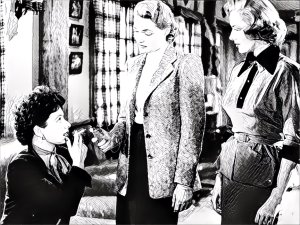
Three Secrets, Parker’s final film of 1950 came out in October, four months after Caged. Parker is top-billed followed by Patricia Neal and Ruth Roman. There’s a plane crash and a little boy is stranded on a mountain. All three women put a baby up for adoption; one of them is his mother. Parker’s the good girl with a past secret. Neal’s a divorced reporter. Roman’s a former chorus girl. The film goes into flashback for each woman’s story, comes together for the big finale reveal. Robert Wise directs.

Secrets is an okay lower budget melodrama. While a Warner Bros. release, it was a United States Pictures production, which apparently means less money. And in bad places too, like sets. The acting from the leads is all good. Parker’s secret is a home front related one so she’s back in that role, which appropriately caps her Warner career. Wise’s direction could be a lot better. But the script’s not great either.
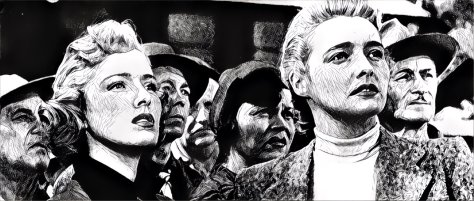
Three Secrets wasn’t Parker’s biggest hit of 1950 (turns out Caged was the most successful at the time) and it didn’t thrill critics, but it was a very easy Parker film to find on VHS. Warner either didn’t keep or have home video rights. Republic Pictures put Three Secrets out on VHS in the late eighties and kept it in print for over ten years. The rights issues also meant it took Three Secrets a long time to get a DVD release, but it got a blu-ray release the same day. The film also had a TV movie remake in the late nineties (making it the only Parker film with any kind of remake).
Eleanor Parker’s Warner Bros. career produced a great film (Caged), some good ones, some okay ones, a number of phenomenal performances, and a lot of good ones. It only produced one abject stinker (Escape Me Never) and the failure had nothing to do with Parker.
After Parker’s return for the 1950 releases, it became clear Warner didn’t have the projects Parker wanted. She was out of her contract before her first film of the year, Chain Lightning was released. The studio had cast her right off in the naive home front good girl part and left her there for almost her entire career. Sure, Chain Lightning at least made her a wartime nurse, but Three Secrets stepped it back again. In between, Parker ripped apart the naive good girl in Caged. She’d already shown she could do entirely different kinds of roles–Of Human Bondage and The Woman in White–but she’d never gotten to do naive home front good girl in a great movie. Voice of the Turtle should have let Parker do something amazing with the trope; shame it doesn’t.
Then Parker went full costume melodrama with Woman in White and Chain Lightning adequately sidestepped her previous Warner persona. Parker’s Caged performance meets her Warner persona head-on. Caged isn’t just a great performance, it’s Parker showing how much further she could have taken any previous part, if the films had just been there for her.
And now it’s actually pretty easy to watch Parker’s development as an actor. All of her films available on DVD feature good or better parts for Parker. Well, not Escape Me Never. Unfortunately, it’s still Turner Classic Movies-only for Of Human Bondage. Maybe someday.
Caged is the place to start though. Seeing Parker progress isn’t near as important as seeing her in Caged.
RELATED

 The Stop Button
Leave a reply to Andrew Wickliffe Cancel reply