Tag: Richard Dreyfuss
-
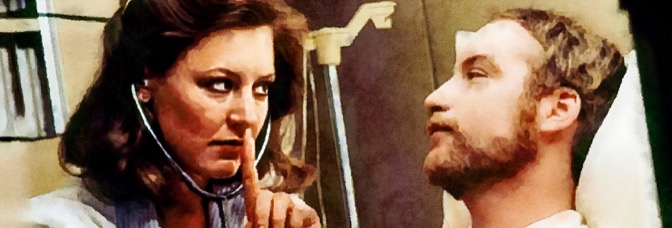
Director Badham intended Whose Life Is It Anyway? to be black and white, which would probably help with the staginess. It’s a play adaptation. Badham handles the relatively big, busy cast well, but he doesn’t know how to shoot lead Richard Dreyfuss. Dreyfuss is playing a recently paralyzed sculptor who, after approximately six months, realizes…
-

The Goodbye Girl is excessively genial. Usually at the expense of lead Marsha Mason. It’s her movie too. Not hers to lose, because it’s so much her movie–she’s The Goodbye Girl–instead hers to be taken away. And take it away writer Neil Simon does. The film starts being about single mom Mason getting dumped by…
-

Tin Men is expansive. So expansive writer-director Levinson can’t get everywhere. He doesn’t have time in 112 mintues, he doesn’t have the structure for it either. Tin Men establishes its narrative distance firmly, deliberately, and usually hilariously in the first act. When Levinson gets to the end of the second act, he’s way too interested…
-

Almost all of Poseidon is extremely predictable. Even if it didn’t rip off every blockbuster since 1995 for one detail or plot twist or another, it would be extremely predictable. There is one big departure into unpredictability and it’s so jarring, for a while I maintained interested hoping screenwriter Mark Protosevich would try it again.…
-
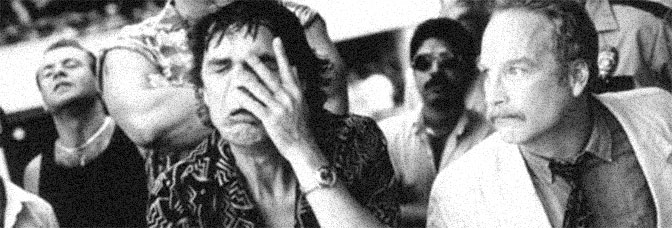
I wonder how Let It Ride would play if it were competently made. Pytka’s not a terrible director, but he’s not any good either. His mediocre composition is undone by the absolutely atrocious song choices for the soundtrack. The film would probably be better with no changes other than that track excised. Not that Giorgio…
-

I wonder if Tim Blake Nelson has read Disgrace. Cheap, cheap, cheap comment. One-liner even. It’s a one-liner. Leaves of Grass is not–if I underlined, I would here–an American Disgrace. It’s something different from that sort of attempt, but also something different from a mainstream or independent attempt… it’s a comedy drama unlike most others…
-

I’d heard of Rosencrantz & Guildenstern Are Dead, of course. I’d probably even meant to see it at one point, probably around the time of Branagh’s Hamlet, which is when I first got big into Shakespeare. But it was only available on VHS and I was already addicted to widescreen. Oddly, this viewing–at the wife’s…
-

I don’t know where to start. The most flippant place to start–the most colloquial–is with George Lucas… specifically, what happened to the George Lucas who made American Graffiti. But it’s not just Lucas. Gloria Katz and Willard Huyck didn’t go on to write anything close to Graffiti–the conversations in the film, the dialogue, is exceptional,…
-

What About Bob? is a special movie. It’s absolute dreck. Coming from screenwriter Tom Schulman, I suppose its lack of quality shouldn’t have been a surprise, but I think I was operating under the assumption producer Laura Ziskin wouldn’t let it get too bad. I mean, production wise, it’s got good people–Anne V. Coates is…
-

The Big Fix is a fundamentally different detective movie. While there are some elements updating it to time period, a lot of it is still a detective investigating in LA, meeting all sorts of people all around town and so on. It’s still Raymond Chandler to some degree–with Dreyfuss playing his (marginally) goofy, but caring…
-
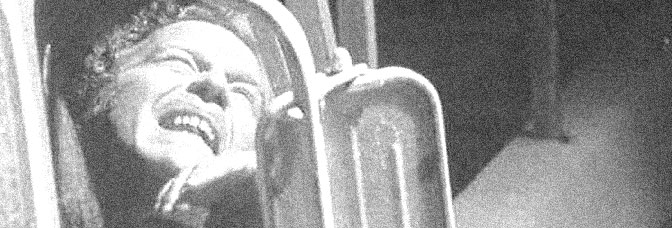
This version–now called ‘The Director’s Cut’–originally came out as ‘The Collector’s Edition’ maybe ten years ago (maybe less). The most striking thing about this cut is Dreyfuss’s insanity. In this version, he’s totally nuts… Spielberg edits back in (from the original, excised from the Special Edition) a couple significant scenes. First, showing off Roberts Blossom–one…
-

I don’t know where to start with Close Encounters of the Third Kind. The jokey open would be something about listing the defects and not having any, but then flipping it and not being able to list everything Spielberg does right because his successes are so difficult to work out, particularly in to an easy-to-read,…
-

I think home video–tape and disc–has done a great disservice to John Badham and his legacy… as in, with this digital (or analog) evidence, one has easy access. Instead of coming across Stakeout at 11:30 P.M. on a Thursday night, pan and scanned, cut for content, and full of commercials, I can sit and watch…
-

The first half of Jaws–before the boat, when it becomes a different film–might be the most perfectly made film ever. The second half isn’t less perfectly made, but it’s its own thing, not easily comparable to any other film; that first half deals in traditional filmic standards and does so with singular success. Verna Fields’s…
 The Stop Button