Tag: Max Von Sydow
-
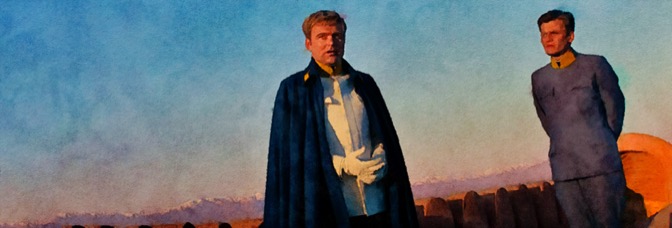
The Desert of the Tartars is a warless war epic. Set at a remote desert fort, a young officer (Jacques Perrin) discovers army life isn’t what he was expecting. The film opens with Perrin leaving home, ready for the great fortune awaiting him, only to learn he’s been assigned to the ass-end of nowhere. The…
-

The extended director’s cut of The Exorcist runs ten minutes longer than the theatrical version. The last time I saw the theatrical, I thought the movie needed some more time to figure itself out. Turns out I was wrong. The ten extra minutes just make it sort of tiresome. Like, the third act of the…
-

At eighty-nine minutes, Through a Glass Darkly never has a chance to get tedious, which is part of the problem. Writer-director Bergman has just introduced the characters, just established the ground situation, when he tries a graceful segue into the characters and their relationships being familiar in the second act. They’re not. They’re still being…
-
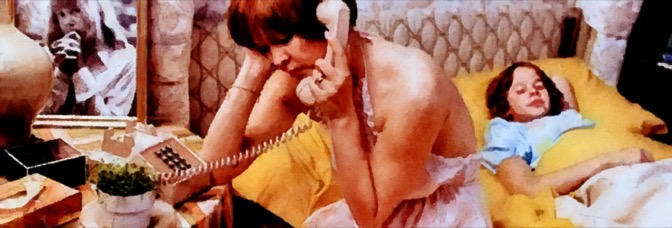
Despite the title, The Exorcist is about pretty much everything except the actual exorcist. When he does appear, kicking off the third act, it’s kind of a stunt. There’s a lot of implied mythology in the film, without much connective tissue–but nothing ruling out connective tissue. Director Friedkin does a balancing act. The reveal moment…
-
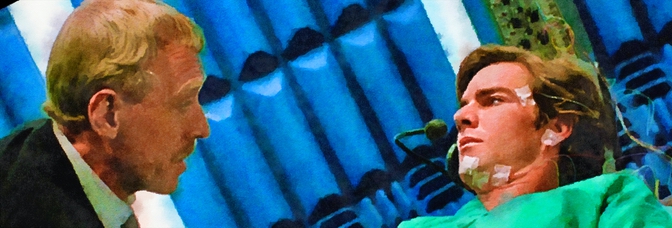
Dreamscape has a lot of subplots. The main plot barely gets any more time during the second act than the subplots. But I’m getting ahead of myself because I wanted to talk about the first act, which has Dennis Quaid getting reacquainted with mentor Max von Sydow. The film opens with this fast, fun action…
-

The Seventh Seal has a lot of striking imagery. Gunnar Fischer’s cinematography is peerless, but it’s more–it’s how the photography works with the shot composition, how the shots work with one another (Lennart Wallén’s editing is simultaneously amiable and stunning). And then there’s how it all works with Erik Nordgren’s music. Bergman’s going for theatrics…
-

Oh, no, Ennio Morricone did the music for Exorcist II: The Heretic. I feel kind of bad now because the music is not good and I like Ennio Morricone. I’m sure I’ve liked something cinematographer William A. Fraker photographed too, but his photography in Heretic is atrocious. Because it’s Exorcist II: The Heretic, everything about…
-
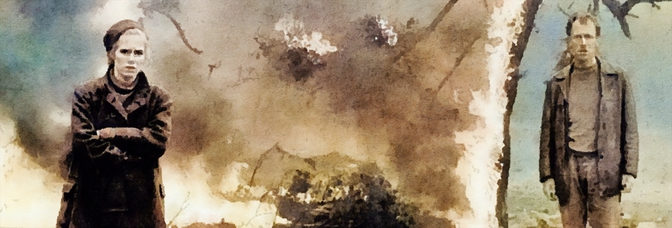
Shame has three or four sections. Director Bergman doesn’t draw a lot of attention to the transition between the first parts, he hides it in the narrative. Liv Ullmann and Max von Sydow are a married couple living on an island following a war. Not much information about the war, but they’re concert violinists turned…
-
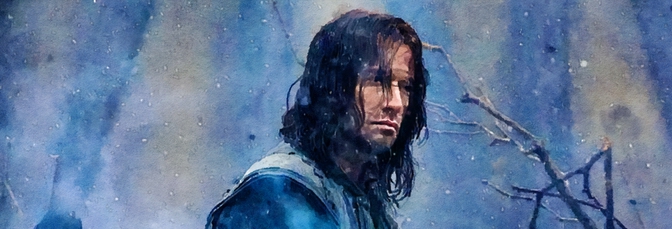
I started Solomon Kane with a decidedly negative opinion of James Purefoy. The first twelve to fifteen minutes did nothing to change my mind. Then something happened. The script stopped being so expositive in its dialogue and all of a sudden Purefoy got really good. He kept it up until the end of the film…
-
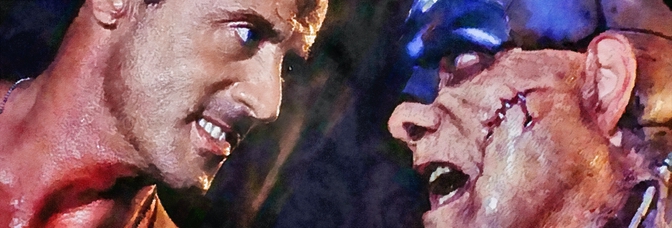
I saw Judge Dredd at a sneak preview. It was the first time I ever saw anyone walk on a movie. It fits into a rather interesting category of disastrous would-be blockbusters–joining Flash Gordon, The Black Hole and Dune–where there’s this largely international cast–why are Jürgen Prochnow and Max von Sydow playing, basically, New Yorkers–and…
-

The espionage genre has gotten so stupid over the last couple decades, it’s hard to even imagine how a mediocre entry could be good. Now, it’s watching the least worst. Three Days of the Condor is such a peculiar film, even though it’s wholly commercial–I mean, Dino De Laurentiis produced it. It’s not just a…
-

John Milius takes Conan the Barbarian very seriously. The occasional use of slow motion and the endlessness of Basil Poledouris’s cheesy score signal Milius’s dedication. So do the long and frequent sequences of shirtless Arnold Schwarzenegger playing with big swords. At the beginning of the film, when it’s the prologue and Milius strange approach actually…
 The Stop Button