Tag: Dick Giordano
-

The issue ends with an afterword from Dick Giordano talking about finishing the Dracula adaptation thirty years after he and writer Roy Thomas started it. He confirms my suspicions they didn’t actually have it plotted out; rather, they did that work thirty years later. Or twenty-eight or whatever. Plus, it sounds like artist Giordano did…
-
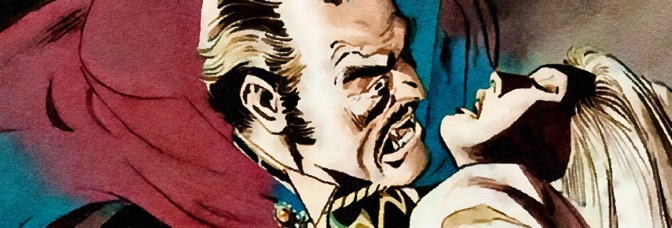
Like all faithful Bram Stoker’s Dracula adaptations, Stoker’s Dracula has hit the point where the source material’s bad writing is causing problems. Or, at least, lazy plotting. But it’s not writer Roy Thomas’s fault; it’s all on Stoker. The most obvious example is someone screwing with Van Helsing’s plan to save Lucy’s soul. Last time…
-
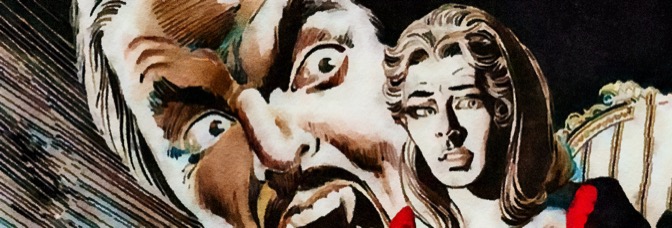
Stoker’s Dracula collects and then continues Roy Thomas and Dick Giordano’s seventies novel adaptation, which ran in the black and white horror magazines, Dracula Lives! and Legion of Monsters. Thomas and Giordano only did six entries back then, and since they’ve only got one chapter of new material in this issue… they stopped before they…
-

Legion of Monsters opens with a defensive letter from editor Tony Isabella, responding to the Marvel faithful who were mad at the inglorious cancellation of the other black and white magazines. Isabella explains the books weren’t ever losing money; it’s just not in Marvel’s best interest not to make money. If readers really want black-and-white…
-

I wasn’t expecting much from this issue; the team of writer Len Wein, penciller Marshall Rogers, and inker Dick Giordano hasn’t impressed in their one-and-a-fifth (they did a bookend on a reprint) issues of Detective so far. Wein’s writing a sequel to Rogers’s arc with Steve Englehart, trying to maintain continuity, like Batman hallucinating a…
-

When Steve Englehart started his Detective run, he quickly settled on a fascist, macho narration style to describe Batman and his male perfection. When Hugo Strange showed up and proved to be just as cut, the two men complimented each other’s physiques and prowesses, with Strange’s evil assistant lady making fun of them. At the…
-

Despite my youthful indiscretions in reading the famed Steve Englehart and Marshall Rogers, I had no idea what came after it. Turns out neither did DC at the time, since this issue’s got Len Wein, Rogers, and new inker Dick Giordano doing three new pages around a reprint from 1971. Batman and Commissioner Gordon go…
-

I had planned on opening bemoaning Dracula Lives only having two issues left just when the series has found itself again, but then I did some research and discovered it’s worse than the series just canceling. They’re not going to finish the Bram Stoker’s Dracula adaptation here; there’s no more Lilith (more on her adventures…
-

The secret to Doug Moench on Dracula Lives is the art. Tony DeZuñiga does a great, sometimes sketchy, always emotive style for their story this issue, and it’s fantastic. The art’s moody enough to sell Moench’s more turgid exposition. They’re on the first story, which takes place in 1809 Transylvania, though the outfits and mannerisms…
-

I may be committing sacrilege, but I’m not a fan of Pablo Marcos’s Dracula. Sure, the outfit looks good, but Dracula himself—with his seventies stash—looks more like a plumber than the prince of darkness. The issue opens with a Marcos pin-up; I’m not just taking the chance to gripe. In other words, I was again…
-
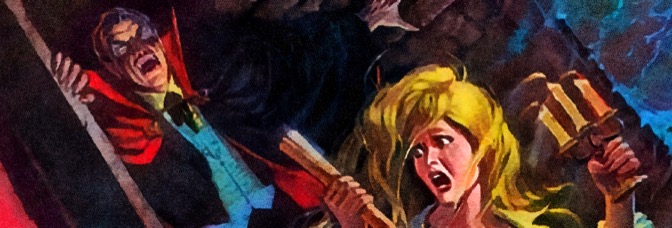
I fear Dracula Lives has reached a turning point and not for the better. While this issue retains the same page count as previous issues, there’s a lot less content. Comics content. There’s still text content, including Tony Isabella finding his voice in his Taste the Blood of Dracula review, but there’s a little bit…
-
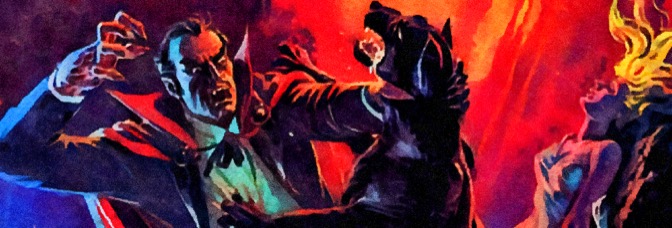
I’m trying to decide if this issue is lackluster or if I’m just peeved I’ve managed to outpace Tomb of Dracula in my Dracula Lives read-through. The first story refers to future issues of Tomb, which would be spoilers if the comics weren’t fifty years old and I hadn’t read them already. Well, except this…
-

This issue starts with the Roy Thomas and Dick Giordano adaptation of Bram Stoker’s Dracula, which I read in reprint. I’m not going to check the original novel, but I’m not sure Stoker had Jonathan Harker be a shitty racist about China (complaining about how their trains ran in 1897). Harker writes in his diary…
-

It’s half an excellent issue. The first story is a big success, an And Then There Were None type mystery set at a research hospital on Mercury. It’s the done-in-one feature. The second story’s a little shorter, but with the cliffhanger. Unfortunately, it’s also kind of bad. The writing’s not terrible, but the art falls…
-

There’s a thirteen-page Neal Adams warlord Dracula comic this issue, and I don’t understand why it’s not a bigger deal. Like, it’s gorgeous. Of course, the other stories have good art, too… well, the Gene Colan and Dick Giordano one, but the Adams one is kind of an immediate classic. I started reading Dracula Lives…
-

Dracula Lives offers a considerable bang for its six-bit cover price. There are three new Dracula features and three old Marvel (from the Atlas days) reprint strips. The reprints are from black and white horror comics and perfectly match Lives’s format. There’s also a Marv Wolfman article covering Dracula movies; Wolfman doesn’t contribute a script…
-

After a cliffhanger resolve with Gil Kane pencils (Vince Colletta inks, which shockingly is an improvement over previous Kane inkers on the Batgirl backups), Don Heck takes over the pencils with Dick Giordano on inks. Can Dick Giordano inks save Don Heck pencils? It’s not terrible. Even after Giordano leaves and the Batgirl strips are…
-
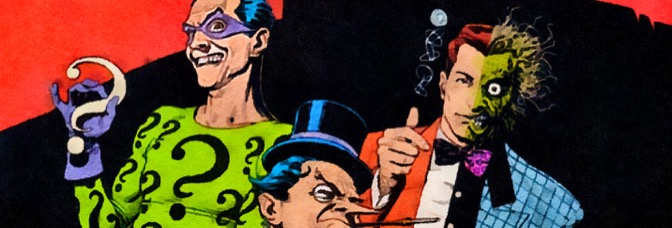
I always forget how much Neil Gaiman threw himself into the DC Universe when he’d write in it. This Secret Origins Special is all about Batman’s villains; a TV investigative journalist has come to Gotham to do a special. Gaiman seems to enjoy writing those scenes–the ones with the behind the scenes, the Batman cameo,…
-

I always forget how much Neil Gaiman threw himself into the DC Universe when he’d write in it. This Secret Origins Special is all about Batman’s villains; a TV investigative journalist has come to Gotham to do a special. Gaiman seems to enjoy writing those scenes–the ones with the behind the scenes, the Batman cameo,…
-
Even with some great Gil Kane art, the last issue of Atari Force is a tad meager a finish for the series. Kane doesn’t have to suffer through a lot of video game-type space action, but there’s some and it’s too much. Worse is the romance. Thomas and Conway promote it to a full-fledged subplot…
-
Andru’s back for exactly the type of comic I expected with the title Atari Force. It’s roughly eighteen pages–I’m not counting the double-page spreads–and most of those pages is like watching someone else play a video game. Only it’s an Atari game, so the designs are pretty childish. (Not to knock Atari game designers, but…
-
Even though the characters are still visually bland, Atari Force gets Gil Kane on the art and he knows what he’s doing. It’s a big read instead of a long one. Writers Conway and Thomas split the issue into three chapters, but it’s more like two–there’s even a cliffhanger mid-point. For this issue, there are…
-
This issue covers two more team members–both new members whose little origin stories come right after their introductions–and both of their stories are, once again, rather rough. First there’s the Indian guy, who only got out of poverty because some British guy mistakenly accused the kid of theft and a tragedy followed. Then there’s the…
-
Atari Force is immediately strange on three levels. First, it’s game tie-in to the company, not a game. Second, it’s a reduced size comic and all the art looks too spacious. Ross Amdru is clearly trying to fill things out. Finally, writes Gerry Conway and Roy Thomas borrow lots of sci-fi movie tropes. But they…
-

Gene Colan and Bob Smith are back on the art and it’s a strange return for Colan. It’s a lot of action and Colan goes a lot more dynamic than he usually does. There are some fantastic panels in this issue. Nice page layouts too. It’s a winner on the art. Moench writes Jason’s diary;…
-
Gene Colan and Bob Smith are back on the art and it’s a strange return for Colan. It’s a lot of action and Colan goes a lot more dynamic than he usually does. There are some fantastic panels in this issue. Nice page layouts too. It’s a winner on the art. Moench writes Jason’s diary;…
-
This issue is weird. It’s great too–I wonder if Moench created Nocturna with Colan in mind, since she basically looks like a vampire–but it’s weird. There’s some action at the end, but the most striking parts of the comic aren’t the action scenes. Moench is serious about his rumination on darkness and he follows through…
-

I try to be open-minded about Cavalieri and Cullins’s Green Arrow back-ups, but this one peeved me. Moench doesn’t get enough time with his Batman story–which is his fault for not pacing it out right–but come on. Who carries about Green Arrow’s lame villain? Though inker Frank Giacoia does ruin Cullins’s pencils in sometimes amusing…
-
I try to be open-minded about Cavalieri and Cullins’s Green Arrow back-ups, but this one peeved me. Moench doesn’t get enough time with his Batman story–which is his fault for not pacing it out right–but come on. Who carries about Green Arrow’s lame villain? Though inker Frank Giacoia does ruin Cullins’s pencils in sometimes amusing…
 The Stop Button