• The Watermelon Woman (1996, Cheryl Dunye)

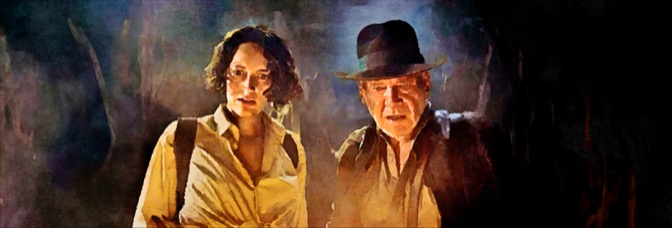
    The Watermelon Woman is the story of video store clerk slash filmmaker Cheryl Dunye making a film about a 1930s Black female actor known only as “The Watermelon Woman.” At least initially. Dunye, in character, will spend the film discovering more and more about her subject, culminating in a documentary short. Surrounding Dunye dans le personnage’s professional aspirations are her friends and lovers. Dunye’s best friend is fellow video store clerk and videography business partner Valarie Walker.

    Walker’s the film’s comic relief (until she’s not). Woman is split between Dunye’s documentary footage in the film, shot on video; she and Walker’s professional videography outings, shot on video; the dramatic narrative, shot on 16mm; flashback film footage to 1930s movies, played on video; and occasional still photographs, sometimes on film, sometimes part of the video documentary, maybe sometimes just on video without being part of the documentary. Woman’s an editing masterclass. Dunye en tant que réalisateur and editor Annie Taylor do some sublime cutting, which isn’t always easy since Woman’s scenes all end in fade out. Dunye and Taylor will drop whole subplots in the fade-out, adding another layer. Woman’s about Dunye, the character, making the documentary, and the video stuff in Woman is footage from that documentary, but assembled—presumably—with agency by Dunye (the character). In the film made by Dunye, the writer and director. It plays incredibly naturally, down to Dunye just enjoying having the camera for the weekend and having fun.

    And that natural feel also works in the reverse; when Dunye, the character, gets to the third act, she’s cagey about everything except her final product (which we don’t see her assemble). As well as Woman being the general story of her and Walker being two Black lesbian best buds in Philadelphia in the mid-1990s, with their dating and professional woes, it’s this particular, intentionally unexplored romantic drama about Dunye and Guinevere Turner. Turner’s a hip, upper-class WASP, who Walker can’t stand. Things just get worse when Dunye starts involving new video store clerk Shelley Olivier in their videography business; Walker really doesn’t like Olivier, and it’s when Walker stops being comic relief and instead Woman becomes this uncomfortable friendship drama, except Dunye (the filmmaker) doesn’t show much once Dunye (the character) strikes research gold.

    Only then the research doesn’t reveal what Dunye (the character) expected, which plays out not in narrative drama but through videography narration.

    Woman’s indie budget, but Dunye makes it work for the film instead of against it. The cost-saving measures (16mm only for controllable shots, video for the rest) and the occasional scene where they could’ve used another take (or ADR) add to Woman’s pulsing grip on reality. Because the film’s fiction. Dunye, the director, wanted to make a documentary about forgotten Black female actors of the 1930s and discovered they’d been forgotten. So she created the history for the film, with Zoe Leonard creating the period photographs while Dunye, Alexandra Juhasz, and Douglas McKeown made the old films. Woman’s from the better universe where women made independent movies in the 1930s and then made it to Hollywood. Just white women, so better comes with caveats.

    Juhasz plays the 1930s director in photos and film clips, which strikes a chord with Dunye (the character). Except Juhasz is a white woman director involved with her Black female star (Lisa Marie Bronson), while Dunye is the Black woman director involved with a white girl (Turner). Dunye dans le personnage’s relationship with the material changes orbits during the film multiple times, often in reaction to events shown in the “uncut” footage from the documentary shoots.

    It’s sublime narrative weaving.

    With fades to and from black transitioning every scene, Dunye (often thanks to Walker) gets some great mic drop moments, and there are numerous good, encapsulated scenes. There are some definite standouts, but watching Camille Paglia say interracial dating didn’t exist in the thirties because Guess Who’s Coming to Dinner? was in the sixties….

    It’s hilarious. And one assumes Dunye just asked Paglia to play the bit like she’s a male film professor.

    Technically, Woman’s outstanding. In addition to that wondrous cutting, Michelle Crenshaw’s photography is fantastic. The 16mm sequences are exquisite. Really good score from Paul Shapiro.

    Watermelon Woman’s awesome.
  • The Giant Gila Monster (1959, Ray Kellogg)

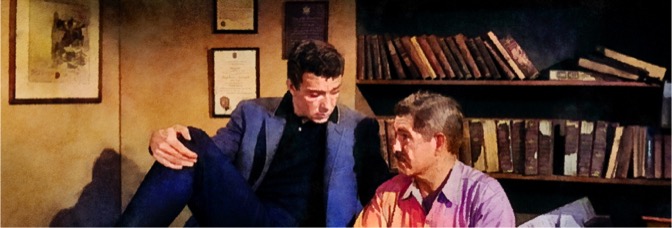
    I thought this one was called The Great Gila Monster, not The Giant Gila Monster. During the first act, I kept thinking how Great was one heck of a flex given the content, but it’s not Great; it’s Giant, which is technically correct. The film is about a giant Gila monster terrorizing a bunch of hot-rodding Christian high school post-grads as they try not to go too fast, either with their cars or their girlfriends.

    The film never identifies the location beyond “The Southwest,” with an opening narration about the vast empty plains (they’d be perfect for high-speed rail, don’t you think), in what turns out to be an homage to one of the Citizen Kane newsreels.

    In this no-budget regional indie giant monster movie. It’s a cool enough way to start, and while the film never reaches those heights again (knowing Citizen Kane exists), it’s reasonably good, all things considered. The leads are Don Sullivan and Fred Graham. Sullivan’s the leader of the hot-rodders; the film opens with their richest kid member getting eaten by the Gila monster, which leads to the kid’s obnoxious father, poorly played by Bob Thompson, getting sheriff Graham to start an investigation. Thompson’s kid was with his girlfriend, but besides acknowledging she has a family, the film completely forgets about them.

    What’s interesting about Gila is how long it takes everyone to find out about the monster. They don’t have the budget for much in the way of special effects—the Gila is an uncredited Mexican beaded lizard who only gets to crawl around the model train set when there’s an effects sequence. There aren’t even miniature cars until the finale. For a movie without Matchbox money, Gila does all right.

    There are some obvious problems. Texas explains the casual, low-key racist slang and Christianity (Sullivan’s also a singer-songwriter who’s got a doozy about Adam and Eve, apparently because he doesn’t know the end of the story). Kellogg’s a lousy director for most of the material; everything’s a medium two-shot, which is fine with Sullivan and Graham; they’ve got personality and charisma. Everyone else is an energy vampire, starting with Thompson. Oh, wait, I’m forgetting about town drunk Shug Fisher. He hates his wife and drives drunk everywhere and gets away with it. He’s not good, but he’s not an energy vampire.

    But Sullivan’s got a little sister—Janice Stone—who just got her leg braces, so she’s learning to walk again; their dad recently died (which is apparently when Graham took an interest). Thompson hates Sullivan, whose father died working for Thompson, and Sullivan’s dating Thompson’s French maid, Lisa Simone.

    It’s all very convoluted, and only in Gila to get the run time past sixty minutes. Without the character drama and musical numbers, Gila would struggle to crack an hour.

    Surprisingly good photography from Wilfrid M. Cline—his black and white day-for-night is noteworthy—and maybe an actually great score from Jack Marshall. Maybe some of it on a Theremin. It’s weird but also way more imaginative than the film needs.

    Sullivan’s not exactly good, but he’s got a decent screen presence. Though once you realize he looks like a young Robert Taylor doing a James Stewart impression, you can’t unsee it. Graham’s just full-stop good. It’s a bewildering, welcome performance.

    Giant Gila monster isn’t great (or really giant), but it’s engaging and successful as a “Giant” monster picture, at least a close to no-budget one.

  • Black Mirror (2011) s02e02 – White Bear

    White Bear feels contractually obligated, which is strange since it’s got a script credit to series creator Charlie Brooker. Maybe it just fell apart in production, too; Bear crumbles about halfway through, and it’s a short episode already—around forty-one minutes. It begins with Lenora Crichlow waking up in an empty house, apparently having just survived a suicide attempt, pictures of her husband and daughter downstairs, but she’s got amnesia, so she can’t be sure they’re her family. Her neighbors all look at her from their windows, then run around and take pictures of her with their smartphones.

    None of them know how to turn off the shutter sound.

    Carl Tibbetts directs and, for much of the episode, does the best directing in a “Black Mirror” yet. Of course, it’s not a particularly high bar, but Tibbetts’s work is quite good. After chasing one of the onlookers, Crichlow finds herself on the run from a man in a mask, shooting at her with a shotgun. His mask has a symbol on it, which she (and the audience) have already seen on the TVs in her house. Nothing makes any sense!

    Then Crichlow happens across Tuppence Middleton, who’s just trying to survive in this dystopia. Middleton gives Crichlow some information on the ground situation—one day, everyone got a text on their smartphones, looked at it, and all became obsessive voyeurs. Except the people who go out and kill and torture for the amusement of the obsessive voyeurs.

    Presumably unintentionally, Middleton’s a lot more compelling than Crichlow. Maybe because she knows what’s going on, and Crichlow doesn’t have any character development because amnesia. And because reveal.

    Before the reveal, the episode has time to introduce fellow survivor Michael Smiley, who’s playing a medley of caricatures. Even after the reveal and all the stakes have changed, Middleton’s still more compelling than Crichlow.

    It’s half a good episode, but then still a bad one.

    Tibbetts, though. Tibbetts does just fine.

  • War Story: Archangel (2003)

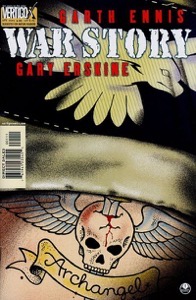
    WsaaSometimes the snow comes down in June, and all that business because out of nowhere… Archangel is really good. It’s not the best of writer Garth Ennis’s War Story: Volume Two, which is only not a joke award because of that David Lloyd story, but Archangel definitely makes up for the previous couple entries. Now, I read Volume Two in the collection order, not the publication order, and I remain convinced they intentionally started with the superior Lloyd story. Archangel is the finale in both orders, so Ennis (and perhaps his Vertigo editors) saved the second-best for the last.


    Archangel has Gary Erskine on the art, and it’s a nice fit. I’ve been dreading War Story: Volume Two, so I was hesitant to embrace Erskine’s art. Or even to acknowledge it was Erskine and, you know, it might actually be intentional, competent artwork. Then I saw one of Erskine’s weird little figures—there’s just something about how he draws people in long shots—it’s like a forced perspective thing; they all look Hobbit-y. Anyway. Some of Archangel’s story involves a visual pay-off, and—conditioned by the rest of the series—I assumed the comic would fail.

    Now, first, the comic does not fail. Erskine does a phenomenal job with that sequence. Except then, Ennis abruptly changes the stakes of the story, requiring Erskine to pivot into a peculiar kind of war comic. It’s the action hero war comic, except Archangel doesn’t do the heroes thing, and the comic becomes this delicate balance of talking heads, World War II airplane action, and just plain countdown suspense. Erskine ably handles all three, and the potential of War Story suddenly shines again. Ennis and an artist who doesn’t just get how to draw the airplanes or do the busy, frantic dogfight scenes, but one who gets the emotional core of the story and can help Ennis get there.

    The story’s about a snotty RAF officer who gets reassigned to CAM ship duty. What’s a CAM ship? The snotty RAF officer doesn’t know, which is part of the gag. Suffice it to say, the snotty officer is on a comeuppance personal growth arc, and it’s fantastic. Especially how the personal growth aspect shakes out.

    Ennis never writes the character too likable, contributing to Archangel’s potentially shaky opening. Would it be potentially shaky if the two-thirds of the rest of the series wasn’t a fail? Maybe, maybe not. Ennis doesn’t make the protagonist remotely charming at the beginning, rather doing lengthy talking head sequences where the other characters explain to the hero why he’s a dipshit.

    I just assumed it would be bad War Story: Volume Two writing, not an intentional character development device.

    But Ennis is on it. Archangel is outstanding. It doesn’t save Volume Two, but it does give it some nice contextual cushioning.

    They should just put out a collection with Archangel and that Lloyd one. Save the unsuspecting from the rest of Volume Two. Archangel’s a great save. I’m so happy this story’s good.

  • Saratoga Trunk (1945, Sam Wood)

    I cannot, in any conscience, recommend Saratoga Trunk. The list of caveats to work through is a “Choose Your Own Adventure” of racism, ableism, and low-key misogyny (though less of the third, what with the first two). If you’re a Flora Robson completist, you presumably know about the time she was Oscar-nominated for playing Blackface, and so you’ve already made your peace with Trunk. For Gary Cooper completists, there are undoubtedly less shockingly exploitative lousy historical soap melodramas in his filmography.

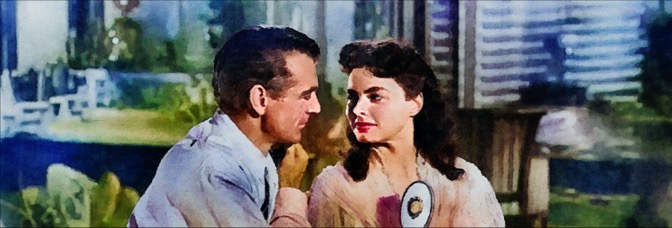
    So then Ingrid Bergman presents the most compelling reason to watch Trunk; she’s in quarter-Blackface (she powders a lot is the film’s excuse) as the illegitimate daughter of a New Orleans blue blood. After her mother “killed” her father–the film skirts around it, presumably for Code reasons (the Code memos must be a sight), but probably Dad killed himself, and Mom found the body. But after the father’s death (after he’d left Bergman’s mother to marry a fellow, white, blue blood), his family paid the mom off, and she took baby Bergman to Paris.

    Now Mom has died, and Bergman is back in New Orleans to exact revenge on family matriarch Adrienne D'Ambricourt. In tow, Bergman has family servant Robson and valet Jerry Austin. Austin’s a little person. Trunk plays him for adorable comedy every time. With music. It’s a lot.

    Bergman’s got a simple plan—she’s going to blackmail D'Ambricourt, possibly into ruin, as payback for Mama, and then she’s going to marry a rich guy, pass as white, and live a life of luxury. Unfortunately, Bergman almost immediately meets Texan Cooper, and he’s such a tall drink of water in his ten-gallon hat and legs for days, she immediately puts off the marriage pursuit to enjoy some Texas.

    The movie initially can’t decide if Cooper’s a mark or an accomplice. Once he and Bergman get canoodling and fading to black together, he’s at least aware Bergman’s a scam artist, and she’s out to fleece D'Ambricourt (deservedly or not). The first act takes a lot of time establishing Cooper as Bergman’s love interest, including having him bond with Robson, which features Robson demanding Cooper respect her.

    As a Black woman.

    I’ll just give everyone the opportunity to google Flora Robson.

    Yikes.

    That scene ends with the fastest fade out in the film like the Hays Office told them they could do it because having a white woman say she deserves respect as a Black woman is at least better than a Black woman saying it? Again, the memos must be a treasure trove of racism, misogyny, and misogynoir. But, really, just yikes.

    The movie’s first half, with Bergman hanging out in New Orleans with Cooper on her arm (and vice versa), giving the blue bloods heart palpitations, is bad. The second half of the movie (less than half, unfortunately) has Bergman on the prowl in Saratoga, her eyes set on marrying would-be railroad tycoon John Warburton. The Trunk in the title refers to a railroad’s main line.

    Bergman and Cooper have to keep their hands off one another long enough for Bergman to marry rich. She’ll get help from busybody Florence Bates and have all sorts of awkward interactions around the grand hotel where they’re staying in Saratoga Springs. Saratoga’s about how New Orleans is crappy, and the most beautiful place on the planet is in upstate New York.

    Sure, Jan.

    After a brief rally in the late second act—Bates gives Trunk some unproblematic gas, arguably the first player to do so—things fall apart for the finale. The Trunk finally becomes important, only it’s dramatically inert. I’m curious if Edna Ferber’s source novel is a spoof of objectivism or if it’s sincere. The movie doesn’t really have time for it—the capitalist philosophy is Cooper’s story, and the movie does Cooper’s scenes away from Bergman in quick exposition dumps. He’s just around for beefcake. Or the early-to-mid-forties version of Gary Cooper beefcake.

    Cooper’s never good, but—when he’s not being racist or ableist to the sympathetic supporting players—he’s likable. Bergman’s either great or terrible. She’s doing high melodrama. I mean, she’s not great, but she’s (problematically) compelling. And they do have lots of chemistry together.

    Director Wood and photographer Ernest Haller deserve kudos for the ways they find to squeeze all of Cooper’s limbs into the frames. The movie makes lots of hash about him being so tall, and Wood does his damnedest to make Cooper seem too tall for the screen.

    Technically, Trunk’s a solid studio melodrama. Wood’s direction is fine. He likes implying sexy time more than he likes doing action scenes, which is a problem. Max Steiner’s score would be excellent if it weren’t for his comedy themes for when Austin walks, talks, or exists.

    Fabulous gowns for Bergman from Leah Rhodes.

    Saratoga Trunk is in the “needs to be seen to be believed” camp (or is it “needs to be seen to be believed camp”), but not in a good way. Beware.


  • Night Shift (1982, Ron Howard)

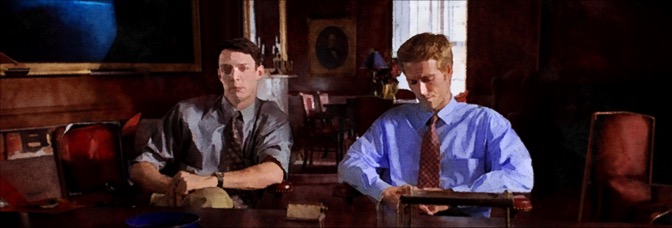
    Night Shift distinguishes itself immediately. The opening sequence is magnificent, featuring two crooks (Richard Belzer and Badja Droll) chasing down pimp Julius LeFlore and inciting the incident for the film. Director Howard has three credited editors on Night Shift—Robert James Kern, Daniel P. Hanley, and Mike Hill—and their cutting is deft. Lowell Ganz and Babaloo Mandel’s script gives them plenty of opportunities for layering the narrative impacts just right, and Howard and cinematographer James Crabe are big on keeping things fluid. The camera moves, the people move. There’s maybe one mediocre sequence in Night Shift, and it jumps out because the rest of it has been so sublime. Starting from the prologue, which leads directly into the opening titles.

    The film’s got one great eighties montage sequence—the story’s about two morgue attendants who decide to offer their location and management services to LeFlore’s call girls, who are having a tough time without him. Shift’s filmed—in part and quite effectively—in Dirty Old New York. However, even with the spots of violence, it’s not about the city being dangerous. The characters sometimes find themselves in danger, but everyone’s jazzed to be living in the Big Apple. Or at least, not un-jazzed.

    Anyway. That great eighties montage sequence is when the girls go to work for the the guys (Henry Winkler and Michael Keaton); as Keaton drives them around, buys them glamorous clothes because Winkler’s a Wall Street burnout who starts investing for the girls, and is able to get them into legit businesses… in less than four weeks. Don’t pay attention to the timing; just enjoy the movie. Especially with that accompanying Al Jarreau song.

    For some wonderful, peculiar reason, Night Shift went with Burt Bacharach for the score, which is a great move on its own, but then Bacharach and Carole Bayer Sager and friends wrote original songs for the film. There are some more familiar ones than others, but Bacharach’s on fire, with the soundtrack always lending to Howard’s constant movement themes. Again, Night Shift is all about fluidity.

    Winkler’s the protagonist. He’s the nebbish burnout who no one takes seriously—not boss Floyd Levine, not fiancée Gina Hecht, not mom Nita Talbot—who finds himself demoted back to the night shift at the morgue so Levine can give nephew Bobby Di Cicco an easy gig. Di Cicco’s only in a few scenes, but he’s an awesome dipshit. No notes.

    Starting on the night shift with Winkler is new guy Keaton, who’s a delightful jackass.

    In addition to breaking in the new guy and fretting over the wedding with Hecht—the wedding is in nine months—Winkler also starts hanging out with neighbor Shelley Long, who just happens to be a call girl. They meet in the second scene, when Long’s identifying a body and realizes she knows Winkler, who does not remember her and who the investigating cop is sure is a john. Eventually, there’s confusion involving Hecht, who the film does no favors in the nagging girlfriend part. Overcoming how poorly Hecht gets treated is one of Shift’s initial hurdles. It clears, but just barely. They delay the fallout from Winkler and Long’s new friendship until they’ve got Hecht in a part to make her seem villainous in addition to pitiful.

    Hecht being really good helps.

    At the heart of the film are Winkler and Keaton. Keaton’s trying to convince Winkler they’re in a buddy picture, while Winkler just wants to be left alone. Lots of good friendship bonding, with lots of laughs (and then heart), for Winkler and Keaton.

    For most of the second act, their friendship is the core; then things gracefully transition to Long and Winkler.

    The third act opens clunky–Night Shift certainly seems like they went back and re-did some of the film to make it work better. It’s so clunky it entirely stalls the film. Then, in an effort worthy of Atlas, Winkler singlehandedly (though Vincent Schiavelli contributes) gets the film moving again. It’s all in a big comedy set piece with multiple moving parts moving across plot levels, and it’s glorious. The finish is then gravy, pay-off after pay-off.

    Keaton gives one of the exceptional comic performances, Winkler’s a wonderful lead, Long’s outstanding. It’s so well-acted, so well-made. So surprisingly unproblematic in its portrayal of the subject matter (I mean, there are some problems, but a lot less than you’d think).

    Night Shift’s phenomenal.

  • Black Mirror (2011) s02e01 – Be Right Back

    Okay, now I’m beginning to understand some of the “Black Mirror” hype. Despite its trying for too clever and not getting there title, Be Right Back is fantastic. It overcomes director Owen Harris having one shot and repeating it over and over again: lead Hayley Atwell is on one side of the frame, the other side of the frame is empty space; it’s like Harris composes for a smartphone.

    Speaking of smartphones… they’re the obvious thing Back gets wrong about its future. The episode aired in 2013 when smartphones were still small and clunky, so the future phones are small and slim. There’s also some hilarious stuff with Atwell’s touchscreen laptop, which is a commercial for why the product category hasn’t taken off. But, otherwise, no real notes on Back’s future. Though, asterisk. Charlie Brooker’s script ignores a whole lot of Atwell’s story so as to not talk about the future practicalities.

    Atwell’s a young widow. Actually, wait. Unclear on her and Domhnall Gleeson’s marital status. It sure seems like they’re married—they’ve been together ten years, and they’re renovating his dead mum’s house to live in, which seems like a married thing. But when he’s been gone a few months, Atwell’s sister (Claire Keelan) is thrilled to see Atwell shacking up with some new guy. I mean, grieve how you’re going to grieve, which is also the episode plot.

    See, in this future, they—they being the brandless tech companies (the least believable thing about “Black Mirror”… its intentional lack of capitalist reality)—have made a large language model you can train with a dead loved one’s online presence so you can converse with them. Upgrades start basic, with you uploading private emails for better training, but it can also do fake voices (better than the fake voices in last season’s “Black Mirror” future, where they never fixed crappy robot voices). Since FaceTime wasn’t a thing yet, Back doesn’t involve any video calls.

    I mean, Skype was a thing, right?

    Anyway. The story’s about what happens as Atwell starts using the zombie email service to cope with her grief and new stresses. She goes from reluctant to addicted, eventually upgrading to the OT VIII level, which will change her life forever.

    The story’s pretty good, but Atwell and Gleeson are spectacular. They’re great alone; they’re great together. It’s Atwell’s show—episode—but Gleeson’s essential.

    So, the secret to “Black Mirror” is apparently genuinely great performances to glaze over mediocre production and cravenly plotted scripts.

    To be fair to Brooker, Back is one of the few cases where something continues past its natural ending to find an even better one. Except, of course, the only reason they pull it off is Atwell and Gleeson.

    They’re so good.

  • Black Mirror (2011) s01e03 – The Entire History of You

    Not to get too Roman DeBeers, but The Entire History of You takes place in a universe where they create a cyborg technology to record your memories but never figure out how to get text-to-speech engines to sound better than they did in 1997. You provides an interesting finale for the first season of “Black Mirror” because it’s the only episode (of three, but still) not written or co-written by show creator Charlie Brooker. Also because it’s tripe.

    Jesse Armstrong’s script is bad. Not just because it fails to make it through some general “hard sci-fi” gates. Not just because its philosophy seems to be, “Well, psychologists implanted all those memories, so we need video memory to prove men’s innocence.” #MenToo.

    Barf. Especially since the episode’s about a physically abusive narcissist.

    It’s simply bad on a structural basis. It starts with episode lead Toby Kebbell in a red herring job interview where they all throw out some talky-talk jargon for this universe. Basically, everyone’s got these “Re-Do” devices in their heads, and, in this future, everyone just watches their old memories. Presumably there’s a market for selling and sharing these memories, which doesn’t get discussed. Instead, Kebbell becomes irrationally jealous of wife Jodie Whittaker, and her jackass old friend, Tom Cullen.

    As Kebbell becomes more and more convinced there’s something going on, he’s able to comb through his Re-Do archive to find clues. Though—and here’s where Armstrong’s bad writing comes in—there’s no discussion of his actual previous behaviors either. Apparently, Kebbell’s been super-jealous of Whittaker having sex before they were married before, and even though he’s a Chad, he doesn’t like his Stacy being with other Chads. At some point, it’s just clear Whittaker really likes abusive narcissists.

    Even with a traditionally thin lady role—Armstrong follows that “Black Mirror” rule—Whittaker’s good. Cullen’s better than Kebbell, which isn’t saying much because Kebbell is awful. It’s not like there will be extended periods of the episode where it’s just Kebbell being terrible, is it? Not with lousy direction from Brian Welsh? Oh, wait, it’s almost half the episode. Bummer.

    “Mirror” hasn’t been aging well ten-plus years on, but You is the first where it’s clear even on release the gimmick doesn’t work. Like what if you lose the remote control to your brain VCR?

    Armstrong also seems to think Rod Serling will be narrating the episode all better.

    With another lead and a slightly more intelligent script, You’d probably be okay. But with Kebbell and Armstrong?

    Rewind and erase.

  • Day of the Dead (1985, George A. Romero)

    Day of the Dead is a nightmare. Occasionally literally, with writer and director Romero not afraid to rely on a recurring “it was just a nightmare” bit. But more symbolically… Day is about a group of scientists working in a secured location in the Florida Everglades, ostensibly protected by the U.S. Army; they’re on a mission from the government, which started in the early days of the undead plague. It’s unclear how long they’ve been at it—at least a month (Romero’s got a great calendar device). Long enough scientist Lori Cardille has had time to get romantic with soldier Anthony Dileo Jr. and long enough the group has lost something like six men.

    There’s a helicopter and its pilot (Terry Alexander, the only Black non-zombie), a radio operator (Jarlath Conroy), the soldiers, the scientists, the zombies they’ve captured, and the zombies above waiting to get into their bunker. The movie opens with Alexander, Conroy, Cardille, and Dileo on a search mission to Fort Myers. Real impressive empty street shots, but it’s the only time the movie’s out of the bunker until the end. As usual, Romero’s got to do what he can on a budget.

    We get some of the team dynamic, but mostly Dileo going through a mental breakdown and Cardille unintentionally aggravating the situation. Dileo and Cardille’s relationship status is never important to the plot, but since the other soldiers really hate Dileo and really want to rape Cardille, it gets an early emphasis. The soldiers in question are mostly bully Gary Howard Klar and comical(?) dipshit Ralph Marrero. Klar’s super-duper racist towards Dileo (for being Hispanic, though Klar seemingly has no issues with other Hispanic soldier Taso N. Stavrakis; well, playing Hispanic). It doesn’t help the situation Dileo’s falling apart and can’t do his job, which usually involves keeping zombies from eating his fellow soldiers.

    When the helicopter expedition returns to base, we find out the Major has died and, now, Joseph Pilato is in command. Pilato thinks the scientists are wasting everyone’s time and making things more dangerous. Given what it’ll turn out lead scientist Richard Liberty has been doing… Pilato’s not exactly wrong. Cardille’s trying to either reverse the zombie process or at least prevent the continued contagion, while Liberty’s training the zombies as pets. His main project is played by Sherman Howard. Howard won’t single-handedly save the film, but he gives its only transcendent performance. There will be other good performances—there will be abysmal performances—but Howard’s is singular.

    The majority of Day is the human drama. It’s the end of the world, you get eaten when you die, there’s nothing to eat but beans. Everyone’s on edge. Romero’s script keeps moving pretty well, but he gives his actors dialogue they can’t possibly essay. Like, again, there’s bad acting. But, holy cow, is Romero’s writing a lot at times. It’s like he’s compensating for the lack of budget both in scope and casting—why give Liberty great (or even good) dialogue when he’s just going to play it like he’s cutting prices on a used car commercial. Eventually, Alexander will get to walk off with the movie (for the humans), but Romero spends a lot of time focused on “protagonist” Cardille. Cardille’s always fine, often good, especially considering how bad the other acting gets.

    Pilato’s amazingly bad. Klar, Marrero, and Dileo are all varying degrees of bad, but Pilato turns it into an art form. Day’s all about how much you don’t want the U.S. Army involved in anything. No lies detected and all, but they’re still cartoonish.

    Of course, one can easily make the argument no one knows how living in a zombie apocalypse is going to affect id vs. superego when communicating with others (i.e., the Howard Hawks “no one knows how Ancient Egyptians talked” argument from Land of the Pharaohs). It also doesn’t matter because the human drama’s real enough, and the zombie horror is exceptional. Once things go wrong, they go spectacularly wrong. And there’s such good gore. Day’s mesmerizingly revolting.

    Exceptional editing from Pasquale Buba is a plus, but the technicals are all solid. Michael Gornick’s photography’s always at least good, sometimes better (though he can’t hide some reused locations), and John Harrison’s score is outstanding. And Romero’s direction’s exceptional.

    If only he had the budget to hire some better actors. At that level, he’d presumably have the time to fix the dialogue too. But still, good show. Day of the Dead’s an exceptionally human (and humane) nightmare.

  • Luba’s Comics and Stories (2000) #2

    Lcs2Another issue in and I’m fine not having read Luba’s Comics and Stories in line with the Luba series. I was worried about it before, but this issue features a direct continuation of Fritz’s flashback reveals from last issue and has a character who dies in the Luba run appearing. So it’s like old home week a bit.


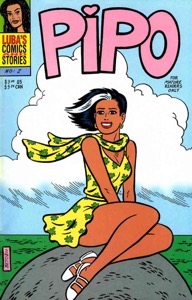
    The issue opens with Luba quickly introducing the tale—it’s a story of Pipo and Fritz, and it’s so over-the-top, it’d make Luba blush. Creator Beto Hernandez stakes out quite a feat with that promise, and he delivers. See, Pipo and Fritz are on a sex vacation. They’re in a foreign land—presumably somewhere in Latin America—and they’re trying out as much local pecker as they can. Pipo’s not not throwing men at Fritz in hopes Fritz gets hot and bothered enough to accept her advances too, which causes a lot of argument on the trip.

    Of course, they’re also in this country during its celebration of freedom from Catholic colonizers however many hundreds of years before. Things get unsafe for tourists, especially Catholic ones. So there’s built-in action, drama, and danger. But it’s mainly about the sex (and Fritz’s gun kink).

    The gun kink has been around since at least Luba, if not Love and Rockets prime, but this issue reveals where it all came from. It figures into Fritz’s flashbacks from last issue, which raises the question of focus—sure, Pipo gets the cover and is the ostensible protagonist, but most of the issue’s either about her mooning over Fritz, trying to get into Fritz’s pants, or trying to keep her and Fritz safe. The protagonist is Pipo, but the subject is Fritz.

    Beto touches on some of the weirdness—Pipo admits to Fritz the only reason she’s okay with Fritz dating her son, Sergio, is in hopes Fritz will see Pipo’s benevolent gifting of her son as a stud as a reason to get try ladies—specifically Pipo. But Pipo’s fully aware of her intrusive courting; straight seduction’s not working, orgies aren’t working, let’s try old-fashioned bribery.

    It’s a wild time. And not just because they’re playing sex tourists. Actually, even though there are some extremes, Beto’s relatively restrained with all the sex. There’s a lot of emotionality to them—the only time Pipo ever gives voice to her feelings, they’re about loving Fritz—so most of the sex scenes themselves are dialogue-free, but Pipo’s context for them is always apparent.

    The issue’s outstanding work from Beto, who usually will go either too far one way or another with the sex, but he evens it out perfectly for this issue. I sort of figured Comics and Stories, at worst, would be a solid anthology series, but Beto’s doing a lot of work in them. Of course, he might be done with the continuing story threads now. But I’ve learned never to bet against Los Bros. Especially not when Beto’s trying to show off how good he can be when showing off.

    The one-panel call back to Tonantzín is a gut punch. Beto does such damn fine work.

  • Black Mirror (2011) s01e02 – Fifteen Million Merits

    I’m understanding why the first episode of “Black Mirror” did a painful Lars von Trier namedrop… because the show’s just Lars von Trier-lite. This episode eventually involves a young woman being pressured into becoming a porn performer—don’t worry it’s just a terminal subplot and her experience is entirely besides the point—and it’s like, oh, what if we objectified but completely de-centered and turned her into someone else’s property.

    Fifteen Million Merits takes place in the future where the British(?) government’s boffins couldn’t figure out renewable energy when it was too late and the 99% spend their lives pedaling on stationary bicycles to make energy for the world(?). There aren’t a lot of details. There is some procreation—Jessica Brown Findlay remembers her mother, which apparently others don’t—but it’s unclear when and how it occurs. It’s also unclear if anyone has any sex ed outside the porno channel they have to pay not to watch when they’re cycling. No one in the episode exhibits actual attraction to another person besides lead Daniel Kaluuya and, presumably, Brown Findlay.

    I didn’t recognize Brown Findlay from “Downton Abbey” until her flirting scene with Kaluuya, which is done exactly the same as her flirting scenes with Allan Leech on “Downton.” Not the greatest moment for the script, though the functional cravenness is pragmatic. Writers Charlie Brooker and Konnie Huq aren’t going to be doing any character development (or even properly preparing the narrative to allow for character development), so why not just have recognizable cast members on the anthology show do their bits from their well-known shows?

    Anyway.

    In the future, the only way for the riders to get ahead is to go on the future “American Idol” (sorry, future “Pop Idol”) and entertain their way to a better life. Is it a better life? Unclear. Merits sets up numerous potential “Twilight Zone” gotchas only to always go the path of least resistance.

    Kaluuya’s the lead. He’s a rider with an incredible amount of money saved up–Merits—which you get from biking and then can spend on your Metaverse avatars. Another thing about watching “Black Mirror” with a decade-plus delay is seeing where the tech billionaires have just lifted dystopian ideas whole. But you also have to pay to eat and wash, which doesn’t make much sense. Of course, it doesn’t make much sense to have the bicycles in communal areas—everyone lives in little rooms surrounded by screens; why not just have the bike in there too?

    Despite the other girl who makes eyes at Kaluuya, it isn’t until Brown Findlay shows up he gets interested in the ladies. Is there some subtext to Kaluuya and porn mogul Ashley Thomas being the only Black people in the show with lines? Maybe not. Though definitely once it turns out Thomas’s porn movies are all about Black men degrading white women. Dystopia, huh?

    The acting’s decent, all things considered. Kaluuya and Brown Findlay have to play people who only exist within the context of these exact forty-five minutes, which will really hurt both their performances by the end. Though since Brown Findlay is a lady and therefore disposable to the plot, she at least gets to stop participating at some point. Kind of. It’s not better for the episode, just better for her not having to try to keep the energy going in a middling effort.

    Rupert Everett guest stars as Simon Cowell, though potentially an Australian one.

    Budget-wise, the episode seems fine. Euros Lyn’s direction is another middling element, particularly with the reveal shots. Jamie Pearson’s cutting is good, regardless of the content. And Stephen McKeon’s music is solid.

    Is it thought-provoking? Ish? It’s affecting, to be sure, but it’s entirely manipulative.

  • Mr. Mom (1983, Stan Dragoti)

    Approximately three-quarters of the way through Mr. Mom (approximately because the movie is a series of sitcom set pieces, not necessarily in sound narrative order), I realized it wasn’t just about sitcom set pieces; the whole thing is a situation comedy. With very low stakes. When the third act has to gin up the big drama, each resolution is a little more pat than the last, with Mom putting the whole weight on Teri Garr.

    Sort of sums up the entire picture.

    Mr. Mom opens with its pilot episode—Detroit auto engineer Michael Keaton gets laid off, even though his boss and carpool driver Jeffrey Tambor said it wasn’t happening. Keaton also works with Christopher Lloyd and Tom Leopold; Lloyd must’ve been doing someone a favor. Mom plays like a prestige sitcom in an era where the concept was before its time… except the script’s bad and the direction’s terrible.

    Anyway.

    Keaton’s laid off, so both he and Garr are going to look for work. They bet on it. After a commercial break, Garr’s got a job, and Keaton doesn’t. We get a little of their characters’ backstories throughout, without any actual insight, obviously. Garr went to college for something advertising-like and worked for two years before leaving to homemake for Keaton. Keaton was in the Army, then went to college, then got a job in Detroit designing cars. They can’t afford actual cars, just filming at the plant, so it’s not like there’s a failed supercar subplot. “Tonight on NBC Mr. Mom” doesn’t have supercar money.

    Garr goes to work for Martin Mull, Keaton starts hanging out with her housewife friends. Mull’s a sleaze, but Garr doesn’t acknowledge it because it’s the eighties and it’s messed up. Garr’s Mom’s secret weapon. Like, it’s Keaton’s test run for sure—is Michael Keaton ready for his own “The Michael Keaton Show”? Most of his scenes are like he’s doing stand-up, presumably because director Dragoti hasn’t given him any other instruction or input. Mr. Mom has a lot of pitfalls—spoiler, the screenplay (credited to John Hughes) was worked on by a room of Aaron Spelling TV writers. And Hughes’s screenplay was only ever intended for television anyway, in that weird era of TVM comedies.

    So Mom’s got a lot riding against it.

    But nothing compares to Dragoti’s abjectly bad direction.

    Obviously, some of the fault lies with Victor J. Kemper’s photography. Kemper’s not incompetent, just generic. But there’s better generic than what Kemper shoots for Dragoti. And Patrick Kennedy doesn’t know what he’s doing with his cutting, either. The technicals on the movie, outside Garr’s work outfits (they get the only costuming credit), are rough. I forgot about the hair and makeup on the housewives.

    So why isn’t Mr. Mom the worst, then? Keaton and Garr are likable. Keaton never has to be particularly cute with the kids—any parenting mishap scenes are short, and the biggest plot arc for any of the kids is middle child Taliesin Jaffe having to give up his blankie. Though even it’s an incomplete plot arc, with Mom skipping the middle section. The movie does multiple montage sequences to cover the lack of story, including one involving Keaton growing a beard and being a layabout. The problem is the anti-beard coding doesn’t age well. Luckily he’s slobbing out in other ways… at least until Garr tells him a homemaker has to take pride in the home.

    Plus divorced housewife Ann Jillian is hot to trot and after Keaton for absolutely no reason other than there aren’t any other men in the movie.

    Garr’s coworkers don’t even get names.

    And, of course, despite having such a limited cast of fellas… Mr. Mom doesn’t pass Bechdel. It fails proudly.

    Do Keaton and Garr save it? No. But there aren’t any casualties among the cast—even with lousy sitcom bits and Dragoti’s bad direction, everyone makes it through. Eldest son Frederick Koehler gets less than Jaffe but is perfectly solid. Koehler and Jaffe are professional kid actors. They can do this job. Mull’s fine. It’s not a standout performance, but it’s not bad. Jillian’s fine. Not sure about that hair. After them, everyone else is basically just a guest star.

    Nice cameo from Edie McClurg. Miriam Flynn’s good for barely having a name (it’s also unclear how well Garr knows the other housewives or if Keaton joined someone else’s gang).

    I wish it were better. And not just because it’s somehow a long ninety-one minutes—you’re being forced to marathon a sitcom you didn’t agree to marathon. But there are some really obvious misses—Keaton and Garr never get to be together, which I know is a feature, not a bug, but it’d have been nice to see how they worked together. Especially since they’re then left running their own shows without reward.

    Also… the final joke is dreadfully unfunny. There’s a good reason Aaron Spelling didn’t make sitcoms.

  • Chaw (2009, Shin Jeong-won)

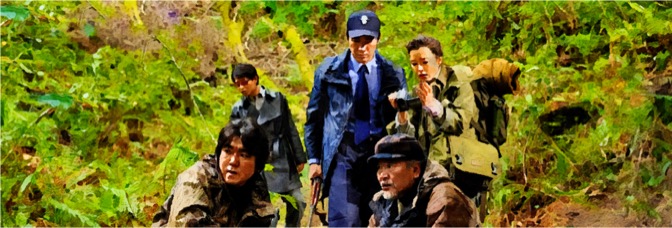
    Chaw tells the familiar tale of a man-eating wild boar and the brave villagers who confront it. The boar’s descended from the mutant boors the Japanese created when they invaded Korea. These abominations have been low-key terrorizing the countryside for decades and as the hipsters started doing weekend trips from Seoul into the countryside, things have gotten worse. The boars have gotten a taste for man-flesh, which post-grads Jung Yu-mi and Ha Sung-kwang have been investigating for years in hopes of breaking it big into tenured positions. They just happen to be in this one particular village when the giant man-eating boar attacks, and the timing coincides with Seoul cop Eom Tae-woong getting reassigned to this one particular village, which is important because Jung and Eom are going to be the third act action heroes.

    Eom’s brought along mom Park Hye-jin and wife Heo Yeon-hwa; Park’s got dementia (you wouldn’t feel good about it, but you’ll laugh at her dementia antics too) and Heo’s pregnant. Heo and Eom might have chemistry together, but they’re never in the movie long enough together for anyone to find out. Heo’s got home stuff to do, not protagonist work like Eom.

    Eom initially shares the spotlight with absurd Seoul detective Park Hyuk-kwon. Chaw actually has an incredibly complicated first act, lots of characters, lots of layers. But the movie starts with a horrific Jaws-inspired death scene, followed by exceptionally straight-faced slapstick. Director and co-writer Shin isn’t shy about setting Chaw’s tone, which is one of its greatest assets. Along with his confidence. Chaw’s finale, which attaches the second half of Predator to the first half of Jaws, with some Aliens thrown in, is exceptional action direction. Especially since the film’s shot in frequently iffy DV. Shin and cinematographer Kim Yung-chul compensate—and the silliness but thoroughness of the CG wild boar helps a lot (it’s intentionally cute)–and it all works out.

    But the first act is a lot. There are multiple victims to remember—and to remember who, if anyone, knows about the victim (since it’s a vacation town, I’m pretty sure at least one victim gets forgotten). Eom’s subplot initially seems to involve Park and Heo, but it doesn’t. Instead he becomes best friends with adorably weird detective Park—who never breaks character, which is the point, and it’s superb work start to finish, especially since all the village cops are buffoons. It’s like a mix of Se7en and Keystone Cops.

    Eventually–Chaw’s real confident in its runtime—Shin knows they can keep this going for a couple hours, they just need to make it to the second act, and so the first act throws a bunch of spaghetti at the wall. All of it pays off in the end, which is chef’s kiss; Shin and Kim Yong-cheol’s script is so narratively sound it rings. But the first act. So lots of comedy, lots of characters.

    The second act brings in master hunter Jang Hang-seon. He quickly becomes everyone’s grandpa. What if Robert Shaw was cuddly? Jang’s great.

    So then it seems like it’s Eom, Jang, and Park. Jaws. Including some great homage scenes. Though much grosser with mammals than fish.

    Then the movie adds Yun Je-mun to the mix. He’s Jang’s former protege who’s become a TV celebrity hunter. Yun’s weird. He does this macho thing until he gets sweet on Jung, then he’s very… inappropriate at times. Harmlessly? But grossly? Don’t sniff girls’ hair when they’re asleep, fellas.

    It’s a neat, very amusing subplot the movie introduces in the second half for Yun and Jung. There are a number of major subplot resolutions in the second act. Chaw’s clearing the deck for the finale but also compensating for it not having an infinite amount of space for the hunting party to cover. There are only so many places the boar can be.

    Chaw’s great. The main cast members all get nice standouts, the script’s strong, production’s good. Shin even knew not to show off too much when shooting with DV because who’s going to notice? It’s a delight.

  • Black Mirror (2011) s01e01 – The National Anthem

    I spent all of The National Anthem waiting for someone—anyone—to turn to the camera and say, “David William Donald Cameron.” Hell, they could’ve done an animated Peppa Pig saying it. But "Black Mirror" started in 2011, when the world was a much different place. Not just Cameron, but in the intervening years, the whole British Prime Minister office doesn’t come with much regard (or even less regard than before). And "Mirror" is all about commenting on technology and its effect on the world. I assume the title refers to screens; I’m not Googling… right now.

    Writer (and co-showrunner) Charlie Brooker thought way too much of people. He attributed much more grace to the species than we deserve.

    That observation made, it’s a perfectly reasonable example of absurdist comedy done straight-faced as prestige television. To some degree, Brooker’s definitely making people talk about the episode’s “big twist”–"Black Mirror" probably led to spell-checkers no longer squiggle-lining meta, which they might’ve still done back in 2011.

    Politely put—I mean, Google David Cameron and "Black Mirror" if I’m being too discreet–National Anthem is a tense political thriller about a prime minister in a tough spot. Someone has kidnapped the people’s princess (no, not Princess Mia) and will only release her if the prime minister does something reprehensible on live television, humiliating himself and the concepts of polite society and decorum in the digital age.

    Now, there are a couple moments in the episode when the law enforcement goons miss very obvious technology things, but it’s from 2011, not like 2016, which is what I assumed. All the “Downton” references play different too. Though it still means in the universe where Diana and Charles (presumably, there aren’t details) had a daughter, “Downton Abbey” was a sensation. Heck, it’s even possible Diana’s queen in this universe.

    Anyway.

    The decent enough observations for 2011 are a time capsule of a more ignorant time (i.e., more ignorant of reality).

    As a dramatic thriller, it’s solid prestige television. Rory Kinnear’s good as the prime minister, who finds himself under unimaginable pressure (he should’ve been reading The Pet Goat), which leads to… well, not a character arc–lots of dramatic moments, but not character development. Lindsay Duncan’s his chief assistant who makes some bad choices, leading to contentious moments with Kinnear. She’s fine. It’s a crap part. No one else makes bad choices, just the older woman, but it was 2011 and making a powerful woman incompetent was progressive. She’s powerful, isn’t she?

    Despite “Mirror” being co-run by Annabel Jones, Anthem wants nothing to do with the ladies. Anna Wilson-Jones plays Kinnear’s absent from the plot but physically present on set wife, who’s a plot accessory for Kinnear. Chetna Pandya’s the too-eager young reporter who knows how the future of media’s going to work (only she doesn’t—according to the show, anyway—and then she gets punished). Odd flexes.

    Tom Goodman-Hill’s kind of pretty good as Kinnear’s boy Friday. So many qualifications. All the acting’s fine, sometimes excellent—there’s just not much for them to do with their performances. Anthem’s on a strict schedule, and director Otto Bathurst keeps the trains on time.

    Bathurst’s also fine without being notable. He can direct prestige–big shrug.

    But there are some great “cameos.” The show’s trying to be classy by not drawing attention to the stunt casts, but they’re still a lot of fun.

    It’s fine. I’ve only said “fine” like five times. It’s a prestige anthology show with a gimmick.

    It’s fine.

  • Werewolf by Night (1972) #33

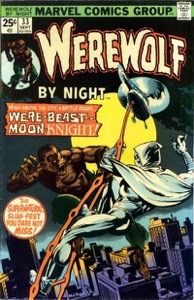
    Wbn33It’s a lackluster but not bad Werewolf by Night, which is one hell of a compliment, but what else are you going to do with this book. Writer Doug Moench finally resolves the mysterious Committee out to get Jack Russell since the first issue. Or at least by the third issue. They hired Moon Knight to deliver him, promising $10,000 in U.S. greenbacks, then make Moon Knight wait until human Jack wolfs out. Will mercenary Moon Knight let the Committee turn Wolfman Jack into a relentless killer, probably starting with the Committee’s latest captives—Jack’s best girl, Topaz, and his little sister, Lisa.

    For a thirty-three issue plus story arc (Marvel Spotlight and Giant-Sizes), the Committee resolution is a bunch of bumbling capitalists confused how step one: werewolf doesn’t lead to step three: profit. I don’t even think the lead one has a name. He’s just the head of the organization who’s been behind every bad thing to happen to Jack since… they killed his mom, didn’t they?

    Anyway. Moench’s ready to be done with them.

    He’s also apparently done with Lissa being a werewolf. She very definitely doesn’t turn this issue (I think there’s the implication the Committee knows she should be changing too, yet doesn’t cage her). Again, Moench’s ready to be done with a lot.

    Sadly, he’s clearing the decks for his worse subplots. Like Raymond Coker in Haiti hunting zombies. Marvel’s added a “cultural insensitivity” to new releases of the issue, but it’s unclear if they’re talking about the characterization of the voodoo priestess and Coker’s Haitian relations or if they’re talking about the LAPD cop telling the Haitian cop he’s worthless and poor.

    Either way, it’s nice once the scene’s over. Apparently, Coker is going to fight a zombie of his grandfather with the racist LAPD cop come to Haiti to kill him. I thought the cop was a werewolf now. I’ve lost count of all Werewolf’s cops. There are either two or three. One became a werewolf. I’m sure it’ll matter lots.

    There is some exceptionally bad writing and editing in this sequence (and not just the characterizations). Coker’s niece sees zombie great-grandfather or whatever, who died thirty-two years ago. The niece is a kid. Sure, it could be from photographs, but it doesn’t play like it.

    So that subplot actually has three separate scenes, not poorly assembled for brevity, just… problematic and lazy.

    Then Moench checks in on Buck in the hospital. I forgot Jack almost killed him, and then Moench immediately rolled it back, including all the emotional heft. But checking in on bad subplots without doing anything bad is a wash.

    Plus, mixing up the bad isn’t the worst move. The Buck subplot’s bad because it’s narratively craven, and the Coker subplot’s bad because it’s problematic and thin. But neither of them is obnoxious like Moon Knight. Moon Knight’s sucks the life out of the page. And Werewolf’s still got art by Don and Howard Perlin. It doesn’t have much life on the page (though there aren’t any staggeringly bad panels this issue).

    The issue’s a cop-out, but… at least the comic’s operating within its limitations. It doesn’t aim high; it doesn’t fall too low. It’s fine. For Moench, Perlin, and Perlin Werewolf by Night anyway.

  • Mad Monster Party? (1967, Jules Bass)

    Mad Monster Party? spends a solid portion of its runtime only slightly amusing. It’s technically competent stop-motion animation with a charming voice performance from Boris Karloff as Boris von Frankenstein. He’s just discovered the anti-life formula and has become destroyer of ravens, potentially worlds. Having run the gamut from creating life to creating anti-life, Karloff decides it’s time to retire, and he’s leaving the whole thing to nephew Felix Flanken (voiced by Allen Swift). And he’s going to reveal both his achievement and his succession plan at a meeting of the Worldwide Organization of Monsters.

    So Karloff invites all the monsters to come down to the island, have a few laughs, have their dreams of world domination crushed.

    The opening titles are a usually amusing, always competent series of bits involving the various monsters getting their invitations to the party. There’s Dracula (voiced by Allen Swift), there’s the Invisible Man (voiced by Allen Swift), there’s Dr. Jekyll (voiced by Allen Swift), and there’s Mr. Hyde (voiced by Allen Swift). Swift has two more major characters—the zombie and the Frankenstein Monster. Phyllis Diller plays the Bride of the Frankenstein Monster, though Mad Monster doesn’t do the obvious hair bit.

    Finally—at least in terms of unique performers—there’s Gale Garnett. She plays Francesca, Karloff’s ample-bosomed assistant. She thinks she ought to be the heir and starts plotting against Karloff, enlisting the aid of Count Dracula.

    Swift plays Dracula as a Borscht Belt Bela Lugosi. Outside Dr. Jekyll and Mr. Hyde, Swift has a bit for all the voices. Invisible Man is Sydney Greenstreet, specifically in Casablanca, including the fez. The zombie character is Peter Lorre (looks like him too). Felix, the lead (who looks like a variation on Hermey from producer Rankin/Bass’s Rudolph), is Jimmy Stewart. It’s very disconcerting to watch the Stewart bit fail over and over; like, did they really think it would work?

    Swift will also voice “Mafia Machiavelli,” who is the chef. It’s a surprisingly intentionally problematic scene with the killer chef threatening the Lorre zombie, who’s busy mooning over Garnett.

    Garnett is Mad Monster’s secret weapon. When she does her song about betraying everyone—in alliance, at that time, with Dracula–the movie suddenly gets strangely good. At first, it seems like a brief flash of goodness, but then Garnett keeps going, both in her performance and the occasional song numbers. She and the Felix puppet get a good moonlit duet and such.

    There’s a surprise monster—a deus ex machina in a movie about a literal deus ex machina—but there’s enough humor in the finale for the movie to surpass the contrivances. Even the worst characters have some charm to them, and the stop-motion’s always fun. There are a couple of great action sequences, including one coming immediately after Diller and Garnett’s puppets start wrestling, and the soundtrack plays cat yowls. Repeated ones, like the sound editors demanded more, drilling in the “joke.”

    But then the movie immediately recovers with a phenomenal action sequence.

    Mad Monster Party?’s got lots of moments ranging from fun to actual funny, a surprisingly good performance from Garnett, a fun one from Karloff, way too broad work from Swift, and superb stop-motion animation.

    It all evens out well enough.

  • Sudden Impact (1983, Clint Eastwood)

    At least a third of Sudden Impact is director, producer, and star Eastwood doing a Hitchcock homage starring Sondra Locke. Locke doesn’t speak during the Hitchcock homage sequences; she just walks silently, staring at various things, remembering her horrific origin story, then shooting some rapist in the balls and then the head. Now, Sudden Impact is Dirty Harry 4, coming seven years after the previous entry; Eastwood’s in his fifties now. There aren’t young chippies throwing themselves at him (I mean, Locke’s fourteen years younger, but she’s still a grown woman), but he’s still got to contend with unsympathetic police brass. They don’t understand how dangerous the world has become, and only a man like Dirty Harry can get results.

    The movie opens with Locke offing her first rapist, but we don’t know he’s a rapist yet. She’s just killing some guy in a Hitchcock homage. Then it’s off to court for lady judge Lois De Banzie to disrespect Eastwood’s authority and let young punk Kevyn Major Howard back out on the street. Eastwood didn’t have any evidence. Then Eastwood goes and interrupts a coffee shop robbery where he kills the only four Black people in the movie so far, just before Locke has an interaction with some Hispanic toughs. Impact’s main villains will be all white, but the movie is determined to remind the audience cities are full of ethnic types who are just criminals.

    Also, one of the main villains will be a lesbian. Audrie Neenan. She hopefully fired her agent after this one.

    But we’re getting ahead because it takes Sudden Impact forty minutes to get the actual plot, which will be Eastwood investigating the secrets of coastal city “San Paulo” (filmed in Santa Cruz), where Locke just happens to have returned to kill all her assaulters. See, ten years before, Neenan brought coworker Locke to a party (along with Locke’s little sister) but as a set up for some local boys to rape them (occasionally under Neenan’s direction). Sudden Impact is Eastwood doing a seventies exploitation picture in the eighties, with the Hitchcock vibes, and then all Eastwood’s one-liners about how all those liberals, and intellectuals, and smooth-talkers don’t understand how policing needs to be done. From the business end of a very special .44 Magnum, because it’s the eighties, and there’s got to be some kind of tech angle to it.

    Just to pad out the run time, Eastwood also stars a gang war with uncredited Michael V. Gazzo, so there can be lots of shootouts in scenic San Francisco. Eastwood, as a director, does a great job showcasing the locations. Impact’s got a great crew—Joel Cox’s editing is great, and Bruce Surtees’s photography is muted and lush—even if the action set pieces are a bit blah. It’s just Eastwood going from shootout to shootout. Occasionally, boss Bradford Dillman yells at him. Dillman’s back from the previous movie playing the same part but with a different character name. Eastwood’s only friend—his Black friend, no less—is played by Albert Popwell. Popwell’s back from the original Dirty Harry, where he was at the business end of a one-liner; apparently, since 1971, Eastwood rehabilitated him and turned him into a cop.

    Better movie, no doubt.

    Lalo Schifrin’s music varies from inspired to grating–his Hitchcock-y music for Locke’s great. The opening music’s weird, though, especially since the titles are an homage to The Maltese Falcon’s San Francisco Bay shots. Shame Eastwood didn’t realize they could’ve nodded towards movies with good stories for the plotting.

    He’s not good. He’s bored all of the time, annoyed some of it. The director’s cut must be about him having to pass bladder stones. Locke’s awesome during her silent walking around scenes. Once she’s got to talk, she’s terrible. Except when she’s got the exploitative but prestige scene where she tells her catatonic sister how she killed the first rapist. From that scene, it seems like Locke will have some pay-off dramatically.

    Not so.

    Not even after Eastwood gives her an excellent thriller chase sequence on a carousel.

    By the third act, Impact’s gotten over its intentional casual racism and dog whistling. It seems like there’s nothing anyone can do to stop the momentum, especially not after that great thriller sequence. But then it turns out Eastwood had one more homage up his sleeve; for some inexplicable reason, which either has a great story or a tragic coincidence, Eastwood directs his Dirty Harry action scenes like he’s the slasher in a slasher movie.

    So bad.

    Then it’s nice the end titles have a Roberta Flack song, but it’s not a good Roberta Flack song. Sudden Impact makes some very intentional references to the previous Dirty Harry movies, but only their very seventies technical choices.

    Again, the whole thing’s fascinating. But certainly not rewarding. Certainly not any good.

    There is—eventually—a cute bulldog, however. Though Eastwood really leans in on bulldog’s farting. Uncomfortably so.

  • Dead Man’s Curve (1998, Dan Rosen)

    Dead Man’s Curve’s opening titles are intercut with someone meeting with Dana Delany—playing a college campus therapist—and asking questions about signs of suicidal thoughts. Delany makes a joke about how first-time efforts from writer-directors might do it. Then the title card cuts to director Rosen’s writing and directing credit. All his other references are on the nose. Some of the plot involves the latest gaming craze on campus—you write a bunch of names on scraps of paper, mix them together in a glass bowl, then your partner has to identify them–Trivial Pursuit but from when they first invented paper.

    There’s a lengthy sequence where the players list off famous female actresses of the era; it’s surprising no one turned to the camera and informed the audience they were the actresses who turned down Keri Russell’s part.

    For her part—no pun—Russell does almost all right. It’s a lousy, good-girl coed femme fatale part, and Russell handles a lot of it. Starts falling apart halfway through and never comes back. It’s a bummer because her performance gets more impressive just around the time Matthew Lillard’s takes off, so it seems like it’s a rising tide raises all ships type situation.

    Even Lillard cannot hold on for all of Curve’s twists and turns. Rosen homages almost seventy years’ worth of thrillers but forgets he might want some sympathetic characters. While Rosen’s clearly overconfident from jump, he does have some great instincts, and it seems like—given the movie wants to take “nothing is what it seems” to the nth degree—he might pull it off.

    But then Russell starts falling apart, Delany goes nowhere, and top-billed Michael Vartan finally assumes the hero spotlight. The real question of Curve is whether or not Vartan is going to be able to hold the water on his own. Rosen knows when Delany’s good; he knows the movie mostly rests on Lillard and spotlights him monologuing at least twice—Rosen knows Vartan isn’t cutting it, but nothing’s to be done. The Curve spills out of Vartan’s barely cupped hands.

    And it’s not just about Vartan playing a bland white guy. Randall Batinkoff plays a bland white guy; he’s (relatively) great. Let’s say… surprisingly good. Even though he looks way too old. They’re all supposed to be college seniors; all the guys are clearly in their late twenties.

    Russell’s about the right age. She’s Vartan’s girlfriend.

    Tamara Marie Watson plays Batinkoff’s girlfriend. He’s terrible to her, so it’s okay his roommates are plotting to kill him. Lillard’s only got a love interest for a scene, though apparently, it’s a steady thing, so her not being around doesn’t help things.

    Watson’s awful. She’s in a thankless spot—Batinkoff berates her, and all their friends ignore it because they’re all rich together, and she’s poor. So there’s this wonderful collision of misogyny, patriarchy, and classism.

    The movie’s on location at a college campus but on a tight budget. The lack of scale doesn’t help things.

    Kevin Ruf plays the dipshit campus cop. He’s terrible.

    Dead Man’s Curve doesn’t exactly have its moments, but it has moments where it has potential. None of it pays off. Surprisingly decent soundtrack, though.

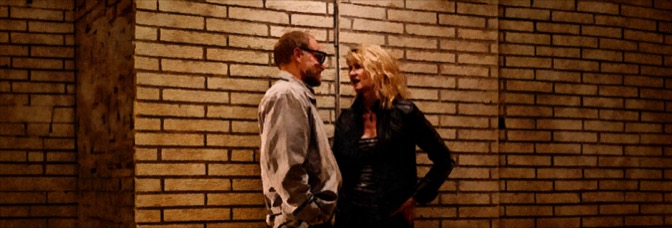
  • Wilson (2017, Craig Johnson)

    From the start, Wilson’s got two problems it can’t possibly overcome. First, director Johnson. He’s never got a decent idea. Not with the actors, not with the composition, not with the pacing. He does seem to understand Laura Dern’s far and away the best thing in the movie, but he doesn’t address compensating for her not being around sometimes.

    The second problem is lead Woody Harrelson. He’s Wilson, an old curmudgeon who loves his dog. He inserts himself into people’s personal space to ask invasive questions and just generally be a prick because he’s a white guy, so he’s always gotten away with it. Harrelson will have a comeuppance of sorts, but the film never addresses how that comeuppance affects him or how it manifests in the everyday.

    Harrelson’s usually okay. He’s never good. He’s not better in the Dern scenes because Dern’s so awesome it carries over. He’s got no great third-act character arc to bring things around for the finale. Just to get it over with: the third act’s a disaster. When Wilson is good—which is before Cheryl Hines shows up as Dern’s sister in an intentionally unlikable stunt cameo—it’s good enough to make up for the clunky first act. Screenwriter Daniel Clowes, adapting his own graphic novel, stumbles through the entire first act, doing narrative pratfalls and showing off how read mediums can have superior structuring. Though Johnson’s direction is also blah.

    And Harrelson’s not making it compelling.

    The movie starts with Harrelson’s best friend, Brett Gelman, announcing he’s moving away. I was wondering how the movie was going to deal with Harrelson having such an obvious chemistry vacuum with Gelman’s wife, played by Mary Lynn Rajskub. But they disappear, so it doesn’t matter. Harrelson only ever has to do character development with Dern and Isabella Amara. Amara is the daughter Dern gave away for adoption. Further into the second act than it ever should, Wilson becomes about their mutated take on the nuclear family.

    All three characters will have profound arcs.

    The film will ignore all of them. It will vaguely acknowledge them, though the solution to all of Amara’s problems seem to just be “don’t be goth,” whereas the movie doesn’t ever get specific with Harrelson or Dern’s exact problems. Like, Harrelson’s got some definite problems at a few points in the movie, but they’re taking on his overarching character development arc in the third act, kind of invalidating the second act for the audience. We just sat through this better movie and now the worse movie tells us it was all for naught.

    The copout with Amara and Dern can just be chalked up to “the mystery of women.” Trying to explain them would require adjusting the narrative distance to encompass their points of view. Not going to happen in Wilson, even though Johnson seems to be leaning into Harrelson coming off like a serial killer in the first act, stalking his prey.

    The other technicals are all just okay—Frederick Elmes’s photography, and Paul Zucker’s editing. Whoever okayed Ethan Tobman’s entire production design concept should have made better decisions. Jon Brion’s music initially seems like it’s going to bring something to the film.

    It does not, though no one really brings anything special except Dern, who’s so great when the film lets her be, which isn’t often.

    The rest disappoints.

  • The Amazing Spider-Man (1977) s02e01 – The Captive Tower

    Stop me if you’ve heard this one.

    A group of highly trained men takes over a state-of-the-art skyscraper. They are led by an enigmatic leader whose primary contact on the team is the computer wizard. They have rigged the roof to explode. They have thirty or so hostages on the thirtieth floor, and they are in control.

    But there’s something they didn’t expect—they’re not in the pilot for “McClane,” which could’ve starred Tom Selleck in 1979—they’re in the second season premiere of “The Amazing Spider-Man,” and Nicholas Hammond is going to kick their ass. I mean, presumably Nicholas Hammond. While there are a handful of scenes you know it’s him in the costume, in most scenes, you know it isn’t him. Does it break the verisimilitude?

    Yes and no. Captive Tower is a decent season premiere of an action stunt show. It’s very specific about how it works. Hammond (out of costume) hangs out in the first act, then is in and out for the rest of the episode. He checks in for exposition scenes and catch-ups with the supporting characters, but otherwise, it’s all costumed “Hammond.”

    So it’s an action stunt show with a specific target market. Tween boys who are allowed to stay up at primetime, which is a weird advertising demographic for primetime. The Die Hard plot is so incontrovertible the show can’t help but be compelling. Even when the height of action drama is “Hammond” being woozy at the edge of the building.

    Spider-Man’s lack of balance this end of the Spider-Verse also plays in when there’s a balancing on a tightrope sequence. Spider-Man’s bad at balance. What is even happening.

    Basically, there’s just no promise of verisimilitude for it to fail. All the character work for the regular supporting cast stops before the halfway point. Chip Fields drops Hammond off at the assignment—presumably to borrow his new car (which will go on to be a regular on the season, but never a plot point). She does an exposition dump to help introduce new regular Ellen Bry, playing a rival photographer who can appear in the action plot but also be damsel and love interest at better rates than weekly ingenues.

    Bry and Hammond bicker, touch a lot, then she’s background.

    Ditto Robert F. Simon as J. Jonah Jameson. He gets a lot to do in the first act (though, at best, he’d just be setting himself up for an Ellis situation). But then he’s just around to tell the guest stars what to do. Like, literally. Either Hammond or Hans (David Sheiner) will tell everyone to do something, and Simon will tell people to do it. It’s busywork and very obviously where Tower proves the Die Hard structure needs, you know, some kind of artistic impulse.

    Instead, the character drama is either about a terrorist’s fear of heights or the computer guy (Todd Susman) being in love with the computer. Does the computer talk to him? No. Is it visually impressive? No. Director Cliff Bole just gives Susman one shot after one shot about how much he loves the computer and how he’s got to seduce her into doing their… commands.

    Sheiner’s bad. Susman’s bad, but not always. Hammond’s got his moments, and even though Tower features him definitely in the costume doing scenes with other characters—he talks to the other other agent Johnson—Spider-Man’s not a character who has any stakes. The cops aren’t even after him this season, apparently. The show replaced season one (and pilot movie) regular Michael Pataki with Bry for this season, only to bring in Ed Sancho-Bonet as a Pataki-like cop to negotiate with Sheiner.

    Simon and Bry are both fine. Fields gets that opening scene to be charming and makes Hammond immediately better; he’s never better on the show than with her. If only she’d stayed past that actual opening scene.

    But there’s more than enough “Spider-Man” action for the target audience.

    And that Dana Kaproff score is dynamite.

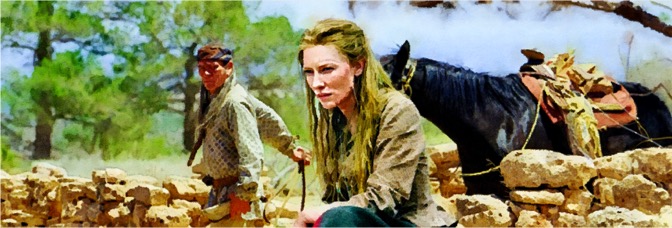
  • The Missing (2003, Ron Howard), the extended cut

    There’s a moment in The Missing when Tommy Lee Jones appears to be dead-panning at the camera, clearly as exasperated being in the film as the people watching him in the film. He’s tired because The Missing makes sure to keep him busy, but he easily soldiers on because Jones is in Missing to soldier on. No one in The Missing can be relied upon for anything except Jones. And all Jones promises is not to embarrass himself further than the project’s conceit.

    Too bad the conceit is so damning, particularly for Jones.

    See, The Missing is about Jones returning to his daughter, played by Cate Blanchett, in 1885 New Mexico. Jones ran off to… join a Native American tribe? It’s unclear. He ran out on Blanchett and her mom and eventually ended up living with various Native tribes, but how they knew he ran off to join up is unclear. Given the thoughtfulness of Ken Kaufman’s screenplay, maybe they thought he jumped on a freight train like he was running off to join the circus.

    Jones goes to find Blanchett, so he’s around when she needs an experienced tracker to go find her daughter Evan Rachel Wood, who renegade Indian Scouts have kidnaped. Eric Schweig plays the main villain, a witch. His gang kidnaps young women to sell in Mexico. The calvary is after them—led by Val Kilmer in one of the film’s rare good casting ideas—except the calvary are dipshits, and they’re going the wrong way.

    It’s up to Jones and Blanchett to put aside their differences and team up to save Wood, with Blanchett’s younger daughter, played by Jenna Boyd, tagging along. Boyd’s supposed to be precocious. She’s terrible. Blanchett’s supposed to be… well, actually, Blanchett’s not supposed to be anything. Missing is terrified of spending any time with Blanchett, which tracks because her performance is embarrassingly bad, but still. The film’s ostensibly about Jones and Blanchett’s relationship, except the only time they have an honest conversation is like ninety seconds about halfway through the movie and then never again. They have other conversations pertaining to their character arcs, but they’re all bad because Blanchett’s terrible. That first conversation is the only time she actually works at the character.

    She’s playing The Woman With No Name the rest of the time. Except she’s got a name. But also has a pretty cool Western wanderer outfit courtesy costume designer Julie Weiss, who’s otherwise just trying to make the Native characters’ costumes as close to cartoonishly racist without some respectability line. Missing thinks it gets a lot of mileage from having Jones culturally appropriating the Native Americans while villainizing the Native Americans who sold out to the white man. It’d be more cringe if the movie weren’t such garbage.

    Mostly good photography from Salvatore Totino. Totino has a lot of bad moments, particularly with composite shots, but otherwise, it’s competent work. The editing not so much, but director Howard’s got no ideas for his set pieces, so it’s not the editors’ faults. Not entirely.

    James Horner’s score is repetitive but has its moments. At least until the end of the second act when it craps the bed and basically sits out all the moments the film needs it in the third act. The music’s never good, but at least it seemed professional. Not in the finale.

    The Missing seems like someone’s very bad idea for Oscar-bait, not realizing Jones wasn’t going to make a part for himself and Blanchett wasn’t capable of holding an accent, much less making up for zero character development. Sure, it’s about Blanchett never giving up on daughter Wood, but only after all the men who care for her fail her.

    There are some abysmal performances in the film besides Blanchett and Boyd, like Aaron Eckhart, who is so bad he makes Blanchett look good. Eckhart’s utterly inept in the film—it’s not his fault; he’s just so obviously miscast it’s silly. It’s director Howard’s fault. Lots is Howard’s fault.

    Sergio Calderón’s bad. Ray McKinnon’s awful. Max Perlich’s bad.

    Wood’s okay. The movie spends a lot of time with her in the second act because it’s an excellent way to avoid character development for Blanchett, and Wood’s got some good scenes. Unfortunately, the movie gives her some really lousy material for the third act.

    The Missing’s tedious and terrible.

  • The Man Who Knew Too Much (1934, Alfred Hitchcock)

    The Man Who Knew Too Much is an action thriller. It doesn’t start as an action thriller—it begins with an English family (dad Leslie Banks, mom Edna Best, daughter Nova Pilbeam) vacationing in Switzerland. Their vacation has almost come to an end, and they’re saying goodbye to some of their trip friends. Their good trip friend is flirty Frenchman Pierre Fresnay, but they’re also friendly with Peter Lorre and Frank Vosper. Lorre’s just another guest, while Vosper competes with Best in a shooting competition.

    Then everyone gets together for dinner and dancing, while Best and Fresnay flirt in front of Banks—just for laughs—and so on. Except then Fresnay gets shot and drops dead, but not before he passes a message for Banks on to Best. Best relays the dying request to Banks, who has an intrigue scene before discovering someone has kidnapped daughter Pilbeam and, unless Best and Banks behave, they’ll never see her again.

    At this point, the film moves back to England—the British agents know Banks knows something about Fresnay’s death, in addition to realizing the daughter’s been kidnapped and the parents aren’t participating. Slightly less obtuse agent George Curzon tries getting through to Banks but still gets the stonewall. Best and Banks have family friend Hugh Wakefield around to help with moral and adventuring support.

    Curzon will only be significant in the film because it forgets about him. The film also forgets about Wakefield, but he does get to participate in some of the eventual action set pieces—always as comic relief. The film can function without Wakefield; he leaves just as Lorre takes over. But the Curzon situation’s more interesting. If the film didn’t forget about Curzon, it wouldn’t have a third act. See, Curzon knows Banks knows something. No one else in the movie will ever think Banks knows anything. He’s the Man Who Knew Too Much and all… but Too Much is a very relative term.

    When Banks and Wakefield go investigating, trying to beat Curzon to the punch (silly, since his arc isn’t a thing), they discover a strange church of sun-worshippers who have something to do with Fresnay’s death and maybe Pilbeam’s kidnapping.

    At this point, just over halfway through, the film becomes an action thriller with continuous action. It’s one set piece after another, including a hypnotizing scene, a brawl scene, a big shootout, and a complicated assassination scene. The film’s just a series of action set pieces, barely taped together with the characters and their respective plights. By the third act, almost all the heroes are in eminent danger—whether they know it or not—and the bad guys are getting desperate.

    As an action thriller, Knew is superb–great direction from Hitchcock, who keeps the film and its proceedings incredibly quiet. There are no slam-bang sound effects during the fight scenes or the pile-ups, and Arthur Benjamin’s music always falls silent when it’s time for someone to do something dastardly. Or to fight back against dastardly doings. The film’s distinct and confident. Great photography from Curt Courant too. And Hugh Stewart’s editing is superb.

    Unfortunately, there’s almost no story once the consecutive plotting takes over. There’s no character development; there’s no drama outside what will be solved through action violence. The film’s screenplay involved many hands–and five credited writers in one capacity or another (Charles Bennett, D.B. Wyndham-Lewis, Edwin Greenwood, A.R. Rawlinson, and Emlyn Williams). Not one of them gave it a story, which would be more impressive if the first act didn’t promise there was some grand conspiracy to unravel. Worse, we don’t know there wasn’t some grand conspiracy; we just know the writers and Hitchcock didn’t think it was worth delivering on that early promise at all. Or to even acknowledge it.

    Luckily, there’s some outstanding acting to carry things along. Banks and Best are both excellent, though they never get to be excellent together. Instead, Banks gets his showcase in one location, and Best gets hers in another. Lorre’s spellbinding. Once he gets going, he sets the entire tone of the film. Hitchcock waits a while to hand it over, instead starting with Cicely Oates as his ominous companion. There are hints at Lorre, implications he’s going to be worth the wait, then he’s quadruple any of those promises. He’s exceptional.

    Wakefield is good as the sidekick. Oates is good. Pilbeam’s fine. She’s a teenager in peril. She’s fine. She plays it really scared, though, which ends up making Knew seem insensitive to her. She’s British; she can’t experience trauma. Vosper’s barely okay, which is a bummer. He seems like he’ll have some depth, then doesn’t. Since the script’s not giving it to anyone, all dimension is thanks to the actors. Just not Vosper. He’s more than happy to play it flat.

    The Man Who Knew Too Much is a tight, taut seventy-six minutes. Great production, great performances, great pacing… lukewarm plotting.

  • The Trial of the Incredible Hulk (1989, Bill Bixby)

    Spoiler: there’s no trial in Trial of the Incredible Hulk. Except maybe the viewer’s difficulty getting through the TV movie. Or producer, director, and star Bixby doing a special effects heavy (but not for Hulk Lou Ferrigno) backdoor pilot for a “Daredevil” TV show starring very special guest star Rex Smith. Ferrigno’s so shoe-horned into the production he doesn’t even get to Hulk out in the third act.

    Things are off from the start, which has Bixby working on a ranch—run by familiar-looking TV guest star Meredith Bain Woodward—only to leave when he’s being bullied too much. Don’t want to waste one of the three Ferrigno scenes on a ranch fight. Woodward warns Bixby if he heads to the city, it’ll suck his soul out. Now, the city never gets mentioned by name—it’s Vancouver—but when henchman Nicholas Hormann lists the various crime lords’ home bases, New York is left off the list and Daredevil’s traditionally New York.

    And Trial’s New York City being in a quick hitchhike from the Canadian North Shore mountains or whatever… well, it sums up the production fairly well.

    Most of the episode is about Smith trying to rescue third-billed Marta DuBois from John Rhys-Davies. Rhys-Davies is playing evil businessman Wilson Fisk (aka the Kingpin, though not in Trial), who wears his sunglasses both indoors and at night, and watches everything on video. The opening jewelry store heist sequence has the robbers setting up cameras so Rhys-Davies can see what they’re doing and instruct them. There are a few times throughout the movie where it’s clear someone did a lot of work getting all that video to show right in the final production. Shame Gerald Di Pego’s script doesn’t have similar levels of care.

    Let me see if I can quickly summarize the contrivances. DuBois is on the same subway train as Bixby after the jewelry heist. Bad guys John Novak and Dwight Koss are also on the train, giddy after their successful robbery. Novak decides he’s going to rape DuBois. Koss seems iffy on it, but then agrees. After initially staying out of it, Bixby finally Hulks out, and it’s Ferrigno to the rescue.

    Except after the cops arrest Bixby (post-Hulk out), DuBois tells them he was the one who assaulted her. It just doesn’t make sense to poor Bixby, who thinks he’s still in the more wholesome, early eighties era of primetime. Smith offers his services to Bixby—who goes from a jail cell to a prison cell without so much as a hearing (about halfway through Trial he has a scene about not being able into the courtroom because he’d let Ferrigno deal with it)—and Bixby reluctantly agrees. Basically because Smith is blind. DuBois is also nicer to Smith once she realizes he’s blind. It’d have been a wild “Daredevil” show; so many plot twists based on Smith being blind and people not realizing he’s got sonar vision.

    After DuBois tells Smith what really happened, Rhys-Davies realizes there’s still another forty-five minutes, so he tells consigliere Hormann to kidnap her and use her as bait for Daredevil. No one in Vancouver New York has heard of the Incredible Hulk so it’s not really a team-up movie, at least not in terms of action set pieces. Hormann falls in love with DuBois, potentially complicating matters.

    Can Bixby and Smith bond over their respective radioactive secrets and save her in time?

    There’s very little for Bixby to do in Trial. Eventually, he plays big brother to Smith, who gets a whole “Daredevil Forever” arc in his first appearance, as Rhys-Davies is able to hit him in the ego. But until then, he’s got to stay busy in scenes with no plot arc for himself. Lots of small talk.

    Smith’s got his whole potential series crew with him—love interest and law partner Nancy Everhard, Black guy who works at the office Richard Cummings Jr., Commissioner Gordon Joseph Mascolo, and then Hormann. Rhys-Davies clearly wasn’t showing up for every episode of “Daredevil,” and Hormann could be the stand-in. Apparently, the show would then feature the damsel-in-distress (so DuBois here) having to do multiple scenes being terrorized before Smith would rescue her.

    DuBois gets a whole bunch to do. Multiple monologues about how shitty everyone is being to her even though she was the one who was almost raped. She gives one basically every fifteen minutes.

    While DuBois is just okay—there’s nothing she can do with the part—she easily puts in the best work in the movie. Smith wants that series gig and tries hard, but no matter how game his performance, he’s bad. He’s sympathetic; he’s trying to make hash out of this terrible movie; still bad.

    Trial is an arduous watch, except for counting Vancouver locations and plot holes. It’s not even fun for catching shots of Ferrigno in his Hulk booties. He’s always wearing them.

    The morbidly curious might be interested in watching Bixby’s attempts at playing Fiege, but otherwise… beware.

  • Spider-Man: Photo Finish and Matter of State (1979, Tony Ganz and Larry Stewart)

    I’d love to know the logic behind the episode arrangement in Photo Finish and Matter of State. Another “Amazing Spider-Man” compilation movie again puts the later episode first; while the series presumably didn’t have much in the way of season-long character arcs, it’s peculiar to see Nicholas Hammond and Ellen Bry’s relationship rewind in the second half. The movie has one an adjoining scene to tie the two together—they got Hammond and Chip Fields back, though not the sets—but the actual adjoining scene would be one explaining why Hammond and Bry went from near onscreen canoodling to asking their friends if the other one likes them in the second half. Well, practically.

    The two episodes do share some similar themes. They’re about Peter Parker, News Man, which is how he describes himself throughout Photo Finish. It gets so gendered Robert F. Simon makes sure to explain—in 1979, mind—he supports “newspaper people,” not just news men. Hammond is covering a boring rare coin purchasing story—Geoffrey Lewis is apparently friends with Simon, which is funny on its own—when someone robs Lewis. Besides being about the freedom of the press, Finish and Matter are about how Hammond—despite his very obvious super-strength and accelerated healing powers—can be knocked unconscious like everyone else. Each episode’s plot depends on it. In the first half, I initially thought he was faking. By the second, I realized he gets the invulnerability from the suit.

    Speaking of the suit… Hammond spends much of Finish in jail for contempt of court, yet he’s always changing into Spider-Man to bend the bars and go do adventures. Should we be asking where he keeps the suit?

    It turns out Hammond’s passively participating in a frame-up—someone took a picture with his camera when he was unconscious, framing Lewis’s ex-wife Jennifer Billingsley for the robbery. The known villains are Kenneth O'Brien and Milt Kogan, playing a TV version of the Enforcers (Kogan’s the Ox, and I suppose O’Brien’s Fancy Dan, but they’d want to change it to make it more Irish). O’Brien plays his part like he’s auditioning for Lucky the Leprechaun’s evil brother.

    Can Hammond unravel the mystery while staying ahead of the bad guys—who learn his secret identity (don’t worry, it goes nowhere)—and copper Charles Haid?

    Obviously; there’s a whole other episode after the first one.

    The second half has Bry in trouble; she snaps a picture of international bad guy Nicolas Coster while he’s doing espionage at the airport. He sends his goons, Michael Santiago and James Lemp, after her to get the camera. Then the film, then the negatives, then they’ve got to go kill her. Coster has to explain things multiple times, but it also pads out the runtime to a full episode.

    Otherwise, it’s mostly just Hammond trying to get Simon (and Fields) to agree Bry deserves not to be murdered even if she does work at the rival newspaper. It’s also another episode where Fields and Hammond have much more potential romantic energy than Hammond and Bry, only for Fields to get dumped for the second half. And, given the events of the first episode, it introduces a strange, almost jealous vibe?

    There are some great stunts—the finale has Hammond’s stunt man climbing the Empire State Building for an action scene (based on reused stock footage, both episodes also take place mostly around Times Square, Los Angeles County)—and Ganz’s direction of Photo Finish is downright good. Not so for Stewart’s direction on the second half, which struggles towards middling for a late seventies action show.

    Lewis is a good guest star in the first half, something the second is sorely missing. The target demographic can’t pay attention long enough for Coster to explain all his international espionage stuff, so instead, it’s Hammond and Bry charmlessly bickering, which you’d also think the target demographic wouldn’t be interested in. Yet. Though trying to imagine what went so wrong between the two episodes for Hammond and Bry to be so awkward after seeing each other naked does keep the neurons firing while the movie’s not encouraging them.

    The first half isn’t good but is fine. The second half isn’t fine. They really needed to finish with the better episodes.

    But, again, Ganz. Ganz’s direction is excellent. Oh, and Billingsley is often quite good. Something’s very wrong with the editing on her scenes, or maybe they had to do a lot of takes, but she’s better than the show needs. Well, you’d think, but then the second half shows what happens when the show’s in need.

    Anyway.

    Ship Fields and Hammond. Always.

  • Spider-Man: Wolfpack and the Kirkwood Haunting (1979, Joseph Manduke and Don McDougall)

    Wolfpack and the Kirkwood Haunting once again proves me very wrong in thinking these two-episode compilation movies were the way to watch the old “Amazing Spider-Man” show. However, that revision is less about the narrative packaging this time and more about the show itself. Independently or consecutively, Wolfpack and Kirkwood are stinkers. But the Wolfpack half is at least a fun stinker, whereas Kirkwood is mind-numbingly dull. Except when Spider-Man (Nicholas Hammond or his stunt man) fights a lion, and a bear; oh, my.

    Wolfpack also has the much better guest stars. While Gavin O’Herlihy and Will Seltzer are fairly dull as Hammond’s grad school buddies, Allan Arbus plays the villain. He’s a shitty scientist turned middling middle manager who has been overseeing O’Herlihy’s grant from Dolph Sweet’s chemical company. When O’Herlihy accidentally discovers mind control mist, Arbus sees his chance to finally get rich. However, instead of robbing a bank or anything simple, he does things like getting O’Herlihy and his sidekicks to steal a Gutenberg Bible or brainwashing the local military base into helping him pull a heist.

    Arbus is phoning it in, but with enough energy it’s fun to watch him seventies camp it in a Spider-Man. Chip Fields has been helping out O’Herlihy and Seltzer—in their unregulated human experimentation trials they’re all obviously doing—so she gets to be in the main plot, and she’s delightful. Even when the scenes are dull exposition full of fake science words for eight-year-old boys who talked their parents into letting them watch prime time, Fields is a delight. Other series regulars Robert F. Simon and Ellen Bry are around a bit—Simon’s a gruff old grandpa in this half, much different than his “We blue bloods need to stick together (with international arms dealers)” in the second. But Wolfpack treats Bry like garbage, as though her agent demanded they shoehorn her in, so her scenes are usually just Hammond telling her to go away because she’s not part of the main cast.

    Bry does a little better in the second half (Wolfpack and Kirkwood are compiled in reverse order, presumably because there’s never any character development, so what does it matter). Simon has Hammond go check on his arms dealer friend’s widow, a suffering (the role) but earnest Marlyn Mason, who’s getting shaken down by psychic huckster Peter MacLean. Hammond’s supposed to suss out whether Mason is actually haunted or if it’s fake. Given the first scene with Mason seemingly unintentionally reveals it’s fake—MacLean’s sidekick, Paul Carr, starts the episode (sorry, half) as the medium but then becomes the sound van guy. It’s like no one can see him except MacLean. Wait a second… he’s just walking around like a regular person….

    Anyway. Much like there being wild animals all around the mansion who terrorize Bry and Mason at various times but are never a danger to the actual villains, so there are no good comeuppance scenes, Kirkwood misses any opportunities it might (accidentally) have.

    Manduke's Wolfpack direction is nothing spectacular, but it’s much better than McDougall’s attempts at sophisticated suspense. Though MacLean’s such a hack, Kirkwood never has a chance. Maybe if he’d brought some Arbus-level scorn to it, but no. Kirkwood tasks MacLean with more than he can handle.

    Also, Fields is barely in Kirkwood, which is a bummer. While Bry’s better when she’s not just around for Hammond to clown on, Fields’s the closest thing to a breakout in Spider-Man. She’s at least got a personality.

    There are some decent stunts, occasionally solid music from Dana Kaproff (and occasionally not), but Wolfpack and Kirkwood is bland and blah.

  • The Terminator (1988) #7

    T47Despite The Terminator not offering much (if anything) in the way of entertainment, much less artistry, I’m still intrigued by the series. Like, where’s the bottom? This issue has a guest penciler, Robin Ator, who’s probably the series worst (so far). The script’s from Jack Herman, who’s written more issues than anyone else at this point (pretty sure). Jim Brozman’s back inking, which is an inglorious task. But the comic’s even more of a mess than usual.
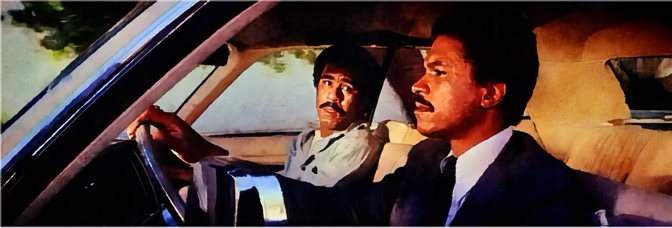
    At one point, Herman’s narration is talking about someone shooting a pulse rifle–or whatever the laser guns are called in Terminator—and Ator's very obviously just drawing a machine gun. Then there’s a scene where someone talks about how the neutron bomb has dropped. Neutron bomb? What? One of the amusing things about the Terminator franchise, in general, is how it went from eighties nuclear war paranoia and became an excuse to keep Arnold Schwarzenegger employed regardless of age, but The Terminator’s supposed to be based on that first movie, on that eighties nuclear war paranoia.

    And it’s not a nuclear bomb anymore. It’s a neutron bomb.

    This issue doesn’t feature any of the “regular” cast, though the letters page threatens their return. Instead, the comic opens with a couple of ne’er-do-wells saving a dog from a Terminator. There’s also no use of the “gators” term, which I remain convinced was the letterer confused about “nators.” There’s no continuity in the future.

    Anyway. They’re able to save the dog, but then a wolf attacks one of them. Is there anything suspicious about the wolf? Definitely. Are we going to ignore all that obvious fishy stuff, even when a dog lover meets the wolf, even when the comic’s got omniscient third-person narration? Of course, we are because The Terminator’s a terrible comic book. There’s also some stuff about the apocalypse still being sexist and garbage. Most of the action is spent with this squad of soldiers, specifically their medic and teen sidekick–not the same teen or tween sidekicks from before–searching for food.

    Ator’s composition is so bad letterer Kurt Hathaway can’t keep track of who’s speaking from panel to panel—colorist Rich Powers also doesn’t keep characters’ clothes consistently colored between panels, so I do get it—keeping track of The Terminator’s unrewarding enough as a reader, it must’ve been more so as a creative.

    The comic’s predictable but not so predictable better art and scripting wouldn’t have greatly improved things.

    It’s another lousy, shockingly inept comic. It also doesn’t have much lore—neither from the movie nor the previous issues—which makes every issue a perfect jumping-on (or off) point. Mostly off. But not me. I’m staying here locked behind the door.

  • The Nightingale (2018, Jennifer Kent)

    While The Nightingale never gets more brutal than in its first hour—it runs two and a quarter—it’s almost more hopeless with less viciousness. The film’s about how the British slaughtered the Aboriginal Australians. It’s about quite a bit more, but the historical context is Australia in the early nineteenth century when people could still buy prisoners for themselves. The film opens with protagonist Aisling Franciosi starting her day on an army base in Tasmania. She’s got a husband (Michael Sheasby) and a baby. She and Sheasby were both convicts; he’s gotten his freedom, but she’s still waiting for hers. Her fate is in the hands of army lieutenant Sam Claflin. Claflin’s an outpost officer with big ambitions, despite his unspectacular command and his gang of misfit soldiers, sergeanted by Damon Herriman.

    Claflin has to protect comely Franciosi from his men, who he keeps as drunk as possible. Sheasby works as a blacksmith at the outpost; they live in their own hut away from the camp. Claflin regularly rapes Franciosi, something Sheasby doesn’t know about.

    Writer and director Kent hammers in the reality, scene by scene. It’s a violent, merciless approach, but it makes Nightingale a singular character study. The film starts when Claflin’s getting inspected by higher-up Ewen Leslie for a promotion. He’s already on edge when Sheasby’s had just about enough waiting about Franciosi’s release. Most of Nightingale is split between Franciosi’s perspective and Claflin’s. It changes in the third act, as Kent slightly changes the narrative distance. Nightingale is always about how Kent’s presenting the information; a lot of it is about what information the characters have and at what time.

    The horrific showdown between Claflin and Sheasby establishes the film’s first hour. Claflin’s half of the film is about him and Herriman trying to teach new soldier Harry Greenwood how to be a proper British officer and kill and rape whoever you can. They’re traveling north inland, by foot, so Claflin can assume a new command and run away from Franciosi. Claflin tries to convince Greenwood there’s never any reason to worry about accountability, but it’s never quite clear how much he thinks his golden boy status will carry him. He’s a charming narcissist, and he keeps everyone around him drunk enough to be forever pliable.

    Claflin’s great. Like, Franciosi’s great, but she gets to weather being battered on screen for the point of battering. Nightingale isn’t about how a bad thing happened to Franciosi, and she did these things in reaction to the events. It’s about how the only things for Franciosi were bad things. And Claflin has to embody the whole thing against her. It’s a monumental villain part–and Claflin’s great.

    Franciosi’s going to follow Claflin and company and kill them. She’s a poor kid from Ireland who ended up in the Australian prison colony; she’s not going to mess around. But she’s going to need a guide. Except Franciosi’s a big-time racist because you really can’t have your exploited groups comparing notes as you’re exploiting them. Baykali Ganambarr plays her guide. He lost his family when he was a kid. Franciosi doesn’t want to share the pain with him because she doesn’t want to acknowledge his humanity. But he’s the only one who can get her to Claflin in time to kill him, so she’s going to make it work.

    Nightingale is a revenge picture. The story Franciosi’s telling herself is one of righteous vengeance; it’s keeping her going. Ganambarr is just doing a job. Claflin’s just doing a job. How the characters perceive themselves plays into how all of them will react to one another along this physically arduous journey. Franciosi is a racist shit who doesn’t want to be traveling with Ganambarr. Still, she doesn’t understand everybody else is a racist shit who doesn’t want Ganambarr traveling along with her either. More than not wanting him traveling, they don’t want him existing. Nightingale takes place during a particularly intense period of genocide, which Ganambarr doesn’t know about until he’s already mixed up in Franciosi’s vengeance quest.

    Their relationship—an acquaintanceship of mutually assured destruction—is the most complicated thing Kent does in Nightingale. Ganambarr shows up relatively late in the first act, and it’s even longer before he’s able to piece together Franciosi’s purpose. Everyone in Nightingale acts with their own agenda. The film implies partnerships are possible but rare. Kent spends most of the time in the wilderness. The time spent with the “settlers” is limited and precisely crafted. The audience is foreign to everything in Nightingale, but the characters are also foreign to many things. Ganambarr and Franciosi have very different experiences than the settlers; the British army ensures that separation by force. Kent’s very delicate about setting up all those scenes. How Kent angles the narrative distance is just as important as her composition. Nightingale mainlines its horrors.

    Franciosi and Ganambarr are awesome. They don’t have the same weights as Claflin, but they also have much more to do. Their character arcs are sublime. Nightingale has exquisite cuts courtesy Simon Njoo. The way the performances carry between shots, through cuts is breathtaking. Kent does an amazing job directing Nightingale. She shoots it standard Academy ratio, so it’s a closer to square image, and she focuses on composing for the vertical. There are lots of great long shots, with beautiful lighting by Radek Ladczuk, and the composition is all about the horizon. The film doesn’t have many technical patterns, but during the first and second acts, Njoo will cut between parallel shots, creating something like a “widescreen” effect. Later in the film, when the narrative’s more aligned to Franciosi and Ganambarr, the shots still emphasize the vertical, and there are still establishing montages, but the focus is narrowed. Franciosi and Ganambarr can only see so much.

    Great supporting turns from Herriman, Greenwood, Magnolia Maymuru, and Charlie Jampijinpa Brown.

    The Nightingale is an extremely tough, rough piece of work. It’s exceptional.

  • Hit! (1973, Sidney J. Furie)

    Hit! is multiple movies all at once. It’s a heist procedural, with Billy Dee Williams putting together an unlikely crew of experts to take out the Marseille heroin syndicate. It’s a rogue secret agent movie—Williams’s boss, a profoundly under-cast Norman Burton, doesn’t want him showing up the U.S. government by taking out the bad guys. It’s a muted, detached character drama; Williams is after the Marseille gang because his teenage daughter died from a heroin overdose, and he’s willing to do whatever it takes to avenge her, even as it makes him a much worse person. It’s an anti-drug movie, though very careful to humanize the addict. Astoundingly problematic humanizing, but the effort is sincere. It’s anti-lesbian. There’s a little homophobia with Richard Pryor doing an impression, but there’s a lot of anti-lesbian stuff (his impression involves making fun of lesbians). One of the villains is a woman who forces herself on various unwilling but terrified young ladies. It’s exceptionally anti-French. All of the French people—except maybe the evil lesbian—are gluttonous caricatures.

    And, finally, it’s a McDonald’s commercial. There’s not just McDonald’s product placement; one of the characters frequently laments the lack of good Mickey D’s in France.

    As a heist procedural, Hit!’s exceptional. Director Furie has this great device to show where Williams is going (he’s got to travel the continental United States to put together his team), always showing a license plate in the establishing shot. The first seventy or eighty minutes is Williams putting the team together. In addition to Pryor—an underwater demolitions expert whose (way too young) wife was murdered by a junkie—there are another six team members. It ought to be seven more team members, but Hit! wants all the heist details to be surprises, so we never find out how Williams adjusts when fate changes his plans.

    There’s sniper, Renaissance man, racist, and drug smuggler Paul Hampton. Hit! takes full advantage of the Vietnam War allowing for various demographics to have the types of skills Williams needs. Hampton and Pryor are both Vietnam veterans, though there’s no bonding between those two. Hampton does appear to bond with San Francisco tough cop Warren J. Kemmerling, the surveillance man. Gwen Welles is an Ivy League French club superstar turned working girl and—more importantly—functioning heroin addict, which Williams leverages for her participation. Everyone else has a relevant heist skill; Welles apparently is just a fetching young woman who speaks French. She falls for Williams, who’s got no time for love (much less with a heroin addict).

    Lastly, there’s older adult couple Janet Brandt and Sid Melton. They have a very particular set of skills but have gone straight and are running a lunch counter. Their son recently died from an overdose. Hit!’s got a lot of good acting, but Brandt and Melton get to show the most heart. They’re lovable. Even though Pryor’s likable, relatable, and sometimes adorable, he’s not lovable in the same way. Welles is very sympathetic, especially as Williams tries to motivate her through cruelty, but she’s not lovable. Hampton’s always a prick. Kemmerling’s fun, albeit a piece of shit cop (the film’s careful to only show him roughing up white hippies, who are all into heroin anyway).

    And then Williams. It’s a fantastic lead performance from Williams. He manages to survive all the silliness the film throws at him, which mostly involves CIA boss Burton sending goons after him. Zooey Hall and Todd Martin play the goons. They’re assholes but amusing (purposefully), while Burton’s a lukewarm dishrag. They really missed their chance on the stunt cast. But Williams also has the worst third act heist action. Heist with an asterisk; they’re all on assassination runs (the film’s not shy about a Godfather nod either). Williams gets the silliest, least dramatic one. While Argyle Nelson Jr.’s editing is sublime, cutting between subplots, even he can’t compensate for Williams’s heist focus being so inert.

    Technically, the film’s phenomenal. Furie and cinematographer John A. Alonzo do gorgeous work. Everything’s exceptionally deliberate and thoughtful during the setup and training phases of the film, while the conclusion—set in Marseille—is hurried. There are occasional shades of the earlier quiet, but once the action starts, it never lets up. Until the ill-advised epilogue.

    Great music from Lalo Schifrin. It occasionally seems like it’s not fitting—Schifrin’s almost always doing a score for the drama, particularly with the various members of the gang—but it always works out thanks to Furie. Furie also does an outstanding job with the actors, particularly Williams, but also Pryor, Welles, and—of course—Brandt.

    Hit!’s got a rocky finish, but it’s an excellent, distinctive picture.

  • Silo (2023) s01e10 – Outside

     “Silo” ends its first season on a massive cliffhanger. Massive in terms of physical scale. In many ways, it’s a soft cliffhanger. People may be in immediate danger, but it’s unclear how much they know about it. The show also manages to low-key tie into the Apple Vision Pro, which is kind of cool, though the future tech is decidedly non-Apple. The first scene has Rebecca Ferguson still hanging out with hacker Will Merrick and ne’er-do-well Rick Gomez and they’re watching stuff on square monitors. Merrick and Gomez quickly disappear from the episode, which then becomes all about how Ferguson’s going to reveal what happened to Rashida Jones and David Oyelowo.

    Except not really. I mean, we do find out what happened to them, but Ferguson doesn’t. We, the audience, have a better handle on some of the reveals than she can because, well, her understanding of reality is minimal. We do find out how some of the more active deceptions are taking place; it’s a great episode for Tim Robbins. “Silo” has had a full cast with folks who never really got to shine—Gomez, for instance, has been regular in most of the opening titles and hasn’t had squat. Avi Nash seems to have been red herring. At least Chinaza Uche gets some more to do—with promises for next season—but he’s left mostly unresolved. The episode juggles perspectives—Ferguson, Uche, Robbins—before settling on Ferguson and Robbins.

    Harriet Walter and Ferguson’s original supporting cast shows up for a bit. They get some okay character arcs for the episode, with Walter getting a huge arc but not actually much to do onscreen because it’s got to all be about the final reveals. There’s a really nice small part for Clare Perkins as one of Walter’s old pals; hopefully, they get to do more next season, but at this point… it’s impossible to know. Next season can go all of the ways.

    Iain Glen shows up for a scene, and while it’s nice he and Ferguson get to play reunited dad and daughter, he’s still got that terrible accent.

    Common has an okay episode, though all of last episode’s character development implications get paused here. Even when he’s interacting with Uche, separate from pursuing Ferguson, we’re not getting the character stuff.

    There’s just too much going on and not a lot of time to do it. Outside runs around forty-five minutes, so short even for a “Silo,” and the last five to ten are all about the reveals and next season hints. There are numerous chase sequences through the episode and full-on action set pieces—director Adam Bernstein does a fine job; I was thrilled to see his credit in the titles. He’s got an unfair advantage in being the most recent director, but he’s “Silo”’s all-around strongest director. He gets Ferguson not to fall into accent hijinks when Glen and Walter tempt her.

    Ferguson gets a fairly nice arc for the season, too, especially considering she didn’t take over the show until episode three, and even then, there was major sharing for a while.

    “Silo” has worked out. The overall structure could be better (those first two episodes centering on other characters never paid off long-term)–especially since Bernstein approaches it as a noir, where they could’ve done a flashback thing throughout better–but it’s definitely worked out. And the stakes have been reset for next time, so the wait for season two’s should be bearable.

  • Indiana Jones and the Dial of Destiny (2023, James Mangold)

    Dial of Destiny opens with a very long prologue flashback to 1945, setting up Harrison Ford (a CGI-de-aged Ford) having Toby Jones as a best buddy in the forties during the war and running afoul of Nazi scientist Mads Mikkelsen. The flashback’s technically successful; de-aged Ford looks pretty good (the eyes are off, and the expressions are static), but the sequence itself is kind of pointless. It’s ostensibly to start on an action sequence with Ford, but it’s a tolerable action sequence. Director Mangold—the first and presumably last director to pick up Spielberg’s whip for a theatrical Indiana Jones—will do great action sequences later on, but this first one feels like a video game cutscene. And having a computer-generated lead certainly doesn’t do anything to dissuade that feeling.

    But once they’ve established Ford and Jones know each other, Jones is obsessed with Archimedes’s Antikythera device, and Mikkelsen is also after the Antikythera, the flashback’s done its work, and it’s time to jump ahead twenty-four years. Ford’s already done the Indiana Jones legacy sequel, which turned canon on its head, and now they’re doing a second legacy sequel, but it’s also basically a legacy sequel (coming fifteen years after that entry). So we’ve got all sorts of first act establishing to do: Ford’s been a settled down college professor for ten years, happily married to Karen Allen for some of them, but after son Shia LeBeouf died off-screen in Vietnam—he enlisted to piss off Ford which fails some basic logic tests if you start doing the math on LaBeouf’s age, but whatever… he’s not back.

    Instead, Dial of Destiny introduces Phoebe Waller-Bridge as Jones’s grown-up daughter, who’s also after the Antikythera. After her is Mikkelsen, who spent the post-war being coddled by the U.S. government so he could get them to the moon before the Russians. He’s got a Black woman CIA handler (Shaunette Renée Wilson, who brings more to it than the role deserves), a redneck henchman (Boyd Holbrook, who maybe shouldn’t have trusted Mangold it’d be a good part), and a giant (Olivier Richters) helping him in the quest. Dial pulls no Nazi punches—it’s a Disney movie, after all, and they’re fighting fascists in real-life these days—but it’s fairly tepid with the American race relations. Holbrook really doesn’t like Wilson because she’s Black (and a woman), but he can’t say anything because political correctness. Meanwhile, Mikkelsen isn’t the standard Indiana Jones Nazi… he’s even more invested in the ideology than most. Because Nazis, even removed from the mid-twentieth century, are really dangerous and shouldn’t be ignored or placated.

    Waller-Bridge shows up in New York City for Ford’s retirement—which seems to have been decided after they filmed Ford giving a lecture on the morning of the Apollo 11 parade (he’s telling the kids what’s on their final, but he’s apparently leaving right after that class)—and asks for his help with the Antikythera. Only she’s not being super honest, and since it’s 1969, Ford can’t just Google her.

    The adventure will take them to North Africa, then the Mediterranean, where they can pick up various sidekicks, and there will be time for cameos from the other movies. Though very limited cameos; the franchise put all its eggs in a LeBeouf-sized basket last time, after all. Waller-Bridge has her own Short Round (spoiler: no cameo from Ke Huy Quan, which is too bad) in Ethann Isidore. And then Ford brings in Antonio Banderas to help just when it seems like there’s no more room for supporting characters.

    The film will have some big third act surprises regarding supporting cast introductions, but the second act is where Dial of Destiny’s gears work up their momentum. Turns out Mangold can direct character-paced action scenes (something entirely missing from the opening), and Waller-Bridge and Ford are fun together. Though when it’s them and Isidore trying to beat the Nazis to the treasure, it’s painfully obvious the franchise missed a big opportunity for Indiana Jones Family with Ford, Allen, and, well, LeBeouf, I guess. Thanks to Waller-Bridge, it still works out with Dial’s configuration, but it’d have been nice for the four screenwriters to come up with a less comprised story.

    In all, it’s mostly a success. The technicals are all sturdy without being exemplary, with Phedon Papamichael’s photography being the easy standout. John Williams’s score isn’t bad. It isn’t particularly good, but it isn’t bad. Excellent costumes from Joanna Johnston, which compensate for Adam Stockhausen’s surprisingly pedestrian production design. Thank goodness Papamichael’s lighting it.

    Once he gets to act the part instead of his CGI counterpart doing it, Ford has some good moments. It’s a rough part, mostly because he’s trying to incorporate so much hackneyed plotting from previous entries. Waller-Bridge is tabula rosa and can zoom past Ford, but she keeps pace with Ford thanks to her timing and Mangold’s direction. He maintains a steady clip at eighty years old (playing seventy), but there aren’t any Indiana Jones endless punch-outs this sequel. No Ben Burtt punches.

    Mikkelsen’s great. Isidore’s fine. Banderas is fun. Holbrook’s a good piece of shit? Maybe don’t get typecast. And good little turn from Thomas Kretschmann in the prologue.

    Dial of Destiny is too long, too digital, and too trepidatious.

    But, otherwise, it’s aces.