• How do you follow up an episode where your season villain, an omnipotent time deity played by Charity Cervantes, changed the entire world into a musical? If you’re “Doom Patrol,” with an almost limitless well of human despair. The main cast—April Bowlby, Diane Guerrero, Matt Bomer, and Brendan Fraser—are all rapidly aging to their deaths. And half of them have either new or pre-existing conditions in play as well; they’re not just on the decline; they’re even further than they expected.

    While Bowlby is playing Donna Reed to ignore the situation, Guerrero, Bomer, and Fraser are all luxuriating in their individual miseries. Guerrero can’t find the other personas in the Underground, and she’s thinking maybe she does like that girl (Madeline Zima, who only appears in flashbacks), but she’s also having uncontrollable slips in time back to her profound childhood abuse. Bomer—with Matthew Zuk doing a fantastic job doing the physical work on set—is trying to figure out what to do about his radioactive space symbiote when he dies. It means he doesn’t have time for love interest Sendhil Ramamurthy, who’s also about to die because Cervantes turned out to be a high school theater department narcissist and not a benevolent god. It also means Bomer doesn’t have time for best friend Bowlby.

    And then Fraser just wants to go see his daughter and grandson, trying to involve Guerrero in his shenanigans, but she’s still a little put out he betrayed them all. Except she can’t stay mad at him forever (how could you), giving the duo a fantastic mutual despondence arc. Absolutely phenomenal body acting from Riley Shanahan this episode, too. So, so good.

    Joivan Wade is off at Star Labs with dad Phil Morris, talking through his regrets at giving up Cyborg. It’s basically just an opportunity to get Wade and Morris a scene in before the end of the season (and show, we now know); it’s so good to see Morris again. It’s also a good showcase for Wade, who gets to hash out a lot of his internal angst.

    Wade’s not dying with the rest of the team, nor is Michelle Gomez. Gomez spends the episode trying to save the Doom Patrol, except they’re all too aged to want to help. Bowlby, in particular, has resigned herself to her fate, which figures into the outstanding cliffhanger.

    All the acting’s real good. Bowlby gets a great scene “with” Bomer (I do wonder how they record his conversations; are they really just dubbing him over line readings, in which case the other actors are even better). Gomez has some great moments (she’s the show’s de facto lead at this point). Cervantes is great.

    The show’s trucking along just fine towards its finish. Director Omar Madha might not have clicked with the musical material, but he’s real darn good with the angst.

    Oh, and the butts.

    The butts are back.

  • According to the opening titles, 20 Feet from Stardom will focus on background singers and session vocalists Darlene Love, Merry Clayton, Lisa Fischer, and Judith Hill. Love and Clayton started in the sixties, Fischer in the eighties, Hill in the aughts. If they’re the main cast, the supporting are Claudia Lennear and Tata Vega. The principals providing additional commentary and context are The Waters (Oren, Julia, and Maxine Waters), Gloria Jones, and Patti Austin. There are many mega-stars–Sting and Mick Jagger offer very different takes (Sting’s blue-eyed soulful while Jagger drools over Lennear memories), and then Bruce Springsteen’s the de facto narrator for the first half. Stevie Wonder’s around a bit, too, especially in the second half.

    Though even though Sting and Wonder get more in the second half when Springsteen disappears too much, his absence spotlights Stardom’s big problem. It doesn’t know where it wants to go. It knows where it doesn’t want to go. When the film’s covering these entirely BIPOC women’s attempts at being solo artists in the late seventies, it doesn’t want to talk about disco. When talking about their experiences in general, it rarely wants to talk about race. Some interviews discuss it towards the beginning, but in the “it was another time” way.

    And it was another time, and while all interviewees who talk about the sixties to seventies musical changes directly refer to race, director Neville hurries through it. There’s no dwelling, no exploring, which is Stardom’s other problem. Neville doesn’t know what to do with divas, which Clayton tells him straight up when the film crew—in the first few minutes and the only time they’re really present—wants her to turn off the music in her car, and she says something to the effect of, “You can’t tell a diva to turn off her music.”

    Because there is no great recording session with all these amazing vocalists. There’s one, with many of the amazing vocalists, but not all of them. And not necessarily the ones you want to be teamed up. Well… it’s strange, actually. It’s a number for Love, and she so entirely captivates it doesn’t matter who’s backing her up. It’s also not an ensemble number.

    Now, obviously, Stardom’s on a budget. One interviewee tells Neville they certainly wouldn’t be giving him an interview if they became a star. But while Neville does understand the potential for filming these women singing, he doesn’t fulfill it. Giving Stardom a strange parallel to the conventionally agreed upon reasons for some of these women not becoming solo superstars—they didn’t have the best writers or producers; they didn’t have anyone who knew what they could do with their music.

    Since the film’s about celebrities, it’s also got some poorly aged elements. Hill got her first big break singing at Michael Jackson’s memorial service. Stardom’s from before further allegations and substantiations. What would Neville have done? Well, given the villain in Love’s career was very much Phil Spector, and the film did drop after those allegations, substantiations, and incarcerations, it certainly seems like Neville wouldn’t have wanted to go there. And it just makes Hill’s inclusion seem strange.

    Especially since she just shows up in the second half (despite being around for a couple sessions in the first), like the film’s going to focus on her and her interactions with these other background singers. And… nope. Neville gets them together and does nothing with it. It’s an incredible miss.

    But it’s also still an incredible show because every few minutes, there’s one great performance clip or another—presumably for budgetary reasons, there’s not an accompanying twenty-disc soundtrack. The snippets are often frustratingly short.

    Fischer’s eventually the star of the film, getting lovely music videos of her singing because she was the one who made it—a background singer who went solo and won a Grammy—only walk back the twenty feet again afterward. It’s a good section of the film, but Neville doesn’t have any way to weave it back into the rest, so the very distinctly delineated third act often swings in out of nowhere. But it still works out, thanks to the subject matter and the interviewees.

    There’s probably enough story for twenty hours, but another ten or fifteen minutes would’ve been nice, too. Besides Fischer and Hill’s music videos, Neville’s always in a hurry.

    20 Feet from Stardom is a fine documentary and a fantastic time. It just ought to be better; even with budgetary constraints, Neville misses (and avoids) too much.

    Also, get Bruce Springsteen to narrate everything.

  • Right Hand Man reintroduces the idea of a triumvirate to the veterinary practice. Nicholas Ralph has put in for a student to be placed with them, Samuel West’s nasty attitude be damned. We meet James Anthony-Rose before Ralph and West, as Anthony-Rose discovers all the street signs have been taken down in the village (to prevent the Bosch from finding their way), and he has an amusing lost montage.

    He arrives just in time to help Ralph with Patricia Hodge’s latest dog problem. Not little Tricki Woo (played by Derek again, but also Dora, which makes me worry about Derek’s health), but rather a bulldog she’s taken in while his owner’s off at war. Anthony-Rose puts his foot in it, and we’re off to the races.

    The episode’s got a lot going on. Having decided to have a baby, Ralph and wife Rachel Shenton are trying to find some time to work on making one. Ralph’s going to be busy with Hodge’s bulldog, while West’s got a horse with an allergy problem. Anthony-Rose offers his advice in both, with part of the gag being how unhelpful his (purely academic) advice can be. Then there’s the Anthony-Rose training subplot, which West unexpectedly takes point on, giving Ralph pause. Ralph’s various pauses stress out Shenton even more. She has a good scene with Hodge about being… well, okay, about being wives, but even as it bellyflops on Bechdel, it’s a good scene. There’s some very solid character development for Hodge in the scene, too.

    Meanwhile, Anna Madeley’s very gentle romance with Will Thorp continues.

    Speaking of very gentle, the war makes its presence (and its impending effects) known, with West getting into it with the local trainees about how they’re disrespecting the Yorkshire ways. It’ll figure into the main plot a couple ways, but also how—Shenton reminds everyone—the war’s still coming, and they might lose Ralph at any minute. Something Ralph’s not thinking about, which the show’s also been avoiding the last couple episodes.

    And even though the show’s finally acknowledged the war’s not done with it, it’s still unclear if “Creatures” will be able to incorporate the foreboding or just use it in one-offs.

    Anyway. There are some great veterinary scenes, good or better moments for pretty much everyone, and Anthony-Rose certainly seems like a fine addition to the regular cast. For how long? Well, I suppose I could Google, but I shan't.

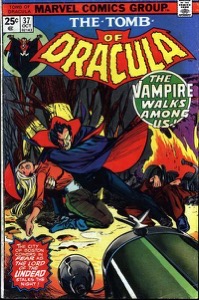
  • Mp3Monkey Face—sorry, Monkey Prince—sort of transcends this issue. The comic’s set over forty-five minutes to an hour, but isn’t a waste of decompression. Instead, Marcus the Monkey Prince has a very full after-school calendar. He gets some more training from the custodian, Mr. Zhu, who’s actually a mystical being (Shifu Pigsy), but most of his story has to do with dream girl Kaya.
    Meanwhile, Shifu Pigsy will go on a demon hunt and determine the threat is even more imminent than he’d been thinking, and Marcus’s parents will have some workplace troubles. Marcus’s parents work for the Penguin, who has been possessed by the mystical villain, the Golden Horn. The Golden Horn is going to be Monkey Prince’s big bad—presumably, as Shifu Pigsy seems really worried about him.

    Marcus isn’t interested in gold-plated Cobblepots, not when Kaya starts flirting with him. She’s got some questions about Monkey Prince and Marcus—like, why isn’t Marcus ever around when Monkey Prince is on the scene—and there’s also the matter of Kaya’s brother. Turns out it’s Marcus’s nemesis, The Riz, and he’s missing. Monkey Prince promises to find the missing dipshit.

    At this point in the issue, writer Gene Luen Yang has completed a full enough comic book narrative gesture. He’s done character development, he’s done twists with Kaya, and there are the subplots with Pigsy and the parents. But then Monkey Prince delivers on the promise instead of kicking the can down the road for two more issues. Monkey Prince goes off to find the Riz, who’s being questioned by Boy Wonder Robin (the cover promises a Batman appearance, which thankfully doesn’t happen).

    Monkey Prince and Robin have a fun, funny, and (gently) gross fight scene. Artist Bernard Chang does a good job throughout the issue, but something about the Robin fight just brings it all together. Visually, Monkey Prince is a strange combination. There’s the obvious “real-life” meets comic book, but there are also Chinese mystical beings in modernity as well as them interacting with men and boys in tights.

    Good resolution, good cliffhanger. Yang’s doing a fantastic high school superhero comic here.

    Oh, and the parents. I’ve been bearish on the parents, but this issue turns it around when they start Nick and Nora’ing as they contend with an even more dangerous Oswald Cobblepot.

    Great stuff.

  • Somewhere near the end of the second act, Good Bye Lenin! starts having some narration problems. At first they seem like a little bit too lazy writing or, given Lenin has five screenwriters, a too many hands situation. There’s just a disconnect between protagonist and narrator Daniel Brühl’s experience and what the film’s doing. Then, as Lenin enters its muddled third act, it’s clear the disconnect is either by design—which seems unlikely unless the point is to make Brühl into a narcissist—or director Becker missed the boat.

    Lenin doesn’t just ignore the most interesting points it raises—with some optics because they’re all for the ladies and despite the movie being about Brühl being an exceptional mama’s boy—it doesn’t even do right by Brühl. Ostensibly, the film’s about listless East German young adult Brühl’s complicated history with reunification; his mom, played by Katrin Sass, who the film manages to diss, showcase-wise, which is incredible given she’s in it all the time–she was a Party member who spent her life spreading the good word and then she was in a heart attack-induced coma when the Wall fell.

    When she wakes up, the doctors tell Brühl she can’t handle any excitement, which he takes to mean he’s got to lie about the Wall falling to keep her alive. So it’s a bunch of hijinks. Eventually it gets real, with Brühl and sister Maria Simon learning maybe mama Sass told them some lies too. And then it flushes all the real for more hijinks, including Brühl’s romance with nurse Chulpan Khamatova. Khamatova has a “subplot” about having problems with Brühl’s elaborate scheme to lie to Sass, but it’s really just a scene and the end of even the pretense of agency. Sass doesn’t get a name in the credits—she does in the film, but she’s just mama in the credits—and despite the female characters outweighing the male, the film doesn’t even try to beat Bechdel. Even when it’s not about Brühl, Becker’s there to make sure it’s not about anyone else in the meantime.

    When it seems like Lenin’s about Brühl’s experience with the Wall falling, it’s good. When it seems like it’s about Brühl and Simon’s family secrets drama, it’s better. When it’s about Brühl gaslighting Sass? It’s always running out of steam. Especially once everyone starts calling Brühl on the gag going on too long, only then the gag just keeps going on too long. There’s also the subtext about Brühl—and many of the former East Germans—wishing things would go back to the way they used to be. Not everyone wants to drink the literal Coca-Cola.

    Lenin does zilch with it.

    Sass is great. Simon’s really good. Florian Lukas is adorable as Brühl’s buddy, who helps him make fake newscasts for Sass’s benefit. That subplot’s a double-edged sword once Lukas’s video production techniques become more interesting than the main plot.

    Brühl’s fine. He doesn’t have a character arc. He doesn’t learn anything. Taking those considerations into account, he’s fine.

    Good supporting turn from Burghart Klaußner, who the movie positions like a deus ex machina, but then ends up just being background.

    Good Bye Lenin! ought to be a lot better. It does Sass incredibly wrong, and doesn’t do Simon or Brühl any favors. Maybe they needed a sixth screenwriter.

  • Immortimas Patrol gives away some of the bit during the opening titles when the “Doom Patrol” theme gets an acapella cover version. Last episode ended with big bad Charity Cervantes getting pissed off. The town was celebrating the Doom Patrol for rescuing her, not her for being rescued, and she did something. This episode, we find out what she did was turn the world into a musical.

    All of the series regulars get to participate in the musical in some capacity. Brendan Fraser and Matt Bomer get to show up in person since Fraser’s not a Robotman in Cervantes’s alternated reality. Bomer gets to be a square-jawed hunk worthy of beau Sendhil Ramamurthy. Fraser sticks around the whole episode, even doing a duet with Riley Shanahan (as Robotman—so Fraser is double-voicing), while Bomer’s one of the first to get back to normal.

    In his case, normal meaning back into the full face bandages and Matthew Zuk taking over. Zuk and Ramamurthy have a great dance number. Do Bomer and Ramamurthy have a great duet? It’s complicated.

    The episode’s a good entry in the very special musical episode every show does these days, and a couple of the songs are catchy, but it is somewhat slight. The whole thing builds to Cervantes coming over for Immortimas Day dinner; even though she hates the Doom Patrol, she desperately wants their approval, too. Once she arrives, there’s a great “I am Spartacus” scene at the table as people decide whether they want to stay or not.

    But it’s not a musical number.

    And outside Madeline Zima deciding opposite Diane Guerrero because Guerrero doesn’t like her back (romantically), there’s not much relevant character development from the episode. The characters get their appropriate numbers—Zima and Guerrero have a duet about liking each other even if they haven’t shared, Fraser gets to sing about the joys of the flesh, Joivan Wade gets a big Disney hero song number complete with spinning and raised arms, April Bowlby and Michelle Gomez sing about their very complicated friendship, Bomer and Ramamurthy have the singing that goes along with the dance number, and Abi Monterey gets to sing about belonging somewhere.

    Everyone’s perfectly happy in the fake reality until Gomez wakes up and decides she doesn’t want to sing all her dialogue. So, she starts bringing the team back online so they can confront Cervantes.

    There’s some excellent acting from Gomez this episode, and Zima does a fantastic job. Plus, it’s fun to see Fraser and Guerrero get to goof in real time.

    The musical trappings sometimes seem more like a flex than a necessity. But only sometimes; other times, the episode does indeed show why the musical numbers are precisely what’s needed.

    Maybe if the ending had landed with more oomph, or if director Omar Madha had a different touch, it’d be more successful. It’s a good episode with some solid highlights, but it never lets loose. “Doom Patrol” doesn’t often feel too short; Immortimas feels too short.

  • It’s been long enough since I last saw Amadeus I forgot the narrative face-plant of the epilogue. The film objectifying the suffering of nineteenth-century psychiatric hospital “patients” is bad enough, but the way the film ignores it’s spent the second half of the nearly three-hour film away from narrator F. Murray Abraham… Well. It doesn’t go well, dragging Amadeus down in what ought to be its victory lap.

    Albeit a victory lap all about Mozart’s death. The film’s way too enthusiastic about Abraham’s performance, which is fantastic, but it’s better in the flashback than the old age makeup bookends. And Amadeus, despite the title and the magnificent, meticulous directing Forman does with Tom Hulce (as Mozart), tries its damndest to convince everyone Abraham’s character, a never-will-be composer who engineers the downfall of Hulce as an affront to God, is the lead. And Abraham is the lead in the first half of the picture; the film opens with Vincent Schiavelli (playing Vincent Schiavelli) finding boss Abraham in the middle of a suicide attempt. They take Abraham to the hospital, where he recuperates, and a young priest (Richard Frank) comes to hear his confession.

    Frank thinks Abraham is exaggerating or lying when he tells everyone he meets how he killed Mozart; the rest of the film is just Abraham convincing Frank (and the audience).

    The first half tracks Abraham’s initial encounters with Hulce, who comes to Vienna as an unhappy upstart wunderkind who wants to drink, bed, wed, and write great music. Abraham’s boss, the Emperor—Jeffrey Jones (who’s really good; shame he’s an actual monster in real life)—takes on Hulce over the objections of his musical advisers, Charles Kay, and Patrick Hines. Lots of Amadeus is Kay and Hines acting like old fuddy-duddies while Hulce increases the artistic potential of opera; Abraham watches from the sidelines, manipulating all he can, simultaneously hating and envying Hulce.

    The second half is all about Hulce’s financial and personal fizzling as he attempts greater and greater compositions. Elizabeth Berridge plays Hulce’s wife, and the film tracks their adorable, if problematic, courtship. Things come to a head for the couple when Roy Dotrice, as Hulce’s father (who trained him to be the great musician), comes to live with them. Dotrice is either miscast or the part is wrong; Hulce is both devoted and terrified of disappointing his father, except Dotrice and Hulce are utterly flat together. There’s no indication Dotrice is impressed with Hulce’s compositions; he is just displeased with Hulce’s extravagant lifestyle in general and Berridge in particular.

    Given the whole second half is about Abraham exploiting Hulce’s relationship with Dotrice to slowly drive Hulce mad… it’d help if Dotrice were better. His portrait does more heavy lifting than Dotrice ends up doing acting.

    While the first half has Abraham eventually inserting himself into Hulce’s life through Berridge at one point, in the second half, he’s mostly distant. He’s gifted Hulce and Berridge a maid (an excellent Cynthia Nixon), and Nixon reports back to Abraham, which gives the film the narrative excuse for Abraham acting on information he can’t know, but it’s dramatically inert.

    Then Abraham finds himself forced to assist Hulce in his creative process, and Amadeus, pardon the expression, truly sings. The film finally gets Abraham and Hulce, who it’s been juxtaposing since jump, together on screen, and it’s magic.

    Then the film punts it for the finish.

    While Abraham’s great, Hulce is better. Neither exactly gets to verbalize what’s going on with their characters, with Abraham’s narrations all about intentionally wronging God and snuffing out one of His brightest angels, and Hulce unable to verbalize what he’s going through. It comes out in the music.

    Besides Dotrice, the acting is universally outstanding. Berridge is sympathetic and adorable. Simon Callow shows up as the working-class musical theater owner who convinces Hulce to try to write for the people instead of the royalty. He’s good.

    Technically, the standout is Michael Chandler and Nena Danevic’s editing. Absolutely superb cutting, whether toggling from present to past, staged opera to dramatics, whatever they’re cutting, Chandler and Danevic do a marvelous job. Forman’s direction is good but better in terms of directing the actors than the composition. Forman and cinematographer Miroslav Ondrícek do a fine job, and there are some excellent sequences (mostly involving Hulce in his descent); the cutting is always what makes them so special.

    Amadeus is often breathtaking, beautiful work, with Hulce, Abraham, and those editors particularly excelling.

  • Maybe the first three-quarters of this episode is the best “Grantchester”’s been in ages. And “Grantchester”’s a perfectly good show, they just really figure out a way to knock it out of the park here. Last episode laid out the new normal—vicar Tom Brittney married to Charlotte Ritchie, playing stepdad to Isaac Highams—and then saw Brittney run down some pedestrian while out zooming on his motorcycle.

    This episode’s got Robson Green trying to protect Brittney best he can, with sidekick Bradley Hall low-key trying to sabotage in an effort to suck up to big boss Michael D. Xavier. Last season, Brittney had an indiscreet relationship with Xavier’s fiancée, breaking up the engagement, and Xavier’s holding a grudge.

    So when it seems like Brittney was going nearly eighty miles an hour when he hit the guy, Xavier’s thrilled, Green’s mortified, and Brittney’s screwed.

    Pretty quickly the episode gins up a way to get Al Weaver into the story (in this case, into the story means into a jail cell to talk to Brittney). Behind Green’s back, Hall goes to roust Weaver’s halfway house. Along with giving Weaver and Brittney a great scene, the subplot gets Hall in deep water with office secretary Melissa Johns, who doesn’t like it when he’s shitty.

    For a relatively substantial portion of the episode, it feels like a backdoor pilot for Hall and Johns to carry. If Johns is around, Hall can not come off like a weasel, and there’s a charm to it. Unfortunately, even as Hall gets a bit more character development this episode, it doesn’t appear he’s any less of a weasel than he seems. He’s just a different kind of weasel.

    When the episode’s at its best, Green is trying to do what he sees as his job—solving a crime, whereas Hall and Xavier just want to get a result. Juxtaposed is Brittney’s guilt arc, which has some major high points but then fizzles for the conclusion. During that fizzle, Green’s investigation arc is similarly bubbly. The episode throws in one too many twists.

    Excellent performances from Weaver, Green, and Brittney this episode. Tessa Peake-Jones, Kacey Ainsworth, and Nick Brimble are all super-peripheral, none really getting much to do other than remind everyone they’re regulars, and also Highams’s got supervision. Ritchie does a voice spot, which may or may not end up being more filler.

    But most of the episode’s outstanding, and the rest’s pretty good.

  • The Marvels is a sequel to Captain Marvel, starring Brie Larson, which came out four years before but takes place thirty years before. It’s also a sequel to the TV shows “WandaVision,” which introduced Teyonah Parris (though her character appeared as a little kid in Captain), and “Ms. Marvel,” which introduced Iman Vellani as a teenage hero who idolizes Larson.

    Through celeritous convenience and contrivance, Marvels gets the three together, along with Samuel L. Jackson (who also starred in Captain, CGI de-aged, and is back here in a combination comedic relief and exposition provider role) and Vellani’s family, also coming back from the “Ms. Marvel” show. Marvels spotlights mom Zenobia Shroff and dad Mohan Kapur the most, but does give older brother Saagar Shaikh some great comedic bits. Shaikh’s wife is mysteriously absent like they filmed Marvels before all of “Ms.”

    It doesn’t matter, of course, because the point’s getting the trio together. Fangirl but still professional superhero Vellani, government scientific investigator turned reluctant metahuman Harris, and intergalactic world-saver (and world destroyer) Larson, who’s not really aware of how her celebrity works on her home planet. Thanks to villain Zawe Ashton, Vellani, Harris, and Larson find their powers intertwined; if one uses their power, they change locations—across the galaxy—with another. While the film does an excellent montage sequence with the three learning how to use the “Marvels leaping” to their advantage (the movie doesn’t make that joke; I made that joke, blame me), it never explains the rules.

    Marvels opens with Ashton and her sidekick Daniel Ings (who supposedly has a name in the movie, but I don’t think so) finding an ancient space artifact—a bangle like the one from “Ms. Marvel,” now streaming exclusively on Disney Plus. It never occurred to Ashton one of the bangles would end up on a desolate planetoid, and the other would just be on planet Earth in Pakistan. One of Marvels’s subtlest recurring plot points is how little people look at things from the other person’s perspective. See, Ashton might not have been in Captain Marvel, but only because they didn’t know they would need to have a character mad at Larson for what she did at the end of that movie.

    Thirty years ago in story time. In between, there was half the universe disappearing and coming back, which features into Parris’s backstory but no one else’s. It presumably would have also affected Ashton’s scheme. Ashton’s scheme is unclear for a while. When we find out exactly what she’s got planned, it’s maybe Marvels’s biggest plot contrivance. The film runs a nimble 105 minutes, with profoundly precise cutting by Catrin Hedström and Evan Schiff. Director DaCosta likes doing some nice sci-fi establishing shots, too—lots of space superhero grandeur on display, but she never holds the shot too long. Marvels is clearly on a schedule, and DaCosta doesn’t miss any stops.

    Things get a little clunky in the second act, which has Jackson dealing with a grim and gritty tribbles “Star Trek” episode. At the same time, Parris and Vellani discover Larson’s space adventures are a lot weirder (and more “Doctor Who,” frankly) than they were expecting.

    But then the third act’s a powerhouse. Even as the film ignores plot thread after plot thread—I’m not sure any of the outstanding ones get resolved, the movie instead just floors it, relying on Vellani, Parris, and Larson to get the finale through. And it works just right, even though the film’s got three cameos from elsewhere in the franchise, with one deep—but modern—cut and then another deep and surprising one. They’re all effective—though only the surprising one doesn’t require franchise literacy. It can stand alone, whereas the first two only make sense if you’re up on the lore.

    But there’s not much lore otherwise. It’s like the screenwriters—director DaCosta, Megan McDonnell, and Elissa Karasik—all realized there’s just no way to do a straight sequel to Captain Marvel so they might as well treat it as a legacy crossover sequel. With Vellani’s family playing such a large part (besides them, the only other regular characters are Leila Farzad and Abraham Popoola as Jackson’s flunkies), it feels a little like a legacy sequel, a little like “Ms. Marvel Goes to the Movies,” and then… well, no, just those two things. It does feel like there were cuts, whether filmed material or just cut from the script and while some of them were undoubtedly delightful, Marvels works better as a leaner picture.

    Larson, Parris, and Vellani are trying to save the universe, after all; they’re going to be in a rush to get it done.

    Vellani’s delightful, Larson and Parris are both good—Larson gets the least to do of the three; she’s the stoic one. Jackson’s always funny, even when he’s stretching the bit; Shroff, Kapur, and Shaikh are great. Ashton’s fine. Could she be better? Sure. Does the movie need her to be better? Nah. She’s a good foil, but not too good of one because it’s not about anyone and their nemesis; it’s about people and their… friends, family, country-people? None of the terms really work, but it’s about people who care about one another working together (which makes Jackson’s secret space military organization even weirder since they’re just a bunch of lovable nerds).

    Anyway.

    The Marvels is a great time.

    Also, if you like cats, you’ll have an even better one.

    Unless you want the thread resolved, of course. No time for tidying up here, just warping ahead.

    Sorry, wrong franchise.

  • Okay, now “All Creatures” feels like it’s back. Carpe Diem is a regular, episodic entry, with Samuel West hiring a professional bookkeeper to get the practice ship-shape—did he hire Neve McIntosh because he was flirting with her at a dance and not able to ask her out so instead he offered her a job? Unclear. Something’s going on with West this episode; he’s definitely missing his brother (will Callum Woodhouse be back this season? I refuse to Google), but we never find out how exactly. It’s not in the episode’s purview.

    The A-plot involves McIntosh coming in and messing with the practice so they can make more money. The B-plot is West and aging farmer James Bolam’s aging cow. There’s also some family planning discussions for Nicholas Ralph and Rachel Shenton, who spend the episode oscillating between West and McIntosh, sometimes participating, sometimes just observing. West’s got a lot of hijinks, whether it’s bulling through the china shop, mooning over McIntosh, or ignoring Ralph’s complaints about her.

    Ralph and Shenton get a vet case of their own—Paul Bazely’s adorable ferret—except Bazely’s broke (and an immigrant) and McIntosh hates rodents and the rodent-appearing, and the separate dramas all weave nicely together. The script, credited to Helen Raynor, is gentle to a fault. The show really doesn’t want to talk about the war, with multiple characters assuming it’ll all be over soon. So there’s a big air of dread hanging over it, which the script doesn’t acknowledge.

    The show even cuts away when Anna Madeley and Will Thorp go out to the movies (the show was able to get permission to use Hollywood movie posters, but not the British movie the characters are discussing.

    Director Hay gets in some very nice landscape shots and the elaborate slapstick (serious slapstick) opening.

    It’s a very good episode. Though it bothers me I’m more scared about the war than some of the characters.

  • By the time Rocky gets to the big fight, you forget there’s actually going to be a big fight. While the film does open with a boxing match, until somewhere decidedly in the late second act, Rocky isn’t a sports movie. It’s a character study of a boxer, sure, but he’s not in a sports movie. He doesn’t have another fight lined up anyway.

    The film starts just before Thanksgiving and ends on New Year’s Day. Holidays aren’t important to Rocky (screenwriter, leading man, and fight choreographer Sylvester Stallone), who’s seemingly been alone for a decade. He’s thirty now, breaking legs for a two-bit loan shark (an oddly touching Joe Spinell), getting occasional fights, winning over half of them, and putting up with his gym owner (Burgess Meredith, mostly saving MAD Magazine time on the caricature) treating him like crap because he’s too old to be a contender.

    After the first scene, Rocky’s done with boxing for the first act. There’s talk about it—folks being surprised Stallone won the fight—but the rest of the time is establishing the ground situation. Stallone’s got a crush on pet shop girl Talia Shire, who’s not necessarily not interested in the attention, and he’s best buddies with her drunken “lovable” asshole brother (Burt Young). Young wants a job as a leg-breaker, but Stallone doesn’t think he’s reliable enough. Into the second act, there’s a big implication Young’s trying to pawn Shire off on Stallone in exchange for a job hookup.

    Young’s an asshole. They realize in the third act they can make him funny about it and give him some goofy reaction shots during the big fight, but it’s too late. It’s fine. He’s supposed to be an asshole, but he and Stallone’s arc is one of the film’s most rushed.

    Just as Stallone and Shire kick off their tender but macho romance, he gets the chance of the lifetime. The world heavyweight champion of the world Apollo Creed (Carl Weathers) is looking for an unknown contender for a New Year’s Day fight. Weathers is celebrating the United States Bicentennial, wants to do something showy. Giving the underdog a shot. Now, we’ll find out later Weathers has not just never lost a fight, he’s never even been knocked down. Rocky has plenty of opportunities to exposition dump about Weathers’s record (the film does use TV news footage as a device, but Shire knows squat about boxing, and Stallone could tell her). Stallone’s a fan of Weathers, but it seems uninformed. In one of Rocky’s sincerest flexes, Stallone pushes back at his regular bartender Don Sherman’s regular racism about Black man Weathers. It’s also one of the most realistic—Stallone doesn’t say why he’s upset Sherman’s a racist and just bounces.

    There’s a decent argument for Stallone not knowing how to verbalize it. He’s something of an uninformed philosopher king, lots of observations—he even writes jokes to tell Shire—and Rocky’s most shining moments are when Stallone ventures out into the world. He leaves the gym, the fight club, the bar, his “economically distressed” neighborhood, and participates in the world. Rocky will have several problems by the end, up to and including the last moments, but once it rings the bell in Stallone’s self-esteem character development arc, the movie’s basically won. It’s done the Stallone arc, it’s done the Stallone and Shire arc, it’s given Shire just the scantest amount of character moments on her own (it’s truly staggering how much the film puts on her; she’s charged with bringing it legitimacy). Like the rest of the film, the big fight’s got its problems (Stallone’s got a strategy, a foreshadowed strategy, but they make it coincidental), and its moments (despite uneven sound editing, Stallone and Weathers do have a real scene together amid the blows).

    Technically, the film’s a sparsely mixed bag. Whenever director Avildsen actually has a good shot (he’s awful shooting in cramped spaces, which is about half of the movie), cinematographer James Crabe or one of his camera operators messes it up. There are some decent shots throughout the film, but they’re either outside, involve static camera placement, or in giant indoor spaces. Otherwise, it’s buyer beware. Richard Halsey and Scott Conrad’s editing is similarly hot and cold. It’s good for the sports movie, it’s atrocious on the dramatics. Young in particular will change head position and facial expression between his shots. Is it Young, is it Avildsen? Probably. But it’s also artless cutting.

    Then the sports stuff is good.

    Bill Conti’s score is one of the main stars, along with Stallone, Shire, and, to a lesser extent, Weathers. Weathers gives an unforgettable performance, but… he’s not, you know, particularly good. Stallone and Shire are good. Especially Shire. The supporting cast ranges. Meredith’s cartoonish and semi-pointless (it’s like no one told Stallone after he figured out the plot, he could improve it) until the movie remembers to tell us Meredith could’ve been a surrogate family to Stallone but didn’t because he’s an asshole too. One of the film’s other endearing subplots is Stallone’s good nature—his “friends” all want something from him, which he acknowledges and, once in the position to help, does so.

    Except Shire, of course, which just makes them all the cuter. Though Stallone’s pushy advances age poorly (maybe if Avildsen directed them better), but Shire’s into it, so it’s fine… see what you made me say, movie? Do you see?

    Anyway.

    The film’s greatest unsung performance is Tony Burton. He’s Weathers’s trainer, who realizes Stallone might be good enough to get lucky, and Weathers better take the big fight more seriously. Weathers, spoiler, does not. Hence drama.

    Thayer David plays Weathers’s Mr. Big manager. He and Meredith unfortunately don’t get a chance to do a caricature-off.

    A shame we’ll never get to see it—the movie reminds everyone at least four times there won’t be a rematch.

  • And this, ladies, germs, zombie butts, is what is called an hour of television. Or, well, forty-two minutes of television. “Doom Patrol” once again knocks it out of the park, but then the ball ricochets and pings around the ballpark, going out of the park and then pinging back in and out until the cliffhanger.

    The perfectly done cliffhanger.

    Fame Patrol gives the characters an impossible episode to endure. While the supervillain either did or didn’t come back in the form of Charity Cervantes, last seen a few seasons ago when Michelle Gomez first showed up (I think in a season finale tag, right?), the Doom Patrol’s got more personal problems going on.

    Everybody hates Robotman (Brendan Fraser speaks, Riley Shanahan steps) for giving up his immortality because Cervantes’s cult told him he could see his grandson grow up. Mind you… the episode opens revealing Cervantes has killed everyone but the Doom Patrol in her awakening, including her cult. It turns out to be a great episode for Fraser and Abi Monterey, who’s gotten back to her surrogate family when they need her the most—they’re all rapidly aging and will be dying soon.

    She takes on Fraser as a project while her new friend, played by Madeline Zima, tries to help Diane Guerrero. Guerrero is experiencing rapid aging while being unable to connect with her other personalities. She’s also upset about the world ending, maybe. It’s an excellent episode for Zima and Guerrero, too. There’s potentially a pin in it for later, but I’m hopeful “Doom Patrol” won’t do the characters dirty.

    While Zima doesn’t share too much with Guerrero, she’s experiencing profound loss on a couple levels similar to Guerrero’s. The aforementioned dead cultists included her father, a space warlord (Zima’s a space cop), and her creator (Lima’s a comic book character). She’s very confused and in a lot of pain. The episode gives Zima and Monterey a lot of space to flex in their performances, even though they’re the supporting players in their scenes. The script—credit to Tamara Becher-Wilkinson—is simply exquisite in the character interactions. Perfect music from Kevin Kiner and Clint Mansell, especially for the Zima and Guerrero scenes.

    Matt Bomer (voicing, with Matthew Zuk doing the bodywork) goes off to his room to mope—after making the very deft observation, Cervantes seems more like one of the team than their nemesis—only for Sendhil Ramamurthy to show up, looking for help in his disintegrated state. It’s a nice plot arc; not quite the weight of the other two, but nice. Ramamurthy and Bomer are great together. Or Ramamurthy and Zak. Or is it just Ramamurthy because he’s acting opposite someone who’s not responding? Or do Zuk and Shanahan read the lines while they’re shooting?

    Anyway.

    The last grouping is April Bowlby, Gomez, and Joivan Wade. Like I said, if Wade doesn’t have a dedicated guest star to play with, they don’t have anywhere to put him. Part of the plot will involve his (magically induced) obliviousness. He and Bowlby do get a nice scene together where she gets to play mentor again.

    But Bowlby, Gomez, and Wade have the broadest plot strokes. Bowlby can’t stand Cervantes and wants to nuke her from orbit before she has a chance to time monster out on everyone (again). Gomez thinks there’s something weird about Cervantes no one else can see. And then Wade’s just along for the ride.

    It ends up being, of course, a fantastic ride.

    Excellent direction from Bosede Williams. “Doom Patrol”’s not slowing down. I can’t wait to see what’s next.

    Maybe some man-eating zombie butts. One can only hope.

  • Theater Camp is a mockumentary, but doesn’t really need to be one. The occasional title cards set some of the stage (no pun), but the documentarians don’t just not exist in the film—their subjects don’t even acknowledge they’re being filmed. And it’s about a bunch of theater kids and theater adults—and social media influencers—so you’d think someone would notice the camera crew. Co-directors Gordon and Lieberman (who “co-wrote” with cast members Noah Galvin and Ben Platt—Camp’s improvised) get some mileage out of the format in the first act, then don’t know what to do with it until the epilogue.

    Mockumentaries can always do something in the epilogue if they want, thanks to the format.

    But in the first act, the format lets the film introduce Amy Sedaris as an impassioned, perpetually broke theater summer camp owner who ends up in a coma during her spring fundraising tour. The film establishes her sidekick, played by Caroline Aaron, who will always be around in the movie but never have much to do except drop the occasional great one-liner. If there’s a scene about Aaron taking over the camp (or not), it didn’t make the final cut. Instead, Sedaris’s non-artistic son, played by Jimmy Tatro, takes over the camp. He’s a social media influencer planning to document his unexpected boss status.

    He never documents his unexpected boss status. It’s like Camp forgot the bit until the third act. His influencer stuff comes back when evil rival camp owner—venture capitalist Patti Harrison—starts sniffing around the camp and flatters Tatro by watching his videos. Tatro was never into the arts, and, you know, content creators aren’t actually creative, so he doesn’t understand all the weird theater kids. Or the camp counselors. He only really bonds with Galvin, who plays the “third generation” stage manager; Galvin secretly has performing talent but has never exercised it.

    Tatro’s plot is initially about running the camp into the ground because he’s a dope, only to have to try to save it once he makes one mistake too many. Along the way, he hires a new counselor (Ayo Edebiri), who the film pretends will matter and doesn’t. Thanks to the (intentionally) narratively choppy second act, Camp never has to do character arcs, which would be strange anyway since it focuses on the adults, but it should be about the kids. Question mark.

    What’s so impressive about the film—thanks to editor Jon Philpot—is how well the thing flows. Even when the title cards are handling the audience, Camp’s got a great pace.

    Besides Tatro’s camp owner in trouble plot, the main story is about Gordon and Pratt’s original musical. The camp does multiple musicals every summer (it’s so low budget we don’t see the others because they couldn’t afford the songs), and Gordon and Pratt’s is always the centerpiece. They grew up as besties going to camp together, only to become bestie camp counselors. Gordon’s been in love with Pratt forever, except he’s gay, which doesn’t matter since most characters are sans-sexual. The movie avoids going there at all, which is fine, but also, why bring it up in Gordon’s character’s ground situation? Especially given some of the later reveals, which the movie could’ve baked in early instead of dropping late for actual dramatic effect and not twists.

    Anyway.

    The adult cast is all okay or better. Since the movie makes fun of Gordon and Pratt so much, it’s hard to really “care” about them, especially when their actual emotional scenes are played for comedy. With them as the punchlines. It’s not unintentional, either. These sequences are usually beautifully cut by editor Philpot. It also limits their performances.

    Gordon’s better than Pratt, though. Pratt seems to be protesting the idea he should have any meaningful scenes whatsoever, even when other characters try to drag them out of him. Ha ha, he’s a narcissist. So’s Tatro, and he’s a delight; easily the best adult performance.

    Great, small turns from Nathan Lee Graham and Owen Thiele.

    Galvin’s good, Aaron’s good, Edebiri’s good. The latter two just don’t get anything to do, and Galvin’s got to wait for the movie to gin up a way to get him involved. Sure, it does a great job with it, but it’s way late.

    But what makes Theater Camp more than a competent, middling outing is the kids. In no particular order, Bailee Bonick, Donovan Colan, Luke Islam, Alexander Bello, Vivienne Sachs, Alan Kim, and Kyndra Sanchez hold it together. Jack Sobolewski, too, but—like Galvin—we’ve got to wait for him. The kids all have phenomenal timing, especially opposite the adults. It creates this lovely contrast in acting styles. The kids are eccentric but real; their counselors are eccentric but for a movie. None of the kids really get a showcase part. Sort of Sanchez, sort of Colan, but not really. They’re the Theater Camp players, but they’re essential.

    Cinematographer Nate Hurtsellers does a nice job lighting (though the fake Super 8 is pointless unless it’s supposed to be a filter gimmick; though no one’s got a phone in Camp, not really). Gordon and Lieberman’s direction is good, which is sometimes disconcerting because the direction works, but the documentary conceit does not.

    To be sure, Theater Camp could be better. But it’s still very impressive.

  • The mystery in “Grantchester”’s season premiere seems a tad simple. The episode’s got lots of foreshadowing—whether it’s the victim (warning: the episode kills a teenager, which is harsh), the suspects, or the season setup. I’d forgotten “Grantchester” saves the biggest twist for last, and the finale takes the proverbial cake away from the other established season subplots. Until the final scene, it seems like we’re in for a season involving Robson Green’s impending (and forced) retirement, newlyweds Tom Brittney and Charlotte Ritchie expecting a baby while Brittney learns to dad with step-son Isaac Highams, and then Al Weaver’s trying to start-up a halfway house amid NIMBY neighbors.

    All of those subplots will doubtlessly continue, but none of them are going to be the main season plotline. It even ties into this episode’s mystery a little: the dangers of motorbiking.

    While the people of “Grantchester” aren’t sure about having a bunch of young people, boys, girls, Blacks, whites, in motorcycle clubs, Brittney’s sure it’s a good idea. Local mechanic Shaun Dingwall agrees, turning his garage into a de facto clubhouse where the “gang” can fix up their bikes and hang out. In addition to Dingwall’s son, Elliot Norman, there’s Black (and deaf) orphan Jayden Reid, as well as “girls can bike too” Antonia Rita. Except, we’ll find out as the episode progresses, Rita’s about the only one who thinks girls should be allowed to bike. Especially in competition.

    Everyone in “Grantchester” seems vaguely progressive until Rita talks about how Dingwall tells the kids how women competing would “lessen the sport.” More competition leads to less sportsmanship. Wokka wokka.

    Brittney’s put together a charity race for the teen biker gangs, and—for a moment—the townspeople embrace the youth and their interests. It all goes wrong after the murder, of course, and the cliffhanger isn’t going to help things; but for a brief moment, Brittney’s convinced everyone to show some grace.

    Though he’s having his own problems being graceful at home. Ritchie’s sensible atheism really doesn’t jibe with Brittney’s Anglicanism, especially not when she makes more sense than him.

    The show’s gone from having, basically, a cast of four—Green, Weaver, vicarage housekeeper Tessa Peake-Jones (who doesn’t have a season subplot yet), and the hot young vicar (Brittney’s officially put in more time than James Norton at this point)—to twelve-ish. The show infamously doesn’t name Green and Kacey Ainsworth’s kids (other than Skye Lucia Degruttola, who got a subplot a few seasons ago), but they’re still around. With everyone paired off, there are plus ones, there are kids–so, big regular cast.

    So big the initial season setup doesn’t even have time for a mystery.

    The episode starts sturdy, a little predictable, sure, but in a victory lap sort of way. Then, the cliffhanger writes a big dramatic check for things going forward. This season’s not just going to be Green bucking against dipshit boss Michael D. Xavier and Brittney taking forever to listen to advice.

    Can’t wait.

    Though I’m sure Brittney will also take forever to listen to anyone else.

  • 30118I only have the vaguest memories of my previous Tomb of Dracula read through, but when Harold H. Harold appears this issue… I remembered he was going to be obnoxious beyond compare. In not disappointing my expectations, writer Marv Wolfman succeeds in disappointing my everlasting soul.
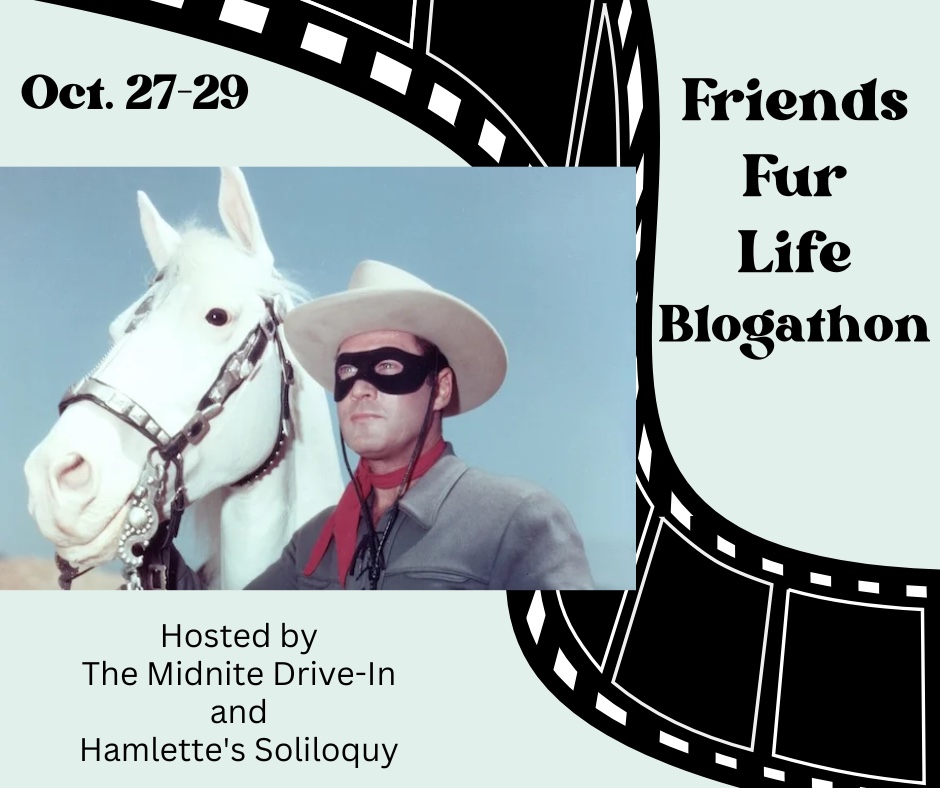

    The issue opens with Dracula in Boston, messing around with a bunch of American young people. They just want him to chill out and groove, and Dracula, weakened by Doctor Sun’s mystery attack, is having none of it. He doesn’t feed, however; he’s too weak. When we next see Dracula, he will be feeding with no real explanation of why he didn’t feed before. And the comic will have skipped over the question of his Boston lair, which theoretically must be a thing.

    Because instead of spending the day with Dracula, Wolfman instead tags along with Harold. Harold is a hack writer who’s been trying to get over his current case of writer’s block for three years. At least, I think it’s three years. Harold’s had writer’s block for three years; Harold writes worse than a three-year-old plant–lots of threes.

    Wolfman tracks Harold from his failed drafting, where he decides just to plagiarize for his freelance assignment, then to the office where he sexually harasses and demeans the office girl, Aurora. She’s just a pretty face, he tells her, and dumb as a box of rocks. Except after he comes across Dracula in the street—Harold thinks there’s been a car accident, but Drac really dive-bombed a couple on a motorcycle and made sure to eat the girl because he’s sick of how empathetic he’s been lately. Where’s empathy gotten Dracula? Nowhere.

    Anyway. Harold calls Aurora at like two in the morning for help, thinking about how she’s stupid, but she’s pretty, so maybe he’ll get laid after they take care of the vampire on his couch. I really hope Drac eats him next issue. Or lets Aurora eat him.

    Capping the issue is a scene where Brother Voodoo tells Frank Drake even though Frank doesn’t seem like a white savior (he’s so ineffectual compared to lady friend Rachel Van Helsing, after all), Brother Voodoo sees the white savior in him, and all he needs to do is act with unwarranted confidence, and he’ll feel better.

    It’s an eye-roll of an ending. Thank goodness for Gene Colan and Tom Palmer’s sublime art. Though their soft, lascivious cheesecake of Aurora juxtaposed against Harold (i.e., Wolfman) deriding her is weird and off-key.

    Maybe Dracula can turn Aurora, and she can eat Harold. Just so long as he doesn’t become a major supporting player. Now, there’s a scary thought.

  • Aka Thank Goodness Patrol. Sorry, just need to acknowledge how everyone was pretty sure MAX was going to delete the rest of “Doom Patrol” off the hard drive without dropping them.

    Things pick back up where we left off–the team is in over their heads (again), and the end of the world is neigh (again), and they’re all too mad at each other to save it (again). It’s a glorious return, finally giving Joivan Wade a chance to air all of his character’s grievances in a strong scene. He’s teamed up with childhood friend grown-up Elijah R. Reed; they’re trapped in Orqwith with everyone else, but Reed doesn’t have any superpowers. Good thing drawings become reality in Orqwith.

    Out of nowhere (well, almost), Wade blows up at Reed about how much being a superhero sucked, even if it led to Wade being a lousy friend too. Wade—sans cybernetics so long now you have to wonder if they’re coming back—doesn’t have exterior conflicts similar to his teammates, but he and Reed’s arc this episode perfectly showcases why he’s “Doom Patrol” material. It also shows how awkwardly the show is balanced. If it weren’t for Reed, Wade wouldn’t have anyone to team up with.

    Diane Guerrero, Brendan Fraser (talking his part), and Riley Shanahan (walking the rest of that part) are also prisoners in Orqwith, except they’re on a different mission. Oh, right. Wade and Reed are trying to rescue Matt Bomer (voice) and Matthew Zuk (bandages). The episode’s got no room for Bomer’s moping, so they turn his rescue into a running joke. But the main stuff is Guerrero and Fraser bickering their way through newly revealed villain Daniel Annone’s Bond villain exposition dump, complete with an alternate-reality digression.

    Guerrero needs Fraser to stay strong, except the only thing Fraser’s guaranteed not to do is stay strong.

    Meanwhile, back on Earth, Michelle Gomez and April Bowlby are trying to remain calm while enraged at one another. It’s a character relationship episode for them, and it’s so good. Gomez wants to make things work so they can save their friends—she’s on a redemption kick, after all—but Bowlby wants to focus on how Gomez is redemption arcing because she wronged the team. Bowlby especially.

    And they have too much to drink.

    The cliffhanger finale’s got a deep-cut reveal, and—like the best “Patrol”—is tragically human.

    Bosede Williams’s direction is good. Orqwith isn’t the most visually interesting alternate dimension, but Williams finds the drama in all the scenes. She gives all the actors a little more time, which really pays off. Some great Clint Mansell and Kevin Kiner music, as usual; the great thing about “Patrol”’s score is how the show often uses it as a contrast. So this episode, there’s a contrasting energy to Gomez and Bowlby’s arguments. It doesn’t worry about matching the style; rather the intensity of the moments.

    So good.

    “Doom Patrol”’s so, so good. Thank goodness it survived.

  • Buddy is in desperate need of some contextualizing. The film takes place—roughly—between 1928 and 1933. Given that timeline, it’s a little weird the Great Depression doesn’t start, but Buddy’s also really strange about when it decides to be grown-up and when it doesn’t. The film tells the story of eccentric socialite Gertrude Lintz, who raised chimpanzees as her children. Until a zoo needed to get rid of a baby gorilla, and she raised him as a human child, too. It turns out chimps and gorillas are different, which Lintz—played by Rene Russo—completely ignores, even as her husband (Robbie Coltrane) tells her to think about it, even as her assistant (Alan Cumming) tells her to think about it.

    If Buddy could talk, he’d probably tell her to think about it too.

    But Russo doesn’t listen. Or when she does listen, it’s not a scene. Buddy skips almost all of the character moments for Russo, which is really strange since she narrates the movie (presumably with lines from the real Lintz’s memoir, which… could use some punching up).

    Buddy’s very short—eighty-four minutes (I didn’t time the credits either)—and most of the movie involves Russo trying to get Buddy (a combination of animatronics, puppetry, and man in suit) to learn how to act more civilized while the chimps she’s ignored since four minutes into the movie have hijinks. Buddy’s bullish on training apes to perform tricks, which is a bit of a flex. Though regular science at the time—in the form of a Paul Reubens cameo—thinks apes are violent man-eaters or something. As for zoos… they don’t talk about why zoos are bad. Except lack of money. Wonder where they could get some.

    The chimp hijinks are incredible, but they’re also in questionable taste. Buddy casts many of its characters as caricatures—watching Irma P. Hall fight through being the Black housekeeper to eccentric rich white folks is incredible. Not to mention once she shows she’s going to put in the effort opposite the animatronic.

    The first few scenes of the film are a little concerning. Everything is for sight gags, or it’s the lackluster narration. And then Russo and the baby gorilla doll aren’t dramatically compelling. But once Buddy starts to grow, Russo shows off how well she can act opposite the practical effects. And the practical effects are great. In the awkwardly paced third act, the script reveals that the whole thing has been about the animatronic ape’s experience of the film, which he can’t communicate because—despite having an elaborate supporting cast—Buddy only exists as Russo’s accessory.

    Now, she comes to that realization, too, which means there should be some fantastic character development.

    Except, like all the other character development, Buddy skips it. Buddy even skips the whole point because it doesn’t want to get into the history.

    Though everyone else is ready for the history. Colleen Atwood’s costumes, Daniel A. Lomino and David Nichols’s delightful art deco production design, whoever put together the elaborate World’s Fair sets they’re on for under five minutes. A lot of effort went into Buddy. Either lots ended up on the cutting room floor, or the producers (and director and screenwriter Thompson) sorely misunderstood what they were doing.

    There are also some weird scenes someone fought to keep in, like Russo telling priest Philip Baker Hall (in a fantastic cameo) to get over the whole creationism bit and get with the real. All the cameos are one-sceners—Rubens, Hall, John Aylward, a delightful Mimi Kennedy, young Dane Cook doesn’t count—which doesn’t help Buddy feel less… herky-jerky.

    But the main leads are all good—Russo, Coltrane (who gets very little direction but still does a bunch of work), Cumming (he’s the standout), and Hall (Irma P.).

    Lovely Steve Mason photography and a good—if repetitive—Elmer Bernstein round things out. Buddy’s a bit bumpy but more than okay; it should’ve been much better.


  • Besides the unfortunate special effects execution (the conceptions are fine), the only thing wrong with Beast from Haunted Cave is the title. And, I suppose, some first-act budgetary shenanigans—the movie’s about Frank Wolff’s crew knocking off a gold reserve in a mining town and heading across the mountains on skis to escape, and they have this big exposition dump about the heist. Only when it comes time for an effects sequence, the movie entirely skips it. Someone should’ve ponied up for emergency vehicle stock footage.

    They don’t skimp (by Beast’s standards) on the Beast for the finale, which helps the movie stick to its landing.

    Here’s the setup: Wolff has hired ski instructor Michael Forest to take he and his crew (who Forest ostensibly thinks are just Chicago businessmen) on a two day, cross-country ski trip. It just happens to be timed after Wolff and the crew knock over the reserve. They’re in the sticks–Beast shot on location in South Dakota, which sometimes means better locations, sometimes not—and the reserve’s not guarded on Sundays. Or they can distract the guards? It might be in the exposition dumps, but the subtext of those scenes is always Wolff’s main squeeze, Sheila Noonan, making eyes at Forest.

    Noonan and Forest have a contrast flirtation. He’s a hunk, she’s a babe, but he’s wholesome (they’re heading to his cabin, where he gets away from it all to read the encyclopedia and learn about the world he doesn’t want to experience), and she’s fallen. Much of Beast is their getting-to-know-you scenes. Forest’s not good, but he’s not godawful, and he’s sympathetic. Noonan’s good, though. For most of Beast, they don’t know they’re in a horror movie; they think they’re in one of those back-to-nature noirs, and they toggle beautifully.

    It helps the third act is maybe eight action-packed minutes.

    The best performance is Wolff, who’s an awesome asshole. Forest isn’t so worried about his party having guns until he witnesses Wolff’s management style—Richard Sinatra (cousins) is going off the rails because he watched the Beast eat his hot date, and no one believes him. The Beast is chasing Sinatra; if you see the beast, it’s coming for you. Because it’s a terror. It taunts its prey with visions of digested victims and so on. It looks terrible because it’s 1959 and low budget, but the concept–some faceless spider monster draining your precious bodily fluids–is terrifying.

    And director Hellman gets how to oscillate between the terror and the crime suspense. Beast is always done straight, just cheap. Wolff’s got some questionable makeup decisions, but the acting’s so good beneath them, it doesn’t matter. Finishing the quality triangle is Charles B. Griffith’s script. Griffith, Hellman, Wolff. They make Beast something special.

    Wally Campo plays the other goon, who’s goofier than Sinatra, even when Sinatra’s freaking out. But both Campo and Sinatra get to show some humanity, while Wolff’s just an exercise in cruelty. Him, you watch for the tension, while they’re a combination of comic relief and dread. Then, Noonan and Forest have their star-crossed flirtation.

    And there’s a spider monster out to eat them all.

    Hellman’s direction is often quite good, with solid black and white photography from Andrew M. Costikyan, nice enough cutting from Anthony Carras, and a score full of personality by Alexander Laszlo. Laszlo flexes in odd directions at times, with varying degrees of success, but it’s always hep.

    Beast from Haunted Cave is more than all right.

    Except that title. Like, call it The Hold-Up or something generic heist. It’s a heist movie with a monster, not a monster movie with a heist. Otherwise, though, real cool.

  • “All Creatures” returns with an Easter special. Because the show’s changed so much since last time—Callum Woodhouse is off in World War II (it’s 1940)—the episode’s less the start of a new season than a special, which is fine, just a peculiar start. Since last episode (a Christmas special, so just a handful of months later), the veterinary clinic has found a new normal, well integrating Rachel Shenton into the house as de facto bookkeeper. Things seem to be going well (enough), but it’s hard to tell because Samuel West has given up tobacco for Lent, and it’s almost over, and he’s jonesing for a pipe.

    Meanwhile, Nicolas Ralph seems to be taking to co-ownership in the practice well, while Anna Madeley’s ready to get on with her life and divorce her long-absent husband. It’s unclear where things stand with Madeley and just pal Will Thorp; despite her getting a relatively big setup for her divorce subplot (which includes an intentional public shaming stage), the episode doesn’t reveal much about her experience. “All Creatures” continues to keep reveals about Madeley for special occasions. Not even Easter is special enough.

    The episode starts with Ralph taking a leisurely drive back to town from country, with “Creatures” showing off the beauty of the English countryside, then almost hitting little kid Billy Hickey and his dog. Hickey’s going to be Ralph’s nemesis for the episode, a poor kid who Ralph profiles and decides is mistreating the dog, even as Shenton tells him to give Hickey a chance and not to be a dipshit. West’s got his own medical case about a ewe who rejects her lamb, and how West’s forgetting he’s not the only one going through things, and farmer Paul Hilton might have it rough, too.

    Back at the house, Madeley and Shenton share a subplot about medical supplies while mostly playing support to the boys. West will give Madeley some support in writing her divorce statement, but it’s for the eventual benefit of his character arc. Shenton and West get some great scenes together as part of the episode’s antics. “All Creatures” spends the first quarter of the episode showing how life has changed since war began—men are just gone, with the town trying to continue in their absence—and it’s all very serious. Hickey’s a kid in an unsafe, if not dangerous, situation, and so his plot has a lot of serious.

    Broodiness compensates with downright sitcom antics around the house, with West as the butt of the joke. It works out, especially juxtaposed against West’s subplot about the farmer. “All Creatures” manages to do a deft contrast of West and Ralph’s cases for the episode and how the duty of care relates to each. It’s a very nice, eventually rending morale.

    “All Creatures” gives no indication of what it’ll be doing this season, but this first episode does reassure wherever they go, it’ll be more than worth the trip.

    Speaking of… the drone shots. Not just when Ralph or West is driving around town, but for some of the establishing shots; they got themselves a drone, and they know how to use it. Nice directing from Andy Hay, great photography from Sara Deane.

    It’s so nice to have “Creatures” back.

  • Battle Beyond the Stars answers that age-old question… what if you mixed the star-fighting of Star Wars, the visual grandeur of Star Trek: The Motion Picture, and some of the production design of Alien, but also had all the sexy babes in the galaxy hot for John-boy Walton’s bod. Also, it’s a remake of Seven Samurai.

    I should also mention the budget—approximately twenty percent of the original Star Wars (two million, which mostly went to the respectable special effects). Stars has shockingly good space effects. They just don’t have enough of them and sometimes reuse the same footage. They can’t do multiple ships in a frame, which limits the visuals after a certain point, but it’s a fine effort. James Francis Cameron did the special effects for the film.

    Unfortunately, even though the space stuff looks good, the sets and “exteriors” are rather wanting. There are some okay matte shots of the alien worlds, but the actual sets are… I wanted to say iffy, but they’re much closer to bad. There are good exterior shots, but they’re models without any people. Sorry, I really want to talk about how Stars somehow didn’t know what trench warfare meant, but we’ll have to wait a bit.

    The movie opens with intergalactic (literally, screenwriter John Sayles likes to talk about all the galaxies) bad guy John Saxon showing up at the peaceful world of Akir (home of the Akiras, which is more amusing now than when Stars originally came out) and threatening to nuke them from orbit if they don’t promise to be his subjects. The Akira are a peaceful people ruled by the Varda, a guide to a pacifist lifestyle, but Sayles didn’t write more than a rule and a half. Or they cut the rest. Some of Stars definitely got cut; you have to wonder about other parts.

    Saxon’s seen Seven Samurai so he knows he’s got to threaten the yokels and then give them a deadline so they have time to mount a resistance, and there can be a movie. So, he leaves to go mess with some other planet.

    Young farm boy with a hankering for adventure, Richard Thomas, decides he’ll go round up some mercenaries to defend the planet—he hasn’t seen Seven Samurai but the town elders explain it to him—and he takes Obi-Wan Ke… he takes Jeff Corey’s space ship, which has an AI on board named Nell (voiced by Lynn Carlin). The spaceship looks like a part of the human anatomy. Well, two parts, but parts in a pair. In fact, from different angles, it looks like two different pairs of parts of human anatomy.

    Anyway.

    Thomas’s first stop is Corey’s old friend Sam Jaffe, who isn’t going to a lost cause but also wants to breed Thomas with his daughter, Darlanne Fluegel. Fluegel seems like she’s going to be quite bad in Stars and she might be quite bad, but once Sybil Danning shows up, Fluegel improves, thanks to the comparison. It might not be Fluegel’s (or even Danning’s) fault. While director Murakami is good at the space stuff and some of the dramatic stuff, he’s utterly inert with the romance. And since Stars becomes a low-key race between Fluegel and Danning to bed Thomas, the romance will be important. Ish. I mean, it’d have been nice for Fluegel not to oscillate between love interest and exposition blatherer, and it’d really have been nice if Danning weren’t a scantily clad star warrior, but I’m not sure it’d have made too much difference.

    But it would’ve made some kind of one.

    Fluegel and Thomas team up to save his planet; he goes one way to get more help, she goes another. He’ll bring in George Peppard (as future Earth hillbilly space trucker Space Cowboy, one half of Stars’s Han Solo), Robert Vaughn (the other half of Han Solo, this one a soulless space assassin), and these nice Borg, led by Earl Boen, in a lot of makeup.

    Plus Danning, who demands he let her fight alongside, but Thomas doesn’t like pushy women, so he tells her to bug off. She’ll tag along because that bod’s too hot.

    Meanwhile, Fluegel gets kidnapped by space lizard Morgan Woodward, who, it turns out, hates Saxon–so, lucky timing.

    Thomas is an affable, likable enough lead, but the best performances are Vaughn and Peppard. Peppard takes a while to warm up, but Vaughn’s on from his first scene. Carlin’s a lot of fun–unfortunately, Saxon’s awful. The supporting cast’s okay; there are no standouts either way.

    The sublime editing from Allan Holzman and R.J. Kizer is the standout of the entire film (besides James Horner’s proto-Star Trek score). They cut the effects sequences just right and the non-effect sequences just right. Holzman and Kizer’s cutting is responsible for many effects sequences’ success. They cut just as the limitations are about to show.

    Daniel Lacambre’s photography is good, too. Stars is visibly cheap but never bad-looking. Well, never too bad-looking.

    It’s a peculiar, always diverting, usually engaging oddity.

    Even if someone thought fighting in the trenches meant digging wide corridors where they could have battles on the same set but pretend they’re somewhere else.

    Finally, look fast for Julia Duffy and faster for Kathy Griffin.

  • About the only compliment I can pay Ghostbusters II is the first half or so doesn’t reveal how terrible the movie’s going to get. The film had a troubled production, which might explain the special effects looking rough for the third act. II’s third act apes the third act from the first movie, only without any of the stakes. Ghostbusters II is profoundly without stakes.

    Ostensibly, the boys in beige (and navy blue to fit into the popular contemporary cartoon series “The Real Ghostbusters”’s continuity) are trying to save Sigourney Weaver’s baby from Peter MacNicol, her pervy boss who’s become an agent of evil. Except the movie’s not going to kill a baby. So it’s all about how they save the baby. Except Ghostbusters II’s third act is horrible. It gets worse every stake-less scene. The movie’s also got this “New York City sucks” undertone, which is kind of strange. It could work—the movie picks up after the Ghostbusters have been sued out of business, so maybe they could hate the Big Apple, but… no, it’s just for the jokes. The really tepid jokes.

    The first act establishes the new ground situation—Weaver’s got a baby (Murray’s not the daddy), Murray’s a psychic TV talk show host (which fits because the character’s written like a talk show host the entire movie), Harold Ramis is doing hard science, Dan Aykroyd is running a used book shop while not doing appearances with Ernie Hudson. Does Hudson have anything else going on the side? Don’t ask; the movie doesn’t care.

    Along the way, we’ll learn Rick Moranis has gone back to school and become a lawyer. Annie Potts will be back, then David Margulies comes back as the Mayor, too. Margulies seems exhausted at the whole production, which tracks. Kurt Fuller plays his dipshit aide, who doesn’t trust the gang.

    The movie feels long because nothing connects. Ackroyd and Ramos’s script gives them more to do for a while (Ramis especially), but it doesn’t go anywhere. Moranis and Potts get about the best subplot, which is only fair since they’re giving the best performances, but they also don’t have the worst writing. Ramis and Ackroyd saved it for themselves—plus Hudson. II forgets about Hudson for most of the first act, then turns him into an exposition delivery device in the second—alongside Ramis and Ackroyd—and it’s way too much.

    Then Weaver starts phoning it in for the finale, which is not good, given it’s all about her baby becoming an evil god. I can’t remember when she goes flat, but it’s way too early, and it’s way too flat. II can’t figure out how to make her and Murray cute together, so they have him play with the baby a lot. Ghostbusters II targets the weirdest demographics—boys who love “Real Ghostbusters” and their moms who didn’t like the first movie but can handle it because the baby’s adorable.

    Reitman can’t direct that movie. He does an awful job. As far as the technicals, no one does a good job, really—Michael Chapman somehow shoots it poorly, and then Randy Edelman’s score is arguably offensive—but there’s some basic competence to the production. Dennis Muren’s special effects leave a lot to be desired, though.

    So it’s all doomed.

    There are also a bunch of stunt cameos for some reason. They don’t amount to anything.

    As for top-billed Murray… maybe HBO should’ve given him a talk show or whatever. But it’s not a performance. Many people embarrass themselves in II—Aykroyd, Weaver, Hudson, MacNichol, Harris Yulin—but nothing compares to Murray. He’s been fixed. I’m not sure II’d have been any better without the snip-snip, but it might not have been so dull.

  • Polite Society (2023, Nida Manzoor)

    Polite Society is the story of British-Pakistani teenager Priya Kansara. She goes to an expensive London private girl’s school, where she’s got two best buds—Seraphina Beh and Ella Bruccoleri—and a nemesis—Shona Babayemi. Complicating matters is Kansara’s passion for martial arts stunt work. It leads to lots of fighting, which quickly reveals Polite’s major conceit: Kansara’s living in a PG-13 martial arts action movie. Writer and director Manzoor makes no attempt to rationalize this reality, which is otherwise close to our own. It’s just a universe where everyone’s ready to kick ass. And has to kick ass, because there are supervillains.

    Not costumed supervillains, just rich people supervillains (see, it’s like reality). They’re not trying to take over the world or, I don’t know, create a clone army, but there’s something very suss about them and Kansara certainly isn’t going to let her big sister, Ritu Arya, marry into that world.

    Polite’s opening titles and most of the first act juxtapose Kansara and Arya. Kansara’s trying not to get into too much trouble while still having some self-respect in high school, while Arya’s licking her wounds as an art school dropout. While Kansara’s sure she’ll be a stuntwoman and Arya will be an artist, everyone else assumes Kansara will be a doctor and Arya will be a trophy wife. Including mom Shobu Kapoor, who’s trying to keep up with the Joneses in her friend circle, and unintentionally puts Arya into the crosshairs of queen bee Nimra Bucha.

    Bucha’s trying to marry off super-stud son Akshay Khanna, who might charm all the moms and aunts, but Kansara sees right though to the mama’s boy underneath. Unfortunately… Arya doesn’t agree and, after a single date montage, she falls for dreamy Khanna. Act two kicks off with Kansara enlisting Beh and Bruccoleri to help her sabotage the relationship. She’s worried Arya’s not in her right mind (the art school thing) and everyone’s taking advantage of a setback to make her conform. Dad Jeff Mirza actually sums it up for Kansara during a great montage sequence.

    But then things get worse—Arya’s buying into the fantasy (Khanna wants to whisk her off to Singapore to live in tropical luxury) while Kansara’s pretty sure it’s actually a nightmare. And then it turns out she’s literally not wrong.

    It’s too bad Manzoor didn’t find some way to keep Arya active once she’d detached from Kansara’s plot line, but otherwise, Polite’s basically perfect. It’s funny, it’s got a fount of heart, it’s so smart. Manzoor's a perfectly solid director; she and cinematographer Ashley Connor shoot Panavision ratio, which is fine for the prosumer action movie vibe, but Manzoor’s rarely filling the frame. There’s an iffy effect or two, but they always come with some winning character moment, so it doesn’t matter and sometimes lends to the scene. Manzoor does a phenomenal job using the composite to showcase the performances. And Connor’s photography is good. Great is Robbie Morrison’s cutting. The editing is incredible.

    Maybe the neatest thing about Manzoor’s script is the way she foreshadows the very distinct acts; Polite’s got different chapter titles, riffing on Jane Austen novels, and fighting games, but it’s also got major act breaks. They stand out because Kansara, Beh, and especially Bruccoleri examine everything regarding acts. When Kansara’s griping about Arya dating Khanna, Bruccoleri, and Beh explain, it’s just because Arya’s in the second act of her comeback. When it becomes clear the third act isn’t an art show but a wedding, they again discuss it in those terms. Manzoor’s got a really nice way of setting it up, and the self-awareness tips the hand a bit. Foreshadowing for later, more significant moves.

    And the other thing about losing track of Arya (sorry, forgot where we were headed; Polite’s so well put-together it’s easy to get lost admiring)—it just means more Kansara, who does get to graduate to a more dangerous nemesis in Bucha, but also gets to have a big character development arc missing Arya.

    All the performances are good or better. Kansara’s a charismatic, funny lead, Ayra’s got depth even as she Stepfords (which is such a weird and nice detail—the movie makes that comparison in scene), Khanna's a charming science stud and mama’s boy, and Bucha’s a fantastic baddie. Then the supporting cast—Kapoor, Mirza, Beh, Bruccoleri, and Babayemi—are all delightful. The more Polite asks of its cast, the more they deliver.

    Polite Society’s badass.

  • The Quiet Man (1952, John Ford)

    The Quiet Man starts as a loving postcard tour of the Irish countryside. It’s pastoral, romantic, funny, human. Son of Ireland-gone American John Wayne returns home and immediately falls in love with neighbor Maureen O’Hara. Unfortunately, despite O’Hara having similar inklings, her big brother is Wayne’s new nemesis, Victor McLaglen. It’s this exceptionally lush, tender, sexy comedy-drama for a while—it’s almost like director Ford got Wayne to agree to do the touchy-feely stuff by promising he’ll get to hulk out in the second half.

    And hulk out Wayne does. It’s Ireland, after all, and McLaglen owns little sister O’Hara, and he’ll be damned if he’s letting Wayne have her. Except by this time, the whole town has cooked up a scheme to marry the kids (asterisk) off. They are not kids; when it comes time for town mascot Barry Fitzgerald to play matchmaker (officially) to Wayne and O’Hara, O’Hara’s official designation is spinster. Now, Quiet Man does not have many roles for women. There’s O’Hara, there’s Mildred Natwick as the town rich lady, and Eileen Crowe as the vicar’s wife. So we never see any of the other similar-aged wives–Quiet Man takes place at the pub a lot, so they’re not invited—but Man’s first big ask is pretending O’Hara’s not Maureen O’Hara.

    In addition to McLaglen, she cooks and cleans for his farm crew, who all think she’s swell. They’re in a scene before McLaglen takes over. McLaglen’s a delight in the movie’s first half, and strangely absent in the second half. Quiet Man does this inestimable summary sequence with Wayne and O’Hara on the outs because she doesn’t want to get married without her dowry, and he doesn’t want to hear about money. There’s a scene where John Wayne talks to Protestant vicar Arthur Shields about how it triggers him. There’s also sports talk involved—pointless, inappropriate sports talk—so you know it’s still manly.

    As for how O’Hara processes it… well, there aren’t any women for her to talk to, so she talks to Catholic priest Ward Bond about it when he’s fishing. It’s kind of funny because Bond does eventually pay attention to his parishioner and her problems, but they’re talking in Gaelic, so the audience can’t understand. Taking that moment away from O’Hara is what Quiet Man will do over and over in the second half. The moral of Quiet Man is to objectify your wife in the right way, John Wayne, not the wrong way. And don’t forget to hit her with a stick if she’s asking for it. You’re in Ireland, boyo.

    I mean, yikes. However, O’Hara’s plot about the dowry is not without its issues either. She wants it because it’s all she’ll ever get; it’s about what the culture allows a woman to inherit from her foremothers. It should be devastating and give Wayne and O’Hara a killer resolution to that romantic comedy-drama. Quiet Man will eventually turn up the melodrama just a tad, and it’s when Wayne almost breaks the fourth wall to say he ain’t no softie.

    Anyway, O’Hara’s asking him to treat her like dirt; that’s just how they are in Ireland.

    Again.

    Yikes.

    It’s a gorgeous film. Ford, cinematographer Winton C. Hoch, and Technicolor consultant Francis Cugat film the heck out of the Irish countryside. Even when he’s stuck using soundstages for exteriors; there’s a great horse race on a beach, but all the setup is on set, which Ford uses to focus the audience’s attention on the dramatic undercurrents. Quiet Man will use technical constraints to its advantage almost every time. Hoch, editor Jack Murray, composer Victor Young; Quiet Man always plays great-looking and sounding.

    Speaking of sound… there’s a lot of singing in The Quiet Man. The fellows of the town like to get together in the pub and sing some songs, usually led by the local IRA lads, Sean McClory and Charles B. Fitzsimons. There are plenty of John Ford Stock Company players about (look fast for Hank Worden; I knew that guy looked familiar), including Ken Curtis, who leads one of the songs. When the supporting cast is limited, the film has got a real likability quality. Not quite hanging out, but enjoying the shenanigans, singing and bullshitting. The film loses that quality in the late second act.

    Luckily, it gets it back for the third. Eventually. Quiet Man’s got a few last-minute reprieves, a few because it intentionally calls back to previous highs.

    Much of the film has Ford directing Wayne and O’Hara in fantastic performances. But it eventually hits a “what would anyone be able to do with this” period. The supporting cast helps in those spots, especially Bond. Bond’s just great. So’s pretty much everyone. Fitzgerald, McLaglen, Natwick (though her arc is bananas). O’Hara’s great; one kind of asterisk. Wayne’s good; another kind of asterisk.

    It’s an astoundingly beautiful film, too. Ford, Hoch, Cugat—nothing quite looks like Quiet Man. That ethereal quality ought to help it through the troubles, but turning the movie into a fable about humiliating the woman you love in front of as many people as you can because you’re an Irish man, not a weak sister American… oddly, does not.

    Quiet Man’s a bit of a bummer, but nowhere near the bummer it could’ve been.


  • Black Mirror (2011) s03e01 – Nosedive

    If Nosedive is any indication, “Black Mirror” having guest writers isn’t going to help things. Rashida Jones and Michael Schur wrote the teleplay (they’d previously written “Parks and Recreation” together) from a story by “Mirror” creator Charlie Brooker. The episode also kicks off the show’s Netflix run; it had been on Channel 4, but Netflix took it over, hiring movie director Joe Wright to do a profoundly mediocre job.

    Bryce Dallas Howard plays the lead, a woman obsessed with her social media score. Too low of a score, and you lose your job, your apartment, your freedom, and your ability to participate in the ratings game. It’s a similar setup to that “Orville” episode, which came out a year later; guess Seth MacFarlane watched “Black Mirror” and figured he could do better.

    He’s not wrong, but let’s talk about Nosedive. Howard’s an incredibly likable lead, but it’s a mediocre script and performance. She’s an unlikable narcissist, desperate for approval from strangers, which drives a wedge in her relationship with brother James Norton. Now, “Mirror” is a very British show, except Nosedive’s pretending it’s not. Norton and co-star Alice Eve are British, while Howard and other co-star Cherry Jones are not. Norton and Eve do American accents, and the cars drive on the right side, so… is “Mirror” trying to appeal more globally? Jones and Schur are American sitcom writers, after all.

    It’s a long, tedious episode about Howard getting her comeuppance and learning not everything is about what other people think about you. Michaela Coel’s cameo isn’t even good, but she’s got some personality, which the episode otherwise reviles in not delivering. “Mirror”’s rarely good at explaining the context well enough, but Nosedive takes that avoidance to a whole other level.

    Jones is good. It’s not worth watching the rest of it, but she’s good.

    “Mirror”’s best when it’s got great lead performances. Nosedive gives Howard a spotlight but then doesn’t give her anything to do in it. Except work her way through various sitcom beats.

    Nosedive is so lackluster I was even hoping for one of those lousy “Mirror” end credits epilogues just to have something to discuss. I mean, I suppose there’s something to say about the episode’s take on social media, but there’s also not. Jones and Schur don’t even try to have flaccid observations; they just have excruciatingly dull gags.

    If the Netflix episodes keep up the unnecessary length, I hope they at least build in nap time.

  • Gangnam Zombie (2023, Lee Soo-sung)

    For a micro-budget horror movie, Gangnam Zombie isn’t unsuccessful, but it also isn’t much of a success. The setting is decent—locked in a trendy office building on Christmas Eve, except Zombie doesn’t have the money for Christmas decorations. It also doesn’t have money for zombie special effects, so it’s more like they’re rabid vampires (complete with the teeth). Except then, the opening titles imply a bad batch of COVID-19 vaccine causes zombie vampirism. Only for it to not. I had been thinking how Rona would give cheap horror movies plot points for a decade, but….

    It seems like they had the Dawn of the Dead content and had to pad it out. Gangnam fully embraces the no-budget pad; there’s a flash-forward prologue (which gets entirely repeated later on), there are too long opening titles, frequent stock footage montages, lots and lots of slow motion (including annoyed actors walking slowly only for it to get further slowed down even more), then six minutes of end credits. Gangnam’s greatest struggle is making that eighty-one-minute runtime.

    After the zombie (but, wait, are they vampires?) action introduction, where we learn despite buying a stock movie score package, Gangnam didn’t buy a fight sound effects pack. So there’s rarely any sound when the good guys hit the zombies. Gangnam can’t afford gore, can’t afford sound effects, so it’s a surprise when director Lee does an entirely adequate job. Other than all the slow-motion nonsense.

    And also, it’s not like Lee takes advantage of the micro-budget status. There are approximately twelve different zombies for most of the movie, recognizable once you start paying attention. Instead of playing up that familiarity, Lee tries to pretend there are more. There are never a bunch more.

    Oh, they also pad with a break dancing sequence. It comes back way too briefly for one of the fights. The breakdancing is more impressive than the fights, which hinge on hero Ji Il-joo being a taekwondo badass. There’s a lot of kicking. But Gangnam is lousy at fight choreography; the movie’s “hook” is Ji fist-fighting zombie vampires, and every time they do a sequence, it’s a disappointment. Even there’s the break dancing, they don’t do enough of it. Like they had the good idea but then didn’t shoot enough of it.

    There is one slightly better fight scene when leading lady and not damsel in distress, Park Ji-yeon, helps Ji fight the main zombie (Jo Kyoung-Hoon).

    I couldn’t bring myself to check the runtime breakdown, but most of the movie seems to be the first-act setup. Ji’s in love with coworker Park, who thinks he’s a taekwondo dork. They both work at a YouTube channel run by Choi Sung-min, who has a bad business model and worse ideas for YouTube videos. Tak Tu-in plays Ji’s doofus bro sidekick, which Tak grates against. Choi’s a dipshit who’s sexually harassing Park; before the zombies show up, the movie’s mainly about Ji trying to empower Park to stand up to Choi like she stands up for young women she encounters being threatened by men.

    Gangnam doesn’t say much for humanity.

    About a third of the shots look good, with the rest being either mediocre or vaguely warped, like cinematographer Kim Do-young didn’t convert the iPhone-shot footage correctly. But it’s micro-budget, and it looks all right for it.

    Ji’s not good, but he’s also not bad. Park’s a bit better, but she gets even worse material than Ji. Choi’s a good zombie movie dipshit.

    Speaking of zombie movie standards—Gangnam’s zombies run. Except when they don’t. The movie doesn’t try to explain the zombie rules at all.

    Gangnam Zombie’s not good, and it’s not so much successfully inventive as competent. Director Lee’s really good at making things monotonous.

    An actual score—instead of the melodrama music pack—would help a lot.

  • Silkwood (1983, Mike Nichols)

    I wholeheartedly recommend Silkwood. It’s beautifully made, with a singular performance from Meryl Streep and great performances from its astounding ensemble. I need to remember to list all the supporting actors in the film. But I caution against reading up on the actual history. The film’s very accurate; the problem isn’t with veracity; it’s with the dramatic choices for the finale. The film refuses to make any claims about union organizer Karen Silkwood’s mysterious death, which occurred while she was on her way to blow the whistle on her plutonium manufacturing bosses. They’d been really shitty about telling people they’d probably get cancer and die from their jobs, plus doctored reports to make things seem safer.

    Streep gets involved with the union after her first contamination; she’d been building to it, concerned about one of her friends at the plant, but experiencing it herself pushes her over. Her life quickly changes, as she’s instrumental in involving the national union in the Oklahoma plant’s business. But with Streep’s increasing involvement, her relationships suffer at home and work. Home is stud muffin boyfriend Kurt Russell and their roommate Cher, a lesbian who’s in love with Streep but also thinks Russell’s swell. They all get high, bitch about work, visit Streep’s kids, and get poisoned by their job together. The first act is all about the trio; the second is about breaking up the trio, and the third is about them having to get back together because it’s partially a medical melodrama.

    A damned good one.

    But the finish skips ahead a lot, focusing on Streep’s still hot and heavy relationship with Russell, ignoring both her work stuff and her increasingly strained friendship with Cher. Despite the film’s abrupt, tragic ending, there’s some kind of closure with Russell and Streep. There’s nothing with Cher. Even though Cher shows up in the ill-advised closing montage, apparently having been present for a scene the film implies but doesn’t show. Because to show it would be to take a stand on Silkwood’s death.

    The ending’s frustrating—I mean, Silkwood gets away with doing an actual pre-made Oscar reel for Streep’s nomination video, so it can frustrate all it wants, actually—but knowing there was more potential content—historically solid content, too—is upsetting. The film proposes there’s just not enough information to do anything else with the finish. But the real story had some more information. There were other choices.

    Before reading up on the actual history, I had intended to start talking about Silkwood in terms of staying too strict with the reality, except it didn’t even make that choice. It did something entirely different. And the film can’t get away with it.

    Silkwood starts a somewhat standard outsider drama. Streep, Russell, and Cher are stoners; their coworkers think they’re a truple; they don’t fit in. For example, even though Streep’s okay with Russell’s giant Confederate flag, she doesn’t join in racist conversations with her coworkers. The film’s Americana, but that Americana. Given Russell eventually getting uncomfortable with Cher taking up with another lady is a plot point, the film is aware of that focus. It just entirely dumps it, like they weren’t allowed to cut anything throughout the film but had to stop at exactly 131 minutes.

    The film’s mostly a technical marvel—Miroslav Ondříček’s photography, Patrizia von Brandenstein’s production design, Ann Roth’s costumes—but Sam O'Steen’s cutting is only just okay. It’s often good, but because of the content, not because O’Steen’s got a good feel for that material. Though the Oscar reel partially redeems the lackluster final montage; Silkwood effectively gets away with nostalgically repeating something from two scenes before. It’s not great, but it does the job–it reminds how Streep’s performance over the last two hours and eight minutes has been absolutely mesmerizing.

    So cast your votes for her.

    Before I forget, here’s that supporting actor costar list. It’s entirely men, but major shout out to E. Katherine Kerr, who plays the other woman in Streep’s work crew. Also, Craig T. Nelson plays a creep coworker, and he’s in the movie a lot, so I’m not counting him. Bruce McGill’s also got a lot to do but much less than Nelson. The biggest part otherwise goes to Fred Ward, and in continuing descending order of importance: Ron Silver, Charles Hallahan, David Strathairn, Josef Sommer, J.C. Quinn, M. Emmet Walsh, James Rebhorn, Bill Cobbs, Gary Grubbs, Anthony Heald, and Will Patton–the Nichols Thirteen or something.

    Russell and Cher are both good but not great. Well, wait. Cher’s always good but never great, while Russell’s often good but never bad. He’s really good with the bump and grind scenes, where he and Streep slobber on each other, but he doesn’t really get a character arc.

    Nora Ephron and Alice Arlen co-wrote the screenplay, which technically never runs out of stream since there’s no dialogue after a certain point. Silkwood doesn’t want to do a thriller sequence in the third act—supposition and all—and their solution of flashing forward into the epilogue is unsuccessful. Nichols loses track of the story at just the wrong moment.

    But, like I said before, it doesn’t really matter. Silkwood’s already knocked it out of the park; Streep’s astonishing, Nichols’s direction—big thanks to Ondříček’s lightning—is excellent, and the story’s always compelling.

    Though—and I promise I’ll get back to an uptick for the end—we need to talk about Georges Delerue’s score before we go. Delerue starts doing honky tonk, which is fine, but then it stops and never comes back. He does lots of melodrama instead, which is fine too, but just when the music should be figuring out how to combine those two genres, Silkwood punts. The film gives Delerue a vote of no confidence with the ending music choice; it’s a cold burn to Delerue.

    But, of course, Silkwood makes it work because it’s a superlative piece of work.


    This post is part of the Everything Is Copy Blogathon hosted by Rebecca of Taking Up Room.

  • Ghostbusters (1984, Ivan Reitman)

    In the almost forty years since Ghostbusters’s release, the film remains unparalleled in terms of present-day, urban sci-fi action. The film’s a mix of crisp action comedy and a special effects spectacular, with Reitman’s direction toggling as needed and Elmer Bernstein’s score tying a beautiful knot. With the special effects, the film never isn’t grasping too far and never isn’t succeeding. It’s visually exquisite, even when there’s some noticeable foam versus marshmallow. Richard Edlund produced the effects and, well, accept no substitutes.

    The film’s also got an incredibly brisk pace—partially due to an elongated victory lap of a third act. In the first few minutes, the film introduces real ghosts—in the New York Public Library, establishing an expectation of location shooting. The film kind of takes a dodge on for set pieces but still impresses with what they do pull off on-site. Fake ghost-investigating scientists (played by Ghostbusters co-writers) Dan Aykroyd and Harold Ramis play second and third fiddle to lead Bill Murray; they’re the true believers, Murray’s just in it to manipulate coeds. Just when they see their first real ghost, the university has had enough and boots them.

    This turn of events could lead to the worst in Murray’s character, but instead, the movie skips along, hurrying to put the trio in business as New York City’s first (albeit entirely unlicensed) professional ghost hunters. The second act starts with their first potential customer, professional classical musician Sigourney Weaver. She’s got a valid cause for concern (the movie shows her haunted apartment, which also gives Weaver a great scene opposite in-camera effects, which the film provides a number of its cast). Except Murray tries to get some action instead of taking her seriously, and she’s out of the plot for a bit.

    Weaver will be—from a particular point of view—literally a girlfriend in a refrigerator, but the film smartly keeps her in play during the second act as the Ghostbusters start getting actual business. The media coverage will transition to Weaver, along with her neighbor, Rick Moranis. Eventually, it’ll all come together in hilarious and scintillating ways. And scintillatingly hilarious ways. Those ways might be the funniest. Oh, and with occasional major effects sequences. Moranis and Weaver end up doing the most work in the film.

    The ghost-busting business booms so much the trio brings on Ernie Hudson as their first busting employee (they’ve got a secretary, played by Annie Potts, who seems to know she will be unappreciated for her turn but still kills it). Hudson brings the soul to the team, being the only one who professes a belief in God. Ramis and Murray never really talk about it, but it’s obvious Ramis is a science atheist, and Murray’s a libertarian atheist. Meanwhile, Aykroyd’s a go-along-to-get-along all religions have a kernel of truth guy. The third act brings in all the religious stereotypes, which includes blowing their outfits around in ghosts of wind (and implying the Catholics are corrupt in some way, but also seemingly happy about it). But the God question? No comment.

    Gods, to be sure, are real, however. Gods and ghosts.

    However, the film also skirts the undead aspect of ghosts. There are some definitely human-looking ones, but they’re mostly just ghostly (and slimy) creatures, which is all fine. Edlund does a phenomenal job with the ghosts; the film’s always got the right tone in the paranormal encounters.

    Performances-wise, Moranis is probably the best for his range, followed by Weaver for her seriousness, playfulness, and willingness to play a hair band video vixen. Murray’s an engaging asshole, especially once the celebrity aspect comes in. Since Ghostbusters takes place in the real world, there’s a lengthy, sometimes salient subplot about their notoriety. It’ll put them on the radar of EPA pencil pusher William Atherton, who thinks the Ghostbusters are poisoning the air with hallucinogens and saving people from the ghosts they’ve convinced them are real. Given the initial suggestion, Murray’s a sexual predator….

    Anyway.

    Murray gets reformed really quickly in his courtship of Weaver. He’s never too creepy around her (because she’s a grown woman and not a coed, apparently), but he ends up downright cute.

    Akyroyd’s incredibly likable but kind of barely in the movie. He gets a couple big moments, but none really in the second act. The second act has a lot for Ramis, not Akyroyd. Hudson… well, theses will be written about the film’s hostile indifference to Hudson. He gets some material, even some jokes, but he always gets the fastest cuts away.

    Speaking of the cuts… editors Sheldon Kahn and David E. Blewitt do just as singular work as the more obviously superlative work from cinematographer László Kovács, Edlund, and Bernstein. Reitman’s not slouching in his direction either. But back to that cutting, Kahn and Blewitt do this thing where they’ll cut just as the next setup begins, usually a comedy scene, and instead of seeing it play out, it becomes this implication for the viewer to mull as the next scene begins. It’s excellent work.

    In terms of narrative, the smartest thing about Ghostbusters is that celebrity angle. Akyroyd and Ramis know how to give the audience directions to Willful Way, and seeing their two bashful characters embrace the spotlight is a really cute, absolutely passive subplot. The third act’s got some really functional plotting, but it can’t overshadow the sometimes outstanding story moves.

    Ghostbusters is pretty darn awesome. It’s great-looking, well-acted, and a lot of fun.

    I really hope they don’t try to turn it into a franchise and screw it up somehow.

  • A Matter of Life and Death (1945, Michael Powell and Emeric Pressburger)

    A Matter of Life and Death suffers the unusual condition of being too good for its own good. Writing, directing, and producing team Powell and Pressburger (The Archers), along with their crew and much of their cast, do singular work on Matter. Jack Cardiff’s Technicolor is so breathtaking a character can get away with commenting on it. Marius Goring plays that character, a pleasant French aristocrat who’s gone on to work as a grim reaper. Goring’s one of the phenom performances. The others are Roger Livesey, Robert Coote, and Raymond Massey. None of the performances slack, of course, they just aren’t exceptional creations.

    Unfortunately, leads David Niven and Kim Hunter aren’t on that list. Matter is ostensibly the story of Niven and Hunter’s great love overcoming death (hence the title). The film opens with a rending sequence where British bomber captain Niven calls in and gives his final report to American Hunter; they have an awkward, deep flirtation—see, Niven’s about to jump without a parachute because it beats burning alive in his doomed plane. He and Hunter have a quick get-to-know-you talk, then forecast an impossible future before Niven’s got to go.

    This entire sequence is peerless. Cardiff’s photography, Reginald Mills’s cutting, Niven, Hunter. It’s movie magic.

    It’s also Hunter and Niven’s biggest scene together. Alone, anyway. Matter’s not very long, given the eventual scale, just 104 minutes. And it makes that time by not spending much of it on Hunter and Niven’s romance. Instead, the movie races to bring in Livesey, which is great because Livesey’s great, and he gives one of the all-time heroic everyman lead performances.

    Except, Niven’s the lead. He’s just nowhere near as fun to watch. Especially not once he starts napping most of the time. While Niven’s convinced he’s got to defend his right to stay alive to Goring and an otherworldly tribunal of some sort, doctor Livesey’s sure he’s got a very specific kind of brain tumor. Hunter then spends most of her time with Livesey until the third act because they’re caring for Niven. Livesey’s also a badass Brit biker, so there are a few motorcycle sequences ranging from harrowing to charming. Despite the wartime context, the Archers find the little joys in the characters’ lives.

    Which makes it all the stranger when Massey—the prosecuting attorney, a Revolutionary War veteran who still hates the colonizing British—brings up how wartime romances are just a little bump and grind, and they don’t lead to anyone putting a ring on it. The most dramatic rising action is all about this big trial, and then it’s just a couple talking heads. Niven’s not even in the scene because the Archers know he’d only distract from Massey, who’s… well, divine.

    But the movie still rests it all on Hunter and Niven’s romance being deeper. Sure, Hunter dotes on him, but Niven’s basically in a medical crisis through their entire courtship–and we don’t even get to see the most relevant parts of it because it’d have delayed Livesey showing up. Matter’s fine with holding its reveals once Livesey’s arrived, but until then, it’s racing to get to him. Hunter and Niven’s romance plot gets an incomplete, even though Matter acts like dropping literally every other character and subplot can make the movie about the couple.

    Unfortunately, not.

    A Matter of Life and Death is a masterful, technical, creative marvel. It’s got rich, thoughtful performances in insightfully written roles. It’s also just a little bit too thin once it gets to the finish. But, damn, is it beautiful. The afterlife is black and white, and 1945 Earth is color. Glorious Technicolor. There are these transition shots between the two, where there’s a move from color and not, and they’re always exquisite. So a mixed bag, but wondrously so.


  • The Killer Shrews (1959, Ray Kellogg)

    I’m not sure The Killer Shrews is the best movie with a protagonist with the first name Thorne, but it’s got to be very high on the list. James Best plays that lead—Captain Thorne Sherman of the S.S. Minnow, and he and first mate Judge Henry Dupree are on a three-hour tour… okay, no, but only because the script doesn’t put any thought into the setup.

    Sherman’s delivering supplies to a remote island. It’s his first time doing the run; the other guy is sick. There’s a hurricane due in, so Sherman and Dupree are racing it to the island. They’re planning on holing up onshore until it’s done, then heading back. When they arrive on the island, they discover a peculiar setup.

    Swedish mad scientist Baruch Lumet is trying to shrink human beings so we use fewer resources. Except they’ve been testing on shrews—oh, there’s an opening monologue about how shrews need to eat three times their body weight in a day, or they’re going to eat people (basically)—and one of their treatments turned the shrews into twenty-pound beasts. The shrews run the island, except they’re nocturnal (basically evil moles), so the movie’s first act is Lumet’s daughter, Ingrid Goude, trying to convince Best to stay in the house.

    Most of the film takes place in the living room of the house. It’s an unconventional lab, but they’re an unconventional team. There’s Gordon McLendon as the brain, Lumet as the visionary, and Ken Curtis as the drunken screw-up whom Lumet’s paired off with daughter Goude. The general assistant, Alfredo de Soto, gets stuck making drinks and doing security rounds.

    Everyone on the island is a big lush because they spend all their time waiting for the shrews to eat each other, except before then, the shrews will try to break into the house and eat the people. The people also don’t have radio, so they’re unprepared for the hurricane.

    The movie is Best unraveling the initial mystery, falling for Goude, and fighting back 800 giant Killer Shrews. It’s a mix of labored exposition, dogs dressed up as shrews (badly; very badly), adorable, cheap rodent puppets (a quick FYI: shrews aren’t rodents; I was serious before: they’re really mole cousins), and violent love triangle stuff. See, Curtis isn’t ready to give Goude up to some flyboy skipper like Best.

    Best, bless him, is a thirty-year-old man dressed up in a captain’s outfit like a five-year-old getting his picture taken. He deserves an award for keeping that hat on. While the special effects have considerable ambition, which they fail to deliver on spectacularly, Best’s hair is always great. Must have used so much product.

    Best does not make the material good. But he manages not to embarrass himself too much in the film, which seems impossible thanks to director Kellogg’s failings as well as the supporting cast.

    Lumet’s quite bad as the mad scientist. Goude may be worse as the daughter. Curtis isn’t good—though he does have a couple good scenes—and he sometimes does particularly poorly, but he’s nothing compared to Lumet and Goude. They’re atrocious.

    Curtis also produced, which is funny since his character’s a complete shitheel.

    Dupree and de Soto do all right considering they’re the two people of color in the film, and Shrews is definitely a horror movie if you’re wondering how to figure out who will get it first.

    There’s some good photography from Wilfrid M. Cline and some bland photography from him. The house isn’t a great set, and Cline can’t make it not look like a cheap set. Certainly not with Kellogg’s tedious direction. Shrews is either talking, action, or waiting for action. Kellogg directs the talking and waiting exactly the same, leaving all the suspense for the action. Except Jay Simms’s script is all about the tension breaking people down. It’s practically a Southern Gothic, and Kellogg totally misses it.

    Simms’s script deserves better, even with its not inconsiderable problems.

    But, all things considered, Shrews isn’t bad for a no-budget fifties atomic-age sci-fi monster movie.

  • Black Mirror (2011) s02e03 – The Waldo Moment

    “Black Mirror” creator and episode writer Charlie Brooker really loves mentioning Twitter in episodes. It’s practically a drinking game, and it at least makes some sense time-wise because most of this episode takes place in the present. During the end credits, just like last episode, we get a flash forward to show how our new modern age has gone awry, and Brooker starts beating each and every viewer over the head with the message.

    Multiple epilogues are great if you’re good at them and have a reason for them. Brooker just uses them in a way I had to look up solipsism again. “Black Mirror” ostensibly takes place in a multiverse of endless shitty possibilities, but I’m pretty sure—at least based on a two-thirds of this season—they’re all just hard solipsists and don’t pay enough attention to anyone else to realize their perception’s whacked.

    Anyway.

    The Waldo Moment.

    It’s mostly great.

    It stumbles in the third act, real hard. Jason Flemyng somehow manages not to be able to play a perfectly realistic sleaze bag billionaire. It’s an incredibly easy part, but Flemyng is so absent charisma he flops. I’m not even sure Flemyng does a bad job; he’s just entirely miscast.

    The episode’s already in some acting trouble thanks to lead Daniel Rigby. He’s been voicing this cartoon character Waldo on a TV show with a title seemingly spoofing “Last Week Tonight,” but it’s from a year before, so maybe “LWT” ripped off “Black Mirror.” Cool.

    Rigby hates his job because no one likes him for him. They don’t like white British guys who can’t get any sun because it’s clear his skin would burn off; they like Waldo, an obscene, blue cartoon bear whose accent isn’t not Black. Waldo’s got a gold-capped tooth.

    Anyway.

    Just as Rigby’s having another crisis and being too needy with another ex-girlfriend, promising young woman Chloe Pirrie is interviewing for a position running as the Labour candidate. She’s not going to beat the slimy Tory (Tobias Menzies), but it’ll look great on her CV.

    It all collides because Menzies has the dumb idea of doing an interview with Waldo, where Waldo offends Menzies, and then Menzies files a complaint. So Rigby’s producer—Christina Chong, who’s too likable to be cutthroat, so she’s utterly passive—decides they’ll take Waldo out in a van where Rigby can perform and taunt Menzies live on the campaign trail. Pretty soon, Waldo’s invited to the debate.

    Oh, and Rigby seduces Pirrie.

    Except politics is war, and all is fair in love and war.

    After an auspicious start, which overcomes Rigby being too bland and Waldo not being a very interesting technological subject—it’s just a real-time animation thing. Like, Flash was already dying when Waldo came out. The reason there wasn’t a real Waldo Moment isn’t because the technology didn’t exist, it’s because politics was all bullshit at this point. Menzies is the soulless bullshit candidate, Pirrie is the soulful bullshit candidate, but what about Waldo….

    Will billionaire Flemyng have a naughty idea? Will Rigby and Pirrie dance too close to the fire? Will there be animated bear wiener? Will any of it matter after the hard bellyflop finish?

    No. It will not.

    Good direction from Bryn Higgins. “Mirror” doesn’t flop because Brooker misses something with his scripts; it flops because of intentional choices. It’s obvious and craven.