
As Staying Alive celebrates its fortieth birthday, I’m sure there’s information on the web to answer some of my most burning questions. For instance, did they shoot John Travolta and Finola Hughes singing numbers for the in-movie Broadway show (Satan’s Alley), or was it always a rock ballet? And what about the Frank Stallone songs—did director, co-writer, co-producer, and very special guest star Sylvester Stallone always plan on using his brother’s bland early eighties soft rock, which saps the energy out of all their scenes, which are many—or at some point was better music on the table? The film’s got five Bee Gees songs (plus the title track; trivia note: Stayin’ Alive was abridged on the soundtrack album, not in the movie itself). Were the Brothers Gibb too busy, or did they just not want to continue the story of Saturday Night Fever lead John Travolta?
So many questions.
Staying Alive runs a somewhat long ninety-six minutes. Once the Broadway show rehearsals start, it’s too rushed, but until it gets there, it plods. It still plods during the rehearsals—Travolta has to listen to an entire song to understand he’s hurt love interest Cynthia Rhodes by eighties stalking Hughes—and then there’s an endless “romantic” dance sequence. But there’s theoretically potential during the rehearsals; they’re what Alive promised during the opening titles, a bargain basement All That Jazz. Except Stallone can’t direct the dancing scenes.
Or, more, he can direct them, but then he slows them down, which makes the dancing far less impressive. Unless the whole point is Travolta’s athletic exertion faces, which the film inadvertently showcases for most of the third act. The rehearsals ought to be a no-brainer—Travolta, Hughes, and Rhodes are preparing for a show while in a love triangle. There’s plenty of drama, but they also have to work together for the show to work. Maybe it’d work if show director Steve Inwood weren’t so wooden (despite wearing outfits too extreme for a “Thriller” knock-off video). The scenes where Inwood and Travolta “act” opposite one another are some of the film’s worst, which is saying something, because even though Inwood’s bad… he’s only got a half-dozen scenes where he talks. Hughes is just as bad but in the movie, so much more often.
She’s the rich girl rock ballet star who practices free love, something Travolta just can’t understand, though he definitely should be while he’s sleeping with lovestruck co-worker Rhodes; he’s also going home with various girls from his bar job. Travolta and Rhodes work at a dance studio by day, then he waiters at a club while she sings at another. He doesn’t like her working at the club because it’s skeezy, only once we see it… it’s fine? Like, if he knew about her lovestruck coworker at the club—Frank Stallone—he might have a reason to dislike it, but we see him see Frank for the first time. And he can’t be worried about it being dangerous. Despite it being 1983 and prime “dirty old New York,” the city’s incredibly safe. He’s going to let Rhodes walk at least forty blocks home at one point.
Alive also could be about two dancers—Travolta and Rhodes—and their troubled personal relationship but their success in their field of chosen professional pursuit. She’s a little older, which sort of makes her a stand-in for the Karen Lynn Gorney character from the first movie. Except it’s not because Stallone and co-writer Norman Wexler are astoundingly bad at the romance stuff. They’re slightly better with Travolta’s character development arc, which involves realizing he shouldn’t mistreat people (especially women), only for mom Julie Bovasso to tell him it’s okay, actually. It’s what makes him so awesome.
Bovasso is the only other actor to return from Fever. No one else gets mentioned except the dad character, who seems to have died between movies, and Travolta has left mom Bovasso alone in Brooklyn while pursuing his Broadway dreams.
Bovasso’s scenes all feel inserted later, raising even more production questions, especially about Travolta’s possible original character arc. Maybe he sings about it. The scenes’ tacked-on feeling goes so far as to forget the movie is taking place at Christmastime. Maybe. Definitely winter because Travolta never wears enough clothes (but neither does anyone else).
The eventual musical has to be seen to be believed, and if Stallone weren’t so bad at directing it, it would be a camp classic; it should be a camp classic.
Based on the opening titles, which feel like an All That Jazz rip-off (sorry, not calling it a homage, given it’s set to a Frank Stallone song), it seems like at least the editing’s going to be good throughout. Mark Warner, Don Zimmerman, and Peter E. Berger do okay with the editing, even after Stallone starts all the slow motion. The cinematography from Nick McLean is occasionally (and unintentionally) great. Stallone’s got some bad shots and a real lack of visual continuity, but McLean does a fine job with dirty old New York. He lights about a third of Travolta’s approximately 75,000 close-ups okay. The other two-thirds, he’s bored too.
Johnny Mandel does the “score,” which doesn’t even get mentioned in the opening titles, and produces at least one of the Frank Stallone songs. Is it one of the better ones? I don’t know; I was too busy dancing to Stayin’ Alive to pay attention during the end credits.
Acting-wise, Bovasso wins on the technicality she’s in three and a half scenes. Rhodes is likable, even if she weren’t so tragically sympathetic as she lets herself get played, over and over, by Travolta.
Travolta’s reasonably bad. He seems better during the Broadway rehearsal portion of the plot; shame it’s rushed.
Hughes is terrible. Also, Stallone’s really bad at shooting her dance, so when Travolta’s ostensibly impressed with her craft (in addition to her looks), it doesn’t seem legit. Though at least Hughes gets to dance. The movie forgets Rhodes wants something more than the chorus line too.
If it weren’t terrible, Staying Alive could be good. Given the setting’s inherent drama and potential visuals, it ought to be good. Shame Stallone turned it into a weird vanity project for his brother, and an even weirder “toxic masculinity is good, actually” commentary. Because the questions the film raises about Travolta being a Brooklyn disco king grown over are good ones, it’s just Stallone, Wexler, and Alive have bullshit answers to all of them.
Still, it’s ninety-six minutes of early eighties Hollywood ego train wreck; after all, sometimes you need to strut.
This post is part of the Fifth So Bad It’s Good Blogathon hosted by Rebecca of Taking Up Room.

 With each issue of Mamo, I consider starting by saying there’s no one like creator Sas Milledge in terms of visual pacing. At least for her character’s “performances.” Throughout the issue (and never concurrently), protagonists Orla and Jo have these reaction shots where Milledge has just paced it so perfectly their emotions come alive. Milledge’s other pacing devices are expert, but this particular one seems singular. It’s filmic in a way comics, even talking head comics, rarely attempt.
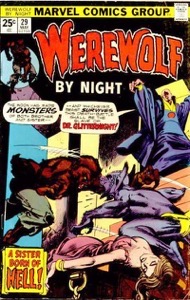 Werewolf by Night somehow manages to straddle being an utter debacle on every possible level while simultaneously being perfectly in sync. Writer Doug Moench and artist Don Perlin have reached simpatico like Moench gave in to Perlin’s art and just started describing it in the narrative instead of trying to make it fit the pre-existing story he had in mind. Only once does Moench slip—when Perlin thought they were making just eighteen Lissa Russell into an old woman.
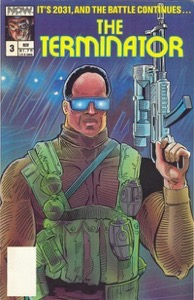 Tony Caputo once again gets the guest writer credit—but he’s written two of the three Terminator comics, so how’s he a guest (maybe because, if you read the indicia, you see the original characters are copyright the first artist)? He also completely shuts down the story arc he started last issue. I mean, there’s still little Tim Reese, brother of Kyle (Michael Biehn from the movie), and they go to the brainwashed human town… but Caputo seems to be cleaning house otherwise.
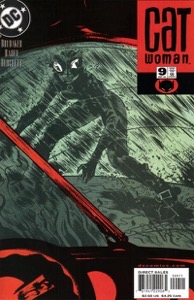 The finale proves way too much for penciler Brad Rader and inker Rick Burchett. It doesn’t look like a Batman: The Animated Series comic; it looks like a generic riff on one. Rader and Burchett rush through every character who isn’t Catwoman or Slam, which is kind of nice, I suppose. They were the leads of this arc, though this issue doesn’t have any time for anything but Catwoman’s complicated scheme to clear Holly’s name.
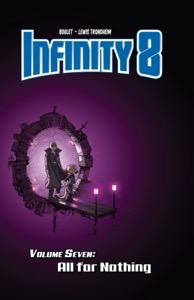 All for Nothing is an almost entirely different kind of Infinity 8. Creator Boulet is writing and illustrating (Lewis Trondheim shares the story credit), which gives the volume its own distinct feel. There are some obvious differences—it’s not about a fetching female agent (something the Lieutenant complains about on the bridge), but rather a tough guy alien sergeant. The assignment isn’t investigating; it’s capturing and interrogating. We also get the backstory on the space graveyard. It’s not what anyone thought.
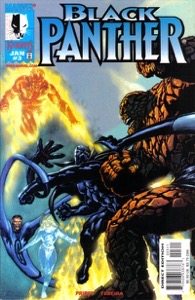 Black Panther is from just before the “writing for the trade” concept, which then led to the “waiting for the trade” purchasing decisions. But this issue very much feels like it’s meant to be read in the middle of a trade, not as the single Panther released in a four-week period. It’s not a bridging issue but a (brief) exposition issue.
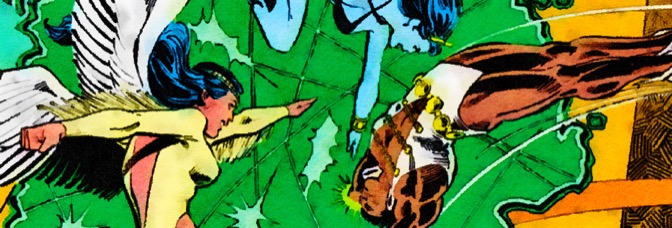
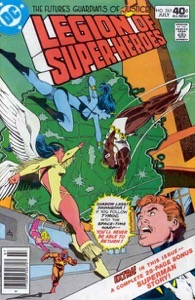 Given Jim Starlin once took his name off a Legion story because it wasn’t published as a Super Spectacular, I started wondering if regular writer Gerry Conway just did the plot for this issue—letting J.M. DeMatteis handle the script—because there’s a Radio Shack advertisement posing as a Superman comic accompanying. With pencils by none other than Jim Starlin.

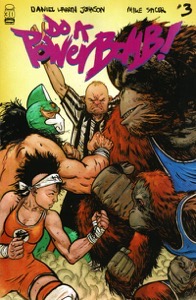 Powerbomb does not disappoint with its first issue at the tournament. Creator Daniel Warren Johnson starts with a bunch of emotion—last issue’s cliffhanger revealed wannabe wrestler Lona’s dad is actually Cobrasun, the wrestler who killed her mom. The opening scene fills in the backstory when Dad visits her uncle.
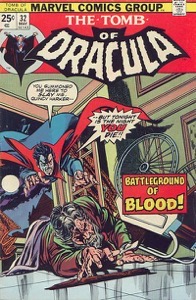 Well. Writer Marv Wolfman reveals a lot this issue; it’s almost entirely nonsense, but there’s a lot of it. There are conclusions (of sorts) to Taj’s Indian sojourn and Frank Drake’s South American capitalist exploitation. Taj can’t stop the villagers from breaking in to kill his vampire son; Frank discovers he’s surrounded by worker zombies who move to kill him after he says hello to one of them. Not sure what they’d have done if he had ignored them.
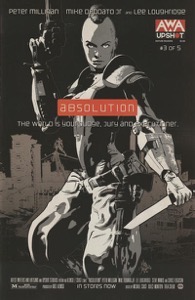 Artist Mike Deodato Jr. gets a little too bored with the art this issue—it’s another fight scene at night in a skyscraper. That repetitiveness figures into the problem Absolution’s revealing about itself writ large. The concept lends itself too much to repetitive storytelling. High-tech super-assassin Nina needs to kill bad guys in a way to score approval with her (civilian) audience, who watch her stream. And because the future’s just as shitty as the present, she’s got to be sexy doing it (which raises a question for later). So she does well, her score goes up. Then she goes something wrong, or something bad happens, and her score goes down. So she needs to do well again. But then something will go wrong again.


 The cynic in me—combined with Dave Gibbons doing the art, the protagonist sergeant not getting a name until the finish, and the soldiers being in Easy Company—makes me wonder if Screaming Eagles didn’t start as a Sgt. Rock special. At least at some level. It’d be Sgt. Rock Gone Wild, so maybe it didn’t last long as one, but….

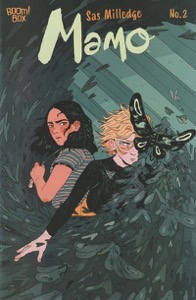 While reading the first issue, I didn’t realize Mamo issues were double-size. I just thought creator Sas Milledge had some preternatural sense of pacing; she does have it, but the issues are also double-sized. They don’t feel like two issues slapped together, either. Milledge fluidly paces the issue—starting with a cliffhanger resolution through a bunch of character development and reveals. There’s never a false step. It’s incredible. Mamo #2’s even better than the first one.
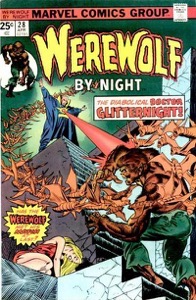 I’ve been wondering why Werewolf never does an issue in-between Jack’s werewolf nights—so, you know, the majority of his life—and Doug Moench “delivers” here, complete with entirely unsuitable hard-boiled narration for surfer bro Jack. After last issue’s second-night cliffhanger, they all had an uneventful third night. Then they didn’t talk for a week, just moped around, presumably because neither Jack nor Buck wanted to console Topaz, whose soul is in peril.

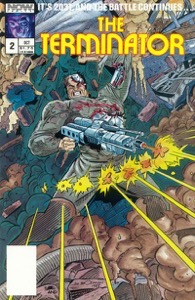 The credits for this issue say Tony Caputo (also NOW Comics publisher) is the guest writer. Except we’re on Terminator #2; it’s not like there’s an established team. Plus, penciler Thomas Tenney is new too… but not a guest.


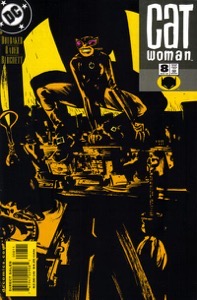 Batman doesn’t appear in this issue, but he really ought to be here somewhere. What with the cops moving a bunch of heroin through the city to make a deal with the Russians. One would think the Darkknight Detective would give a shit. But he apparently does not. It’s hilarious how bad Batman is at his job.
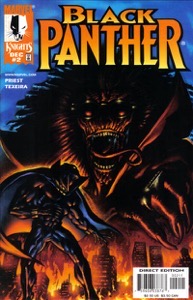 The misadventures of Everett K. Ross continue, with writer Priest still hopping around the flashbacks to give the most bang for the two and a half bucks. It starts with Mephisto, last issue’s hilarious and extra cliffhanger. For some reason, Mephisto’s waiting for T’Challa; Ross (and Priest) don’t tell us (or Nikki, Ross’s boss, who he’s debriefing). Instead, we get these occasional check-ins on the odd couple sitting on a couch, Ross without any pants (but a Pez dispenser in his sock), and Mephisto silent until just the right moment.
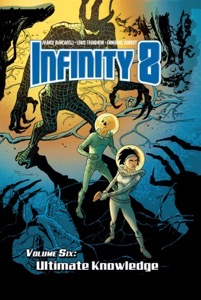 Much of Ultimate Knowledge is the best-written Infinity 8 has been so far, and Infinity 8 has been exceptionally well-written so far. But this volume pairs an odder couple than usual, so there’s constant banter. The partner is also a know-it-all, verbose historian, and he’s always got something to say about whatever they’re experiencing (or running from).
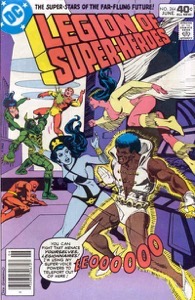 Turns out the only time Wildfire isn’t a raging asshole is when he’s ostensibly worried about his kidnapped parents. Either I forgot, didn’t realize, or didn’t care his parents had gotten taken last issue. They didn’t stand out (I think some parents got kidnapped off-page) because they weren’t assholes like their kid. It’s a really weird failing for writer Gerry Conway, who can write Wildfire freaking out about someone not saying hello to him, but when he’s actually supposed to be concerned….
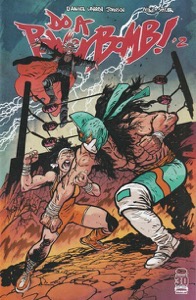 Well, despite being curious about something related to the issue’s Brobdingnagian last page reveal when creator Daniel Warren Johnson set it up last issue… I can’t remember the last time I’ve been as surprised by a comic. It’s a perfectly solid narrative choice but also entirely unexpected. Johnson started Powerbomb last issue doing one comic, then changed to another, then another. So now he’s on to a fourth–or at least a three and a half.
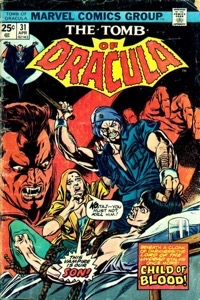 The “Taj in India” C plot has been running seven issues, so half a year, and it’s just now getting to him staking his vampire son. The cover shows Taj thrilled to do it and the wife begging him to stop; the interior’s the opposite; the entire point of Taj going home was to stake the kid before the villagers do it. And to slap his wife around for being… a woman, basically.
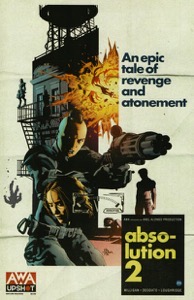 I’m unsurprised to see writer Peter Milligan downshift Absolution’s pace this issue. The action opens on streaming assassin Nina finishing her outing from last issue and quickly becomes about establishing the actual ground situation. First issue, Milligan did the world set-up; now it’s time to lay out Nina’s “normal” life.
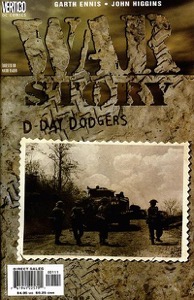 D-Day Dodgers ends with a ten-page series of splash pages, with artist John Higgins moving through a battlefield, a poem accompanying the imagery. The poem, “The Ballad of the D-Day Dodgers,” is from an unknown author. Higgins’s pages tie the poem’s lines to the various characters we’ve met throughout the issue, which is a fairly standard war story until the “D-Day Dodgers” plot point arrives.
 The Stop Button