• Infinity 8: Volume Eight: Until the End (2019)

    I8 8Infinity 8 has quite the conclusion. The issue opens with a flashback, an origin story—of sorts—for both the time-hopping captain and his faithful sidekick, Lieutenant Reffo. Reffo’s been the guy creeping on all of the female agents and, occasionally, recapping the mission. We find out in the flashback he’s been trained for just this position and isn’t actually a socially inept jackass; he’s got a computer-enhanced brain, so he’s just really smart and therefore doesn’t have time for social pleasantries.

    After the surprising flashback, which answers some questions about the eighty-eight Tonn Shar captains piloting the eighty-eight Infinity ships—questions writer Lewis Trondheim has never explicitly told the reader to ask, but in hindsight, certainly wasn’t discouraging the reader from thinking about. Unlike the introduction of the time-traveling robots (Hal is back this issue, teaming up with Reffo, delightfully), which came without significant foreshadowing, the Tonn Shar backstory has had some narrative shading. But nothing explicit enough for the opening reveal not to come as a surprise. Infinity 8’s resolution involves lots of red herring, but since time reset itself and so on, is it really red herring if it doesn’t spoil and stink?

    I read Infinity 8 in the original French volume release cycle, not the split-into-three-issues format. However, given the number of callbacks in the finale, I’m reasonably sure you’re supposed to read Infinity 8 in a sitting or two–all of it. Trondheim brings back multiple characters from throughout the series as Reffo and Hal assemble an Infinity 8 all-star team to save the day. While Trondheim spends more time with some characters than others, he remembers to tie up loose ends for even the most tertiary. And I could not remember what he was tying up for some of them. Especially since the team-up allows the previous agents to chitchat, leading to further references.

    Sometimes the former protagonists get action sequences to themselves, where they’re technically interchangeable, but they’ve got enough personality to drive themselves. Other times, Trondheim will give a return character some panels, or even a full page, just to vamp because he clearly likes writing the character. Thanks to Trondheim’s strong storytelling instincts and artist Killoffer’s imaginative renderings, either approach leads to sublime results, especially since Trondheim doesn’t shy away from mixing multiple sci-fi subgenres and Killoffer’s able to bring them all together stylistically.

    Killoffer initially seems a little too rough. He uses computer-generated fractals for some space exteriors, particularly the space graveyard. It’s jarring—I’m still not sure about the galactic swirl being CGI—only to quickly become a captivating device. There’s so much intentionality in the objects when the action returns to the space graveyard it’s hard not to get lost in Killoffer’s rendered details.

    The actual art seems a little rough at the start too. Killoffer’s got thick, almost reckless lines. They initially appear out of control, though—just like everything else with the art—the control soon becomes apparent. Until the End’s not my favorite art on Infinity, but it’s definitely in the top four. Once Reffo and Hal start their buddy picture, Killoffer’s comic timing hops the book up in line.

    Killoffer’s also got the most packed story to contend with. While some of the previous volumes are almost entirely all action, End is all-action with different protagonists, in different (and new) settings, plus exposition. Reffo and Hal are simultaneously on the run, chasing someone else and learning how the series is going to end, though at different paces. While Reffo’s got the computer brain and so on, Hal knows more about what’s been going on in the book, so there’s a catch-up process. Finally, after seven volumes of Reffo being a pest, Trondheim turns him into a worthy protagonist. While still making him a pest.

    It helps to have Hal around, even though Hal’s role in the volume isn’t quite what last time promised. He and Reffo have their buddy picture only until Reffo can manage on his own, then he (and Trondheim) almost immediately turn End into the team-up with the previous volumes’ agents. I get the need for narrative brevity, of course—End could be three times as long; there’s so much going on, and all of it’s entertaining—but there are only so many pages.

    Trondheim employs a couple more narrative efficiencies in the epilogue, with the epilogue itself being something of an efficiency—only a couple characters really get a resolution to their character arcs. Trondheim’s script is mercilessly efficient.

    Though he does allow the series, which has traversed time and space, to end on a one-liner. There’s some grandiosity to it, but it’s background. The joke’s the thing. And it works because, of course, it does. Though I wonder if you were marathoning Infinity 8 how it’d work. Maybe next time I read 8, it’ll be in a long sitting.

    Until then, I’m obviously going to be missing this series. Trondheim and his various co-creators outdo themselves, time and again. Infinity 8 has been a damn good, damn fun read.
  • Black Panther (1998) #5

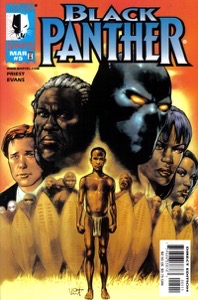
    Bp5Writer Priest gets a guest artist—Vince Evans—to help him finish out the arc. At first it seems like Evans is going to be more action-oriented, but then he starts coming through with the comedy. He’s pretty bland with Ross (still) telling the story to his boss (slash girlfriend). It’s an even more Michael J. Fox Ross.
    The issue opens with Black Panther and Ross in Hell, drug there by Mephisto, who’s got a deal for T’Challa. If he agrees to sell his soul, he can have Wakanda back. Meanwhile, in between cut scenes to Ross not wanting to tell his girlfriend what happened—which ends up being a red herring since the end of the issue’s incredibly abrupt, and there’s actually nothing more for Ross—there’s a flashback to Black Panther’s origin. Ulysses Klaw comes to Wakanda, ready to strip mine it, only young—then prince—T’Challa saves the day.

    It’s an okay origin recap, with Priest and Evans moving fluidly through the flashback events, but it’s got no narrative purpose. Other than for Ross to tell his girlfriend the Black Panther’s origin story like she couldn’t just pick up an Official Handbook of the Marvel Universe and get the recap. It’s stranger still to have a guest artist do it (though the end of the issue promises Joe Jusko arrives as the new regular artist… but then why not have him do it next time?).

    The flashback’s engaging enough to distract from there really not being any story and Priest punting the Wakandan coup plot down the line. As part of the series’s setup, Black Panther can’t deal with it now, plus there’s a significant twist reveal on the last page, which should have more of a kick.

    Between the flashback, the Ross bookends, Mephisto being talky, and the final reveal, Priest has managed to get five issues into Black Panther without ever letting Black Panther be the protagonist. It’ll be interesting to see if Priest keeps up with the Ross narration—it starts stalling out this issue like they were desperate to make their pages but also unwilling to do a straight resolution to the arc.

    The Mephisto bit isn’t a swing and a miss, but there’s nowhere near the payoff initially implied. It definitely seems like something happened between issues one and five, editorially speaking.

    Anyway. Can’t wait for more. Bring on the Jusko.

    And Kraven!

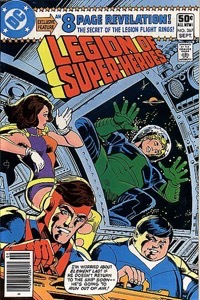
  • Legion of Super-Heroes (1980) #267

    Lsh267Writer Gerry Conway maintains his enthusiasm through this Legion entry, though he doesn’t have as many pages as usual to fill. Paul Kupperberg writes a backup—with pencils from Steve Ditko!–and eight fewer pages is what Conway needs.

    He also gets to break away from the Legion story for a few pages to explore a planetary mining operation, where the women are the fighter pilots because dudes just aren’t suited for that kind of work. Conway starts the issue letting Duo Damsel save the day from last issue’s cliffhanger, and—even though there’s occasional cringe—he seems to like writing strong women more than annoying guys.

    And the starfighters versus giant space genie sequence has better art than the space superhero pages. Jim Janes pencils the feature, with Dave Hunt on inks (Hunt also inks Ditko on the backup). Janes’s visual pacing on the battle might be his best work to date on Legion. I certainly can’t remember anything else comparable.

    The genie’s attacking the mining colony because he’s only been awake a few hours, and he’s seen humanity infest the stars, greedily strip-mining the cosmos. No lies detected.

    Conway also reveals the genie’s origin, which involves the Guardians (the Green Lantern Guardians), who imprisoned an entire species to little bottles and flung them out to various worlds in the galaxy. Just like the strip-mining, it’s a little weird how the book tries to present the Guardians as the good guys. Instead, they seem like thoughtless dicks.

    And if they’re not thoughtless, they’re certainly not particularly prescient. Patronizing, maybe.

    After Duo Damsel’s very wordy rescue mission—she has thought balloons for almost her entire sequence, the female star fighter, and the genie origin, Conway’s only got time for the action finale and wrap-up. He does all right. It’s a little silly, but Conway never gets bored, and he doesn’t seem to loathe any of the characters he’s writing, which is nice.

    The backup’s a mixed bag. Maybe half of Ditko’s panels are fun Silver Age-ish ones; then the other half is a little lazy. Hunt’s inks hold the line (no pun) for about half the story, then figures start getting very loose. There’s still some good composition, even if the story itself is incredibly confusing. It’s the origin of the Legion flight rings and Kupperberg overwrites Brainiac 5 and the exposition dumps.

    If one’s interested enough in the curiosity of Ditko illustrating, the art alone can carry the story—until the mealy-mouthed exposition at the end—but it’s a disappointment. Not just compared to the surprisingly adequate feature but also the backup’s first couple pages. Everything’s clicking (relatively) before it breaks down.

    Still, a pretty decent issue for Legion.

  • I Was a Teenage Werewolf (1957, Gene Fowler Jr.)

    I Was a Teenage Werewolf opens with a reasonably impressive—for 1957–schoolyard fight. Throughout the film, director Fowler will have these entirely competent low-budget action sequences, with much thought put into them by Fowler and his uncredited editor. It’s not because they’ve got ambition with Werewolf; they’re just trying to pad the runtime.

    To its seventy-six minutes.

    Anyway. The opening fight: troubled teen Michael Landon is at it again with the roughhousing. Someone slapped him playfully on the back, and Landon doesn’t like being touched, so he went from one to nuclear.

    Responding police detective Barney Phillips says Landon’s out of chances. He’s got to go to the aircraft plant psychiatrist to get himself head-shrunk. Of course, Landon’s not into any of that mumbo jumbo and walks off. Sort of.

    He walks over to his waiting girlfriend (Yvonne Lime) and is shitty to her in a different way, but it’s 1957, and she’s going to do what he says.

    Landon’s issues about being touched—he initially recoils at Lime’s embrace, but if he’s initiating, it’s fine—those issues will never be addressed. When Landon goes nuclear again—beating up on his friend Ken Miller (who deserves it for his ghastly song)—he’ll end up seeing the shrink. The aircraft plant thing is a red herring (unless the plant’s in the middle of downtown), and evil psychiatrist Whit Bissell doesn’t care about Landon’s anger management issues. Bissell’s been waiting years for this perfect test subject; he’s going to give Landon a serum to revert him back to his primal stage. The problem with the modern world is too much thinking; we need to regress to the missing link and start over.

    Aiding and abetting Bissell is reluctant fellow scientist Joseph Mell. There could be a whole movie about their antics over the years, with Mell cautioning Bissell not to kill this or that person and Bissell doing it anyway.

    Werewolf’s about Landon’s anger issues for the first act, plus setting up the town—he and his fellow kids (he’s the leader of a significant clique) have a clubhouse where they dance, play slapstick pranks, go to second base with girls, and drink root beer probably. It’s entirely inconsistent with Landon’s previously established character. Especially since none of these kids seems to know about his fighting. It’s Halloween when the movie starts (something else entirely unimportant), which means end of October.

    Landon’s had the cops called on him for fighting six times already this school year or something.

    As time passes, Landon eventually turns into a werewolf—more like reverts to the missing link, but whatever—and starts killing his classmates. At that point, it becomes a police procedural for chief Robert Griffin, with already established Phillips the backup. Landon spends most of the second half of Werewolf in his makeup. He’s an enthusiastic werewolf (missing link), even if the teeth are exceptionally silly.

    The finale warns of the dangers of… psychiatrists. The story’s moral is if a boy’s mother dies, he’s broken; just put him out of his misery there. Otherwise, he’ll end up in the gas chamber, and especially don’t send him to aircraft plant psychiatrists. They’re all just out to destroy modern civilization.

    Unfortunately, the movie’s too rushed in the third act to embrace any of these big swings. Werewolf pads with teen exposition, fisticuffs, a posse with torches, and slapstick. When it’s actually interesting—like Landon’s dad, Malcolm Atterbury, waiting for news about his murderous son—it’s in a rush.

    The best acting is Atterbury, followed by Guy Williams as Griffin’s initial sidekick (who loses his spot to Phillips because the film’s got a weird structure). Bissell’s an over-the-top caricature. Mell’s an under-the-top caricature. Vladimir Sokoloff plays the Maria Ouspenskaya part (it should’ve been Lon Chaney Jr. in a cameo), proving they could still be racist to Eastern Europeans in 1957.

    Landon gets a lot to do being an inexplicable jerk and running around in his Larry Talbots. But he doesn’t get an actual arc—when he’s on the run, knowing he’s a murderous werewolf (missing link), the movie’s about everyone but him. So no character arc. His showdown with Bissell doesn’t even pay off.

    Lime’s second-billed, but… has very little to do by the film’s end. She starts having very little to do after her second scene. Werewolf’s got no time for love.

    The film’s got some definite camp value—Bissell alone—and there’s not-bad low-budget filmmaking on display, but Herman Cohen and Aben Kandel’s script sinks it.


  • Do a Powerbomb (2022) #5

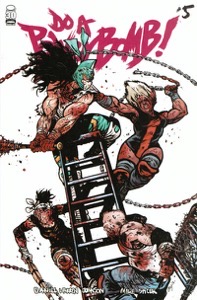
    Do a Powerbomb  5Creator Daniel Warren Johnson outdoes himself with this issue of Do a Powerbomb. It’s an almost entirely action issue, with Lona and Cobrasun fighting for the championship. The winner gets to resurrect a dead person of their choice—in Lona and Cobrasun’s case, her mom and his wife (actually, it’s unclear if they were married). Lona still doesn’t know Cobrasun’s her father; she assumes he’s helping resurrect her mom because he feels bad about killing her.

    I mean, he does feel bad about killing her (during a wrestling match), but there’s so much context. And all of it surrounds the characters as they decide to have a potential fight to the death for the championship. They don’t want the traditional rules—especially since their opponents are from a universe where pro wrestling isn’t staged. They want to be able to fight anywhere in the arena, they don’t want to have to tag in, and they want to use, well, weapons. Barbed wire baseball bats, barbed wire folding chairs. Pretty much anything they can use to cause some damage.

    Cobrasun has been fighting in these kind of matches for a decade (or so), but it’s Lona’s first time. She’s scared. Johnson bakes that fear into the greater context. It’s a wrestling match action issue, complete with a ring announcer and wrestling moves, but it’s not just the final match; it’s also so much more dangerous than usual. Even for Powerbomb.

    The action’s a truly superb balance between the pro-wrestling theatrics, the additional danger to the wrestlers, as well as the overarching tensions of the comic itself. Johnson teases at Lona and Cobrasun’s opponents’ backstory vise-a-vie needing someone resurrected but waits until the cliffhanger to delineate. In doing so, he introduces an entirely integrated subplot with just a couple issues left.

    Powerbomb’s exceptional work.

  • The Naked Kiss (1964, Samuel Fuller)

    The Naked Kiss is an exceptional motion picture. However, it’s never not without its problems: it’s an astoundingly classy exploitation picture about an ex-prostitute (Constance Towers) who tries going straight, only to discover the other side of the tracks just hides their secrets in different places.

    The film will also explore the lack of honor (and humanity) among thieves and just how low cops will go, all while reinforcing the cops and “moral” society as worthy and everyone else as lost. Since Kiss is a character study of Towers, one could say writer, producer, and director Fuller’s message is believe women… except it turns out most women lie. Fuller’s not subtle about the message—Towers gets at least two monologues about it, while copper Anthony Eisley gets one—though I suppose the film does technically pass the Bechdel Test. Albeit due to censoring the language.

    Other side of the tracks town madam Virginia Grey has “bonbon girls,” which also gives Fuller a couple opportunities to clarify in dialogue they’re not really talking about bonbons. Once the film hits the final third—Kiss is almost equally split into thirds. The first third is about Towers arriving in a small city and becoming a nurse’s aide at the local children’s hospital. The second third is about Towers’s romance with town hero Michael Dante, which is complicated by Towers’s general past as well as her single trick in town—with copper Eisley (the film’s hero who tests out all the traveling sex workers before setting them up at Grey’s, where he visits them for bonbons, presumably). The final third is Towers in trouble, learning just because Dante and the town accepted her, they might not have done it for the right reasons.

    Of course, the film opens two years before the main action, with Towers beating the crap out of her pimp (a profoundly smarmy Monte Mansfield) before revealing she’s been wearing a wig and is shaved bald. The opening titles are set over Towers calmly getting her makeup on while Mansfield wallows on the floor. Kiss is never quite as in-your-face exploitation again, but Fuller never lets the audience forget where the film started.

    Fuller breaks the story into vignettes, separated by fades out, which lets him establish Towers’s new persona in town offscreen. Eisley’s initially convinced Towers is doing it as some kind of weird gag—how could a sex worker want to work with kids with terrible injuries and diseases, even though everyone at the hospital says she’s a godsend. They’re all a bunch of ladies, too; they don’t know things like Eisley. Eisley’s worlds colliding changes the direction of the film in the third act, and even though it is offscreen, too, it’s clearly momentous.

    Eisley’s okay. He’s a little flat, which helps since his character’s despicable, but once it’s clear he’s fallen for Towers, there’s a nice bit of depth to his actions. Especially once he’s de facto competing with Dante, who not only saved Eisley’s life in Korea but is also a millionaire who can promise Towers the world.

    Kiss is rather low budget, so the world is just film strips and stylized daydream sequences. Until the second half, when Fuller can’t stop beating the drum on how Towers is only worthwhile because she got out of the bad life and everyone else there is too vile or dumb to save, it really seems like Kiss’s low-budget is going to be its Achilles Heel. While Eisley’s just a little flat, it clearly could’ve been a bigger name. Towers, too—though she’s phenomenal, so you don’t really want to see anyone else there. But then there’s Dante. Fuller’s got a lot of character actors in the supporting roles, sometimes making the thin parts more substantial, sometimes not (though usually because of the moralizing). But Dante’s usually just plain not good. He’s never terrible, but he’s sometimes bad, and he’s never any good. Watching Towers hoist their scenes up over and over looks exhausting.

    Towers and Fuller are Kiss’s big achievers. He gives her a great part, problematic as it might be, and she’s outstanding. Even when she’s got to do something silly, she makes it work. It’s a superior performance. And Fuller’s direction is singular too. He uses these smash cuts to second-person shots; the camera—sometimes Towers, sometimes not—peering into someone’s face. It’s particularly devastating with the sick kids, who have an initially adorable, then infinitely macabre musical number. However, Fuller’s careful to empathize with the kids. He’s making an exploitation picture, sure, but it’s more a melodrama, after all–a didactic one at that.

    Every ten to fifteen minutes—the film runs ninety—Fuller has one visually dynamic sequence or another. There’s a phenomenal synergy to the whole thing. He amps up the melodrama either through Towers’s experience of the narrative or through masterful visceral visual scenes. Great stuff.

    Fuller’s crew is excellent; Stanley Cortez’s moody black and white photography is crucial, and, outside the times they reshot something but from the exact same setup, and he couldn’t cut to match, excellent editing from Jerome Thoms. Fuller, Thoms, Cortez, and composer Paul Dunlap set Kiss’s tone fast and strong while still leaving themselves room to flex throughout.

    Naked Kiss has problems—heaps and heaps—but it’s one hell of a picture. And Towers is sublime.

  • Tomb of Dracula (1972) #34

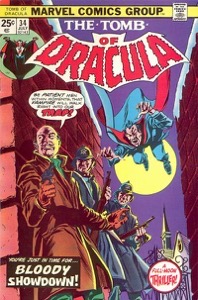
    Tomb of Dracula  34I’m resisting the urge to go back and figure out how many issues this day has been taking place–at least three, possibly four. Writer Marv Wolfman opens checking in on Frank Drake, who’s down in South America with some zombies after him. They’ve been after him for at least an issue, maybe two. Wolfman’s narration makes fun of Frank not being courageous, which is interesting since… we haven’t gotten anything out of him being a sap. Like, he’s not on some great character arc. He’s a jackass. It’s just never been clear Wolfman’s third-person narration thinks he’s a jackass too.
    Then the action goes back to London, where Dracula’s fighting with the police. Despite the editors remembering to tell readers to pick up Giant-Size Dracula and Vampire Tales, they’ll miss the cops already suspecting Dracula’s nemesis, Doctor Sun, is behind Dracula losing his powers. Later in the issue, when the vampire hunting team gets back together—partially, Frank’s still gone, and then Taj is apparently leaving the book—obnoxious Inspector Chelm isn’t aware of Doctor Sun.

    It’s messy, but it’s also the first time Wolfman’s had any forward progress on the plot in ages. There’s even a somewhat interesting hook—Dracula’s scared of dying again because he’s worried he won’t return–but it’s unclear if he’s justified. It’s better if he’s not, of course, because it’d be character development. Wolfman doesn’t like character development, though, so it’ll probably end up disappointing.

    But it’s well-plotted. There’s the wrap-up from last issue, the vampire hunters, but then a new character shows up—fashion designer Daphne von Wilkinson, who hates all men and promotes incompetent women because she’s an incompetent woman too (the sexism pulses). It seems she’ll be important in the near future to Tomb. It’s problematic, but it’s also energy.

    Great art, as always, from Gene Colan and Tom Palmer. The Dracula action’s particularly dynamic, then Daphne’s moody scenes are also phenomenal.

    It’s better than the series has been lately. Fresh plots help immensely, even if Wolfman’s still dragging out Taj and Frank’s C plots.

  • History of the World: Part I (1981, Mel Brooks)

    History of the World: Part I is funny about twenty percent of the time. The eighty percent of the time, it isn’t funny, it’s either because the jokes are too homophobic, sexist, racist, or punny. If you’re not laughing out loud, you’re ready to hiss.

    Since twenty percent doesn’t quite qualify as a mishmash, it’s good the film’s a technical success. The matte paintings alone are an achievement, but Woody Omens’s Panavision cinematography is a delight. Writer, director, producer, and usually star Brooks does an okay job with the direction. Of course, if he doesn’t, he’s got Omens, editor John C. Howard, or composer John Morris to cover for him. But—at least as far as direction—Brooks is solid.

    The film’s a pageant, starting in the Stone Age with a profoundly ahistorical 2001 sequence led by caveman Sid Caesar. Orson Welles narrates the whole movie, but never more than the caveman sequence. Welles’s outtakes are probably hilarious. Following that sequence, it’s off to the Ten Commandments and Brooks. It’s a short, funny scene, which Brooks brings back later. Despite Moses, the Last Supper, and the Spanish Inquisition, History’s pretty hands-off with religion, even though every time Brooks touches on it, the scene’s a winner.

    Especially the Spanish Inquisition musical number.

    But History spends the most time in Ancient Rome and the French Revolution—also note there’s no American history—which go on so long Brooks, the writer, needs rescuing. Literally.

    In Ancient Rome, Brooks is a stand-up philosopher who gets a gig at Caesar’s Palace. The casino. Get it? He teams up with escaped slave Gregory Hines and vestal virgin Mary-Margaret Humes (who deserved an Oscar for pretending to lust after Brooks) for misadventures involving emperor Dom DeLuise and empress Madeline Kahn. Kahn’s mostly great. DeLuise is fine, but way too many of the jokes in his scene—it’s a billed cameo—are homophobic. Brooks, the writer, often runs out of ideas once he gets to a scene and tries to cover it with bad jokes and cleavage.

    The Spanish Inquisition musical number comes between Rome and the French Revolution. It’s Brooks’s best writing in the film and, since it doesn’t have a chance to go stale, his best performance.

    The French Revolution sequence involves Brooks playing both the King and the King’s pissboy, who holds the bucket for nobles to pee in. When the Revolution’s clearly on the horizon, noble Harvey Korman has Brooks, the pissboy, stand in for the King at the guillotine. Korman’s good—though Andréas Voutsinas’s much funnier as his sidekick—while Brooks is one-note. Pamela Stephenson plays a busty young woman who needs to curry the King’s favor (physically). When she discovers the pissboy isn’t going to force her, they have a few scant moments to become love interests before the Revolution—led by Cloris Leachman as Madame Defarge (which could’ve been the whole movie)—knocks down the door, leading to another chase sequence.

    The finale’s contrived and hurried—despite a gigantic cast and elaborate production, Brooks entirely runs out of ideas before the ninety-minute mark. It only worsens in the epilogue, which promises Part II and completely deflates Part I.

    The best performance is easily Hines, followed at a distance by Kahn, Voutsinas, and Korman. Both Stephenson and Humes are fine; they’ve just got terrible parts. Stephenson’s better, though. Despite the more objectified, exploitative part, she’s got some character, while Humes is just… madly in love with Brooks.

    History’s got its moments, but nowhere near enough. Especially since the bad jokes are really bad. Again, thank goodness Brooks has his crew to make up the difference.

  • The Flash (1990, Robert Iscove)

    As a pilot movie, The Flash is a success. It establishes its regular cast—John Wesley Shipp, Amanda Pays, Alex Désert, Paula Marshall (who wasn’t back, but sure seemed like she would be)—and doing an admirable, post-Burton Batman live-action superhero. Danny Elfman even contributes the theme, while composer Shirley Walker keeps the rest in Elfmanesque line.

    There are also some solid guest stars—Tim Thomerson and Priscilla Pointer—and some okay ones—M. Emmet Walsh (he’s just barely putting in any effort) and Lycia Naff. No superhero (even TV) movie can be without a villain, which is where The Flash shows its age. Michael Nader plays the villain, an ex-cop who escaped prison when arrested for highway robbery and recruited the city’s unhoused twentysomethings into a motorcycle gang. They’re the “Dark Riders,” which the movie pretends is a scary name. A few times, it seems like they changed something with The Flash–including the Dark Riders having a blood spot on their jackets–and it seems like that name came in late. Like, Shipp’s supposedly watching the news about them and grinning, even though it’s during his dark arc.

    Shipp’s a crime lab scientist in the days before “CSI” made it popular. Big brother Thomerson is the city super cop, and dad Walsh used to be on the beat (mom Pointer had Shipp promise to stay in a safe job)–the first act’s about Shipp’s resentment about not being a real cop. The third act will be his “with great power comes great responsibility” arc, recovering from the death of a loved one, which motivates him to seek revenge against the villains.

    He was trying to solve the case anyway because he wanted to show Walsh he could do it and to help out Thomerson. The Flash is copaganda by default, but the cops can’t keep up with the villains—even if they’re just seventies exploitation baddies done with a budget and “90210” extras—so they need a superhero to help them out. Luckily, Shipp just happens to have been struck by lightning and doused in various chemicals–the result: super speed.

    Shipp’s super speed discovery subplot is a lot of fun—Shipp’s got a dog to play off, which gives the pilot a surprising amount of texture—and the pilot leans into the wonderment value for a while. Shipp’s got to team up with Star Labs scientist Pays (they’re the local super-lab, the one with the government contracts and super soldier programs) to figure out his new powers and, even though he’s dating Marshall and Pays is a tragic widow, they have some chemistry from go.

    The movie’s third act, when it’s all about Shipp exacting his suitable-for-prime-time vengeance on the bad guys, is where The Flash gets lost in the fog. It’s trying not to be too mean—giving Shipp one-liners, for instance—but it doesn’t want to take any time giving them characterization. Especially not in case it makes them sympathetic. It’s cruel about its callousness, though the pilot does okay rendering cartoon villains in live-action.

    In addition to the Batman ‘89 vibes, The Flash lifts a bunch from Robocop, including the police uniforms. The Flash cops are just missing the helmets, really. Though I guess only the motorcycle squad, who goes after Nader. The Flash doesn’t have any great motorcycle scenes. There are a bunch of places it feels like they skip around for budgetary reasons. Like Nader’s reign of terror. The opening scene establishes the streets aren’t safe, but then Shipp’s superpower discovery arc is full of nice restaurants and lovely parks. It’s apparently not unsafe until dark, at which point it becomes a hellhole.

    Shipp works better in the brighter sections. He’s only got a handful of dramatic scenes, and he does okay with most of them. Not really the most important one, but it’s also a rough scene, thanks to the costars. Shipp handles it adequately. Some of the problem is writers Danny Bilson and Paul De Meo don’t know how to end the pilot. Or, if they do, it’s way too rushed.

    The special effects are excellent for TV. More impressive is the production design, which has many art deco touches but also very late eighties modern designs. The sets are always interesting to see; it’s inviting. It works out very well (Dean Edward Mitzer did the production design, Jeannie Gunn decorated sets, and an uncredited Hugo Santiago was on art direction, which is a lot—the murals are gorgeous). Good photography from Sandi Sissel, and good editing from Frank E. Jimenez. At first, it seems like Jimenez has problems cutting conversations, but then it becomes clear director Iscove wasn’t getting the coverage. Iscove’s direction hurts Walsh’s performance the most.

    Biff Manard and Vito D'Ambrosio are a hoot as the Mutt and Jeff cops (they continue into the show).

    The Flash finishes with a promise for more but isn’t specific about what more will be, other than Shipp in a red suit, running fast, Pays nagging him to think about his limitations, Désert being the charming straight-man sidekick, and Marshall… well, Marshall’s apparently just going to moon over Shipp. Based on how little Marshall got to do in the third act versus the first, maybe they adjusted since they knew she wasn’t back.

    Shipp’s a good lead, and Pays—who keeps very busy onscreen even when she doesn’t get material, which makes the character immediately distinctive—is a good confidante. Bumps aside—thankfully, no lags—The Flash sets the show up quite well. Next week, same Flash time, same Flash channel.


  • Absolution (2022) #5

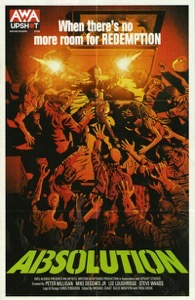
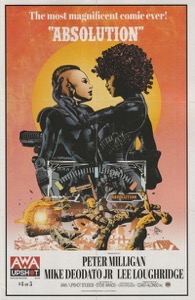
    Absolution  5Writer Peter Milligan takes another approach with this issue’s narrative distance, back to Nina heavily narrating, but now she’s interrogating herself. As the deadline for Absolution draws near, she has to ask herself questions about who she wants to be. Or something. Milligan hints at what’s behind her character development, but he’s boxed Nina in, so she can’t do anything with it. She can’t even think it to herself. Otherwise, the reader would be clued in, and Milligan couldn’t do a twist.
    “Twist.”

    The issue also trashes the concept of the series as a procedural. When Nina does get around to the series’s last mission, Milligan shoehorns it in. He also repeats a story twist from last issue with it, which is something he just did last issue. I thought Absolution was a four-issue series stretched to five, but it’s a three stretched to four stretched to five. Milligan just decorates the story beats a little differently.

    He also doesn’t give artist Mike Deodato Jr. anything interesting to draw this issue. I mean, torture stuff? A Reservoir Dogs nod? It’s definitely not finale-worthy material. Some of the point is in the anti-climatic nature of the narrative, but… Milligan and Deodato should’ve figured out a way to make it work.

    Though Milligan’s narration writing is his worst on the book, I don’t think I’d have kept going if he’d had this narration in the first issue. The most disappointing thing about the bad narration is Milligan’s bored. He’s not blathering on because he’s excited about the content; he’s just trying to write the comic to a finish. It’s mawkish.

    Absolution’s been a bumpy ride, but I wasn’t expecting Milligan to run out of gas with the finish line in sight. I mean, I expected the character arc he started last issue to not resolve well in this issue, but he flushes that approach and starts fresh with the bad narration instead.

    It’s bewildering. However, it’s also confusing why he never established a distinct storytelling approach. Instead, he tried a bunch—one an issue—but for absolutely no reason in the end.

    He had a slick, pulpy exploitation story and went trite with it.

    Bummer.

  • War Story: J for Jenny (2003)

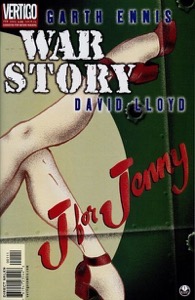
    War Story J for JennyI meant to read War Stories in order of publication. Unfortunately, I got out of order here with J For Jenny, the second issue in the second volume but the first story in the collection. Because it’s David Lloyd on art again and, unlike the first volume, which ends with its Lloyd-illustrated story, War Stories: Part Two is coming out swinging.

    Writer Garth Ennis has had some fantastic collaborations over the years, and even when he isn’t clicking with the artist, he can usually make something work. But he’s never clicked better with an artist than David Lloyd, at least not for a war comic. The visual pacing on Jenny’s extraordinary, even better than their collaboration in the first volume.

    The story’s about a British bomber crew. The first officer hates the captain, who takes delight in the bombing runs, wanting payback against the Germans for killing his family in their bombings. The issue opens with a multiple-page monologue from the captain, setting the scene and his backstory. Ennis usually does single-page monologues for the rest of the crew throughout the issue. They inform backwards and forwards—the world still doesn’t know about the Holocaust—so when the first officer speaks up to defend the German people, it’s not the same as it would be later. One of the crewmen’s monologue is about how he wishes the Germans would be doing something really terrible to absolve him of the sins of the bombings. The issue doesn’t have an epilogue, but Ennis manages to bake in that character’s eventual regret at having the thought.

    It’s excellent writing, including the “twist” ending and how character relationships build in the backgrounds. The spotlight is on the captain and the first officer, but the texture comes from the rest of the crew around them.

    Lloyd illustrates the monologues as montage sequences, the art echoing the text, whether it’s backstory for the captain or daily life for one of the crewmen. Lloyd’s always got the perfect panel to accompany. It’s exquisite.

    Since I’m out of order—how did Vertigo not want to get this one out first—I can’t really say War Stories: Volume Two is off to a good start, but Jenny’s the best from either series (so far, I guess, but Lloyd’s not back), so even if the rest of Volume Two’s middling, it’s still a significant bit of work.

    It’s a spectacular comic, with Ennis focusing on the conflict between the two men, even as he resists humanizing either. The monologues give Jenny an almost intrusive feel, like we’re eavesdropping, which presents the characters from a deliberate angle. They’re not caricatures, but Ennis controls the reader’s perception of their depth. We only get to see so much before he or Lloyd cut away.

    J For Jenny’s spectacular. Ennis and Lloyd are a singular team-up.

  • Luther: The Fallen Sun (2023, Jamie Payne)

    “Luther” show creator and Luther: The Fallen Sun writer Neil Cross started talking about him and Idris Elba doing a Luther movie for at least a decade before Fallen Sun. Like everyone else, Cross assumed the singularly charming, extraordinarily talented Elba would be too busy being a movie star to do another “Luther” TV series. Except, as Cross and most other white people learned in the 2010s, the world’s super-duper racist and Elba, the most obvious James Bond casting pick ever, actually, would never be a movie star.

    So they kept doing the “Luther” series, even soft-booting the show a couple times over five series and nine years. The Fallen Sun, which is never called The Fallen Sun onscreen and has zilch to do with the movie itself, takes place after the last series… but retcons a bit. Fallen Sun is more of a spin-off than a sequel to the series, with only Dermot Crowley returning from the show with Elba. The series ended with Elba headed to prison, something Fallen Sun sort of continues, but changing the circumstances and removing the character development Elba had been building since the first series.

    Because Fallen Sun’s about Elba doing streaming movie series, not about him doing a TV series. And to prove it’s really a movie, Fallen Sun runs over two hours… which actually just makes it a two-part episode, but I suppose they shoot it in Panavision. Well, Panavision aspect ratio. It’s also director Payne’s first film credit after twenty years of TV work.

    Cynthia Erivo plays the no-nonsense new copper on Elba’s old beat. Erivo’s fine, but she’s got very little to do. But she does add some movie cred. More than villain Andy Serkis, who’s a Bond villain serial killer. Everything’s very elaborate but also very disturbing, even though Payne can’t manage a single suspenseful sequence in the picture. Not when Elba’s fending off his fellow inmates in prison or when Serkis is stalking teenage girls. As far as suspense goes, Sun’s inert.

    It’s also full of pointless subplots to pad out the run time. Cross stuffs in a bunch of filler to make up for Elba not having a character to play anymore. His backstory doesn’t matter, and thanks to the retcon, having him go to prison isn’t even necessary. Sun goes to multiple unnecessary places, but thanks to Elba, it basically works out.

    And it’s got an astoundingly dull Serkis performance too. Serkis is better than it seems like he’ll be initially, but only because he threatens to be godawful but just ends up one-note. Late fifties Serkis is less believable as a criminal mastermind than as a forty-something (which makes me wonder who Cross originally envisioned in the part). Serkis is also an inexplicably capable knife fighter; Sun establishes Elba—while not “Black Superman”—can fisticuff his way through a prison riot, only for unassuming Serkis to out-street fight him.

    Why? Because it’s a movie, remember? So it can’t be over at the hour mark.

    The supporting cast is all solid, though dippy copper Thomas Coombes is too dippy, and it reflects poorly on Erivo’s character, who ought to be better at her job. Elba’s only an impressive detective because he’s doing better work than Erivo and her team. Unfortunately, neither Elba, Erivo, or Crowley (who gets a bunch to do) ever quickly figures out the clue; they need that two-hour runtime.

    Writer Cross also has an annoying device where one character tells another character a secret, which allows the second character to act on it without the audience knowing what’s about to happen. It’s exposition doubling, and the only time it needs to pay off–the lethargic third act—it noticeably doesn’t.

    It also doesn’t really matter because it’s Elba mesmerizing his way through the silliness. Sure, it’s grotesque, cruel silliness, but still. It’s silly plotting.

    I really hope they do more.

  • Mamo (2021) #4

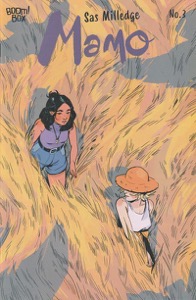
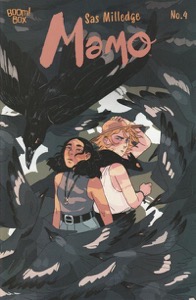
    Mamo  4While it’s the worst issue of Mamo, it’s still a great comic. Creator Sas Milledge just doesn’t seem to have enough story for it and stretches. Orla and Jo deal with last issue’s cliffhanger, with Orla abandoning Jo and the crow. Except the crow seemed to have already left the girls. Jo can’t go after Orla because Orla took her bike (Jo’s), so Jo heads home. On the way, the crow asks why she isn’t going to Orla because the story’s obviously not at home; it’s with Orla.

    It’s a lot of talking—and it’s not disposable exposition either; between Orla’s monologuing and the crow’s monologuing, we start to get a clearer picture of how witchy inheritance works. Unfortunately, we don’t get any substantial information about Orla—except when we find out she and Mamo’s family problems might be less about witch stuff than we thought—just more delays. Presumably, until next issue. Jo asks some direct questions, and Orla brushes them off, but they can’t go unaddressed forever.

    And not with Orla going home instead of going to the rest of the comic.

    Milledge also takes a faster pace, which is good visually (just never serene like the previous issues) and probably reads better in the trade. Definitely reads better in the trade; you’d get the resolution instead of another cliffhanger. But the issue story doesn’t match that faster pace; it’s just the monologuing, whether it’s Orla telling Jo she’s not going to tell Jo what Jo wants to know, Orla telling her cat things, or the crow narrating about Orla to Jo over Orla’s panels.

    The dialogue requires a startling amount of attention. On the one hand, Milledge trusts the heck out of the reader to get it all. On the other, it’s a lot for relatively little. Especially if next issue delivers all the explanations we’re not getting here.

    The character development’s also on hold. Jo because she’s sidelined and letting the crow run her scenes, and Orla because we’re finding out just what was so wrong with Mamo’s child-rearing. It’s a very heavy reveal, though it also feels like Milledge has got the other shoe to drop next issue.

    While technically a disappointment—again, it’s a good comic, just the worst Mamo, and I’m sure it’s fine in trade—it’s still a success.

  • Miracle Mile (1988, Steve De Jarnatt)

    Miracle Mile is an actors’ movie without any great performances. There are affable performances, good performances, (bad performances), but no great performances. Lead Anthony Edwards occasionally tries hard—it’s the end of the world, after all, he’s got to emote—but he’ll frequently hit a wall and start moving his mouth like a Jimmy Stewart impression will be enough.

    It’s never enough.

    Then at some point, Edwards gives up and lets co-star Mare Winningham do the work. Except Edwards isn’t just the protagonist, he’s also the narrator. And Winningham is his manic pixie dream girl—she’s the first girl thirty-year-old Edwards has ever gone for, as she’s the first girl who shares his big band interest. Edwards is in L.A. playing gigs with his big band. Winningham is a waitress. During the opening titles, they have a solid meet cute at the La Brea Tar Pits Museum. Given how important that location ends up being, it’d have been nice if the movie had spent some time on it instead of summarizing.

    Though… as Edwards’s attention-grabbing approach is to hijack a school trip and talk to the kids while their teacher isn’t present and Winningham thinks it’s hot… maybe not.

    They have a whirlwind romance—they’re to their third date by the present action, so maybe they cut something—including Edwards meeting Winningham’s grandparents, played by John Agar and Lou Hancock. Agar and Hancock haven’t spoken for fifteen years but live in the same apartment complex. That detail is mainly important to complicate Edwards’s mission and gin up a reasonably nice scene in the late second act.

    Edwards is supposed to pick Winningham up after her shift, only he threw away a single-puffed cigarette, and a bird picked it up, brought it up to its rooftop nest on some power lines, set its nest on fire (presumably the bird’s okay), which knocked out the power, which knocked out Edwards’s manual alarm clock, so he naps through meeting Winningham. It’s their third date, so she tells him to get some rest. She’ll have just worked a six-hour shift at an L.A. diner, which seems unfair, energy-wise.

    We get some quick scenes of Winningham being sad Edwards didn’t show, and his motel’s phone is out of service—the power outage—so she goes home and takes some Valium and conks out. Edwards wakes up at a quarter to four (in the morning; he was picking her up at midnight) and heads to the diner, expecting her to be waiting for him there.

    The film’s a fascinating relic of many eighties-specific flexes, mostly male entitlement, but there’s also a bunch of racism and transphobia. Writer and director De Jarnatt goes out of his way to proclaim he’s not a homophobe, however. But it’s for a sitcom-level “comedy” beat.

    Anyway.

    In the diner, Edwards meets a variety of early-morning folks who have very little reason to be hanging out at the same diner. Especially when the film establishes they’re regulars. There’s stockbroker Denise Crosby who has the personal numbers of multiple U.S. senators yet likes to spend the opening bell being sexually harassed by Claude Earl Jones. Jones is a street cleaner on a break; Alan Rosenberg is his sidekick. O-Lan Jones is the waitress (who knows Edwards, which also implies cut scenes), and Robert DoQui is the cook. At first, it seems like it’ll be a good part for DoQui. It’s not.

    While trying to call Winningham in the phone booth outside the diner, Edwards picks up a wrong number—it’s the end of the world, says the caller. The U.S. is firing the nukes; they’ll hit Russia in fifty minutes. The Soviet response will arrive in seventy. So Edwards tells the diner, causing a stir, which becomes a panic once Crosby can’t get ahold of her politician friends because they’re already headed to Antarctica.

    The film’s initially Edwards’s quest to get to Winningham, but then becomes their quest to get to the airport and onto a flight to “safety.” Along the way, Edwards meets a handful of interesting characters. First, it’s Mykelti Williamson, one of the film’s few Black characters with lines. He sells stolen goods, of course, but at least he loves his sister, Kelly Jo Minter, enough not to let her get nuked. Minter’s not in it enough. Williamson’s better than the part deserves. Then we don’t meet anyone for a while because Edwards’ quest to get Winningham from her apartment doesn’t have many obstacles once he’s going.

    Later, he meets Kurt Fuller—as a whacked-out yuppie who doesn’t believe the nuke hype—and powerlifter Brian Thompson. Thompson probably comes into Mile in the last twenty minutes and has maybe two minutes of screen time, but stands out. Both because he’s good, and De Jarnatt saddles him with a bunch.

    Along the way, Mile has its ups and downs. De Jarnatt’s script only commits to six-minute subplot arcs, which keeps the movie busy without ever being full. Characters recur, but similarly without any significant arcs. Even when there’s something seemingly salient, its import evaporates. Both in De Jarnatt’s script and the performances.

    Technically, the film’s low middling. De Jarnatt’s composition sometimes deserves better than cinematographer Theo van de Sande’s lighting; sometimes not. The Tangerine Dream score initially seems like it might bring something to the picture. It does not.

    Both Edwards and Winningham are sufficiently sympathetic considering the circumstances, so Mile does stay engaging. It’s just way too obviously got De Jarnatt’s hand spinning the wheel to keep it going.

  • Werewolf by Night (1972) #30

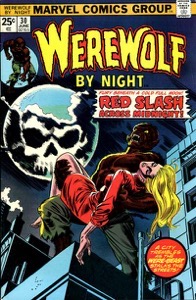
    Wbn30Did contemporary readers ever return their issues of Werewolf by Night, finally fed up with the false advertising on the cover? With its gorgeous Gil Kane cover, this issue promises a story entitled, Red Slash Across Midnight, and Wolfman Jack on the city’s rooftops, holding a blonde lady (so either his sister or Topaz, presumably). A blurb in the bottom right corner further promises, “A city trembles as the were-beast stalks the streets!”

    Bullshit.

    Neither Wolfman Jack nor Weredemon Lissa are in any city. Instead, they spend this issue fighting the same place they spent last issue fighting, their family’s ancestral home, rebuilt in the L.A. bay by the villain in the second-ever Werewolf by Night story. Back in Marvel Spotlight. Maybe third-ever. Doesn’t matter.

    The point is the cover is bullshit.

    Good cover. Redundant story.

    Even writer Doug Moench seems to know it’s redundant. Or, more precisely, Moench goes out of his way to contribute to the redundancy. He’s at least two, maybe three flashbacks to last issue. Because they knew people might buy this one because of that bitchin’ cover, only to be entirely lost as Jack, Topaz, and Buck roam around the castle waiting for nightfall.

    Last issue ended with Jack turning from his werewolf night to find sister Lissa sleeping, having no memory of becoming a blue were-demon. Artist Don Perlin drew Lissa like she’d prematurely aged, Deadly Years-style, but this issue, she’s back to normal. Or whatever’s normal when Perlin draws it. He’s not big on visual continuity for characters’ faces between panels.

    As usual, he’s best in long-shot. I’ll bet he’d have made a great storyboard artist.

    But it turns out Jack took until noon to get back—sadly, we don’t go through the stone sculpture garden, which were victims of the original story’s villain’s Medusa-like power—and so he’s only got time to strong-arm Glitternight to no avail, discover Topaz’s step-father, Taboo, isn’t so much a resurrected magician as a golem, and take a nap before the full moon. He’s got a dream where he and Lissa fight as monsters, only with human heads. It’s silly looking, but then Perlin uses the visual again for Jack’s transformation. Will there be terrible werewolf transformation scenes for the rest of the series? I’m not sure I’m ready.

    The issue’s a waste of time. With better plotting last issue, Moench could’ve wrapped it up to the exact same result, probably with better drama too. Or at least he would’ve avoided this issue’s redundant drama instead of leaning into it so much everything falls over.

    But that cover’s swell.

  • The Terminator (1988) #4

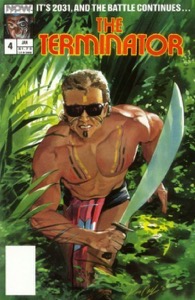
    T4Even with the inexplicable cultural appropriation thread (yes, really) for the Terminator, this issue’s easily the best Terminator so far. Sure, they’re only on issue four—and on their third writer (Jack Herman takes over)—but it’s nearly okay. Until they decide to do “Terminator Meets Predator” only with Arnold as the bad guy… it’s got some real possibilities.
    The issue begins with the Yanomami of the Amazon rainforest. In the NOW Comics Terminator timeline, the world stopped chopping down the rainforest in 1995 because it was bad for the environment–much better timeline, even with the whole Skynet thing.

    Anyway.

    Skynet realizes there are still people in the rainforest, which reminds it to burn down the rainforest to accelerate the extinction of the human race (and all the other animals reliant on oxygen, presumably). So it sends a Terminator down to kill the Yanomami.

    The story follows three young men tasked with hunting wild boar for a peace feast between their village and a rival. It’s not great writing, but it’s better than it ought to be. Then the Terminator shows up, and there’s an action sequence. The young men return home, where no one believes their warnings of the flying craft and its dangerous pilot.

    So while the villages have their feast, the Terminator proceeds to learn their language and strip down to cover himself in body paint, like the Yanomami people. Why does the Terminator need to know their language? To taunt them before slaughtering them. There’s no excuse for the body paint. Just to have a shirtless white dude running around with the shirtless brown dudes, only the shirtless white dude is a killer android.

    But it’s far more inventive than it needs to be; Herman’s got actual ideas. They don’t always execute well, but ideas are more than the book’s really had going for it before.

    Thomas Tenney and Jim Brozman’s art is improving. Tenney’s got some decent composition, though he still doesn’t know what to do with it.

    The most unfortunate thing—besides Terminator-gone-native—is it having a cliffhanger. A done-in-one would’ve been preferable.

  • Catwoman (2002) #10

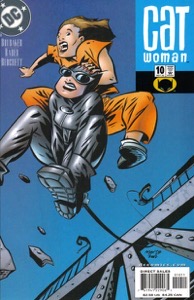
    Cw10This issue opens with Selina narrating—remember, she hasn’t been narrating lately, so it took until the second or so page before I realized it was her (and she wasn’t talking about her sister, whose name I thought was Rebecca—it’s Maggie). There’s a girl named Rebecca (in flashback) who went bad; real Bonnie & Clyde stuff. Including what seems like moralizing but won’t be. Writer Ed Brubaker’s going to get back on the ball with narration as the issue progresses, and, luckily, the next scene is a winner.
    Socialite (or whatever) Selina Kyle pays local philanthropist Bruce Wayne a visit to talk about her “resurrection,” including mentions of New York City (was she in New York before this series?), but mostly it’s charming flirt banter. Brubaker writes the two with easy but unfulfilled chemistry–obviously, it’s better with the masks on—and penciler Brad Rader very quickly establishes the issue’s visual tone.

    Rader and inker Rick Burchett deliver a great issue–none of the previous arc’s too (literal) cartoonish panels. The story’s a mix of flashbacks, including courtroom testimony, talking heads, and heist. See, Selina grew up with that girl in the opening flashback; now that woman is on death row, and today’s her last appeal. It turns into this exceptional (and exceptionally efficient) story for Selina. Brubaker also addresses the idea of real people in the superhero world, just as it seems a little strange Catwoman would be helpless in this situation.

    Then there’s a delightful bookend with the Bruce Wayne scene.

    It’s not the best issue in the series—though it’s Rader and Burchett’s best issue for art—but it showcases what makes Catwoman so special. Not just Brubaker and Rader’s attention to the characters but the (no pun) clawing humanity at the series’s foundations. It’s wild.

    It’s also a done-in-one, so no hints at what’s to come, but I can’t wait, especially with Rader and Burchett having worked out the kinks.

  • Black Panther (1998) #4

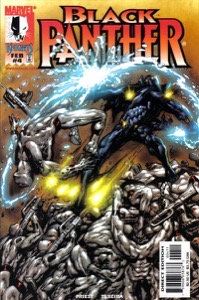
    Black Panther  4Writer Priest has a magical moment—or anti-magical—and artist Mark Texeira gets to do some great art, including shimmering pants, but the first thing to talk about with Black Panther #4 is the Everett Kenneth Ross photo reference.
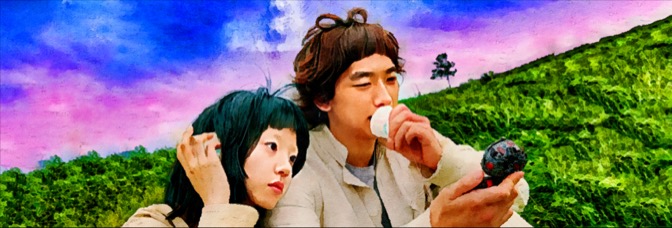
    It’s Michael J. Fox. At least twice.

    The idea of Michael J. Fox playing Ross looms over the issue in a way. Especially if you imagine him in the movies instead of “Cracker” Freeman. Especially late nineties Fox (so post-Mars Attacks he’d be ready for it?). It’s such a strange idea.

    Especially considering the nude banjo playing. Nude banjo playing is not a euphemism.

    In other words, Priest’s back on this issue right from the start. Black Panther’s just had a Mephisto-trip and is running around the rooftops to clear his head when two White Panthers attack him. Now, Texeira has a great issue (shimmering pants), but he’s also got this sequence. It ends with the White Wolf of Wakanda (not Bucky, obviously, Bucky’s dead, Steve) turning into a White Panther, and it’s awful. And silly looking.

    There’s a little catch-up with subplots in progress—the child murderer and the NYPD super-cop, the coup in Wakanda, Alex P. Keaton and his unlikely boss girlfriend (Tracy Pollan?)—before Mephisto reveals he knows all of Ross’s secrets, like when he was a bullied chubby redneck kid. Texeira draws the hell out of this traumatic kid memory flashback right before he draws the hell out of Black Panther saving the day.

    It’s an awesome, confined action sequence. They’re confined to the apartment building, which Priest and Texeira play to comedic and dramatic effect. We’re finally getting to see that chemistry between Black Panther and Ross, and it’s delightful. And much more successful than Ross’s self-deprecating whining with his boss slash girlfriend; it’s like Back to the Future II Marty Jr.

    Anyway.

    Priest and Texeira play the absurd absolutely straight-faced to outstanding results. Even as the opening sort of confused me—the White Panthers look like ghost twins of Black Panther, so I maybe thought they weren’t real in last issue’s cliffhanger? They’re there; they just didn’t make a lasting impression. Regardless, it’s clear from the first few pages Priest’s back on with the book. The comic’s got a distinct wry, laconic sensibility (when it’s not Ross rambling, obviously). Priest has fun, but it’s controlled fun, which matches Texeira’s enthusiastic, thorough art.

    It’s such a good series.

  • I’m a Cyborg, But That’s OK (2006, Park Chan-wook)

    I’m a Cyborg, But That’s OK gets some points for not wrapping things up with a neat little bow, but they do little to offset the film’s more significant issues. Cyborg’s got a lead performance problem and a stakes problem, something the film tries to avoid acknowledging, which ends up creating an infinite loop.

    Im Soo-jung is the titular Cyborg. She’s not really a cyborg; she’s just got schizophrenia, inherited from her grandmother. The film opens with Im at work—a radio factory—where she cuts herself open to put in wires, which mom Lee Yong-nyeo sees as a suicide attempt, not a wireless communications upgrade, and has Im committed. The opening titles cut between the factory scene (which, in hindsight, is probably just Im’s imagination) and Lee explaining the family history to doctor Choi Hee-jin.

    For the first act, Cyborg pretends doctor Choi might be important. She is not. She spends a large portion of the film “dead,” which makes no difference to the plot whatsoever. The first act also pretends the other patients in the mental hospital are important. They’ve all got quirks, which the film first uses to introduce them to Im, but soon become leading man Rain’s introduction too. He’s the only unattached male for Im’s new girl in the ward—there’s a love triangle elsewhere, but it’s unimportant—so, of course, they’ve got to pair off. Let’s not get into whether or not Im’s capable of consenting to the physical relationship Rain wants. If he’s not a nice boy, Cyborg gets a whole other (and entirely valid per onscreen events) bent.

    Anyway.

    Rain’s guy thinks his mom ran off because of him, and no one can convince him otherwise. While Cyborg’s at its most accessible in the first act with the other patients, it’s at its best when Rain is learning how to care for Im. Im only did the radio installation in her arm to get hospitalized so she can track down the white suits who took her grandmother away. Because she’s a cyborg, and she’s going to kill them.

    The film’s got a few imaginary sequences with Im going full T-800 on the hospital staff, which is where director Park really flexes. But, unfortunately, they have no bearing on the film because Im doesn’t have any character development, so they’re just ephemeral tangents. They don’t even set the mood for the third act, which is a full romantic drama, as Rain realizes he’s the only boy for Im and feels the weight of responsibility.

    If Rain had an actual backstory, it might be a good character arc. Instead, it’s the best Cyborg can offer.

    And then there’s Im.

    She gives an accomplished quirky performance in the lead. Except there’s nothing else to it. She thinks she’s a cyborg and is trying to figure out how it’s okay. The film’s got a very epical arc involving Im needing to eat; only cyborgs don’t eat. The script’s also got some obvious timeline problems. But then it’s also got Im either fantasizing about her adventures with Rain or Rain fantasizing about his adventures with Im. I think the ultra-violence and body horror is supposed to distract from those details, but… again, they’re just red herrings.

    Good special effects and good music (Jo Yeong-wook). Park’s direction is solid, if occasionally tedious. He and co-writer Chung Seo-kyung drag Cyborg out in all the wrong ways. Five minutes of backstory for Rain would’ve made a big difference.

    Still, Rain’s a solid lead, Im’s sympathetic, and the film’s usually charming. Monotonous but charming. Cyborg’s got its ups and downs, but it’s OK.

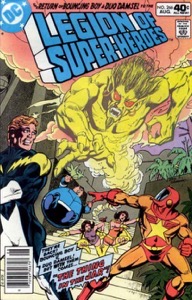
  • Legion of Super-Heroes (1980) #266

    Lsh266Half of this issue reads like writer Gerry Conway’s excited to be on the book. The other half reads like he’s miserable, detailing the petty bickering of superhero teen bros as they try to upstage one another. But when Conway’s writing about married colonists Bouncing Boy and Duo Damsel? He’s having a ball.
    The marrieds are on an ice planet. Bouncing Boy feels like he doesn’t have any challenges to face outside Legion life, while Duo Damsel’s just trying to keep him happy. The two of them have such a nice Silver Age vibe; it feels like a reunion sitcom but good.

    Then they uncover an ancient golden… lamp, and a genie appears, speaking Arabic and talking about Saladin. Conway’s got a weird amount of detail in the story, with Colossal Boy somehow making Islamophobia a thing in the thirtieth century. Colossal Boy says Bouncing Boy and Duo Damsel are making the whole thing up, but the released genie is hurtling through space at enormous size and speed. It destroys space stuff along the way (Bouncing Boy and Duo Damsel are in conveniently timed hot pursuit).

    The stuff with Colossal Boy and Element Lad is lifeless and draining, but the genie—Kantuu, is a potent, if problematic, villain—and the marrieds are just fantastic together. Conway enjoying himself on Legion is rare, but it pays off when it happens.

    Artists Jim Janes and Frank Chiaramonte have the occasional wanting panel, but their combined style matches Conway’s Silver Age but talky vibe. The art can’t make the bickering bro Legionnaires any more interesting, though. They’re too blandly written. At least when Conway’s got a big cast, the numerous characters can cover flat characterizations, but when it’s just two of them… the cracks show fast.

    But, still, so much better than I was expecting. When Conway has to think about the future besides Legion business, he’s actually got some ideas.

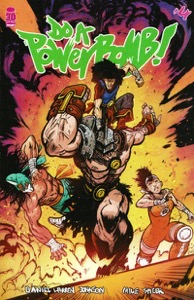
  • Do a Powerbomb (2022) #4

    Do a Powerbomb  4I’ve been getting the necromancer host of the Death Lyfe inter-dimensional wrestling tournament wrong; it’s Nectron, not Necro. So not an ape named Ape situation.
    This issue’s relatively self-contained, despite a big reveal in the last few pages. It’s just the story of Lona and Cobrasun’s next wrestling match in the tournament. Creator Daniel Warren Johnson opens the issue with a flashback establishing their opponents this issue, some real mean dudes from some destroyed dimension. They had a warrior capable of taking out Nectron, but he died, so these wrestlers need to win Nectron’s tournament to get Nectron to resurrect the warrior to slay him. Him being Nectron.

    Johnson gets through that backstory briskly, punctuating the flashback with a brilliant sports training montage sequence. It’s got the cadence of a Rocky movie, except Johnson’s doing it with composition and text. Beautiful work. And he knows it because he does it again a little later for Lona and Cobrasun. They’ve decided to work together, even though she hates him because he killed her mother, and he feels very guilty about it, with him being Lona’s father and the woman he killed’s lover and all.

    We even get more backstory about how they fell in love—or at least the implication of how they fell in love—as a tag team before Lona was born. Obviously. Though she doesn’t know it. And the big reveal isn’t the parentage; Johnson’s clearly keeping that one until later.

    Lona and Cobrasun’s wrestling match is intense and vicious, but nothing compared to the next one, presumably the first other match they’ve seen. They’re also surprised—like I was surprised—to discover there’s another team from Earth. Johnson very quickly introduces the other team, establishes their stakes, and gets them in the ring for their match. The match actually literally interrupts Johnson establishing the stakes. Johnson’s got great instincts for when the exposition has done its job, and he should move on to action.

    So it’s a self-contained action issue with major story threads weaved throughout.

    It’s not the best issue of the series; Johnson doesn’t do anything jaw-dropping; it’s just an excellent, still excelling issue of Powerbomb. However, even when Johnson has a (relatively) simple issue to execute, he still bristles with energy.

    Powerbomb’s electric. And next issue seems like it’s going to kick major ass.

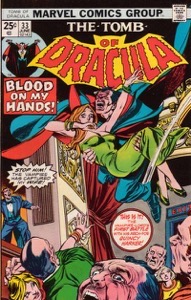
  • Tomb of Dracula (1972) #33

    Tomb of Dracula  33Artists Gene Colan and Tom Palmer have done some stunning issues of Tomb of Dracula, but this issue’s their best (so far). They’ve got the horror—the A plot is Quincy Harker watching a decomposing Dracula die on the carpet—they’ve got the time Dracula broke Harker’s back, so a flashback to an opera. There’s a political thriller sequence; there’s Dracula being regally evil, there’s Dracula as a bat in the winter, and there’s even a British pub scene. Plus, an epilogue (apparently) for Taj, and then checking on Rachel to make sure she’s alive.



    Rachel is alive—despite the vampire brides doing unspeakable things to her, but really they could’ve just been reading her The Feminine Mystique. Writer Marv Wolfman’s got plotting and pacing problems galore, both in the overall arc of the series but also in these last couple of issues. Luckily, there’s the great art to get it through. And the Harker and Dracula showdown has an exceptionally mean (and appropriate) finale. The problems all come in the epilogue.

    After a one-page farewell (perhaps) to Taj, Wolfman checks in on Dracula in the last twenty minutes since he’s left Harker’s, does a two-page mugging to establish the British Parliament has been taken over by evil vampires (evil meaning not-Dracula’s goons), has a lengthy exposition from Dracula about the secret foe who’s wearing him from afar (it’s not a surprise, since Dracula’s only ever had one secret adversary in Tomb), and then does a cliffhanger. It’s the front part of one comic, and then another rushed to fit into the latter third of pages.

    But the art holds, even through Wolfman’s sad revelation of the secret villain and Quincy’s tough personal decisions following the Dracula fight. Wolfman’s spinning his wheels a little, but the book’s fine as long as Colan and Palmer deliver such glorious issues.

    Just a little thin at times, no matter how many plots Wolfman tries to stack.

  • The Princess Bride (1987, Rob Reiner)

    I’m undecided on how to discuss The Princess Bride’s second act. It’s a misstep but an intentional one. Instead of being the story of reunited lovers Robin Wright and Cary Elwes, the film becomes an action comedy for Mandy Patinkin and Andre the Giant, which is fine; they’re great. But the film entirely ignores Wright’s experience, with her scenes instead being from her antagonists’ perspective. Meanwhile, Elwes becomes a rag doll. Having not read the William Goldman source novel—Goldman adapted it himself—I don’t know if it was always the plot.

    Again, it works out fairly well because Patinkin and Andre the Giant are wonderful. Patinkin’s performance is phenomenal; Bride’s got four great performances—Patinkin, Christopher Guest, Wallace Shawn, and Chris Sarandon—though in descending weight. Patinkin’s got a tragic backstory, while Guest is an affected-less sadist with funny lines. Shawn’s got affect and funny lines, but he’s also got the least to do in the main cast. Finally, Sarandon’s a Disney cartoon villain—the good-looking, bad one—come to life without the aid of CG, just presence, delivery, and costuming.

    Princess Bride’s got great costuming all around—Phyllis Dalton does terrific work. Bride’s a swashbuckler: an odd mix of movie serial tropes, which it ably disassembles through the first half only to reassemble in the second. There’s just no room for the ostensible heroes in the reconfiguration. However, Wright’s just helpless in a locked room. She’s way too ultimate a damsel.

    But in the first act, with the masked pirate (doing a classic Hollywood riff) chasing after Wright and her kidnappers, Bride is sublime. The kidnappers are Shawn, Patinkin, and Andre the Giant. Shawn wants to start a war between two countries; Wright’s about to be the princess of one, and he’ll kill her and frame the other. Patinkin and Andre the Giant are troubled by the plan (Shawn didn’t tell them about the killing), but they never have to make a decision on it. The pirate—presumably after the princess—interrupts their plan long before.

    Now, Bride has a framing device. Sick kid Fred Savage wants to play video games, but grandfather Peter Falk wants to read him a book instead. It’s a family tradition, making the book in the movie from the 1920s (as I try to couch the plotting problems). Falk’s very cute as the grandfather, and Savage could be more cloying, but he’s still way more cloying than he ought to be. And then there’s the whole male entitlement thing.

    The frame occasionally breaks up the actual story, with Savage bored or scared, or worried. Or disgusted at the kissing, which—admittedly—isn’t a weird reaction to your grandfather telling you about lusty kisses.

    Elwes was Wright’s first love, who went off to sea five years before. Wright got news he’d been killed by pirates and, so, when prince Sarandon came knocking, looking for a commoner to promote to royalty, she said sure. Shawn’s trying to prevent such a union, but he didn’t expect someone else coming for Wright.

    After three boss fights, the pursuer reaches Wright and reveals what’s happened to Elwes, just in time for Wright and Elwes to do a runner from Sarandon and Guest. Elwes and Wright have a charming reuniting adventure sequence, hinting at the potential for a road movie, as they’re now on the run from multiple parties.

    But then it becomes Sarandon and Wright’s wedding preparation story. Sure, he’s forcing her to get married while torturing Elwes in a secret lair, but it’s also just the bridging section of the film. They need to get Patinkin and Andre the Giant somehow back in to save the day and encounter other big-name cameos.

    The ending’s way too rushed, both the fairytale and the frame. Bride is done on a budget and singularly charming, so it can get away with a lot. Sometimes director Reiner, cinematographer Adrian Biddle, and editor Robert Leighton can make the limitations work for them. For example, the first act’s action sequences always have some obvious budgetary constraints. Still, it works—they’re doing a swashbuckler, complete with Mark Knopfler’s score, which makes numerous nods to action sequence music tropes.

    They just aren’t doing a swashbuckler by the end, which makes the fairytale’s finish awkward. It’s too quick, especially for Elwes and Wright, whose romance never regains the spotlight after losing it in the second act. Then the frame finish relies on Savage before realizing Falk’s the real star. It’s muddled.

    So when the end credits come up playing over scenes from the movie—good scenes, sometimes out of order to showcase their likability—it’s an apparent attempt at a save. And it works all right.

    Technically, Bride’s best in the first half. Leighton’s action editing—and Reiner’s action directing—is more impressive than their medievally-tinged light action comedy in the remainder. Biddle’s photography’s excellent throughout, but he’s got very little to do in the second half. Lots of scenes take place indoors with bland lighting.

    And Knopfler’s score. It’s got a pretty theme, a lot of self-awareness, but is lacking. Especially when Reiner wants the score to carry a scene, which happens a lot in the second half and makes no sense since the score’s better in the first.

    Still. It’s delightful, with some phenomenal performances, and when Goldman’s not ignoring his female protagonist and whatnot, the writing’s on.

  • On the Riviera (1951, Walter Lang)

    On the Riviera ends abruptly. The film promises an amping-up of its mistaken identity, only to immediately chuck it and do another musical number. It’s a solid musical number, but the film was on the rise with the comedy. It was about to get really good. The ending features a double scene for star Danny Kaye—he plays two parts, an entertainer and a maverick pilot—there ought to be some pay-off. Instead, it’s just over. And not ambitiously over; director Lang and Kaye have been giving Riviera a lot; I was expecting some kind of set piece meeting for the two Kayes.

    Nope.

    Thank the Hayes Code.

    At least the final number’s good. Most of Kaye’s numbers in the film are good, though the “Popo the Puppet” number (which went on to be one of Kaye’s career hits, written by his wife, Sylvia Fine) is very strange. Riviera is about stage performer Kaye trying to make it… on the Riviera. He’s American, he does impressions, he sings and dances, but boss Sig Roman just plain doesn’t like his act. Kaye works with girlfriend Corinne Calvet (though I don’t think she’s ever actually in one of the routines). Kaye’s career plot is about this act he creates during the film, and it causes a sensation, which leads to television work.

    Because the movie’s about making it on TV.

    In France. But Hollywood France, where everyone speaks English.

    Lang directs the handful of TV sequences a little too well. They’re framed for TV (there’s TV boxing even), and the numbers are reasonably budgeted and TV-appropriate, but they’re just a little too competent. They’re a little too professional. It’s great for some of the other numbers, but “Popo” is Kaye as a life-size puppet being flung around while he sings about being capable only if someone else controls him. While dressed in a powder blue Napoleon outfit.

    It’s just weird. And it’s long. And it’s unclear why the French public watching the broadcast would want to see it.

    But then, I wouldn’t have thought it’d go on to be a big hit.

    The other songs—also written by Fine—are, well, fine. I mean, the title song’s a bit bland given the eventual plot, but the first act of Riviera is about showcasing all the location photography Fox had available for the Riviera. Once the actors show up—occasionally with some great rear projection composites—they’re in studio. Even for the exteriors, which sometimes leads to unfortunate backdrops.

    The film’s first act, with Calvet and Kaye having money troubles—then more troubles with Ruman’s threat of firing—is slow. They watch the news about pilot Kaye successfully flying around the world, which entertainer Kaye turns into a show number. It’s an incredible number, and there’s no way Kaye should be having trouble getting gigs.

    The number’s all about pilot Kaye being a hit with the ladies, all around the world, which pilot Kaye thinks is a hoot, though his wife, played by Gene Tierney, does not. Unfortunately, the success of the performance comes with bad news for pilot Kaye—investor Jean Murat is going to try to bankrupt Kaye, Marcel Dalio, and Henri Letondal for their IP instead of paying for it. Unbeknownst to pilot Kaye, Tierney invites Murat to a party. Unbeknownst to entertainer Kaye, pilot Kaye invites Calvet to the same party. Pilot Kaye’s extramarital pursuits are just part of the package; there’s no hiding, which would be difficult, say, if entertainer Kaye found himself impersonating pilot Kaye and didn’t know all the women throwing themselves at him.

    Pilot Kaye has to secure other funding, thinking they can cancel the party; except when Dalio and Letondal find out Tierney has invited Murat, they have to pretend Kaye’s still in town. Enter entertainer Kaye, who’s ready to try his stage act in real-life, leading to an engaging, often very funny comedy of mistaken identity errors. Dalio and Letondal take over most of the second act and are great. Tierney’s playing the straight woman part, but she gets some material eventually. Kaye’s better as the French pilot than the American entertainer, which is good for the movie (and Tierney) but not great for Calvet. Calvet’s apparently just around because she’s actually French.

    It’s a good comedy with an excellent pace. The third act crashes, but it’s not the movie’s fault. It’s a bummer because they were finally at a spot where Kaye would have to act opposite himself, with entertainer Kaye getting some character development. Potentially. Also, he and Tierney getting to do a comedy scene together. It’d have been nice for Tierney to have a hijinks scene.

    Anyway, pretty good—oh, and gorgeous color photography from Leon Shamroy.


    This post is part of the Danny Kaye Blogathon hosted by Erica of Poppity Talks Classic Film.

  • Absolution (2022) #4

    Absolution  4As I finished reading this issue of Absolution, I realized—despite artist Mike Deodato Jr.’s photo-referencing—the comic hasn’t established who they’re pitching with the lead role. When the creators muse about the adaptation, who’s playing Nina?

    Because she’s got some character development this issue—she’s got a love interest in Ann, the street doctor who saved her butt last issue when she got duped by a target. But she’s also on a mission with this issue’s target—a child molester who keeps getting away. As a villain, he’s only slightly different than last issue’s villain, except this guy doesn’t get two issues of setup. But he does get to outsmart Nina, which is basically what all the bad guys (all men) do in Absolution. Of course, they’re smarter than her, but she’s stronger than them, so she wins.

    Or she has friends, while they just have goons.

    She also starts interacting with the viewers in a more obvious way than ever before, pausing a real-life conversation to reply to a tweet. It’s immediately obvious writer Peter Milligan should’ve been doing them the whole time—it really would’ve helped with the last issue’s setup, too—but it’s also too late at this point. It seems unlikely, as does Nina getting tricked immediately after the last time.

    The beginning of the issue makes a surprisingly strong case for Absolution as a procedural. Nina hunts some guy down but still doesn’t get a high enough score; she then Lonely Man hoofs it to the next issue. It’s surprisingly strong partially because, by the end of the issue, it’s clear Milligan only had enough story for four issues and drug the story out to five.

    It’s an okay comic. Deodato doesn’t have Nina’s walk down, which only matters now when she’s doing lots of daytime walking, but it’s definitely something he should have done this far into the book. There’s some good, compelling thriller writing from Milligan.

    But starting a character development arc in the penultimate issue after shrugging it off when there was actual time? Absolution’s landing roughly.

  • War Story: Nightingale (2002)

    War Story NightingaleAs a Garth Ennis war comic, I’m not sure Nightingale is the best War Story. As a War Story, it’s the best comic. Ennis’s script gets out of the way and lets David Lloyd’s art do its terrible magic. Because Nightingale is a nightmare, not just because it takes place on rough, cold waters in World War II, giving Lloyd all sorts of opportunities for literal stomach-churning art of the water. Ennis also digs in on it with the script, the words making the imagery all the more unsettling.
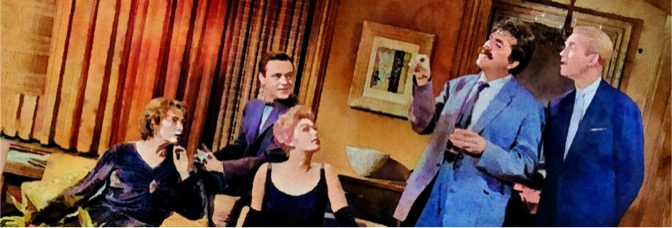

    To get the clarification out of the way—it’s either the best or second best War Story (so far). Ennis’s script is so straightforward it’s almost loose. This story’s narrator is the first officer of a British warship, the Nightingale. She’s on convoy protection duty, and, until now, the ship’s had extraordinary luck. We know the luck will run out because the story opens with the ship at the bottom of the sea, the first officer narrating from beyond the grave.

    Now, it’s never a horror comic. There’s never the slightest supernatural hint, but Lloyd’s dark, turgid panels create this disquieting effect, even as the first officer may be narrating a dream, not reality. Ennis doesn’t imply any hopefulness exactly, just potential for a metaphoric sinking. When the first officer returns home on leave, he has a nightmare, for instance. There’s a particularly phenomenal sequence of panels showing downed ship after downed ship cluttering the ocean floor. It is a nightmare, one Lloyd and Ennis do a stunning job conveying.

    Things start going wrong for the ship when they’re ordered to abandon the commercial freighters during a mission. The admiralty has heard a German super-ship is out of port, and the protocol is scattering the convoy will make it harder on the Germans. Except that plan just leads to the Germans picking off the freighters and their civilian crews as the Nightingale’s crew just listens to the distress calls.

    The crew then becomes convinced they’re cursed for their dereliction of duty despite it being ordered (and double-ordered) from on high.

    Ennis keeps the script very simple; he’s got far more unexplained jargon than usual, with the first officer’s narration at times hurried and erratic. The memories are too rapid, the narration in a race to keep up with Lloyd’s panels as they flash forward; beautiful pacing in the panels, just breathtaking work from Lloyd. He’s the reason Nightingale’s so spectacular; another artist, same script, it’d have been successful, though nowhere near as much. Lloyd’s rough, queasy art makes Ennis’s—not in a bad way—obvious narrative hit harder and, frankly, more viciously. Nightingale’s not mean exactly, but it’s definitely hostile.

    And absolutely first-rate war comics. It’s easily the most formally ambitious of the War Story issues, making its success even more accomplished.

  • American Gothic (1995) s01e10 – The Beast Within

    The Beast Within starts with guest star Jeff Perry looking at his watch, and the date is very clearly 9/25, but it’s episode ten (in the ostensibly official—enough—post-cancellation viewing order), and there’s no way episode ten is airing the last week of September. It only matters because last episode ended with at-one-time protagonist Jake Weber seemingly leaving the show. Or not leaving the show. Or leaving the show.

    Weber’s here this episode, but it’s a very “Must See TV” type of “American Gothic.” Show creator Shaun Cassidy gets the writing credit, which has AWOL Marine Perry taking Gary Cole hostage along with Weber, Paige Turco, and Lucas Black in the hospital. So, basically, “American Gothic” Die Hard for deputy Nick Searcy (who’s got the added family drama as Perry’s his brother). But for Cole, Weber, Turco, and Black, it’s “American Gothic” Speed because a bomb will go off if Perry loses consciousness.

    It’s half a Searcy character development episode and half successful “Sweeps Week” television. Not quite real-time, but there are constant references to the clock because there’s a countdown too. Cassidy’s script has it all done somewhat stagily without ever coming off stagy, just incredibly precise and controlled. It’s the most successful “Gothic” just in terms of execution, especially since Cassidy still manages to frame it as a (slight) mythology episode—Black starts the episode having a dream about Cole and Perry, which later proves relevant. But only for Black’s overall character development, which is an outstanding choice. And it gives Black some great material.

    The best performance in the episode’s Searcy, though Perry’s a close second, and it’s also a good episode for Turco. The hostage situation and potentially relying on Cole shakes her up. Cole and Black are great, of course, and Weber’s got a little. Not a lot, certainly not what’d you expect after he just decided to come back to work after not wandering literal purgatory. But a little. Maybe Within is in the right place in viewing order.

    Director Michael Lange does better staging the community theater Die Hard (I mean it in a nice way) than with the pseudo-real-time countdowns. He knows how to focus on the actors and their performances, not so much the connective tissue. Like, whoever convinced them to go with booming clock ticks to amp up the tension very obviously should’ve been ignored. Or they should’ve called it For Whom the Bells Toll.

    But other than the mid-nineties style choices, it’s a phenomenal episode. Cassidy and company take it as accessible and potent as possible… and the network aired it in the post-cancellation summer burn-off.

    Thanks, CBS.

  • Bell, Book and Candle (1958, Richard Quine)

    Bell, Book and Candle has three problems. The first involves Kim Novak and James Stewart’s May-September romance, which I’ll take couple jabs at in a bit. The second two problems are with the plotting, either in John Van Druten’s original stage play or Daniel Taradish’s screenplay. In the third act, Candle forgets its supporting cast had real arcs. Then there’s the matter of the pat romantic comedy ending, which isn’t a surprise but could definitely be better.

    Other than those three problems, however, the film’s a charming Christmas movie. Literal Christmas movie—the present action starts on Christmas Eve, and the film came out on Christmas Day in 1958. It quickly jumps ahead a few months and then a few more months, so it ends somewhere in April, but Christmas kicks it off.

    See, witches can’t go to church and listen to carols on Christmas Eve, so cultural art dealer Novak is in a mope. She’s sick of being a witch, something aunt Elsa Lanchester doesn’t understand—Novak could be a super-witch if only she’d try, but she’s been refusing to use her powers. Maybe because the other example is her brother, Jack Lemmon, who apparently uses them all the time for his love life. And to turn off street lights.

    We never see anything about Lemmon’s love life. For a movie about witches and their powers, Candle’s very limited in the hijinks. No nose twitching here.

    Novak watches new-to-the-building Stewart come home from work and muses—to her adorable cat, Pyewacket (who seems to have been tranquilized to achieve such filmic mellowness)—how she wishes she could meet a man like Stewart: just a normal, professional non-magic dude, twice her age.

    Even for 1958, Stewart’s clearly too old for Novak or his fiancée, Janice Rule. My friend pointed out if they’d just dyed his hair from grey to brown, it would’ve been less constantly noticeable. Because Novak really gets interested in Stewart after discovering college rival Rule is going to marry him. Stewart’s got a line about watching Rule grow up and then—when she went off to Wesleyan and came back—really grow up.

    Yuck.

    But also, Novak can stop talking about Stewart being so hot, which is even more of a disconnect when it turns out he’s doing a silly physical comedy performance for the film’s second half. He mugs at the camera a bunch; does a great job of it, but it’s a strange romantic comedy lead.

    It could be worse; they could specify he’s friends with Rule’s dad.

    Anyway.

    Novak casts a spell to make Stewart fall in love with her instead of Rule. So Novak’s got this very complicated arc—she likes Stewart, but as a witch, can only play with him naughty-like and wants something different; she hates Rule, which helps her get over the hesitation in playing with Stewart’s brain chemistry; she doesn’t want to be a witch anymore—magic folks like brother Lemmon and Greenwich Village witch society matron Hermione Gingold have made it cheap. So Novak’s got a lot going on, with no support from Lemmon or Lanchester.

    Worse, Lemmon teams up with author Ernie Kovacs to write a book about the actual Greenwich Village witch scene. Without Lemmon, Kovacs would be writing a hack job, but Lemmon wants it real. In addition to not wanting the world to find out about witches, Novak doesn’t want Stewart to find out she magicked him in love with her (and out of love with Rule).

    Stewart’s a book publisher, and Kovacs is writing the book for him, so it’s all neatly tied together.

    Despite the age difference—or because of it—Stewart’s spellbound interest in Novak works, as does her growing (problematic) resentment of it. Lemmon and Kovacs are a great duo; Lemmon’s pretty good on his own, just a little thin since his apparently important Casanovaing is absent on screen, not to mention entirely losing his narrative arc at the finish.

    But Kovacs is a revelation. He’s a fidgety, perpetually confused drunkard. Despite being brought to New York by magic, it’s just as believable he would’ve come on his own in the middle of a drunken musing. He’s great from his first scene, something the film seems to acknowledge and showcase, but then chucks him for the finish. He was just an excisable subplot, after all.

    Lanchester’s delightful. No heavy lifting, but delightful.

    Rule’s fine. It’s a tricky part from any angle. We never find out if we’re supposed to be at all sympathetic to her, but all signs point to no.

    Stewart’s good. He’s better at the transfixed romance or the dad jokes. He’s supposed to be aloof the other times. Only he’s Maugham’s New York publisher; he can’t be too aloof. Plus, he’s hipper than Rule.

    And then Novak. She’s terrific. It’s her movie (other than when Kovacs is onscreen), and it’s a solitary one. She’s got no real confidants, not even the cat. Everyone wants something from her. Great fodder for an arc. Not a great resolution for the character; it’s not necessarily a reductive one, but it’s also very potentially a reductive one. The film’s missing the right punchline.

    Bell, Book and Candle’s cute, funny, well-acted, and well-produced. Quine’s direction is fine—he’s rather good with the actors—and James Wong Howe’s photography is fantastic. It’s an all right showcase for Novak (though it’s all about Kovacs, obviously), but it needed a bit more oomph in the third act.


  • Staying Alive (1983, Sylvester Stallone)

    As Staying Alive celebrates its fortieth birthday, I’m sure there’s information on the web to answer some of my most burning questions. For instance, did they shoot John Travolta and Finola Hughes singing numbers for the in-movie Broadway show (Satan’s Alley), or was it always a rock ballet? And what about the Frank Stallone songs—did director, co-writer, co-producer, and very special guest star Sylvester Stallone always plan on using his brother’s bland early eighties soft rock, which saps the energy out of all their scenes, which are many—or at some point was better music on the table? The film’s got five Bee Gees songs (plus the title track; trivia note: Stayin’ Alive was abridged on the soundtrack album, not in the movie itself). Were the Brothers Gibb too busy, or did they just not want to continue the story of Saturday Night Fever lead John Travolta?

    So many questions.

    Staying Alive runs a somewhat long ninety-six minutes. Once the Broadway show rehearsals start, it’s too rushed, but until it gets there, it plods. It still plods during the rehearsals—Travolta has to listen to an entire song to understand he’s hurt love interest Cynthia Rhodes by eighties stalking Hughes—and then there’s an endless “romantic” dance sequence. But there’s theoretically potential during the rehearsals; they’re what Alive promised during the opening titles, a bargain basement All That Jazz. Except Stallone can’t direct the dancing scenes.

    Or, more, he can direct them, but then he slows them down, which makes the dancing far less impressive. Unless the whole point is Travolta’s athletic exertion faces, which the film inadvertently showcases for most of the third act. The rehearsals ought to be a no-brainer—Travolta, Hughes, and Rhodes are preparing for a show while in a love triangle. There’s plenty of drama, but they also have to work together for the show to work. Maybe it’d work if show director Steve Inwood weren’t so wooden (despite wearing outfits too extreme for a “Thriller” knock-off video). The scenes where Inwood and Travolta “act” opposite one another are some of the film’s worst, which is saying something, because even though Inwood’s bad… he’s only got a half-dozen scenes where he talks. Hughes is just as bad but in the movie, so much more often.

    She’s the rich girl rock ballet star who practices free love, something Travolta just can’t understand, though he definitely should be while he’s sleeping with lovestruck co-worker Rhodes; he’s also going home with various girls from his bar job. Travolta and Rhodes work at a dance studio by day, then he waiters at a club while she sings at another. He doesn’t like her working at the club because it’s skeezy, only once we see it… it’s fine? Like, if he knew about her lovestruck coworker at the club—Frank Stallone—he might have a reason to dislike it, but we see him see Frank for the first time. And he can’t be worried about it being dangerous. Despite it being 1983 and prime “dirty old New York,” the city’s incredibly safe. He’s going to let Rhodes walk at least forty blocks home at one point.

    Alive also could be about two dancers—Travolta and Rhodes—and their troubled personal relationship but their success in their field of chosen professional pursuit. She’s a little older, which sort of makes her a stand-in for the Karen Lynn Gorney character from the first movie. Except it’s not because Stallone and co-writer Norman Wexler are astoundingly bad at the romance stuff. They’re slightly better with Travolta’s character development arc, which involves realizing he shouldn’t mistreat people (especially women), only for mom Julie Bovasso to tell him it’s okay, actually. It’s what makes him so awesome.

    Bovasso is the only other actor to return from Fever. No one else gets mentioned except the dad character, who seems to have died between movies, and Travolta has left mom Bovasso alone in Brooklyn while pursuing his Broadway dreams.

    Bovasso’s scenes all feel inserted later, raising even more production questions, especially about Travolta’s possible original character arc. Maybe he sings about it. The scenes’ tacked-on feeling goes so far as to forget the movie is taking place at Christmastime. Maybe. Definitely winter because Travolta never wears enough clothes (but neither does anyone else).

    The eventual musical has to be seen to be believed, and if Stallone weren’t so bad at directing it, it would be a camp classic; it should be a camp classic.

    Based on the opening titles, which feel like an All That Jazz rip-off (sorry, not calling it a homage, given it’s set to a Frank Stallone song), it seems like at least the editing’s going to be good throughout. Mark Warner, Don Zimmerman, and Peter E. Berger do okay with the editing, even after Stallone starts all the slow motion. The cinematography from Nick McLean is occasionally (and unintentionally) great. Stallone’s got some bad shots and a real lack of visual continuity, but McLean does a fine job with dirty old New York. He lights about a third of Travolta’s approximately 75,000 close-ups okay. The other two-thirds, he’s bored too.

    Johnny Mandel does the “score,” which doesn’t even get mentioned in the opening titles, and produces at least one of the Frank Stallone songs. Is it one of the better ones? I don’t know; I was too busy dancing to Stayin’ Alive to pay attention during the end credits.

    Acting-wise, Bovasso wins on the technicality she’s in three and a half scenes. Rhodes is likable, even if she weren’t so tragically sympathetic as she lets herself get played, over and over, by Travolta.

    Travolta’s reasonably bad. He seems better during the Broadway rehearsal portion of the plot; shame it’s rushed.

    Hughes is terrible. Also, Stallone’s really bad at shooting her dance, so when Travolta’s ostensibly impressed with her craft (in addition to her looks), it doesn’t seem legit. Though at least Hughes gets to dance. The movie forgets Rhodes wants something more than the chorus line too.

    If it weren’t terrible, Staying Alive could be good. Given the setting’s inherent drama and potential visuals, it ought to be good. Shame Stallone turned it into a weird vanity project for his brother, and an even weirder “toxic masculinity is good, actually” commentary. Because the questions the film raises about Travolta being a Brooklyn disco king grown over are good ones, it’s just Stallone, Wexler, and Alive have bullshit answers to all of them.

    Still, it’s ninety-six minutes of early eighties Hollywood ego train wreck; after all, sometimes you need to strut.


  • Mamo (2021) #3

    Mamo  3With each issue of Mamo, I consider starting by saying there’s no one like creator Sas Milledge in terms of visual pacing. At least for her character’s “performances.” Throughout the issue (and never concurrently), protagonists Orla and Jo have these reaction shots where Milledge has just paced it so perfectly their emotions come alive. Milledge’s other pacing devices are expert, but this particular one seems singular. It’s filmic in a way comics, even talking head comics, rarely attempt.

    Or maybe the artists never manage to pull it off because there’s a history of how reaction shots work in comics, and Milledge eschews it for something different. More modern.

    It also just could be because Mamo takes place in a tranquil, patient setting—even when there’s danger, it’s slow-moving (or gives the appearance of slow-moving because moths aren’t fast until you’re trying to save one from a cat)—but I think it’s Milledge. She’s cracked something with Mamo’s character development arc. It’s not just the pacing of conversations and story beats; it’s the actual plot details. We find out more about magic this issue, only not as much from witch Orla as ostensible non-witch Jo.

    Though the opening touches on how magic works in Mamo, and Orla invited Jo into the proverbial fold last issue, it’s just not necessarily as initially exciting as it might seem, being a witch. The two travel continue traveling around town, fixing up the various problems resulting from previous town witch (and Orla’s grandmother) passing without having a succession plan in place. We meet Jo’s uncle and his sheep; they’re acting super-weird, but they’re also super cute because they’re sheep, and Milledge brings a lightness into the book even as Jo and Orla are actually dealing with witch bones and their magical power.

    But Jo then reveals she might have a shortcut to finding the other sites—she’s been lifelong pals with the birds around town, who can talk because Mamo’s always got magic, not just when witches are involved (something Milledge gently implied last issue). It also means Jo’s had a much more fantastical life than Orla assumed, changing their relationship dynamic just as they make a big discovery for the cliffhanger.

    From the first issue, it was clear Mamo was going to be outstanding, but Milledge is upping the ante every issue. It’s superior work.