• Penelope (2006, Mark Palansky), the family-friendly version

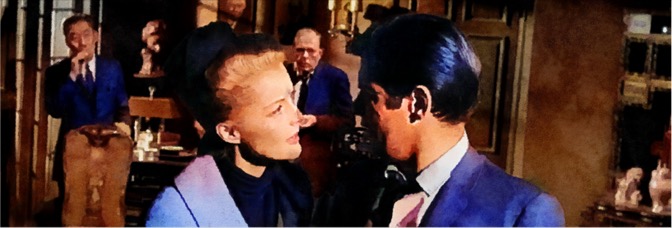
    Between film festival premiere and eventual U.S. release, Penelope went from 104 minutes to just under ninety, apparently to get a family-friendly PG release, which makes sense since it’s based on a kids’ book. Except it’s not. Leslie Caveny’s screenplay is an original, meaning some of the film’s problems no longer have reasonable excuses.

    Penelope is about twenty-five-year-old Christina Ricci. She’s a blue blood who lives in a fairy tale land. And she has the nose of a pig. Her ancestor threw over his pregnant maid girlfriend hundreds of years ago and married rich. The girlfriend killed herself and her mom, the town witch, cursed Ricci’s family. It just took hundreds of years for the curse to go active—the first female born will have “the face of a pig” until “one of her own kind” loves her.

    Ricci’s parents are Catherine O’Hara and Richard E. Grant. Grant’s playing an American. Most of the Brits play Americans. Penelope’s urban fairytale land takes place in a British Manhattan. Maybe it’s in the universe where the U.S. lost the revolution and the American elite suck up to the British–much better movie.

    Sadly, O’Hara’s not playing a Brit. It’d be hilarious. She’s the overbearing mom who wants Ricci to get married so she no longer has a pig’s face. Except Ricci doesn’t have a pig’s face, she has a pig’s nose–and pig-ish ears. We never see the ears. Will Ricci break the curse with true love from pauper James McAvoy or moneyed love with loathsome Simon Wood? Will it even matter?

    Part of the gag is anytime a prospective bachelor meets Ricci, upon seeing her face, he runs away. The only one not to run is McAvoy, first because he doesn’t see her, then because he’s… transfixed. I assumed Penelope was based on a kids’ book because the only way the story makes sense is if, in the book, Ricci’s actually got a pig face. Then the story’s about some dude loving her for the real her, which has the added texture of Ricci and O’Hara’s most frequent repeat conversation being about how Ricci isn’t really herself until she loses the nose.

    Except. It’s just a big, pushed-up nose. It’s a prosthetic. It’s not like it moves around. It’s not like it’s not well-kept. The movie also misses a really obvious opportunity about Ricci’s first kiss, though maybe in the original cut, there’s another one.

    Ricci tries her best to act without being able to use half her face, thanks to the prosthetic. Her eyebrow work is phenomenal. Though there’s nothing she can do with the part, not with the writing, her costars, or the directing.

    Besides Ricci, the best performances are Reese Witherspoon (who produced Penelope and, given selling her production company for a billion dollars, clearly got better at it after this movie) and Peter Dinklage. Witherspoon’s not bad, but she’s not successful either. I’m not even sure—in the ninety-minute cut—Penelope even passes Bechdel. It definitely doesn’t because even if Witherspoon has a name when she meets Ricci… Ricci doesn’t have a name because she’s incognito. Witherspoon’s in it for a couple scenes.

    Dinklage is bad.

    He’s just not as bad as everyone else. O’Hara’s in a similar position to Ricci, except with an unlikable character. She’s just the overbearing mom. Grant and McAvoy are atrocious. They’re both doing American accents, and they’re both terrible at them. Sometimes when he’s quiet, Grant seems like he’ll be good when he speaks (he isn’t, but seems like it). McAvoy’s consistently atrocious.

    And then there’s Simon Woods as the British blue-blood who runs away from Ricci and then teams up with paparazzi Dinklage to out the freak in the newspapers.

    Penelope has a minor newspaper subplot and doesn’t even know how to do newspaper printing montages. Director Palansky is full-stop incompetent. With the actors, with the composition, with the tone, with okaying the montages. Even a slightly better director would’ve helped immensely. Palansky’s only good moments are because his crew isn’t wholly inept.

    Someone could’ve gotten some hash out of Penelope—no pun (though there are endless pork-related puns in the film, and none of them are funny, and we never even see how they affect Ricci because it’s so poorly done). But not Palansky. Not without a profound rewrite. You could even keep the cast (maybe not Woods).

    Or just give Ricci something where she gets to use the brows.
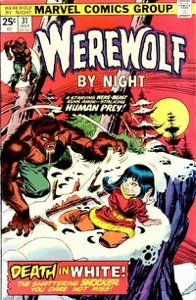
  • Werewolf by Night (1972) #32

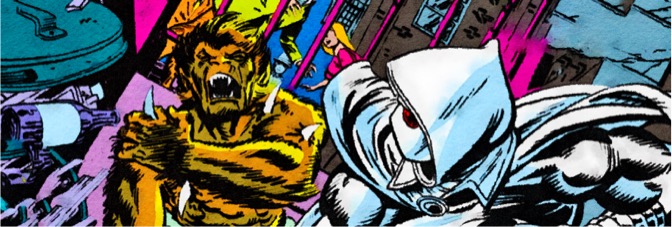
    Sbn32When I was a kid, this issue of Werewolf by Night was the most expensive because it featured the first appearance of “The Moon Knight,” a comic book weirdo. Werewolf proper hasn’t done any superhero crossovers, so Moon Knight could just be a seventies cosplayer. He’s not—he’s Marc Spector, mercenary, hired by The Committee to procure them one Jack Russell, werewolf. By night.

    Moon Knight’s got a sidekick named Frenchie, whose first appearance has him threatening Topaz and Lissa. They’re hanging out at Topaz’s because no one wants to be around Jack because he almost killed Buck last night. The issue opens in the middle of the Moon Knight fight, and it’s immediately so bad I forgot all about Buck being dead, which I felt sort of bad about until it turns out Buck’s just in a coma.

    Werewolf doesn’t have nards.

    Don Perlin got his son, Howard, helping him with this issue’s art chores–Howie’s inking. There are none of the comparably charming long-shot panels in this issue. It looks pretty bad, start to finish, with Moon Knight a sore spot, ditto the close-ups. Everyone’s eyes are always looking in the wrong direction in the close-ups. Most of the issue—at least for the regular cast—is a soap opera; only all the emoting is done to the ceiling.

    The issue ends with a cliffhanger, which means more of the same next time. Due to the expense, I never read this issue as a kid in my Werewolf phase, and when I got around to the Essential collection later… I don’t think I hung around this long.

    Seems like it’s going to be a slog. Though—at one point—Doug Moench’s hard-boiled narration works for Jack. It might work for less than a page and only as a transition device, but it’s the first time the narration’s ever had a blip in the positive, so….

    I’ll bet it’s still going to be a slog.

  • Silo (2023) s01e03 – Machines

    Is Machines a great episode, or is it a sign “Silo”’s going to be great? It’s a phenomenal fifty minutes of television (in an hour-plus episode), but the show’s still got all the existing problems. There’s just this one outlier. So far. But the episode, writing credit to Ingrid Escajeda, is fantastic. If director Morten Tyldum, who wouldn’t know if a cinematic shot if it were a hundred-foot-tall steam generator spinning around, ready to slice up the heroes going to replace it so the silo doesn’t lose power forever… well if it weren’t Tyldum, it’d be better. Even with his profoundly banal direction, it’s great.

    And the cast can find the energy in the action, even if Tyldum can’t bring it, even if the weird accents continue. They’re intentional. I’m pretty sure. Based on Iain Glen having the same weird, not quite anything, but definitely a very white European-ish accent. Glen hasn’t given this bad of an accent since he was in Resident Evil and has spent his subsequent career showing off his ability with accents and middling directors. So if he’s giving a bad accent now, it’s because they told him to give a bad accent.

    Harriet Walter’s back with her weird one too. However, she has some okay scenes. One opposite Geraldine James, who’s walking down the silo to offer Rebecca Ferguson the sheriff job while also getting in some quality time with Will Patton. Halfway through the episode, I turned to my wife and asked her if she thought it was weird Patton has become a soulful, sensual type in his old age. She hasn’t seen H40 so she was very confused.

    But it’s fine. I’m here for it. It’s at least not wasting Patton.

    And James, with her weird, weird, weird accent, is more likable this episode. This episode should’ve been the first episode, and they should’ve figured out how to get the backstory in later. It’s got an excellent three-act structure for a feature narrative. James needs to decide if she’s hiring Ferguson or if she’s going to kowtow to her rival branch of government (an unnamed female judge, who will be a stunt cast later on) while Ferguson needs to convince boss Shane McRae they’re running out of time to fix the generator.

    If they don’t fix it, the silo loses power, and everyone dies. Badly.

    Along the way, we finally find out Tim Robbins really is an asshole and doesn’t just seem like one in the flashbacks. And Common threatens James, which is a weird moment, but later on, we find out Common’s just a good dad trying to get by in a bad future. Common works for Judicial; James is the Mayor, so her rival is the Judge.

    I wonder if it’s Diane Lane. There’s a somewhat deep cut.

    Susan Dey would be baller.

    Especially if they make her do an accent.

    Anyway, the stuff with the generator is great. It’s not a real-time episode because Tyldum’s bad, but it’s exceptionally tense, with big stakes.

    It’s so good it makes up for the cliffhanger resolve being almost entirely toothless.

    Ferguson also gets to run a room instead of brood or moon. She does okay. Not great, but successful.

    The episode also doesn’t shy away from comparing how worker-class boss McRae supports and values women to how Robbins hates them.

    I was reluctant on “Silo.”

    Tedious Tyldum or not, I’m much less so now.

    Machines is great.

  • Black Rain (1989, Ridley Scott)

    Black Rain features one of the worst action movie fight scenes. It’s unnecessary—they could’ve just worked around it since participants Michael Douglas and Matsuda Yûsaku are bad at it, the fight choreography is terrible, and it manages to be the most embarrassing thing director Scott oversees in the film and Black Rain’s chock full of laughable acting, worse writing, and lots of racism.

    But that fight scene.

    Yikes.

    The film—which, two-thirds of the way through, I realized—was supposed to be a Beverly Hills Cop sequel. But instead of Eddie Murphy cracking wise as he and Judge Reinhold travel through Osaka—Osaka City Cop?—it’s Douglas and Andy Garcia. They went out for a totally normal New York cop lunch—Douglas had just gotten railroaded by the “suits” in Internal Affairs (remember when media tried to convince the world Internal Affairs was more than enough), so he and Garcia have a drinking lunch. Now, Douglas is a tough guy cop. Garcia is the dapper, charming one. Garcia’s a lot of fun in Black Rain. He’s the only one who thinks it might be able to lead to something.

    I mean, I’m sure Douglas thought he had a future as “the thinking man’s Stallone,” but he very much did not, and Rain shows why. Douglas has one-liners at the end of every scene. And he’s a dirty cop. Black Rain is about how we should like dirty cops. They’re the real heroes if you think about it. The dirty cop stuff should be the wildest the movie gets—but the racism is where it’s at. Multiple times in Black Rain, the movie pauses for Douglas to try to think of something racist to say, but then the script can’t think of anything, so he stammers out something silly. Then the nearest Japanese character has to acknowledge what Douglas said, agree with it, apologize for it, and prostrate themselves so Douglas can get in the shitty one-liner.

    The film’s script, from Craig Bolotin and Warren Lewis, is garbage. Not just because it’s bad, racist, and fascist but because it doesn’t have a story. See, at their drinking lunch, Douglas and Garcia see eighties manga caricature Matsuda kill some guys. So they give chase—they’re hero cops, after all; the entire movie is about how they’re running to the next action scene. It’s silly but also might work with Murphy and Reinhold. They catch Matsuda and have to take him back to Japan. The exchange goes wrong, and Douglas and Garcia stay to show the stupid Japanese cops how it’s done.

    At its best, Black Rain’s a good-looking vanity cologne commercial for Douglas. Jan de Bont and Howard Atherton’s photography is peerless. Rain’s gorgeous, even when it’s trying to say the Japanese are super-polluted and not chill like New York City. It’s one heck of a flex given Rain is one of those “let’s shoot New York like L.A.,” so Douglas is motorcycling around the city, often chewing gum.

    Douglas is terrible. I mean, his heart’s in some of it. He delivers the racism from the diaphragm, but he’s utterly charmless. Garcia’s okay. Fun, likable. Okay. Takakura Ken is their Japanese cop sidekick. After being the brunt of Douglas’s jokes, he eventually becomes part of the gang, after prostrating himself to white savior Douglas.

    Kate Capshaw’s the “love interest.” It’s a nothing role; she’s there to translate for Douglas and get him takeout, but Capshaw’s working way harder than the part deserves. You see her run out of script and direction and just wing it to try to find some meat.

    Lousy music from Hans Zimmer. The Gregg Allman original song is terrible, though I do wish it were subtitled Michael Douglas’s Theme.

    Good production design from Norris Spencer, who basically makes Osaka look as much like Blade Runner as he can. It’s a bad, unpleasant movie–I forgot, John Spencer’s bad in it, which is enough reason it should be avoided; John Spencer FTW—but the photography’s singular. Maybe it’s better muted.

    It’s definitely better muted.

  • My Name is Julia Ross (1945, Joseph H. Lewis)

    The funniest part of My Name is Julia Ross is when May Whitty, just after having local vicar Olaf Hytten visit, says son George Macready needs to kill Nina Foch before a doctor shows up because while they might be able to convince no-nothings like the vicar, a doctor would be able to tell she’s not mentally unwell.

    Whitty’s worried a doctor might listen to a woman, which would foil their plans, and obviously, a vicar would not. If ever there were a moment for Whitty to mention she wore a mask during the influenza pandemic.

    Ross is the tale of Foch’s very bad job placement. She’s a single girl living in London; her landlady, Doris Lloyd, is a mean jerk, and the building’s maid, an enthusiastic Joy Harington, is a mean jerk who’s also a thief. The film opens with Foch back from another unfruitful job hunt. She finds a letter awaiting her—a wedding invitation from former co-lodger Roland Varno. He’s off and gotten married, even though Lloyd thought Foch would seduce Varno away from his fiancée. There probably ought to be a pin in that detail—and there’s sort of a half-pin—but Ross only runs an hour and five minutes, so there’s no time for subplots.

    Besides the wedding invitation, Foch also finds an advertisement in the newspaper for an employment agency she’s never visited before. So she hurries off and has such a great interview with Anita Sharp-Bolster (who’s not in Ross enough; in fact, she inexplicably disappears around the halfway mark) she gets the job on the spot. Well, after Sharp-Bolster can bring Whitty and Macready in for the final interview.

    See, the employment agency is a sham. Whitty and Macready are looking for someone to replace Macready’s absent wife, but just in body. Can’t collect on life insurance without a body.

    Before Whitty and Macready can drug Foch and whisk her off to the seashore for the main part of their scheme, Foch has to go home and see Varno one more time. His fiancée dumped him at the last minute for moaning Julia Ross at inappropriate times. The scene where Varno explains it to Foch is somewhat painful, as the film flexes Varno’s confusion at the fiancée’s problem. It also reveals Varno’s going to be a weak link in the cast. Foch has to hold their slight scene up entirely.

    It also might not help Varno’s next scene is during some of the film’s day-for-night shooting, which looks terrible even on the backlot. Burnett Guffey’s photography is usually one of the film’s strongest technicals, but the day-for-night’s bad. Luckily it’s only a couple scenes throughout. Ross is technically solid—especially for a B picture—with director Lewis having some strong scenes. Editor Henry Batista doesn’t seem to know how to cut them, though, so there aren’t any breakout scenes.

    Most of the film consists of Foch in her prison—a seaside manor house—where maid Queenie Leonard can’t figure out why Foch isn’t happy to be married to a rich guy; she’s got such nice clothes, after all. Leonard’s not in on the scheme, so Foch is usually trying to convince her to help. But Leonard’s also not going to be believing any women, especially not over upper-crust Whitty’s say-so.

    Throw in regular implications Macready is uncontrollably violent, and they’ve got a reasonably compelling hour-long mystery.

    It doesn’t pay off in the finish, with the finale being particularly contrived, but it’s an okay B suspense thriller. Whitty’s good, but not singular. Ditto Macready, who Lewis knows how to direct… while Macready doesn’t understand how Lewis is directing him. It’s a peculiar situation. Finally, Varno’s a lukewarm, slightly damp towel (at best).

    And Foch’s okay. She’s never not successful in the part, but never anything more.

    My Name is Julia Ross is okay. It’s a suspense thriller told from the perspective of the people causing the suspense, not the person experiencing it, which isn’t a sound narrative structure; it’s also only sixty-five minutes.

  • Silo (2023) s01e02 – Holston’s Pick

    As is the way since, what, “The Shield” in 2002, “Silo” changes its opening titles to adjust for last episode’s big “surprises” as far as lead actor deaths. Also in this episode’s titles is Harriet Walter, which made me happy. I couldn’t wait until Harriet Walter showed up.

    And I’m glad she’s getting work other than her standard British lady stuff. Maybe someday it’ll even be a good part. And, maybe someday, her director will tell her—and her British costars—to work on their freaking accents. It wasn’t until Walter shows up I realized… none of the British cast members in “Soil” can hold their accents. Now, “Silo” takes place in an unknown future location. There’s no reason to think it’s not in the UK. Maybe it’s just a Brexit thing.

    But neither Walter, Rebecca Ferguson (who’s Swedish, sorry; director Morten Tyldum doesn’t care either), David Oyelowo (who has more to do in this episode than last, even though he’s dying in the present), nor Geraldine James (as the mayor) can do normal sounding accents. They all sound like they just remembered they’re supposed to be doing American and did anyone notice they weren’t. Except Walter. Walter’s doing a voice out of a fantasy cartoon.

    This episode opens with Oyelowo walking outside the “Silo,” presumably to his death—only, as all the people inside the silo watch, it’s obvious they’re not going to reveal it right away at the start of the episode. “Silo,” the previous episode established, is all about leaning in on the timeline manipulation. Like in this episode, which establishes Oyelowo is walking out three months after he met Ferguson last episode and had his “connection” with her, or whatever Will Patton called it.

    Except as we find out later on in the episode, not only is calling it a “connection” tenuous, they only meet the one time. Oyelowo’s just a special guest star. They have a relatively eventful first meeting—including Ferguson revealing she and Ferdinand Kingsley are lovers and have been exploring the history of the silo—the forbidden history. Also, they’re forbidden lovers. Kingsley’s an amateur archeologist, which is super-illegal, and he doesn’t want to put a ring on it because then Ferguson would be liable for his crimes or something.

    This episode also introduces Common—who may have been in a crowd shot last time—as one of the future KGB guys or whatever. They all dress in black, and they make people disappear and whatnot. It’s pointless because the show’s obviously waiting to explain it for emphasis later, not just telling the audience what they need to know. Then, the content might have to be interesting rather than its presentation.

    But it’s 2023, and presentation over content is how streaming prestige series roll.

    Director Tyldum failed some very basic sci-fi imagery last episode and continues to do so here, except this episode’s also where AppleTV+ apparently told “Silo” to cut back on the CGI a bit (not a good sign telling them to cut back on episode two, obviously). The composites are particularly poorly lighted, but since Tyldum’s not interested in making it visually engaging or compelling… it doesn’t matter?

    They promise things will get interesting next episode—unraveling conspiracies and solving murderers interesting—but it’s also their TV show. They could’ve just made it interesting from the start.

  • Silo (2023) s01e01 – Freedom Day

    “Silo” is about future humans living in a giant, hundreds of levels deep silo because the outside atmosphere is toxic. They don’t remember why it’s toxic; just it’s toxic. They also don’t know how they got to living in the silo. If you say you want to go outside, you have to go outside. And die. They ask you to clean the single video camera with a piece of wool as you go outside.

    “Silo” is based on Wool, by Howey, the first book in the Silo series. I read the comic book adaptation, Wool. I sort of assumed the series was a one-and-done, but if it’s a series now, maybe they’ve got future seasons in mind. I don’t remember the comic very well, other than it being pretty good and thinking a movie or TV show would be solid.

    The TV show’s okay. I’m not sure if it’s solid. It’s prestige-y streaming, with Rashida Jones playing a rare dramatic role in a special appearance. She’ll come back in flashbacks later, I’m sure, but the cold open—slowly—spoils she’s dead, having gone outside, and her husband, the sheriff, played by David Oyelowo, is going out after her. Sometime later. We later learn it’s two years later. There are lots of indeterminate time periods used for dramatic effect, which the show can get away with because it takes a full day to walk from the top of the silo to the bottom.

    Would it help to understand how life worked in the silo? Oh, heck yeah. I skimmed my old posts about the comic and the show’s following its narrative structure (and presumably the novel’s), but it’s a bad structure for TV. We start in the present with Oyelowo, jump back to Jones’s story, jump forward in Oyelowo’s a bit so the show can introduce eventual lead and executive producer Rebecca Ferguson, then jump forward back to the present to get ready to kill Oyelowo off.

    Neat trick in a novel if the writer can pull it off. Neat trick in a comic if the writers and artists can pull it off. Neat trick in a TV show if the showrunner, episode writer, show director, cast, and crew can pull it off. Director Morten Tyldum really doesn’t get it. Graham Yost—also the showrunner—gets the writing credit, and he doesn’t not get the relatively simple noir structure, but Jones isn’t playing for it. The actors in “Silo” don’t get much direction, whether Tyldum’s got a good idea or not. Professional competence and affability get them through.

    I mean, Will Patton’s the deputy. There’s basically a genre of “Will Patton’s the deputy” TV shows now.

    The flashback’s about how renegade IT clerk Jones and husband Oyelowo got permission to try to have a baby for a year, and over that year, their continued failures to get pregnant will drive Jones to question their reality. Oyelowo’s got an iffier part the longer the episode progresses, as he eventually manages to gaslight Jones both as a lawman and just as a man. It should be a better part, and it’s not Oyelowo’s fault at all. In this case, it’s mostly Yost’s.

    Jones teams up with computer repair guy Ferdinand Kingsley to uncover the secrets of “Silo,” and then she can’t live with them. Fast forward two years but not to the present, Kingsley’s dead, and Oyelowo’s investigating. Patton’s voiceover tells us Oyelowo then has some reinvigorating due to Ferguson (who may not even have an audible line of dialogue, just sweaty biceps).

    Then the episode’s over, and they’ve killed off (imminently) two likable protagonists.

    Tune in next time for a third?

    It’s nice to see Jones in a dramatic thriller, I guess. And it’s decently produced. Unfortunately, there’s just nothing particularly exciting yet.

  • Night of the Lepus (1972, William F. Claxton)

    Night of the Lepus is about giant bunny rabbits. The movie’s got lousy special effects. The composite shots of regular-sized bunny rabbits blown up to giant-ish size are bad, but the life-size giant killer bunny rabbit arms and body parts—only used for rapid-cut action sequences—are worse. When they have the bunny rabbits run around on model train sets and pretend they’re big, it’s the best (of the film’s options) because you get to see the bunny rabbits. They’re adorable.

    With these special effects, Lepus doesn’t have a chance. It doesn’t have a chance for many reasons, but the special effects are the most obvious (and adorable). Otherwise, all the failings are boring and mundane. Director Claxton barely keeps the eighty-eight-minute movie running. Someone—Claxton, maybe producer A.C. Lyles (who, shockingly, is not an Australian who made Lepus to say “yes, bunnies are too dangerous” to his doubting Hollywood chums)—decided to let editor John McSweeney Jr. do rapid-fire cutting to cover: bad special effects, lousy acting, reused footage of the actors, reused special effects footage, boring scenes, nonsensical scenes, and stock footage. Lots of stock footage in Lepus.

    The film only always uses the rapid cutting for action scenes. It’s predictable. But then, towards the third act, they start using it everywhere and anywhere. It’s an assault on the senses. And the cuts are way too fast to see the cute widdle bunny wabbits.

    Then there’s the script, which manages to be joyless in its stupidity. It’s just bad writing, poorly adapted for its cast. The first actor we see is Rory Calhoun. He’s a man’s man rancher who intentionally rides his horse through a bunny rabbit burrow, breaking the horse’s leg, so he kills it and doesn’t even care. Manly.

    Calhoun’s bad, but he’s so much better than eventual lead Stuart Whitman; he’ll eventually be a welcome sight. Whitman’s a bug scientist who wants to kill them off without using chemicals. Instead, he wants to do it naturally, like causing a bat plague or something. See, Calhoun goes to the local university to see DeForest Kelley (who, despite a happening wardrobe and a very seventies mustache, looks embarrassed much sooner than anyone else). Calhoun wants someone to kill off the bunny rabbits but without poison. Kelley suggests anti-poison Whitman, who travels around in a camper with wife Janet Leigh and daughter Melanie Fullerton.

    Even Fullerton can tell acting off Whitman is pointless. Even in the scenes where Whitman is doing science exposition, he can’t carry the scene. It becomes about the people listening to him, waiting for him to stop talking so they can get on with it.

    Leigh doesn’t embarrass herself, which is almost more embarrassing. She can weather stepping in giant bunny rabbit turds without it phasing her. It’s a compliment to her professionalism, but damn sad.

    There are a bunch of other characters. They’re mostly bad, but what are you going to do about acting when it’s pretending there are giant killer bunny rabbits who eat Brussels sprouts like they’re heads of lettuce and cherry tomatoes like they’re… giant tomatoes, I guess.

    Paul Fix plays the sheriff. He’s the best performance in the movie. Paul Fix isn’t going to let this Lepus nonsense get in the way of his performance, not even when he’s waiting for the other actors to remember their lines and getting visibly frustrated with them.

    Ted Voigtlander’s photography is surprisingly competent. Not with the effects shots but the other times. Terrible sound design—the bunnies do phone perv heavy breathing to show they’re mean—and a weird, lousy score from Jimmie Haskell.

    Lepus is the pits. But it is a movie about giant adorable bunny rabbits, so it’s at least a fun time at the pits.

  • Shock Corridor (1963, Samuel Fuller)

    Writer, director, and producer Fuller ends Shock Corridor’s main plot so quickly, it’s like he’s in a hurry to get to the epilogues. Except the epilogues are where Corridor falls flat and doesn’t have the time to get back up. As the film progresses, Fuller makes some significant achievements and builds up such an incredible momentum it seems impossible he’ll run out of speed.

    Sadly, he does. Shock Corridor pulls Fuller in just too many directions and he goes with a genre standard. Or at least a genre reliable. Corridor—at the start, anyway—is a film noir. Lead Peter Breck narrates the opening in the past tense; later, he’ll narrate in the present. It doesn’t really matter; the narration’s not successful, but Fuller proves it necessary, so it’s then becomes more tolerable. There is a move Fuller misses for the narration, which is a bummer because it literally would tie the movie together.

    The first thirty or so minutes is about reporter Breck trying to convince girlfriend Constance Towers to go along with his scheme to get himself committed to the state mental hospital so he can catch a murderer and win the Pulitzer Prize. He forgets to mention he’s not going to just any state mental hospital, but the one with the celebrity patients. There’s some talk about how well Breck has researched the people he needs to interview inside the hospital, but they turn out to be so famous they’d have been on a magazine cover.

    Towers thinks it’s too dangerous, not to mention illegal. Not to mention gross. Breck, his boss Bill Zuckert, and Zuckert’s war buddy turned psychiatrist whistleblower Philip Ahn want Towers to pretend she and Breck are siblings and he’s been coming on to her for years. When she’s finally had enough, she’ll report him, he’ll get hauled off to the mental hospital because it’s 1963, and even though everyone acknowledges men are dangerous to women… sometimes the ladies are really asking for it.

    Ew. Also, that detail should come up in the plot and doesn’t, which is a big problem with the film heading into the third act. So when Fuller’s able to right the ship, it’s magnificent. He paces it just right, leverages Breck just right—despite Brock’s sometimes omnipresent narration, he’s far better at the brooding physical stuff—and we’re almost home.

    Then wipeout when Fuller dumps treating Towers like a real character. At least she’d been the de facto protagonist for the first act, some of the second. Doing right by her would’ve made up for her always getting the shit end of the stick in Corridor. When she balks at going through with the plan, Breck reminds her she works in a strip club, and so she can’t talk. We then see Towers’s performance, which is a torch singer nightclub number, while she strips off pieces of her skimpy outfit and undulates absurdly. Once hospitalized, Towers in the skimpy outfit will become the angel (and devil) on his shoulder, superimposed, imagined, objectified. Meanwhile, the real Towers is trying to convince newspaper editor Zuckert to pull Breck out, especially after his doctor—an unfortunately middling John Matthews—calls Towers to interview her about her and Breck’s fake family relationship.

    All while Towers is going to visit Breck, and they paw each other.

    It’s a mess.

    But it’s near perfection when Fuller gets going with the procedural—well into the second act. Fuller hammers in big ideas, does fantastic callbacks, and all while basically presenting a jingoistic patriarchal worldview with some very problematic beliefs about mental health. Because Shock Corridor isn’t about Breck’s Pulitzer dreams or Towers’s skimpy outfits (though it is, obviously, it very much is about her skimpy outfits; Fuller worked hard to make up reasons for her to be in them). Anyway. It’s about these three patients and how they’ve been experiencing modern life.

    First is James Best. He’s the only one we meet in the first act. The other two actors were busy when they were shooting those crowd shots and what not. Best initially presents as a Southerner who can’t get over the Civil War (shocker), but then it turns out he’s a Korean War vet who defected to the Soviets. See, his parents had raised him to be a racist Southern shit, but then something happened in the war, and he realized it was bullshit and he was being patriotic wrong, so he became a defector. And a worldwide celebrity.

    Until he meets Lee Marvin from The Big Red One. Kind of seriously. There’s not not a Sam Fuller connected universe.

    Best’s low okay. Until Hari Rhodes shows up, Corridor’s acting peaks aren’t particularly considerable, so low okay isn’t bad. It also gives Breck one of his first good brooding scenes when he’s got to listen but not narrate. Since we get so little about Breck’s state of mind—the question from scene one is will Breck go insane after being institutionalized—scenes where he’s got to reflect are great. And too rare, especially since he’s got a tedious “cat got your tongue” subplot in the third act to delay things for dramatic purposes.

    But even with Best just being better than expected, the content’s unexpected. Shock Corridor spends the first act trying to be lurid without being too lewd. The second act is about white racists coming to terms with imperialism (sort of), followed by a Black man (Rhodes) driven insane due to the pressure of being the only Black student at a hostile Southern university, then a nuclear physicist who knows all the times we’ve averted nuclear destruction.

    Gene Evans plays the physicist and ends up being Corridor’s biggest successful swing, which is something because the way Rhodes’s mental illness presents is he thinks he’s a white Klan member who wants to lynch Black people. The staff at the integrated hospital know Rhodes is a threat to the other patients but only acknowledge it after Rhodes has attacked someone. It’s a big logic hole.

    Rhodes is also absolutely spellbindingly phenomenal. Even when Fuller’s script sends him a particular curveball. Usually, within a couple of lines, Rhodes has made the outlier seem foundational to his character. He consumes it. Rhodes raises Corridor to another level. With this performance in this part, it’s clear Fuller’s more ambitious.

    And he makes the Evans thing work.

    And action finale.

    He totally fumbles the finish. The last story to tell would be Towers’s. And then Fuller takes then that acknowledgment away while leaving another thread visibly untied.

    But Corridor’s often a glorious success.

    Rhodes is the hands-down best, followed by Evans, then Towers. Zuckert’s good but barely in it. Larry Tucker’s great as another patient.

    Great black and white photography from Stanley Cortez throughout. Jerome Thoms’s editing is less consistent, usually thanks to Fuller’s lack of coverage. It gets really good for much of the second act, then also takes a hit for the conclusion.

    Shock Corridor’s outstanding. Disappointing as all hell but outstanding.

  • The Terminator (1988) #6

    The Terminator  6Truth be told, I have a hard time motivating myself with The Terminator. It’s not bad in peculiar ways related to the licensed property, and it doesn’t have some undiscovered talent doing fantastic work on it. But it’s had its moments. It’s also had irregular writers, with the original writer (and copyright holder on new characters in the indicia) Fred Schiller still not back and Jack Herman apparently the new series regular writer.

    Herman had an interesting first couple of issues. He doesn’t have an interesting third. Instead, he’s got what appears to be an Arnold Schwarzenegger Terminator—only with a rat ponytail—interjecting himself into the main story. Except this issue isn’t really about the main story—the main story from issues one through three, before Herman came on the book and made it—temporarily—not uninteresting—chuck all that now, now… well, now, NOW Comics’s The Terminator is about to flex that license.

    But not completely. Like, the Arnold Terminator doesn’t talk like Arnold. Everyone else in the comic talks, like Herman just watched James Cameron’s Aliens again—solid move—which is how The Terminator comic kicked off. Like they decided they were doing Terminator with Aliens Marines. Sure, why not. But it’s a little late now. Instead of just doing an Arnold Terminator in the series to start, they’ve waited until it appears desperate.

    Also, in addition to it not sounding like Arnold, the Terminator doesn’t look much like him, either. Artists Thomas Tennessean and Jim Brozman draw the same three guys over and over again. If they’re lucky, the guys have facial hair, which can distinguish them. Except they’re rarely lucky, and all of them look like white guy resistance fighters in Aliens Marine gear.

    This issue has numerous guys who look identical, sometimes shooting at each other, sometimes dying in each other’s arms. The issue’s about a team of… humans or Terminators (can we really tell—yes, yes, we can; it’s a bad comic, no subtexts here). But it’s about one team of guys trying to rescue a civilian from another team of guys. We’re pretty sure we know who’s the Terminators and who’s the humans, but then Herman will occasionally toss a red herring on the deck.

    Are any of them good? Nope, not at all. And Herman seems to get it because Arnold zooms into the comic like anyone cares. He’s just a badass Terminator against a bunch of humans until he starts shit-talking them. That’s right… The Terminator is now about an Arnold Terminator with a grudge. Will Terminator get meta and have Arnold go after the license holders and the comic book creators?

    One can only hope. But, surprisingly, I found something to be enthusiastic about. Terminator’s nowhere near rock bottom yet.

  • The Babysitter (1980, Peter Medak)

    The Babysitter is too technically proficient for its own good. It’s a wannabe prestige lurid TV movie about eighteen-year-old girl with a past (early twenties Stephanie Zimbalist) worming her way into a seemingly perfect family only to reveal all the cracks within.

    Except it’s not a seemingly perfect family—and not even by the end, actually—with recovering alcoholic mom Patty Duke, distant dentist dad William Shatner, and chronic affluenza suffering twelve-year-old daughter Quinn Cummings. Cummings was the Oscar-nominated star of The Goodbye Girl at this point, so it makes sense when Babysitter is all about her at the beginning.

    Mom Duke got so drunk so often she embarrassed the family out of Chicago, so Shatner’s set them up on a commuter island near Seattle. He’s neglecting Duke and Cummings to further his career—it’s the closest Babysitter comes to a subplot for Shatner, who’s otherwise pursuing or refusing Zimbalist. But Duke’s miserable having to hang out with Cummings, who’s on all sorts of medication for unnamed illnesses (don’t worry, they forget about it by the third scene), especially while having to stay sober.

    So when Zimbalist starts hanging out with Cummings, both mooning over dreamy sixteen-year-old neighbor David Wysocki, Duke sees an opportunity. Zimbalist is a poor kid who’d been working as a nanny or something, and she needs a job. Likewise, Duke needs someone to keep Cummings occupied. It’s a win-win.

    After a rapid montage for Zimbalist and Cummings, Cummings—Oscar-nominated Cummings—is basically out of the movie. The second act is about Zimbalist becoming Duke’s only confidant, advising Duke about her shitty marriage to Shatner while also trying to seduce Shatner away from Duke. The third act’s all the thriller stuff, mainly with Zimbalist and Shatner, but also John Houseman as the busybody neighbor who decides to investigate Zimbalist.

    It also means there’s very little room for Cummings and Duke in the third act—but even Zimbalist starts getting pushed out too. The movie’s never clear whose bad dream it’s supposed to be—director Medak tries to focus on each character to give them a shot on the protagonist stage, but no one takes it. Or can’t take it in time. Medak and writer Jennifer Miller manage to be too quick with character moments while dragging out everything else.

    As a result, it’s hard to care for the finale, especially since the main cast stands around to listen to a monologue no one cares about. The movie only realizes in the last few moments Zimbalist might be due some empathy as well, except the character motivation is so erratic it’s not worth the effort.

    There’s some good acting from Duke. Houseman’s really bored as the investigating neighbor, but he’s got some charm. Shatner’s better before he’s got to play shitheel. Cummings is grating, but it’s the writing.

    Babysitter doesn’t have an original score, and the stock music seems a little out of date—too groovy seventies—which makes the movie feel campy, except no one’s doing camp. Especially not with Redford L. Metz’s genuinely outstanding photography. Medak’s got a real lack of consistent tone, but it’s not Metz’s fault at all. Babysitter’s got swell lighting; Medak just doesn’t know what to do with it.

    Maybe a real score would’ve helped since they really leverage montage sequences with music… who knows.

    During the second act, while the movie’s about Duke, it seems like it’ll have to have an okay finish. The Babysitter doesn’t deliver, but it seems like it could for a while.

  • Catwoman (2002) #11

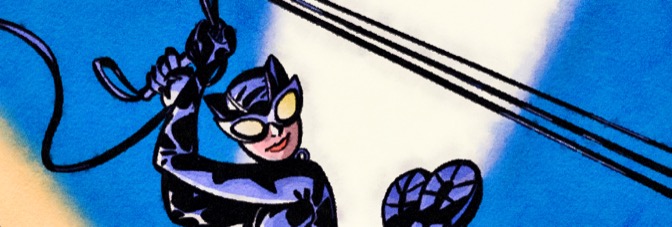
    Cw11Presumably, regular writer Ed Brubaker needed someone to cover for him so he could work on Catwoman Secret Files, so Steven Grant fills in on the writing here–Brad Rader’s on pencils, with new-to-the-series Mark Lipka and Dan Davis on inks.
    It’s an outstanding issue for Rader. The issue’s entirely action, with Catwoman breaking into a mansion and defeating its elaborate security systems so she can steal a cat statue. There’s a bookend about an FBI agent and his partner setting up the robbery victim—a female gangster—so they could also catch Catwoman. The bookend’s terrible, but it’s an okay sort of terrible.

    The issue’s just filler. There’s no reason to read it outside being a Catwoman reader, not even for other Catwoman canon. There’s a nothing-burger previous relationship between Catwoman and one of the people in the mansion, there’s not great fighting, but Rader’s sense of action pacing for Catwoman escaping the traps is phenomenal. It’d be a great action comic if there were any stakes whatsoever, but Grant writes Catwoman as a carefree adventurer. It seems like thin characterization until Grant gets to the FBI agent who’s narrating. The ending’s silly and desperate.

    At times, the issue feels like they’re doing a Batman: The Animated Series Presents Catwoman special—just change the costume—but then the overwrought FBI stuff makes it feel more like it’s just a not skeevy rendition of a Jim Balent issue.

    Worth the twenty bits? Maybe not. But it’s nice to see Rader developing even when the story and the vibe are middling.

  • Suspicion (1941, Alfred Hitchcock)

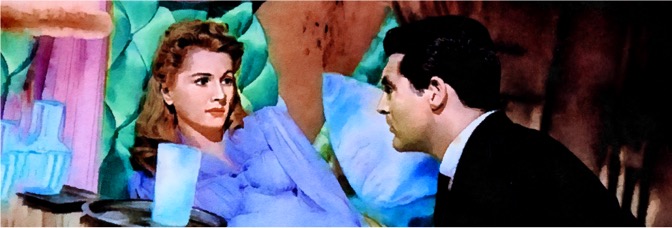
    Suspicion is a peculiar picture, both in terms of content and context. It’s one of those Hollywood pictures from late 1941, before Pearl Harbor, but it takes place in England, which was already in the war. So it’s set before the war. It’s an all-British cast (not to mention director Hitchcock) making an American film, so it feels a little like a thirties British Hitchcock but not really. Then there’s the ending, which certainly seems like someone had it changed—but did they—with Hitchcock saying he wanted to keep it different from the source novel’s finish.

    The film’s about well-off but not too well-off Joan Fontaine falling for broke playboy Cary Grant, who’s got blue blood and empty pockets. He’s presumably a gigolo, though he reforms for Fontaine. They have a meet-cute on a train, where he makes fun of her appearance, then he later sees her on a horse and becomes enthralled. In their subsequent outing, the film hints at some sinister nature, with director Hitchcock and editor William Hamilton very deliberately implying Grant’s doing violence to Fontaine. Except, really it’s windy, and he’s just trying to steady her, or something. It’s an incredibly distinct moment—and the only thrill for the next twenty minutes or so—but the film never uses the device again. Just this one time do Hitchcock and Hamilton decide they want to trick the viewer.

    The rest of the film is about the characters trying to trick one another.

    See, Fontaine didn’t know Grant was a lazy, no good when she fell for him, but once they’re married, there’s really not much she can do about it. The film occasionally hints at Fontaine leaving Grant and turning back because she’s just so enamored with him—even though starting at the one-hour mark, every one of their interactions involves him lying to her and manipulating her—so instead, she’s just going to wait for the next scene. Now, Fontaine’s great. Like, her stressed-out, terrorized performance is amazing stuff. Unfortunately, her part is just paper thin. I misremembered she had some pride thing for not wanting to throw in the towel with Grant before she starts suspecting he’ll murder his best friend for money, but, no, he’s just Cary Grant, so what can she do?

    Hitchcock focuses on Fontaine’s experience–occasionally pulling the camera back long enough for him and cinematographer Harry Stradling Sr. to show her literarily trapped in a spider’s web—which apparently pissed Grant off because he thought the movie should focus on… him gaslighting his wife about money. Grant just fell too hard for Fontaine to do due diligence and find out what dad Cedric Hardwicke would be willing to cough up to support the newlyweds. Grant’s disappointment leads him to take a job with a cousin, Leo G. Carroll, before deciding to convince his chronically drunk, questionably intelligent best friend, played by Nigel Bruce.

    Suspicion is at its most charming when Bruce is around. Bruce brings comic relief even to the scenes where Grant’s being an obnoxious prick and Fontaine’s defending him way too long. Until Grant gets outright hostile to Fontaine—how dare she talk about business when there are men around—the film’s a series of scenes where Fontaine discovers Grant’s lying about something, Bruce makes it weird (and funny), and there’s some character development for Fontaine at least as far as Bruce is concerned. Unfortunately, when Bruce leaves, so end Fontaine’s regular interactions with anyone besides Grant.

    Fontaine does become convinced Grant’s too obsessed with village celebrity Auriol Lee’s crime thrillers, leading to some scenes with Lee around, but none of them amount to anything. Instead, they’re third act filler when the film’s got to keep Grant and Fontaine apart so she can’t get wise to what he’s doing. And apparently, he doesn’t notice her becoming increasingly terrified of him at every moment.

    The film infamous doesn’t go for one ending but then doesn’t fully commit to the other either. They’ve got a chance to change gears—and some great devices they introduced in the first act during Grant and Fontaine’s courtship—which could be well-utilized in the finish, but instead… the audience just isn’t privy to the specifics of the resolution. Instead of expressively not copping out, Suspicion goes for an incomplete.

    While Fontaine gets to stay busy, active, and inventive with a shallow part, Grant does not. At one point, Hitchcock breaks the fourth wall with Grant laying on the charm, which doesn’t work once but might’ve been an okay recurring bit. But, alas, it is not. Bruce’s fantastic, Hardwicke and May Whitty are fun as Fontaine’s parents. And Lee and Carroll are good. The problem with the supporting cast isn’t ever the performances; it’s just the parts being too minor.

    The technicals are all great, especially Stradling’s photography and Franz Waxman’s music. Hitchcock’s direction is usually phenomenal. Suspicion’s a great time; it’s just clear—studio or not, code or not—they didn’t have the right ending.


  • Black Panther (1998) #6

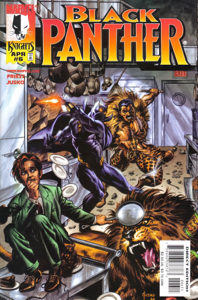
    Black Panther  6 mlThe issue begins with an Everett K. Ross scene; he’s debriefing the President about his latest adventure with Black Panther, only to quickly offend and have to roller-blade his way out of there. Writer Priest knows how to play Ross for comedy—I guess they couldn’t do the whitest white boy in the world in the MCU because Chris Pratt was already playing Starlord—but Priest continues to have problems with Ross professionally. He’s got a wacky reaction to the finale, but also, it was 1999, and maybe even the wokest CIA (sorry, OCP… OmniConsumer What?) agent is going to call armed response at a crowd of Black people.
    Minor quibbles, it turns out, because Priest’s got the plotting down for Black Panther business, and Joe Jusko is doing the art. After the Ross bookend, which will presumably continue through the arc like last time, there’s a five-page fight between Kraven the Hunter and Black Panther. Jusko tracks the successes and fails from panel to panel (except cuts to Ross cowering) so the reader can see how Kraven gets the upper hand or how Black Panther reacts. It’s beautiful stuff. And it’s just the beginning.

    The story then backs up to the White House reception for Black Panther, decades late, with the President still too busy to attend and no Black folks on the guest list except T’Challa and his guests. Great comedy beat for Zuri, T’Challa’s bodyguard, who’s otherwise mostly out of the action this issue. Priest is still doing his distant third-person perspective when it comes to T’Challa. He spends most of the issue dancing with Doja Milaje warrior Nakia. At the same time, the story flashes back to her hiring (and T’Challa promising he isn’t going to be creepy with her, especially because she’s a teenager, while Ross narrates about how he would be creepy with her and go to jail… ah, the 1990s, though also perfect for Chris Pratt). We also get flashbacks to T’Challa’s college days and the white girl who occupied his romantic attention (who may be Ross’s present-day boss and girlfriend; Jusko draws her like Gwen Stacy anyway, I can’t keep track).

    The finale has the Black people of New York City (“all of them, I think”) arriving outside the hotel to ask Black Panther why he’s not their hero. At this point, Ross calls in the OCP SWAT team (no ED-209s, come on, Marvel, lean into it) and tells the crowd to disperse while escorting Black Panther away from the dangerous crowd. Then, in comes Kraven, but before the fight scene earlier, so there’s more fighting on the way. More glorious Jusko fighting, I should hope.

    In addition to the fight scenes being so good, anything with motion is delightful. Jusko captures the enthusiasm and energy of a seventies Marvel comic but with far more detail. But you look at how Kraven’s expressions work throughout, and it’s just old school.

    I knew I was in for a treat with this Black Panther run. Even with Priest’s occasional character bumps, it’s such a delight.

  • Legion of Super-Heroes (1980) #268

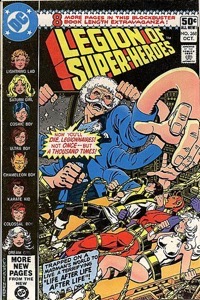
    Lsh268I’ve always had a soft spot for Steve Ditko’s art. Even thirty-ish years ago, when I was starting to recognize creators in Silver Age books—hunting down older comics to read—Ditko was already a reclusive, right-wing crank. No doubt complaining about wokeness since 1985. History’s just proven his being quiet about it was the only difference between him and many other comic creators.
    Except, of course, the talent. Ditko’s art has an energy about it, even here in a Legion of Super-Heroes fill-in. Bob Wiacek inks, doing what he can in the medium and long shots, but there’s this bewildering mix of static and kinetic in the Karate Kid fight scenes. The figures seem stiff, but they move fluidly. And then there’s something weird about the close-ups; not sure if it’s too much Wiacek or not enough.

    The outer space stuff is fantastic. Full stop. Steve Ditko’s 2001.

    The story—by J.M. DeMatteis—is ambitious but not successful. DeMatteis introduces a wild villain—named Doctor Mayavale—who kidnaps some of the Legionnaires, saying they’ve got a history together from previous lifetimes. The issue plays out like a spec script for a “Star Trek” episode—hey, maybe a “Star Trek: Phase Two” episode—only with the three Legionnaires kind of having something to do with the story. Only not really, just for action scenes.

    It’s an incredibly padded story, starting with a reference to current events in the series, then a bookend with Lightning Lad and Saturn Girl (I think; I’ve been reading these for months, and I’m still not sure on most of the names—though Cosmic Boy’s the one dressed like a male stripper). Speaking of Cosmic Boy, he then narrates the flashback–so much padding. Then the mind-boggling cosmic space-time odyssey fit into an “each hero in separate trouble” comic book template.

    There’s some really iffy Native American cultural appropriation, which DeMatteis ratchets up throughout the story, and the resolution’s very pat—even for a Legion fill-in—but the issue’s got some charm. It’s silly to see some guy talk about the secrets of the universe when Steve Ditko’s drawing him as a General Custer wannabe. It’s like they knew the absurdism would actually help, so they amped it up.

    The wrap-up bookend kills the momentum, but it’s a much better read than it ought to be.

  • Do a Powerbomb (2022) #6

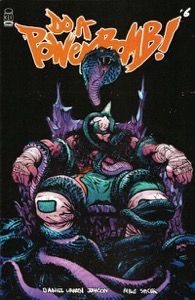
    Do a Powerbomb  6For the first time on Powerbomb, there’s cause for concern. I’m not actually concerned because I’ve got faith in creator Daniel Warren Johnson—he’s more than earned it by this point—but this issue’s at the “shit or get off the pot” moment in the series, and Johnson’s approach is to ask for five more minutes.
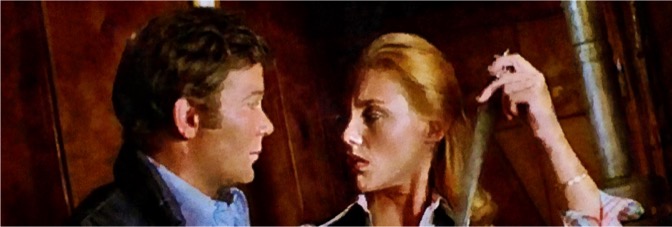
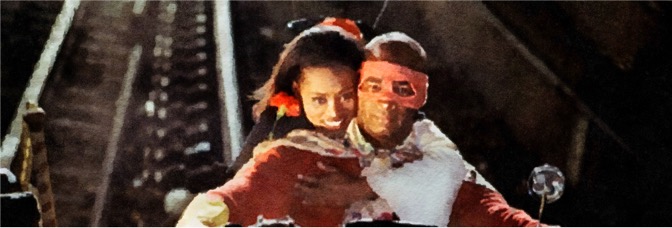
    The issue opens fine, flashing back to Cobrasun after his wife’s death, checking in with his brother-in-law, who gives him a good smack. Johnson then goes back even further to Cobrasun and the wife’s meet cute. She was scouting wrestlers and took to him, despite the way he wears his mask to hide something. In the present, Lona is injured and unconscious, so their “I’m your father, Luke” conversation is also delayed—who knows how the issue would read if Johnson didn’t constantly delay promised moments. Cobrasun’s freaking out, but then there are also their competitors from last issue duking it out.

    At the end of last issue, Johnson promised a doozy of a fight between the competitors, who both have a dead child to resurrect, so there can be only one. It’s disappointing Johnson rushes through their fight, always going for perfunctory or worse (using TV footage to recap something).

    Johnson does get around to one of his outstanding threads, which may or may not foreshadow the big resolution next issue.

    He’s a lot more invested in the flashbacks—and rounding Cobrasun out as a character—and it would have been better just to do this issue for Cobrasun. I’m not sure. Maybe next issue will make everything okay, but… there’s cause for concern.

    The more I think about the issue, the more pronounced the problems become and, consequently, the more I worry about the finale.

    Maybe if the final twist weren’t the biggest eye roll of a deus ex machina possible.

    Great art as always, with Johnson proving very adept at the character drama. Hence, a full flashback issue for Cobrasun’s secret origin would’ve been a better choice.

    Either way, there will be lots to talk about next time. Unless Johnson just pushes it off to Powerbomb Too.

  • Kingdom of the Spiders (1977, John ‘Bud’ Cardos)

    Kingdom of the Spiders opens with some scary music for the title reveal, then an original country song by Dorsey Burnette starts playing over the titles, extolling the virtues of Verde Valley, where Kingdom takes place. It’s a terrible opening titles sequence, followed by the film’s first failed attempt at suspense. Unfortunately, it will not have any successful ones. This first one, involving a bunch of spiders attacking a cow, forecasts the film’s lack of ability for suspense, humor, or anything whatsoever. I mean, there’s good photography from John Arthur Merrill and a handful of affable or inoffensive performances, but otherwise, Kingdom hasn’t got it. It doesn’t even have a kingdom.

    After the spider attack—entirely from the spiders’ points of view, so we don’t know it’s spiders yet—the film introduces leading man William Shatner. He’s just a small-town, rural vet, but he carries a lot of sway. He could quarantine the farmers, and wouldn’t it be too bad if he did, what with the County Fair coming up? Shatner’s actually pretty good as the town vet. He and Woody Strode have decent chemistry, even though neither is doing a particularly good (or bad) job. Of course, Shatner’s first scene involves his widowed sister-in-law Marcy Lafferty (married to Shatner in real-life at the time, which ends up being awkward given the love triangle). Shatner gets to ride a horse and do his own stunts, so he’s having fun. Then Lafferty comes on to him because all the ladies love Shatner in Kingdom, only she moans her dead husband’s name (his little brother who died in “‘Nam.”). Shatner tosses her off him—not the last time Shatner tosses a costar violently in the film—and heads off, but not before shaming her a little for her behavior.

    Shatner heads off to the state lab to turn in the cow’s blood for testing in what seems the set-up for a scene at a university, but the action just cuts to Strode and wife Altovise Davis having a quiet night at home. Strode and Davis are fine in the movie, but they give off big “Davis married her dad’s best friend Strode” vibes. Or “Davis married Strode in exchange for Strode giving Pa some acreage.” It never feels quite right. But then the movie treats them like they’re living in the thirties, so maybe Strode’s lying to Davis about the state of reality. So it would track, especially for Davis’s frontier woman costumes.

    Pretty soon—in time to threaten the County Fair, natch—big city spider scientist Tiffany Bolling comes to town to see what’s happening with these spiders. She’s snooty to Shatner, who mocks her, but then once they’re working together, he just constantly sexually harasses her, sometimes physically, as he makes it clear they need to find the nearest bed or sleeping bag. Bolling manages to churn out endless expository passages while Shatner’s mooning at her, touching her, or otherwise distracting her. Bolling’s not exactly good. The writing on her part’s lousy and director Cardos doesn’t do anything for his actors, but Bolling’s got great timing. Up until she falls for Shatner’s macho charm, anyway. Until then, which is when he starts bossing her around like a possession, Bolling’s the only one who seems to know how to keep Kingdom moving.

    Because, otherwise, it’s a slog. An intentional one. Cardos and editors Igo Kantor (the film’s producer) and Steven Zaillian (Oscar-winning screenwriter of Schindler’s List) belabor every action beat, drag out every shot, and just generally pace Kingdom like a slow roll through a rock pile.

    There are some other surprises. Bolling and Lieux Dressler pass Bechdel in their first scene. They never do in any other scenes, quite the opposite, but it’s initially pretty cool.

    Did I say “surprises” plural? It’s the only surprise. Except when Shatner flaunts Bolling to Lafferty almost immediately after telling Lafferty he’d eventually get horny enough he doesn’t care she’s his dead little brother’s wife, so he’d knock on her door. The longer the movie goes on, the less likable Shatner becomes. By the third act, you’re just waiting for a spider to get him.

    Or for anything to happen, which it doesn’t. Except for a bewilderingly inept town panic scene.

    With a better director, better script, better editors but the same cinematographer, and maybe even Shatner, Kingdom could be a fun homage to fifties sci-fi. Instead, it’s a dull, joyless turd.

  • Blankman (1994, Mike Binder)

    Blankman is surprisingly good. Even after showcasing its initial strengths, then taking a second act tumble, the movie picks itself up for a strong finish. Given the subject—a neurodivergent-coded man becomes a superhero—there are plenty of poorly-aged, ableist jokes. But the jokes made at hero Damon Wayans’s expense always say more about the teller, with Wayans usually having a good rejoinder. It’s often David Alan Grier, as Wayans’s older brother, who’s making the jokes, and Grier being a boob is one of Blankman’s standards.

    But Grier’s a likable boob; he’s just rarely the most likable character in a scene. Definitely not with Wayans or Robin Givens. Givens is the love interest in a riff on the old-fashioned superhero movie love triangle: Grier’s the third wheel since Givens doesn’t know Wayans exists when not running around in his tights. The third act rushes through all the reveals (or skips them entirely) because it’s campy enough by that time it doesn’t need much reality.

    The movie opens with Grier and Wayans as kids watching the Adam West “Batman” show, with already different Wayans (Wayans’s sons play the kid versions) stringing together all the metal in the house to improve the TV reception. Blankman’s got a lot going on with its superhero concepts. The movie’s an homage to “Batman,” complete with the spinning transitions and fight scene onomatopoeia, but it can’t do anything with the actual property. They even downplay Wayans’s gadgets, made with recycled junk, being “Blank” this or “Blank” that. They say it, but never with a wink to the “Bat” naming scheme.

    Then there’s Wayans’s motivation. He’s inspired by personal loss, but he’s not a dark and brooding hero. There’s literally a place in the Blankman for that lousy Dark Knight monologue, but the movie heads happily—and successfully—into camp instead. He inspires the citizenry with his heroics and catches the eye of news anchor Givens. Grier works at the same station but in the basement on the tabloid TV show for Jason Alexander. Besides the unfortunate bald cap, Alexander’s quite funny as a loathsome producer. Unfortunately, some of it doesn’t age well, as Alexander’s in a wheelchair, primarily for sight gags.

    Grier’s much more likable than Alexander.

    Until Wayans decides to become a caped crusader, most of Grier’s time is spent flirting with Givens. Again, part of the joke is he’s laying it on so heavy he’s icky, but it’s still a lot sometimes. Once Givens gets to laugh at him, however, it all evens out.

    The secret to Blankman’s success is Givens.

    So the movie’s got the “Batman” camp thing going on, the recycled junk wonderful toys, a neurodivergent hero, but then there’s Givens. Blankman—both in the script, from Wayans and J.F. Lawton, and in Binder’s direction—plays Givens as Lois Lane… from Superman: The Movie. Only giving her more to do (there are also some Superman nods in dialogue from other characters). It’s an excellent showcase for Givens, who’s fantastic.

    The other essential performance is Jon Polito, as the cartoonishly evil (and capable) mobster. He’s funny, absurd, and dangerous. And the film seems to know how well he does with the material, giving him campier and campier bits as things progress, with Polito knocking all of them out of the park.

    Wayans and Grier are both good, to be sure. Wayans is something of a slow burn, not really getting to do much until his superhero arc has started. And Grier’s got to flex like he’s the protagonist in the first before sharing the back seat with Polito. The late second-act stumbles are mostly about how the film tries to get itself rearranged in time for the finale.

    There are some missed opportunities—they had a perfect post-credits tag and didn’t do it—and some of the jokes, problematic and not, land soft, but Blankman’s an excellent superhero comedy. With a little more money (the special effects range in quality) and an impossible “Batman: The TV Show” license, it could’ve been a singular homage.

    Instead, it’s still one heck of a success. Stellar performances from Givens and Polito, strong turns from Wayans and Grier, an empathetic, nimble script, and more than adequate direction from Binder. He’s not an action director, but Blankman doesn’t have the budget for it, and he gets the timing, both the performances and the comedy.

    Really nice photography from Newton Thomas Sigel too.

    Blankman. He’s not the hero we deserve, but he’s the one we need right now.

  • Tomb of Dracula (1972) #35

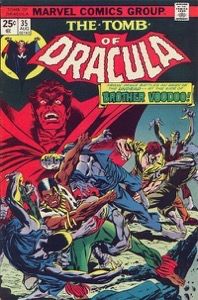
    Tod35Besides the cover art having very little to do with the issue content—the cover shows Brother Voodoo fighting zombies; more on that adventure in a bit—this issue is an exemplar Tomb of Dracula. Writer Marv Wolfman has time to go overboard with the narration and exposition while still fitting a full horror comic story into the still very serialized Tomb narrative. It might also help there’s nothing with the other vampire hunters (and Frank Drake’s appearance comes with an asterisk).
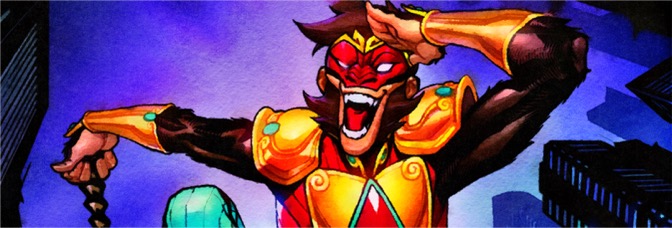
    Let’s get the cover (and Frank) out of the way.

    Frank is still in South America, tricked into running a plantation by one of his old rich kid friends. Little does Frank know the friend now works for Dracula. I think. It’s been a while since this subplot started, but I’m nearly sure Dracula was behind it. Immediately after Frank got to the plantation, the zombies attacked him. He’s been on the run from them for five issues or something. Time means nothing in Tomb of Dracula (especially here, when Drac’s quest involves him averting his death in two weeks).

    Brother Voodoo showed up last issue to save Frank’s lily-white ass. This issue is Brother Voodoo fighting off zombies while talking to himself. It’s much better than the adventures of Frank Drake, which Wolfman seems to be acknowledging by focusing on Voodoo.

    That subplot is a few pages (and still one too many); all action with great art from Gene Colan and Tom Palmer.

    The main plot has Dracula agreeing to perform four hits in exchange for the report about his impending demise (the two weeks thing). His employer is fashion designer Daphne von Wilkinson. She also agrees to feed him her fashion models but assumes he won’t be feeding on her targets.

    It’s a good Dracula plot, as he travels around London meeting various caricatures—beautifully rendered by Colan and Palmer—and disposing of them. There’s a good, though somewhat pointless, twist at the end, and the whole thing is—no pun—a marvel of pacing.

    There are some caveats, of course. Wolfman’s script ups the misogyny whenever it can get its hands on the dial. Von Wilkinson wants these men dead for stealing from her because they thought, as a woman, she couldn’t do anything about it. They all say she’s a silly woman, so they had to steal from her. Wolfman’s pro-victims. Especially since von Wilkinson’s so happy to give her fashion models to Dracula. Patriarchy says what.

    Though Wolfman having a problematic diversion does just further inform the issue as an exemplar Tomb of Dracula. Wouldn’t want to have one where he’s not writing everyone being racist to Blade or Taj, or sexist to Rachel or whatever.

    Thanks to the art, it’s hard for Tomb not to be a good comic, but it’s also a successful execution of the concept. Dracula’s got his big “Doctor Sun is hiding in the United States and killing me, and all he sent me was this postcard” arc, and he’s tiptoeing into it. Drac’s on a bridge, walking between significant plot points, and Wolfman’s making things interesting around him. The story moves forward easily; the peripheral scenery is compelling and fluid.

    Very good comics-making here.

  • Monkey Prince (2022) #1

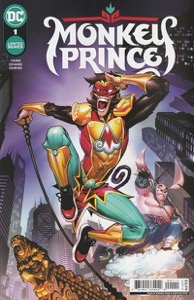
    Mp1I’m not up on modern Batman takes, but… has everyone just agreed he’s a dick? Monkey Prince starts with a Batman cameo, then brings him (and Robin) into it for the cliffhanger. In addition to him being a dick, does every new book have a Batman cameo for the sales? Though Batman’s only on one of the variant covers. Maybe you assume Batman will be in all DC #1s?
    Enough with the rhetorical questions; enough with Batman. Monkey Prince isn’t about Batman, though his initial cameo gives away some of the hook—little kid Marcus Sun wakes up one night and hears a commotion in the living room of his family’s Gotham City apartment. He stumbles out, wiping the sleep from his eyes, and sees Batman beating up on his dad. Batman leaves after making some bad parent judgments (really, how’s Jason Todd again?).

    Marcus never figures it out, but it’s pretty obvious his parents are supervillains. They turn out to be science hench-people who leave town soon after, living in all the big DC cities before ending up back in Gotham when Marcus is a teenager. Unfortunately, he’s still got PTSD from interrupting that Bat-fight, which causes a panic attack at the swimming pool. He makes the mistake of bumping into one of the school bullies, who then pushes Marcus into the pool.

    The school custodian takes an interest, trying to encourage Marcus to work past his trauma, something Marcus initially refuses. When he tries to do it himself, Marcus discovers he’s, well, a monkey prince.

    The issue hints at a rich cultural history for the character—in addition to the teenage son of bad guys, writer Gene Luen Yang’s front and center about how Marcus’s Chinese heritage affects his daily experiences, including his bully further attacking Marcus for having a white mom. It gives Marcus some more ground situation personality, which helps since he’s mostly just having panic attacks this issue. He also meets his presumable love interest; so far, Monkey Prince feels like a new teen superhero number one. With some asterisks, sure, but Yang’s not deviating too far from the playbook.

    Bernard Chang’s art ably toggles between action paces—the superhero action’s much different than the bullying—and the character drama. Chang and Yang pace it rather well.

    The series is off to a fine start.

  • War Story: The Reivers (2003)

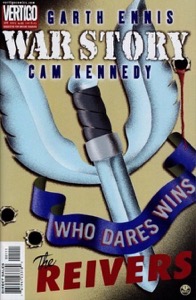
    ReiversI think I figured out why The Reivers, the first issue of the second War Story volume, doesn’t start the collection. Because you might stop reading the collection. It’s kind of actually bad, but it’s also a slog. Writer Garth Ennis churns out dialogue to get through the comic. The artist is Cam Kennedy, who has the same expression for all of the talking heads. He’s slightly better at the action? But there’s minimal action. And it’s also very aggrandized.
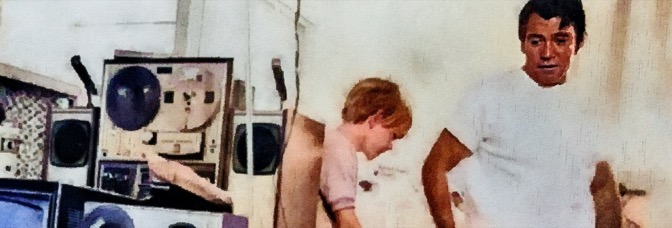
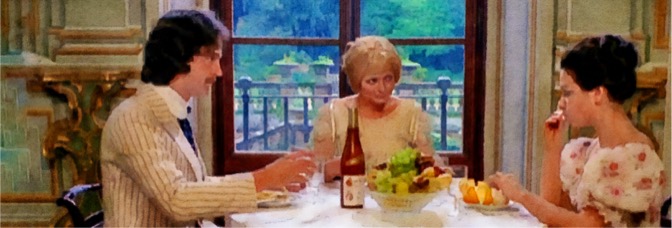
    Kennedy draws Reivers like it’s an exciting adventure outing about an elite squad of British troops in the North African campaign. They’re the ones you call when you need to the ultra-violence. Most of the comic is the commanding officer talking to his sidekick about how they’re descended from the Reivers of yore, a practically mythological band of vicious warriors. We have to sit through at least a page of the commanding officer blathering about how the Reiver blood has traveled the globe, which explains why their outfit is so good, even though the men are from different places.

    The sidekick basically rolls his eyes but in dialogue. Like another half-page to disagree.

    Did Vertigo stick Ennis with what they thought would be more popular artists in an effort to bring up sales? If so, did Ennis intentionally write such a tepid comic for Kennedy to draw? Or did Ennis write this talky, sophomoric outing, and then they assigned it to Kennedy to… spice it up? Or was it a loser script so they got an artist who wouldn’t suffer? Maybe it was Ennis’s attempt at writing a stage play, and he’s just bad at it. The story behind Reivers is potentially so much more interesting than the book itself.

    Eventually, the men go back into battle, and they have a reckoning. It’s slightly absurdist—Reivers feels like a more serious spin-off of Adventures in the Rifle Brigade while also forecasting Punisher: Born. Some of the commanding officer’s descriptions of his blood thirst sound a lot like Born. In other words, Reivers is very much at home with Ennis’s most middling works.

    It opens with a silent sequence long enough I wondered if they were doing the story without dialogue. Little did I know it’d be more dialogue than the rest of the books combined. Big kudos to letterer Clem Robins. He did the best work on this one. But I’m getting scared for the last two War Story entries. The quality of the second volume so far is great and tripe. No in-between.

  • A Whale of a Tale (1976, Ewing Miles Brown)

    A Whale of a Tale is very much not a “whale” of a tale. The film’s about a little kid (Scott C. Kolden) who spends a summer working at Marineland of the Pacific. While Marineland clearly let the film production shoot on location, it also feels very much like the whole venture is Marineland-produced. At its best, Tale feels like an extended commercial for the park, complete with lengthy sequences showcasing its attractions.

    It’s also not very animals’ rights. At one point, Kolden chastises Orky the Orca (a real-life Marineland attraction) for not wanting to perform even though people paid good money to see a show. Marineland’s the bestest oceanarium in the world… or at least America (inside joke you hopefully don’t get), and it’s really neat they let Kolden work there, even though his evil aunt Nancy O’Connor thinks it’s too dangerous a place. Kolden lives with aunt O’Connor and mom Abby Dalton. Dalton’s a recent-ish widow, and they’ve moved close enough Kolden can walk to the park from home, sneaking out so O’Connor doesn’t know.

    For a while, the film’s biggest drama is whether or not Dalton’s going to let Kolden work at the park, but once Dalton meets handsome and single marine biologist William Shatner, the writing’s on the wall. Despite Shatner initially considering Kolden a pest, he soon comes to like the kid. And especially like the mom.

    Sort of. Just like everyone else in the film, Shatner’s utterly lacking in character. All of his character’s busy work throughout is nonsense. Someone’s training the dolphins to do some kind of Navy rescue thing or something. The details don’t matter because they’re nonsense. Shatner and the other actors deliver their lines like someone’s feeding them off-screen. And then there are the times there’s obvious looping, like when Shatner and park fisherman Marty Allen are around the real animals and clearly trying not to get whacked by a killer whale. Shatner does better than Allen, which isn’t saying much, but there aren’t any good performances in Whale. Director Brown’s not capable of directing good performances or writing good parts.

    Though there is an okay enough cameo from Andy Devine, who doesn’t have the lung capacity he did as a younger man, but occasionally still sounds familiar. Richard Arlen’s the other big cameo, as the park owner. Even more than Devine, Arlen’s just there for a familiar name in the credits.

    The film was shot in the early seventies, then sat around for a few years. Then, in the interim, Jaws came out, and the lethargic tiger shark capture sequence—which seems to go on for ten minutes—ends with similar but not too similar music to John Williams. What’s more amusing is the first half of the sequence, when you wish they’d have some Jaws music just so it wouldn’t be boring, only for it to come in later and still be boring.

    The animal showcases don’t feature composer Jonathan Cain’s songs, which are inane and from the perspective of Kolden. School and aunt O’Connor suck, and life’s so much better at Marineland. It’s also unclear why Marineland okayed the plot, which has Kolden become the most invaluable employee in the park. Literally. Can’t run without him. You go see Whale of a Tale and go to Marineland; if Kolden weren’t there, the place couldn’t run.

    But then putting any thought whatsoever into Whale is way too much.

    Director Brown and editor Ronald V. Ashcroft also endeavor to push the audience throughout, constantly repeating the same thirty seconds of carnival music in the park scenes.

    Whale could be worse. It’s an absolute bore, but it’s just a bloated, inept industrial film with a mostly slumming cast. While Kolden’s bad—but he can’t be good with Brown’s writing and directing—he’s far from the worst kid actor in the world–or even America.

    But Whale’s not even worth it for the curiosity factor. Especially not since Marineland of the Pacific showed up in lots of popular entertainment. If you want to see the park in its heyday, you might even be able to find a movie or show you can stay awake during.

  • Death Smiles on a Murderer (1973, Joe D’Amato)

    Until Death Smiles on a Murderer gets so inane it’s exasperating, at least the music (by Berto Pisano) isn’t terrible, and the editing (Piera Bruni and Gianfranco Simoncelli) is excellent. I don’t think either of them get worse once the rest of the movie does, but at that point, the film’s so bad it’s not like not incompetent music or even good cutting will make a difference.

    Murderer opens with Luciano Rossi mooning over sister Ewa Aulin’s corpse. In flashback, we learn Rossi assaulted Aulin at least once and planned to take her somewhere else so they could live as a couple, not siblings. Not surprisingly, Aulin runs away into the immediate arms of older man Giacomo Rossi Stuart. Rossi is chasing her when she meets Stuart. Basically, Aulin sees Stuart on a park bench and is like, take me away.

    I need to mention Rossi–the actor and his character—is a man with a hunched back. The film codes it as terrifying and evil.

    The action then jumps ahead approximately three years, where bored landed gentry marrieds Sergio Doria and Angela Bo watch a speeding carriage crash at the front gate. The driver’s dead, the passenger’s unconscious. The passenger… is Aulin, alive and groggy and suffering from amnesia.

    Police inspector Attilio Dottesio comes out but doesn’t bother interviewing Aulin or even checking in on her (later on, the movie says it’s important; it’s not). Instead, he just tells Doria to have doctor Klaus Kinski check on her and then write the death certificate for the driver. Kinski then inspects Aulin with Doria and Bo, then tells them to leave so Aulin can undress for his further inspection. It seems suspicious because Kinski can’t do anything without it being suspicious, but we’ll soon learn he’s not a perv. Or, at least, he’s not just a perv. He’s got his reasons for being curious about Aulin.

    Could they have anything to do with what maid Carla Mancini finds so interesting about Aulin? We’ll have to wait for that answer, which will never be satisfactory.

    Kinski tells Doria and Bo to keep an eye on Aulin until her memory returns, then heads off to his laboratory to do a bunch of chemical mixing. There’s got to be six minutes of chemical mixing montages. The first act of Death is incredibly padded, which ends up being okay because at least the music’s pretty and the editing is good. The less story, the better.

    But pretty soon, Doria confesses his love to Aulin, who reciprocates (albeit without much enthusiasm). She’s a lot more enthusiastic—or at least director D’Amato’s more enthusiastic—when Bo also confesses her love to Aulin. Apparently, D’Amato convinced Bo to do a lot more nudity than Aulin; in addition to Bo and Aulin’s Skinemax scene, Bo’s also got one with Doria. Their scene—intercut with other footage of the throuple possibly happy (it’s very unclear)—also implies a new status quo, which we soon learn isn’t accurate. Except the inciting incident isn’t shown in scene. It’s like D’Amato knew not to ask his actors to do too much acting. Especially not Aulin, who spends the film looking diminutive and subservient in various outfits.

    Everything eventually comes together—inspector Dottesio, Kinski’s experiments, older man Stuart—except D’Amato and his two co-writers are rather bad writers, so instead of tight knots, it’s a loose jumble of threads, less tied than tangled. Except for the music and editing, it often seems like no one’s invested in Death except to get Bo or Aulin undressed. Then there will be some gory sequence and, even though the gore’s low budget, at least the filmmakers were engaged.

    D’Amato also photographed, and he’s most competent in that role. He’s downright bad at directing actors, regardless of who dubbed them later on (Death’s Italian), and low middling as far as composition, but his lighting’s fine.

    I guess the best performances are Bo and Dottesio. Bo because she gets the only honest part, which helps her through the exploitative aspects. Dottesio’s just the most obviously competent.

    Death is gory, lewd, lurid, and inordinately bad.

  • Mamo (2021) #5

    Mamo  5I’m hesitant to use the word “perfect” to describe a work. Mainly because perfect is very subjective. At a certain point in Mamo’s final chapter, I turned each page, holding my breath a little, waiting to see where creator Sas Milledge would take the book in its conclusion. But Milledge never hits those targets; she’s hitting different ones, better ones. I was hoping she’d find a way to give it a great ending, wheres Milledge was getting it to that great ending. So, in the sense it delivers—page by page—exactly what I wanted from it, Mamo doesn’t finish perfect.

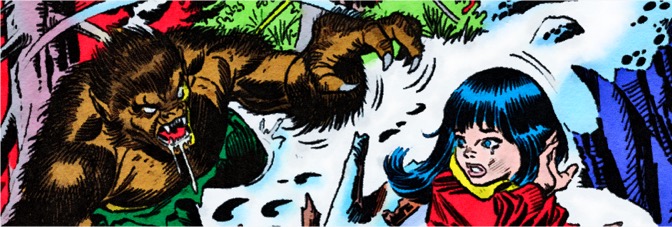
    It finishes perfect in a much better way than I ever imagined.

    Despite the finale opening with an incredible action sequence—Jo and Orla spending last issue apart also makes more sense (again, it probably reads just right in the trade)—it’s all about character drama. The witchcraft is just an expression of all these buried, complicated feelings and bad memories. But the conclusion of Jo and Orla’s quest to properly bury Orla’s witch grandma is just the beginning; Milledge isn’t only telling that story. The action resolution changes the stakes for the characters, and Milledge sorts through it for the rest of the issue. The dynamic, visually thrilling action sequence is just an appetizer for the character drama.

    Mamo’s a book about a lot, but it also does take place in a magical fantasy land, which figures into the resolution but never visually. Milledge focuses on Jo and on Jo and Orla, keeping it very grounded. The magic’s still out there kind of brewing, full of potential, but it’s not the point. The characters are the point, and Milledge does a phenomenal job with them. Perfect job. Down to the body language. Mamo #5 isn’t full of the swaying landscape—I kept wanting a double-page wide shot—instead, it’s full of breaths.

    Outstanding work from Milledge. I can’t wait to read it again. I mean, I can because I want to give it time to settle, but, damn, Mamo is one hell of a comic. I know I’m going to miss Jo and Orla. Enough I hope Milledge does a sequel. Even a strong mediocre one. She’s created something special with Mamo and done so with exceptional skill.

    It’s such a good book.

  • Impulse (1974, William Grefé)

    It’s an insult to hacks to describe Impulse director Grefé as such. There are very few directors with less sense of how to direct a movie (or anything) than Grefé. But then he’s simpatico with cinematographer Edmund Gibson at least in terms of skill. Grefé’s got terrible shots, Gibson shoots them terribly. But Gibson’s credited as Edwin, so apparently, at some point, he realized maybe he was impulsive working on Impulse.

    Grefé kind of—and only because every other option is exhausted—but he reminds of a TV commercial director. Like, a seventies TV commercial director. He’s got way too much headroom, and he never does close-ups during the protracted expository scenes. Outside a handful of action sequences and field trips, it’s primarily people standing or sitting inside talking to one another. Impulse filmed in Tampa, Florida, but it’s supposed to be in a much smaller place. Maybe. Maybe Shatner just drove from one side of town to the other, looking for his next mark.

    More on Shatner in a bit, I promise. But there aren’t any real exteriors. Either the producers couldn’t figure out how to get permits, couldn’t afford them but then also couldn’t just guerilla the shots. Impulse is artless low-budget filmmaking. If the whole thing was about getting Shatner to wear a bunch of silly, silly, silly seventies outfits—silly—to embarrass him later, it might make sense. Except in 1974, the producers wouldn’t have known Shatner can survive anything–even seventies Florida fashion.

    So it doesn’t look anywhere near as good even a TV movie from the same period. Impulse is unpleasant to view. But it’s surprisingly well-edited. Editor Julio C. Chávez initially seems as unimpressive as everyone else involved, then there’s a long shot beach scene, and it’s ADR, but it’s not bad. And then there’s some sound work where it ends, kind of breaking the third wall. Like, someone’s not hearing a conversation, then the conversation directly addresses them, and they hear.

    It’s wild. It’s not good; it’s bad, but it’s at least something different.

    Then the last half hour, which has Shatner’s mentally unwell gigolo conman breaking down and attacking the entire supporting cast… the editing’s really good. The scenes are still crap—especially Gibson’s day-for-night, which is ghastly—but the cutting’s nice. So, kudos to Chávez.

    Otherwise, there’s Ruth Roman.

    Impulse is just degrees of bad performance and how close the needle gets to embarrassing. Shatner’s spins around the whole time occasionally slows down a little, but then reliably zooms. For terrible camp Shatner, Impulse delivers.

    But Roman’s all right. She’s the local rich lady whose mansion gets the only establishing shot, and her best friend is young widow Jennifer Bishop. Bishop has a late tween daughter, Kim Nicholas, who cuts school to go moon over her father’s gravestone. She even projectile cries on it. She’s very sad.

    So Bishop doesn’t date.

    At least not until stud Shatner arrives. Of course, he neglects to tell everyone he first met Nicholas, giving her a ride to the graveyard one day. But don’t worry, Shatner’s got no further designs on Nicholas than killing her for being a tattle rat.

    Nicholas is bad, Bishop’s bad. Harold Sakata—Odd Job from Goldfinger—cameos as Shatner’s former partner-in-crime who wants in on the take. He drives around an RV with a giant “Karate Pete” sign on it; like on the crime job. It’s silly.

    Sakata just embarrasses himself. He’s at least having fun. Or what amounts to it in Impulse.

    For the Shatner-inclined, Impulse is required viewing, like Portrait of the Artist at a Low Point. It’s also early-to-mid-seventies-low budget Shatner, so it’s hard to be too upset at the film. It’s always bad, it’s always strange, it’s always problematic. From the start—the flashback where young Shatner (Chad Walker, in his only credit) kills his mom’s violent john, defending them, but she resents him because women are awful. Only they won’t be later; they’ll do everything Shatner says; except Nicholas because kids are terrible. Anyway.

    It’s poorly shot, but it’s also exceptionally mean to Walker.

    Then the opening titles are actually incompetent. The title cards pause the action, but they’re not in line with the current action. They’re mini-flashbacks. It’s inane, in addition to incompetent. Another reason Chávez is an unexpected boon.

    Impulse is awful. Of course, it’s awful. It exists just to be awful.

    Except for Roman and Chávez, obviously.

  • American Gothic (1995) s01e11 – Rebirth

    Rebirth’s a swing and a miss for American Gothic, even though it was an episode I’d been looking forward to seeing again, even though it’s directed by James “The Muppet Movie” Frawley. It also features garbage human being Danny Masterson as a teenage bad boy who helps Lucas Black against the normie teens bullying Black for… having had his entire family murdered. I didn’t recognize Masterson at that point (or at all, I needed the credits), but the mid-nineties white boy dreadlocks are a look.

    Masterson needs some cash to get out of town, leading to sheriff Gary Cole harassing him. At least until Sarah Paulson figures out how to return from the dead: she needs to borrow someone else’s spirit. In this case, Paige Turco’s visiting pregnant friend, played by Amy Steel, is just what the proverbial doctor ordered.

    I remembered the episode as being some complex character arc for Paulson, who only recovered her full faculties after her death, so she’s never gotten to be alive in this way before. Certainly not with all the grown men leering at her, which she doesn’t notice and, thankfully, doesn’t go anywhere. But her Rebirth gives Cole an idea for palling up to Black. All Cole’s got to do is turn Black against Paulson, which isn’t hard because Paulson’s hanging out with Masterson instead of brother Black. Even though she knows he’s super-lonely without her.

    It’s also not a good brother-and-sister arc. It’s not immaterial, but it’s close.

    Victor Bumbalo and Robert Palm get the writing credit, and it’s similarly nothing notable. Not in any good ways, especially in how lightly Black (and Paulson to some degree) take Cole raping their mother approximately nine months before Black was born—witnessing the event mentally traumatized Paulson for life. They’ve got no time to discuss it, not when Black can mope about Paulson hanging out with Masterson. He’s got a point—remove the real-life stuff, and there are still the dreadlocks and Masterson’s terrible Southern accent—but there’s also a severe lack of character development.

    Is it worse than the scene where Turco makes light of Steel’s two previous miscarriages as she worries about her baby? I mean, no? Rebirth passes Bechdel in the worst ways.

  • Werewolf by Night (1972) #31

    Wbn31This issue does something beyond what I was expecting from Werewolf by Night. It surprised me. Writer Doug Moench—with artist Don Perlin co-plotting—actually surprised me. Now, they couch that surprise in some bad writing, but still. I didn’t know Werewolf had any surprises left in it.

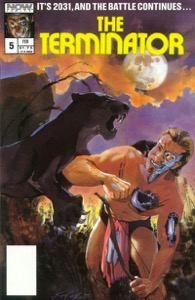
    Though, I suppose the issue even opens with a surprise—Moench and Perlin have turned Jack’s little sister, Lissa, now eighteen and apparently not a werewolf (or were-demon) anymore, into a homely buzzkill a la Jan Brady. Jack and Topaz want to take her skiing, but she wants to stay home and do homework. What a nerd.

    We’ll soon learn this ski trip is the day before the full moon, meaning they intentionally planned their recreation as close to Jack’s monthly lycanthropic outbreak as possible. They’re going with Buck, who wants to introduce everyone to his new girlfriend. Lissa’s surprised he’s got a girlfriend, which is kind of good since most writers on the book before Moench had Lissa hanging around forty-something Buck way too much. Not anymore, she’s got homework, and he’s got a young widow with a daughter. Nice ready-made family there, Mr. Cowan.

    They’re all going skiing. The issue’s cold open is Wolfman Jack about to kill the little kid.

    Now, there’s some bad writing in the issue. First, there’s Jack’s werewolf narration, which is just frustratingly pointless by now, and then there’s the cop who’s going to Haiti to hunt Raymond Coker for werewolfing while Black. Then there’s Raymond down in Haiti, meeting up with a strangely white mystic woman.

    But nothing compares to the little kid’s dialogue. Moench hasn’t exactly exhibited a great ear for dialogue in Werewolf—other than making sure Jack’s a jackass—but, wow, is that dialogue on the kid bad. You’re just begging for the werewolf to eat her.

    Except the werewolf’s not hungry? He’s hunting for the sport.

    Moench continues to rid the series of existing continuity; Jack’s inability as the werewolf to hurt his own friends and family is entirely gone now, something the last couple issues strongly implied. However, it’s more explicit here. It’s even a change from how Moench started writing the book.

    But it does mean he can surprise, and surprise, he does.

    It’s a heck of a compelling read, but probably only if you’ve been through the last thirty-plus Werewolf adventures.

  • Amélie (2001, Jean-Pierre Jeunet)

    I’m hesitant to call Amélie whimsical, though it’s the closest adjective. The film’s kind of a French New Wave-inspired fairy tale, except instead of being about magic magic, it’s about the magic of the everyday and, especially, its residents. There’s also something decidedly not fairy tale about protagonist Audrey Tautou’s quests. Broadly, Amélie is about Tautou interceding in her neighbors’ lives for good, but getting reluctant when she needs to act with as much agency in her own life.

    The film sets Tautou’s character up with narration, something it keeps up throughout the whole film (flawlessly performed by André Dussollier). In summary, we meet Tautou’s individually and collectively odd parents—father Rufus and mother Lorella Cravotta—who keep young Tautou (a delightful Flora Guiet) isolated from other children. When Cravotta dies tragically, it gets even worse. A time-lapse and some narration later, Tautou enters the film.

    She lives alone, except when babysitting someone’s cat, and keeps to herself. Then one day, she discovers someone’s forgotten treasure and charges herself with returning it to the person, who she doesn’t know, and who she doesn’t have any good information about. Getting better information requires Tautou to branch out into the world, which also provides her with further “do-gooding” opportunities (the film’s—or at least the English subtitles—word) for later as she discovers the sad state of her neighbors.

    The film runs two hours, which includes a full subplot about annoying but apparently not dangerous and still lusty Dominique Pinon. Tautou works at a café near her apartment. Pinon used to date her co-worker, Clotilde Mollet, and now spends his day in the café stalking Mollet. Does France not have the right to refuse service? Café owner Claire Maurier knows Pinon’s harassing Mollet, knows Pinon’s interfering with Mollet doing her work, and being disruptive to other customers, but just shrugs at the inevitably of some men being that way. Eventually, as part of her new lifestyle approach, Tautou decides the best solution is to set Pinon up with another employee, hypochondriac Isabelle Nanty.

    Tautou also gets involved with grocery clerk Jamel Debbouze and his abusive boss, played by Urbain Cancelier. Despite Cancelier being profoundly shitty to Debbouze, this subplot is probably Amélie’s lightest or at least most played for laughs. Tautou ensures Cancelier gets his just desserts in a pair of hilarious echoed sequences.

    But her two most significant relationship developments are with dad Rufus and neighbor Serge Merlin. Rufus and Tautou start just as detached as the flashbacks show; once she realizes her capacity for playfully interfering for good, she also figures Rufus can benefit. It’s another subplot played for humor, with Merlin taking on the surrogate dad-for-character-development part.

    Merlin’s a painter with osteogenesis imperfecta. Tautou’s only slightly aware of him, seeing him through the window in his apartment where all the furniture is covered in pillows so he doesn’t break any bones on it. The narration fills in the rest—the narration foreshadows all the pertinent characters, pausing on everyone long enough to give a brief character description and (usually for a smile) likes and dislikes. Amélie’s narration spends the first act handing the film over to Tautou and then shares some space with her alter ego and potential love interest, played by Mathieu Kassovitz. While Kassovitz doesn’t really join the action until halfway through the film, the film at least lets Tautou find out about him in scene. Tautou’s ground situation is dead mom, distant dad, isolated childhood, now in her early twenties. She doesn’t have a character development arc because the film never takes the time to establish her as a character, which allows for fun, impromptu diversions, but—even for something straddling magical realism—is a noticeable dodge.

    Tautou’s charming, but director Jeunet’s exceptionally deliberate about framing her as such. In the third act, when people around her have to conspire to get her more active in her own destiny, there’s a slightly jarring shift in the narrative distance. Kassovitz suddenly becomes more the co-lead and even protagonist, with Tautou reduced to her life only having meaning as a romantic pursuit. At that point, Amélie starts leaning hard on the affable supporting cast—Debbouze and Merlin in particular—to distract from Tautou’s agency going out the window.

    Though I suppose the approach would work just fine if Jeunet and screenwriter Guillaume Laurant (well, Jeunet and Laurant did the scenario, then Laurant did the dialogue; no WGF, I guess) were trying to comment on Tautou’s interfering adventures when she’s on the other side, but they don’t. Tautou’s strangely disinterested in the results of her actions, regardless of their positive or negative outcomes.

    All the acting’s good or better. Ditto the technicals. Hervé Schneid’s editing is excellent, and while surprisingly muted, Bruno Delbonnel’s photography is strong. Good music from Yann Tiersen. And while I’m curious if Jeunet asked costume designer Madeline Fontaine to make Tautou dress like an Audrey Hepburn character or if it was Fontaine’s idea, very good costumes.

    It’s a little long, and the third act’s wobbly (but most of the second act already forecasts the wobble, so it’s not a surprise); Amélie’s often hilarious, usually funny, and always delightful.

  • The Terminator (1988) #5

    The Terminator  5The Terminator, at least with writer Jack Herman steering the series… okay, it’s not good, but it’s not terrible. It’s not bad. While Herman never resolves the culturally appropriating white male Terminator who goes to the South American jungle and puts tribal markings on his fake(?) flesh to terrorize the locals, it’s at times thoughtful-ish sci-fi.
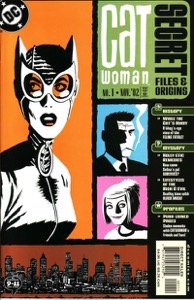
    Like, there aren’t any Terminator: The Movie references and none of the Terminator’s behavior this issue requires continuity with the movie. The Terminator’s mission in South America is to build a giant machine to kill the rainforest faster so the humans all die more quickly. I suppose there’s actually a continuity problem because it means this part of South America is doing just fine in the post-nuclear holocaust of The Terminator. Is SkyNet out of nukes? It can’t figure out how to make more?

    So many questions. But only when you consider the issue as a licensed property. As a comic about some isolated South American tribesmen running afoul of an invading metal monster and having to quest—to a research outpost—to save their tribe? It’s solid. There’s a not great “Terminator history but through hallucinating indigenous people, but it’s just slightly problematic, not disastrous. Herman puts in the work on his story.

    The ending’s pretty cool, too, introducing the idea of The Terminator as an anthology series, checking in on the destroyed world. Much better than when they were doing “The Adventures of Kyle Reese’s Potential Acquaintances but Definitely No One from the Movie.”

    Thomas Tenney and Jim Brozman’s art is the issue’s most significant drawback. They both put in some work, but it just doesn’t add up to much. Odder still is when they do visual nods to other comics; only those nods have better art than when they’re not doing nods. They focused their energies poorly. But, again, it’s a late eighties licensed comic from an indie publisher… the bar is low.

    And while The Terminator isn’t of interest as a curiosity (it might still be), it’s far from narratively incompetent.

  • Catwoman Secret Files and Origins (2002) #1

    CwsfI sort of forgot about Secret Files. Especially this Catwoman one, even though I do remember Holly’s resurrection explanation being covered in it. Like I remember wanting to see how writer Ed Brubaker would address it. Now to decide if I want to spoil the reveal.

    But first, the feature story, with Michael Avon Oeming pencils and Mike Manley inks. Brubaker cuts between some hoods reminiscing about their encounters with Catwoman over the years and Holly telling girlfriend Karon about it. It’s initially a cute idea, but then it gets a little weird because Karon doesn’t know Selina is Catwoman, so it’s basically Holly lying to her girlfriend while the hoods just rate Catwoman’s hotness through various outfits. Oeming doesn’t do cheesecake, but the hoods fill in the male gaze with their dialogue.

    For a 2002 comic, it’s distressingly progressive but hasn’t aged great.

    Oeming and Manley’s art is okay—they do better with Holly and Karon’s section—while the rest seems like a riff on “Batman: The Animated Series.”

    Then there’s a Slam Bradley short—Brubaker wrote all the stories in this issue, which is almost a mistake. Like, he’s got different artists on each story, and only the Slam one really fits the regular Catwoman Cooke-inspired vibe (Cameron Stewart does the art), and maybe it should’ve been the other way around.

    The Slam story also ages poorly. And not just because of Stewart. Brubaker writes it first-person from Slam’s perspective, and it’s all about him thinking about how men used to be men, and now they’re all on their smartphones or something. Selina is hanging out with him and helps out during fight scenes, but she’s utterly pointless to the story. It implies their relationship is further along than the regular series has gotten. Like, they’re at the hanging out and not talking stage of their romantically-charged friendship.

    I think in the main book they’ve had like one case together.

    It’s okay but doesn’t have one clamoring for a Slam Bradley solo book.

    Then comes the Holly resurrection story. It’s two pages, with lovely Eric Shanower art, but it’s cheesecake. The style’s a Love and Rockets riff, only Holly and Selina aren’t the Locas, and Shanower’s not Jaimie. It’d be better if it were a more direct homage. Instead, it just treats Holly like she’s Maggie and Selina like she’s Penny Century—and Shanower’s cheesecake approach draws further attention to the first story’s tell don’t show male gaze.

    It’s a miss. Even before getting into the story itself. But would it be a miss if I didn’t see what Brubaker and Shanower were doing without acknowledging? Probably? Like, it too suggests the regular book emphasizes really good Selina and Holly scenes, but… for the most part, it doesn’t. Catwoman is doing great, but its Secret Files tries to draw attention to what it doesn’t do.

    Very weird.

    Then comes the Black Mask story, establishing him as the series’s next villain. It’s Brubaker doing first-person narration again—more successful than Slam’s, but now an exhausted device—while Black Mask muses about how he’s got to deal with Catwoman. We once again see his slick lawyer sidekick, who’s down with evil but not Black Mask’s penchant for gruesome torture.

    Stewart does the art again, and it’s fine. It’s just an extended Catwoman scene they didn’t have time to do in Black Mask’s reveal issue; they actually could’ve taken the last two pages from this one and tacked it on to that reveal, and it’d have been fine.

    As someone who likes the idea of Secret Files well enough—don’t get me started on the Who’s Who entries—the Catwoman one is a disappointment. None of the stories accurately get the main series’s tone, which—thanks to Stewart doing some of the art—is clearly Brubaker’s problem, not the artist’s. It’s an even stranger miss taking Brubaker’s successful done-in-one fill-ins; he’s had a really good one on Catwoman already. You’d think he’d do great with an eight-pager focusing on a side character.

    Nope.

    It does have some historical value in the history of comic book objectification of women, but mainly as an example of a cop-out. A multi-tiered cop-out.

    Anyway.

    Can’t wait to get back to the series.