Category: 2016
-

The aliens speaking makes human ears bleed to the point of deafness. Blows the ear drums? So now Liddy and Oscar can’t talk to each other. They just have to communicate with body language and expression. Or Liddy just takes Oscar’s stuff because… she can? There’s some “character development” like the revelation Liddy’s husband was…
-

So pretty much everything I liked in Barrier #1 is gone in Barrier #2. The issue opens at NORAD, with a couple officers talking in acronyms about how they’re not going to report a UFO even though they saw a UFO. Close Encounters it ain’t. Independence Day it ain’t even. Vaughan thinks the acronym-heavy banter…
-
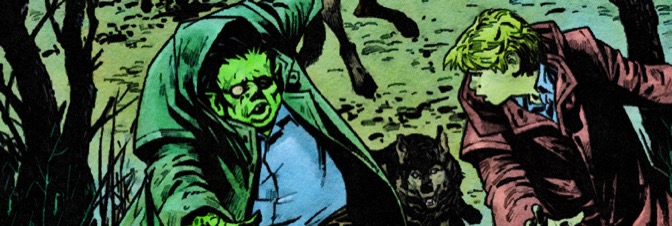
Monster is a strange comic. It’s British, was serialized weekly, running a couple years in a couple different comics magazines–Scream then Eagle–and there’s a very British comics storytelling sensibility to it. There’s also the reality of a weekly four-to-five page chapter and how doing recap–doing some really effecient recap too, using repetitive dialogue to force…
-

The only particularly bad thing in Doctor Strange is the music. Michael Giacchino strikes again with a bland “action fantasy” score. The score feels omnipresent; I’m not sure if it really is booming all throughout the film or if I was just constantly dreading its return. Dread is something in short supply in Doctor Strange.…
-

If cheap, misogynist Canadian horror gore twaddle is a genre, Let Her Out must be one its finest examples. At least in the modern era. In some ways, the worst thing about the film is director Calahan. With a single exception, his direction’s not bad. His composition is strong, his sense of space is solid…
-

Moana takes a while to find its stride. Directors Clements and Musker and Hall and Williams aren’t at ease until the movie’s on the water. The film starts on a Polynesian island, with a young chief-in-training (Auli’i Cravalho) secretly longing not to be stuck on the island paradise, but out exploring the ocean. Grandmother Rachel…
-
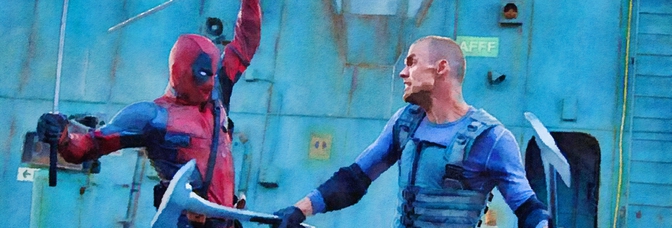
Deadpool never gets to be too much. The film quickly goes into flashback–narrated by lead Ryan Reynolds–but not before going through an elaborate, effects and humor filled action sequence. Maybe even two. But I think one. It takes Deadpool over an hour to get the viewer caught up on Reynolds’s origins as a superpowered, red…
-

Love & Friendship opens with some non-traditional portrait cards for its cast of characters. The actors all appear in the opening titles, but then director Stillman breaks out introductions to the characters. Along with some narration. There’s some narration early on, which goes away almost immediately. Because narration might show a little too much of…
-
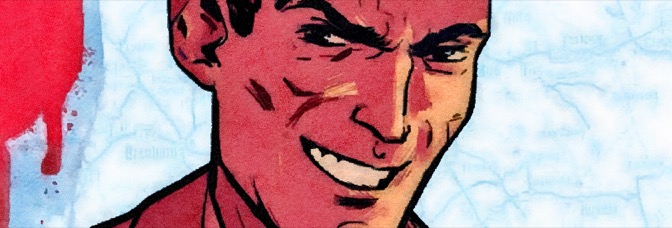
The Killer Inside Me revels in its degeneracy. There aren’t any happy moments in the entire series–a five issue adaptation of Jim Thompson’s 1952 novel–but the first issue is jarringly, hostilely unpleasant. Writer Devin Faraci does lengthy talking heads sequences–back and forth, back and forth–with artist Vic Malhotra keeping them interesting. Interesting or not, the…
-

Mockingbird: My Feminist Agenda, the trade, contains five issues. Mockingbird: My Feminist Agenda, the storyline, is three issues. The last two issues are filler because the series got cancelled because comic book readers are awful. Before those last two issues is an afterword on the series from writer Chelsea Cain. Why would anyone want to…
-

I have no idea what just happened. I mean, I do. Higgins and Siegel are straightforward writers, even when they’re doing flashbacks and big reveals in quick sequence. But it has a strange plot development for the first issue of the back three. And while there are flashbacks to Earth, all of a sudden Reis’s…
-
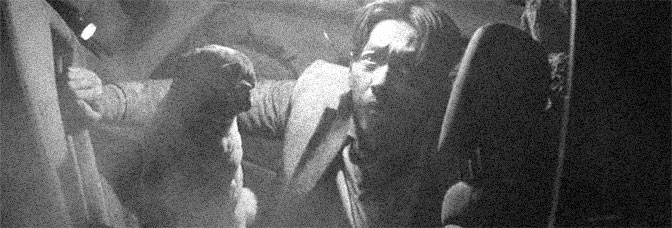
Tunnel is a small scale disaster movie. It’s also not. It’s about a small scale response to a big disaster. Writer and director Kim takes some time introduce threads about craven reporters, craven government officials, craven capitalists, but most of the movie is lead Ha Jung-woo stuck in a tunnel. The first ninety minutes of…
-
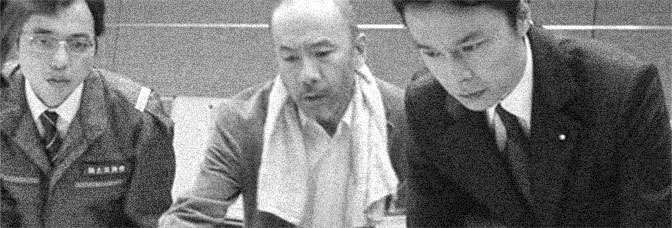
Shin Godzilla is the story of hard-working bureaucrats responding successfully to a national crisis. When the giant monsters invade, you can’t do better than the able public servants of Shin Godzilla. And for most of the film, directors Higuchi and Anno pull it off. The first act of the film, with the introduction of the…
-
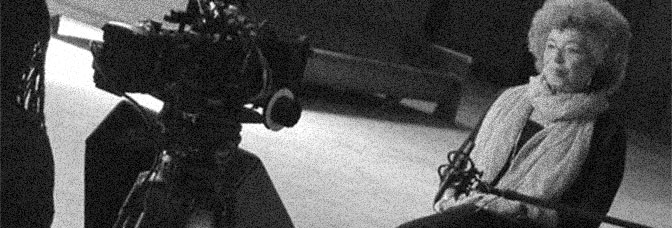
The first half of 13th is didactic–well, except when the film makes fun of interviewee Grover Norquist. There are three or four capital C Conservatives interviewees; Norquist and Gingrich are present because they’re such trolls they think they’re convincing. Gingrich is during his Black Lives Matter phase (the documentary is pre–2016 election, but still very…
-

Literal Bohemian Rhapsody is the filler footage for a bad music video for the Queen song, Bohemian Rhapsody. It’s literal, so Jeff Schine is actually running around telling his mother things and shooting people and whatever. Except he doesn’t shoot the guy right. Because a lot of Literal is just stock footage. It might work…
-

Demonic has enough ideas in it for another twelve issues. Writer Christopher Sebela has six issues and he pretty much gives every couple issues their own subplot. But that subplot is distinct not because of its content but because of how Sebela writes it, how artist Nico Walter visualizes it, or a combination of the…
-

Three is about a dirty cop (Louis Koo), a determined doctor (Zhao Wei), and an injured criminal (Wallace Chung). It’s not real time, but its present action is probably seven hours–in an under ninety minute runtime–so it’s close. Zhao is supposed to be getting more and more tired because she refuses to go home from…
-
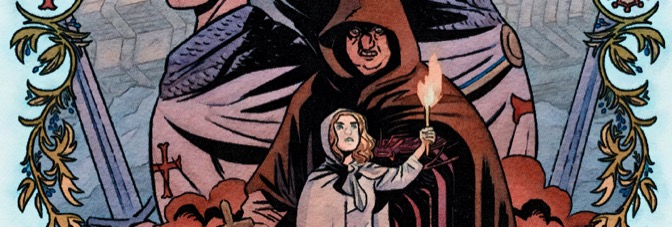
Lake of Fire is thoughtful high concept genre material. It dabbles in genre. It never really engages it. Writer (and colorist and letterer) Nathan Fairbairn does a lot more with the history aspect of Lake of Fire than anything else. So, real quick. Lake of Fire is a story about some knights of the real…
-

Arclight isn’t just back, Arclight is back and pretty great. There’s a lot of content, thanks to how Marian Churchland paces and composes the art. And Brandon Graham’s terse exposition is fantastic. It feels magical and dangerous and big. Churchland’s art is perfect for big, empty, and dangerous. Graham’s strange organic, magic creatures are imaginative…
-

While Dead Inside doesn’t reinvent the wheel–the protagonist is a divorced, hard-drinking female detective who can’t get anyone (male or female) to listen to her about a suspicious death and possible conspiracy–it’s solidly executed. John Arcudi’s script moves things around, has some surprises. Toni Fejzula’s art style is different–the mundane is visually disturbing. It works…
-

In the first scene of Hidden Figures, the film makes it immediately clear there’s going to be quite a bit of self-awareness. The film is based on the true story of three black women who were instrumental to NASA’s–and the space program’s–success. They’re working at NASA in the early sixties, during segregation, doing harder jobs…
-

There’s no indication there’s a better movie anywhere in Operation Chromite. Director Lee just doesn’t have a handle on it. The script’s an uncomfortable mix of predictable and manipulative–director Lee and co-writer Lee Man-hee lay on the war movie jingoism so thick, it actually takes a while to realize Lee Beom-su’s giving a legitimately great…
-

Well. Motor Crush is absolutely awesome. It’s got a phenomenal pace, lots of action–Babs Tarr’s art is fantastic–and just the right amount of drama. Cameron Stewart and Brenden Fletcher actually do a whole three act story this issue, all while doing a first issue. It’s very cool, with a great cliffhanger. And the lead just…
-

Black Hammer looks like a horror comic. Dean Ormston’s art always suggests there’s something darker going on, even if writer Jeff Lemire didn’t hint at it all the time. There’s something creepy about the comic’s world; the cast of characters doesn’t know what’s going on, the reader doesn’t know what’s going on, Lemire doesn’t really…
-
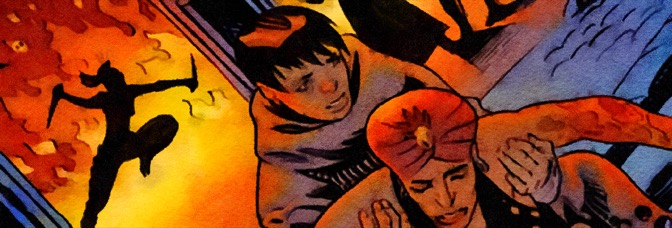
I’m not sure Naifeh is aware people read other comics besides Night’s Dominion. This issue is a bunch of battle scenes, a bunch of characters, a bunch going on; I have no idea what any of them have to do with the other. There’s some excellent art, but it’s a messy, messy jumble. Naifeh’s either…
-

Aside from some rushed art on the talking heads–but still great composition from Aira–and the romantic subplot not paying off, this War Stories arc is pretty fantastic. Ennis is comfortable with the characters and the setting. He looks at the fliers and their fears more than anything else.
-
Hogan wraps things up nicely on the series’s mystery. He covers a lot through flashback and tightly constructed exposition, but doesn’t have enough time to deal with the threat to Harry’s medical practice (and existence). Solid Parkhouse art too. The characters, supporting and lead, make Resident Alien, time and again.
-
Reading this issue of Providence, I expected a lot of things. Moore didn’t do any of them. Even when he hinted at maybe doing something in the direction of an expectation, he didn’t do it. He weaves this beautiful closure to everything he’s been doing not related to the Lovecraft. And he gets to the…
-

Mockingbird: I Can Explain collects the first five issues of Chelsea Cain’s run as writer, along with a special, which was Cain’s first work on the character. That special comes at the end of the collection, introducing Cain’s approach to the character. It’s kind of like a dessert in the collection, however, since it doesn’t…
-

Stylist for hire. Stylist for hire. Denis Villeneuve is a stylist for hire on Arrival. He assembles a wonderful crew and they all do great work. Joe Walker’s editing is always assured, never flashy. Bradford Young’s photography is phenomenal. Arrival’s got a great color palette. Bored with its beauty or some such aesthetic. Excellent music…
 The Stop Button