The Stop Button
blogging by Andrew Wickliffe
Category: 2005
-

The issue ends with an afterword from Dick Giordano talking about finishing the Dracula adaptation thirty years after he and writer Roy Thomas started it. He confirms my suspicions they didn’t actually have it plotted out; rather, they did that work thirty years later. Or twenty-eight or whatever. Plus, it sounds like artist Giordano did…
-
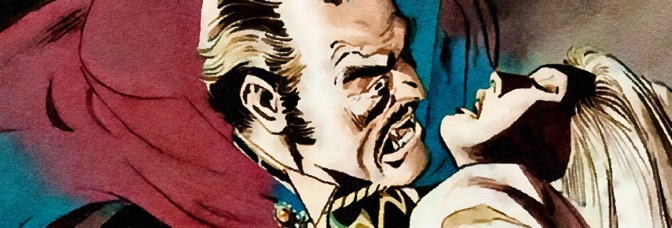
Like all faithful Bram Stoker’s Dracula adaptations, Stoker’s Dracula has hit the point where the source material’s bad writing is causing problems. Or, at least, lazy plotting. But it’s not writer Roy Thomas’s fault; it’s all on Stoker. The most obvious example is someone screwing with Van Helsing’s plan to save Lucy’s soul. Last time…
-
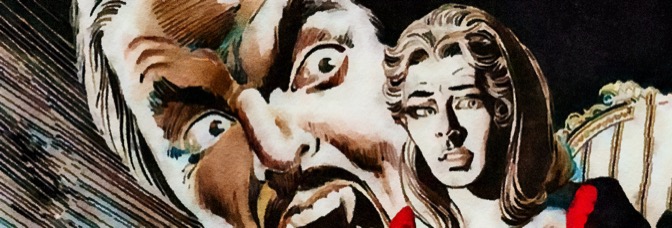
Stoker’s Dracula collects and then continues Roy Thomas and Dick Giordano’s seventies novel adaptation, which ran in the black and white horror magazines, Dracula Lives! and Legion of Monsters. Thomas and Giordano only did six entries back then, and since they’ve only got one chapter of new material in this issue… they stopped before they…
-
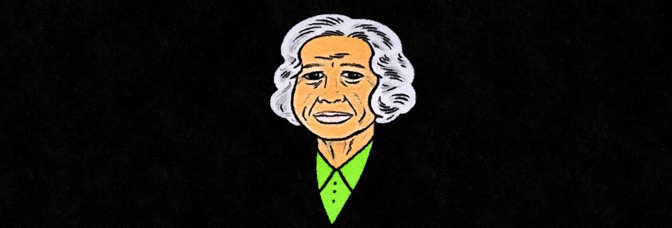
@#$%& Beto! I very deliberately emotionally steeled myself for Luba #10. Creator Beto Hernandez ended the last issue on such a one-two punch of cliffhangers (no pun), I knew I needed to be ready. Lots of stories were about to come to a head, lots of emotions. And they do. Lots of stories do come…
-
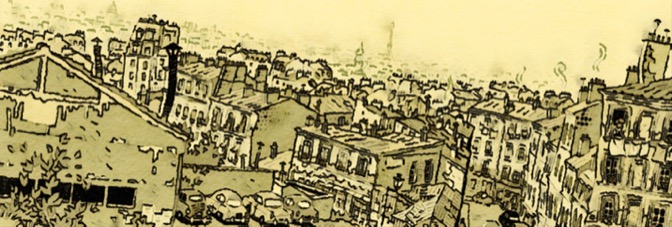
The love story at the heart of Paris could take place anywhere. But it also can't take place anywhere but Paris. This collection emphasizes the Paris setting, with artist Simon Gane doing a new visual prologue of the city waking up. The birds are chirping, the lovers are waking (or already busy), and the city…
-
Did anyone read the script for Cigarette Burns before they started shooting? Udo Kier’s got a line about Norman Reedus following him, then Kier follows Reedus. Not to mention Reedus’s inability to open doors convincingly, much less regurgitate Drew McWeeny and Rebecca Swan’s startlingly insipid dialogue. It’s terrible when it’s Kier and Reedus delivering the…
-
I’m not sure how much more you get out of West Coast Blues if you know all the music references—I know all the movie references and it doesn’t really add anything except being able to contextualize the story as a noir piece, which isn’t particularly necessary. Like, it comes across real easy, even if you…
-
The episode starts with Ricky Gervais visiting agent Stephen Merchant—who may or may not have a new hair cut, which may or may not be silly—and then they go off to a theater to get Gervais a proper acting job. Well, the genie in a production of “Aladdin.” But he’s got lines. There’s a lot…
-
I can’t imagine Ricky Gervais and Stephen Merchant had to take notes “Extras” but thankfully some little angel plopped between their shoulders and whispered the right things in their ears for some course correction. No more is Ashley Jensen marriage and man hungry, now she’s got a regular man, John Kirk. So then Jensen’s subplot…
-
This episode introduces co-creator, co-writer, and co-director Stephen Merchant in an acting role, presumably a regular. He’s Ricky Gervais’s agent. Gervais is mad because he can get any parts whereas Merchant is mad Gervais can’t get any parts; no one wants Gervais is the idea. Certainly not on the movie he’s working on, a period…
-

It takes about halfway through the episode to learn both leads’ names. One is Ricky Gervais, I mean his character name. Ashley Jensen is the other lead. They’re both movie extras, working on the set of a serious Ben Stiller genocide movie. When the episode starts, it’s them after a shot and they’re talking to…
-

There are quite a few things to say about The Christmas Invasion. For example, as improbable as it seems, there’s a chance David Tennant is going to redeem Camille Coduri, who went from a perfectly fine guest player at the beginning of last season to a complete time suck by the end of it. It’s…
-
This episode just ought to be called Deusest Ex Machina because it turns out everything this season has been building towards is a giant reset for the series. Which does make sense, given the Doctor gets reborn whenever they recast, but it completely dismisses the idea of Christopher Eccleston having a significant role. It invalidates…
-
At least it’s got Joe Ahearne directing. I mean, it’s not terrible. Guest star Jo Joyner is a nice “romantic” interest for Christopher Eccleston, which is this standard thing where Eccleston and Rose Piper go to some time period and don’t spend any time together and Eccleston has this chaste but sincere connection with some…
-

This episode is easily writer Russell T. Davies’s best so far. Maybe it helps he’s got Joe Ahearne directing, who’s even able to weather the Noel Clarke storm. Though it’s a new Noel Clarke. A moody one who’s not hanging on Billie Piper’s every word hoping for a kiss. In fact, they suggest a physical…
-
It’s a disappointing conclusion. It’s not a bad episode, but it’s a fairly obvious, kind of silly finish to the much stronger first episode. Partially because the show never really finds its footing with Christopher Eccleston and John Barrowman, who are now in a pissing contest for a number of things but also for Billie…
-

It’s a really creepy episode. Like, really creepy. Writer Steven Moffat comes up with a fantastic “villain,” this little kid in a gas mask who calls out, “Mummy,” over and over again. And then when he touches you, you get infected with something and eventually turn into a gas mask covered person. Now, the gas…
-
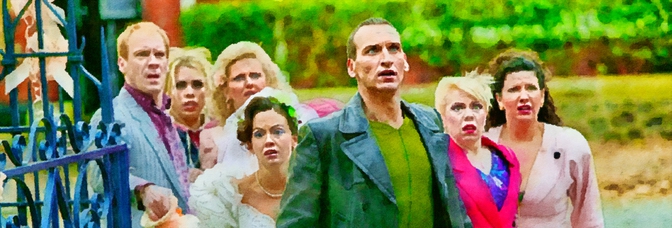
I went into Father’s Day with high hopes; Joe Ahearne directing, Paul Cornell writing. I remember hearing about the episode (albeit vaguely) when it first aired because I knew Cornell’s comic book writing. So I went into the episode full of goodwill. It’s all about the obvious kid going and saving their dead parent thing…
-
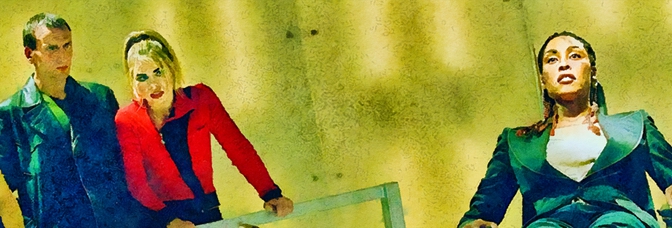
This first half of this episode is really strong. The second half, not so much. Even after stunt guest star Simon Pegg gets better in the second half it’s not any better. Writer Russell T. Davies doesn’t have a good resolution for the episode’s intrigue and no matter how effectively executed the suspense gets—Brian Grant’s…
-

Okay, this one requires some disclaimers. First, when I watched the last episode and saw the preview of this one, I thought it looked terrible. Like, rolling my eyes terrible. Second, I was visually familiar with the Daleks from growing up in the eighties and whatever. I thought they were silly and decidedly not cool.…
-
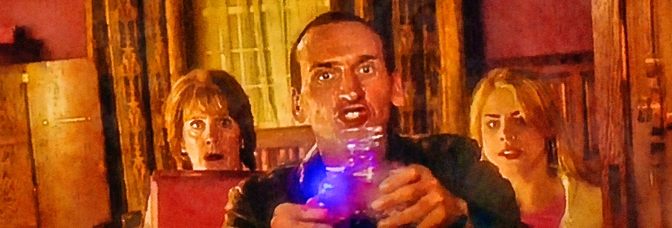
Digital video in the mid-aughts was still very rough. Around the time World War Three came out, some of the best DV cinematography wasn’t being done in film or television but in art and technical schools, as creatives were figuring out how to best light for the medium. In other words, I understand why cinematographer…
-
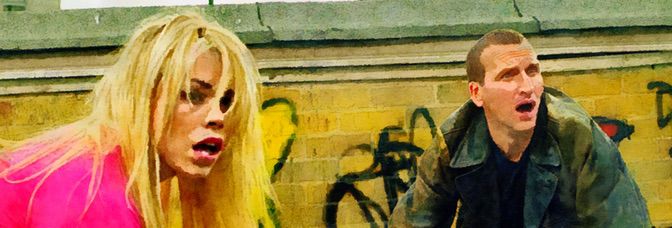
Director Keith Boak is back and it’s obvious from go some of the problem with Boak-directed episodes is Boak’s a bad director. Some of the problems are budgetary, but Boak and cinematographer Ernest Vincze even make the non-effects stuff look like bad digital video. There’s an anti-suspense suspense sequence involving sympathetic coroner Naoko Mori, who…
-
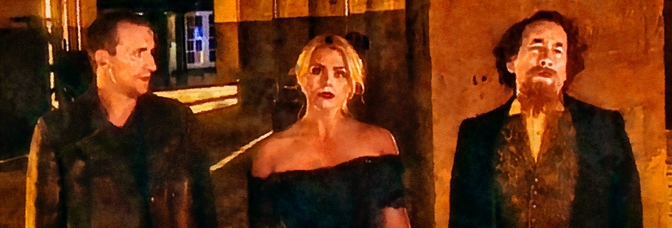
So the time and space machine is imprecise? Is that a “Doctor Who” thing? They bumble through the time? Because this episode is supposed to be Billie Piper getting to see nineteenth century Christmas in Naples or someplace but instead they end up in Cardiff (Cardiff gets a lot of deriding this episode); so can…
-
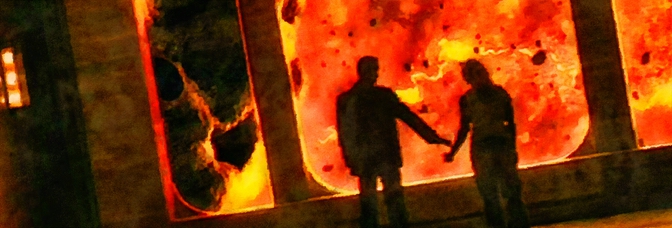
This episode is so much better than the previous one. So much better. And the only difference, besides setting and it not introducing a new lead character (Billie Piper), is a different director (Euros Lyn). Or maybe writer Russell T. Davies just had much better ideas for this one? Though the special effects are also…
-
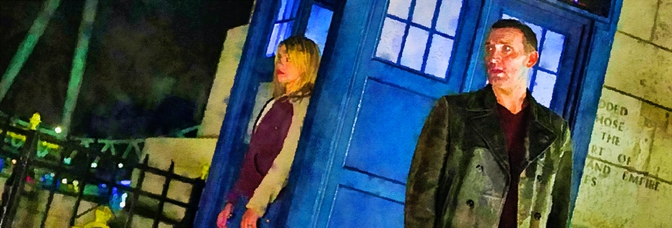
I am not a “Doctor Who” person. I’ve known some “Doctor Who” people, I count good friends as “Doctor Who” people. But there’s no way to talk about this show without prefacing with… I don’t get it. I still don’t get it. It’s like you have to be a certain kind of anglophile. What’s the…
-
The comic opens with Viorica telling Frank what happened to her back in Moldova. Enslaved sex work. Escape. Family (father) rejecting her. Recapture. Ennis splits it into two doses, both for the reader and the characters. In between he introduces the father. Last issue he introduced the son, along with the son’s female sidekick. This…
-
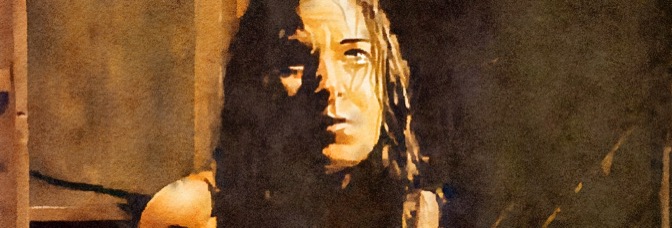
From the first page, The Slavers is different. And not just because penciller Leandro Fernandez, inker Scott Koblish, and colorist Dan Brown turn in a splash page out of Sin City. No Frank, but a woman with a gun in the rain, screaming as she fires. Frank’s narration—which is going to be near omnipresent in…
-
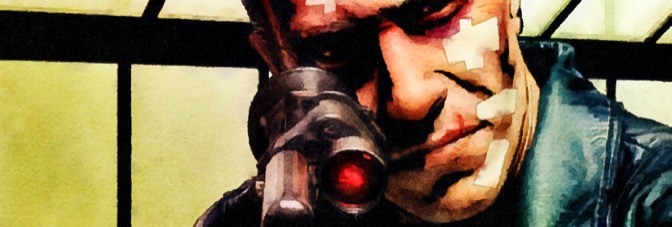
So in the last arc, Ennis found the pulp in Punisher MAX in a non-pulp setting. This arc ends in a pulp setting but without pulp storytelling. Instead, it’s this pensive, depressing look at people trapped by their lives. O’Brien realizes she’s trapped in this dark, violent, ugly world and only ever gets glimpses of…
-
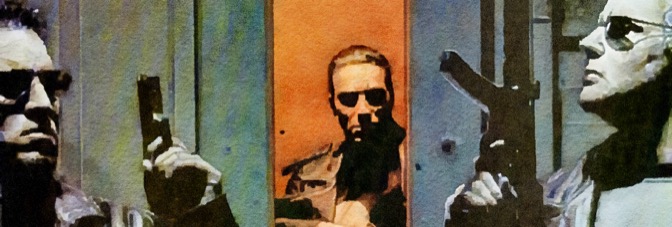
Lots happens this issue. Lots. Also not lots. It’s a very particular kind of comic, where the heroes find out what the villains have been plotting. A revelation issue… but for the characters. There’s probably a term for it. Sort of a diegetic revelation issue. Anyway, it also has Frank getting his head straight—courtesy a…
-

The issue opens with one of those good Ennis ideas not explored; two guys breaking into a closed jewelry shop and terrified by the thought The Punisher, who’s (apparently) never cared about the non-violent street criminals, now does cares about them. Since he’s gone spree. Spree-er. But it’s just the one-page opener, nothing Ennis wants…
 The Stop Button