Category: 1999
-
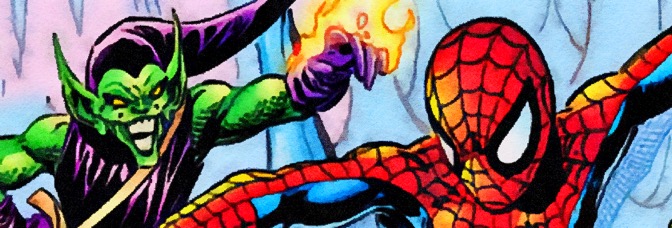
Artistically speaking, I don’t depend on John Byrne for much. Solid layouts maybe, everyone looking the same definitely, a decided lack of backgrounds as well… but I guess I also depend on him not to do Liefeld-like proportions and he closes the issue on one. It’s hideous. But it’s also a mystery–he draws Norman Osborn…
-
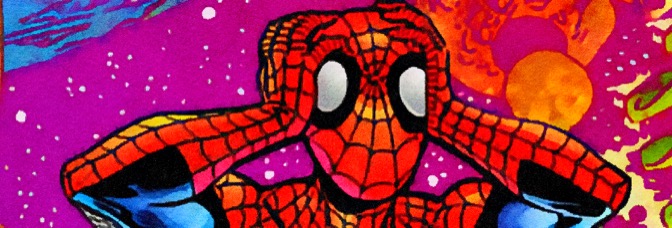
This issue–even though it’s got Betty Brant and I doubt Byrne’s going to have a chance to foul up their flirtation–might be the worst so far. Again, I don’t care (does anyone care about Chapter One? I know even Byrne distanced himself from it, though I swear I read he once said “anyone who doesn’t…
-

This issue, with Byrne eschewing most of Electro’s origin, not to mention the Lee and Dikto issue featuring him, is maybe more what all of Chapter One should have been. It’s got Byrne’s fingerprints all over it, versus a more direct “retelling.” For example, Byrne adds a huge Human Torch fight sequence this issue–the Torch…
-

Wow, it’s worse when Byrne only tries to retell a single Lee and Ditko length issue. He does half the Doctor Doom story (ignoring the initial meeting between Doom and Spider-Man, again, a somewhat interesting omission) and half the Lizard story. The originals probably took fifteen minutes to read. Maybe more. Byrne’s retelling is a…
-
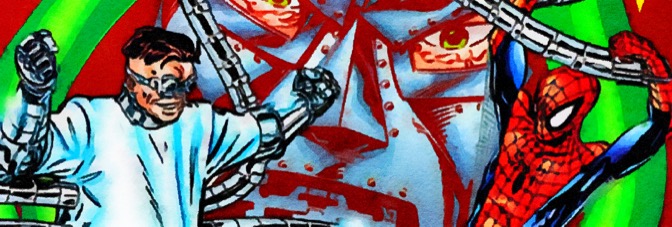
Reading the original issues, I noticed how money concerned Peter’s actions often were during the first few issues. Bryne seems to have noticed it too, turning it into something of a plot point–Spider-Man realizes he should be selfless or some such thing. The problem with Byrne’s take is how lousy it suggests Spider-Man was before…
-
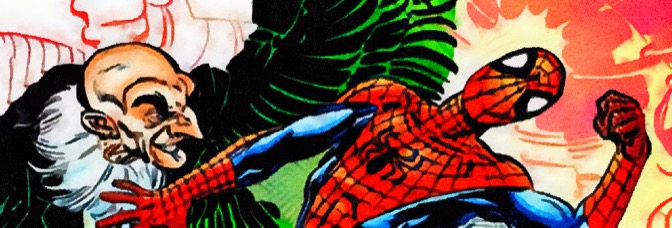
It’s somewhat interesting to see how Byrne adapts the originals–for example, he sets up a cliffhanger on something from the middle of an original (Spidey’s initial defeat at Doctor Octopus’s hands). But interesting isn’t good. Or worthwhile. Here, Byrne introduces a previously unknown Superman and Jimmy Olsen relationship between Spidey and Flash Thompson. Byrne continues…
-

You know, it’s not terrible. I mean, it’s kind of dumb in a nineties rehash kind of way–if Byrne ever got so thorough in his thinking of Superman’s origin, he never showed it in Man of Steel and just let a lot go unmentioned–but it’s nowhere near as bad as I was expecting. Maybe because…
-

I figured I was safe going into Superman vs. the Terminator without any continuity knowledge of Superman comics in the 1990s. Was I ever wrong…. While I did read “The Death of Superman,” I quickly lost interest and am pretty much completely unfamiliar with all the further nonsense following it–Steel, Superboy, Cyborg Superman, et cetera,…
-

The most surprising thing about Godzilla 2000 is learning the director had made other moves in the series before this one. The writers too. It’s a little surprising, since it’s so full of lame lifts from American blockbusters (including Independence Day, which seems a little strange, given Toho made Godzilla 2000 after the American bungling…
-
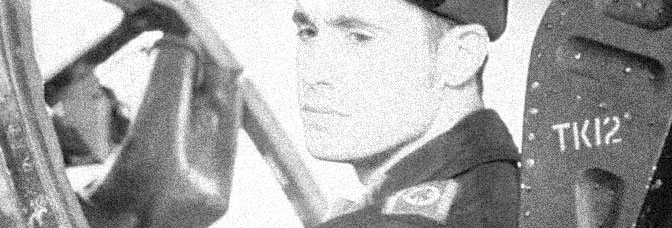
Watching Freddie Prinze Jr. court Saffron Burrows feels like some kind of archaic punishment. It’s the filmic equivalent of the rack. Thankfully, not all of Wing Commander concentrates on the courtship, which might very well be the anti-Christ of screen romances–trying to decide if it’s Prinze or Burrows who gives a worse performance (Prinze through…
-
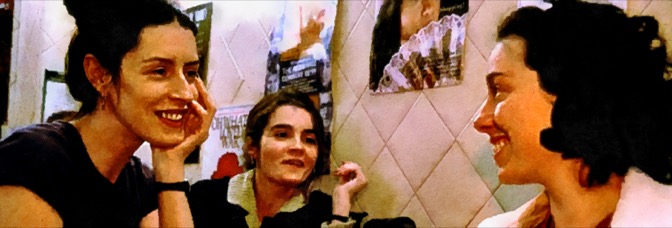
From a description–not even from a few minutes–Wonderland might appear to fit into (or create again) the British realism movement. It’s shot on video, natural lighting, natural make-up, no visible tripod shots, all hand-held, all very cinema verite. There’s no artificiality to it. Except the artificiality of being a filmed narrative. Wonderland even visibly bucks…
-
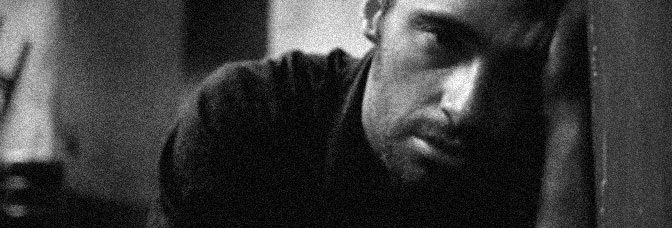
Okay, so Marty Denniss is a playwright. Erskineville Kings makes some more sense. Not a lot more sense, but some. It’s a peculiar picture, a human drama with a lot of dialogue–it’s set over a day–and it’s all in a few indoor locations. But Denniss, the writer, emphasizes himself, the actor, as the protagonist, when…
-
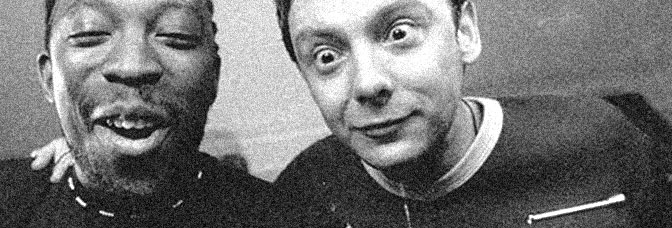
I mustn’t be the right audience for Human Traffic, seeing as how the only thing I found slightly amusing was The Terminator reference. I can’t remember why I had interest in seeing it–maybe because it came up when I was looking up Bill Hicks–and I do like John Simm. The problem with the film is…
-
A substantial portion–probably seventy percent–of Paperback Hero is solely about Hugh Jackman being charming. The rest, presumably, is about being a Claudia Karvan movie. But it’s really not. Karvan’s top-billed and she’s got, I guess, the bigger story, but Jackman’s the protagonist for the parts of the film where there’s a protagonist–the result is a…
-

I have this vivid memory of seeing The Matrix in the theater. When the agents, dressed in their black suits, got out of the car, everyone groaned–they thought it was a Men in Black reference. Of course, the thing about The Matrix is it fakes being wholly original. One of the nice things about being…
-

I have a hard time identifying my biggest problem with Dogma. Is it the lack of good narrative? Smith’s script, which does have some very funny scenes in it, is one of the worst attempts at an epical plot I’ve ever seen. It’s inept. It’s pat. Combined with some of the terrible performances, the whole…
-
From the director of MC Hammer’s greatest hits. Seriously. I wasn’t even going to open mocking Rupert Wainwright, but then I saw his filmography. Instead, I was going to open wondering how, with two people credited with the score (Billy Corgan and Elia Cmiral), it could be so terrible. Not really, I knew when the…
-
Writing about Magnolia seems a daunting prospect (I don’t think I’ve ever read a review of the film). Following the prologue, which one could (or could not) see as a way to ease the viewer into the genre–the multi-character, all connected genre (Magnolia‘s got to be the best of the genre… I can’t think of…
-

Awkward failure about a knife thrower (Daniel Auteuil) and his target (Vanessa Paradis). They meet when he saves her from jumping off a bridge (hence the title) and soon bond. The knife-throwing becomes a metaphor for their “romance,” though Paradis takes various lovers, which drives Auteuil nuts. Charming leads, glorious black and white photography, and…
-
Tell Me Something is, for a graphically violent serial killer movie, kind of goofy. It mixes genres–well, but it leads to the problem–starting off a straight cop movie, moving to the serial killer, then bringing in Shim Eun-ha as the damsel in distress. The serial killer aspect slows over time (especially since the killings, all…
-
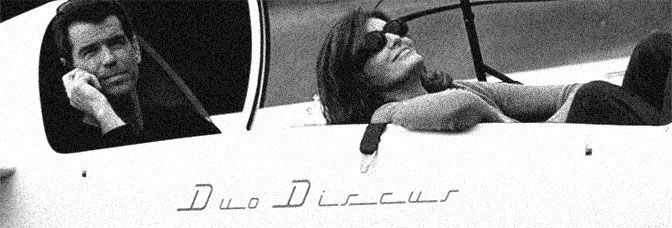
Every time I watch Thomas Crown, I wonder if there’s some magical explanation for all John McTiernan’s other films (except Die Hard, which is, too, singular). Because The Thomas Crown Affair, as I love saying, is the last great utterly mainstream film. But there’s something more… the tone of the film, the Bill Conti score,…
-
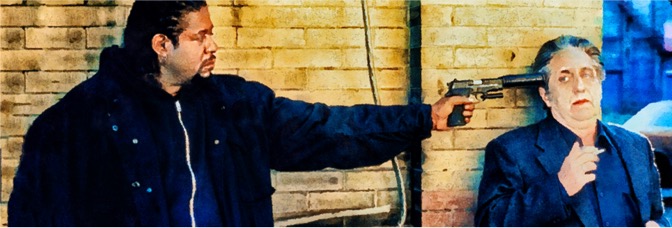
I’m having a hard time thinking of something to say about Ghost Dog. It’s perfect. Jarmusch doesn’t just do a bunch of good things or a bunch of right things. Every single thing he does is perfect. And Ghost Dog is perfect pretty early on too–in the first five or ten minutes, I was completely…
-

Andrew Fleming’s Dick has an irresistible premise (slow-witted teenage girls take down Nixon, not Woodward and Bernstein), but it turns out not to be enough for a movie. Not even a ninety-four minute movie. Besides inspired casting of Watergate figures (Dave Foley as Haldeman is probably my favorite, but Saul Rubinek’s Kissinger is the best–and…
-
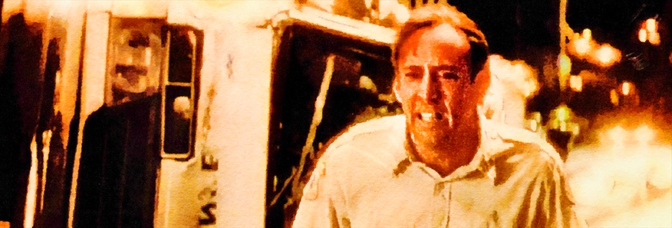
Singular motion picture recounting three nights of New York paramedic Nicolas Cage’s life and experiences on the job. Amazing on all counts–the lead performances from Cage and Patricia Arquette, the showy supporting ones from everyone else. Marc Anthony stands out as a frequent “customer.” Once frequent Scorsese scripter Paul Schrader adapted Joe Connelly’s novel, which…
 The Stop Button