Category: 1999
-

It’s a good but unfortunate issue of Black Panther. Writer Priest is firing on all cylinders, while the art is a Many Hands mishmash of styles—the issue credits Jimmy Palmiotti and Vince Evans (washes for Evans). But there’s also additional help from Alitha Martinez and Nelson DeCastro. So the art never looks consistent for more…
-

The issue begins with an Everett K. Ross scene; he’s debriefing the President about his latest adventure with Black Panther, only to quickly offend and have to roller-blade his way out of there. Writer Priest knows how to play Ross for comedy—I guess they couldn’t do the whitest white boy in the world in the…
-
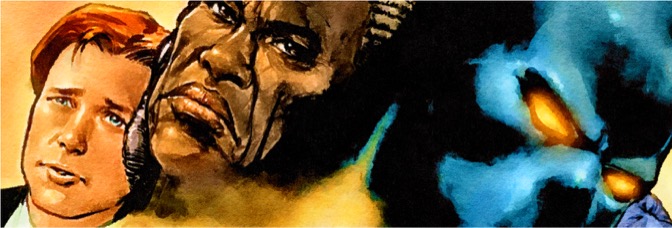
Writer Priest gets a guest artist—Vince Evans—to help him finish out the arc. At first it seems like Evans is going to be more action-oriented, but then he starts coming through with the comedy. He’s pretty bland with Ross (still) telling the story to his boss (slash girlfriend). It’s an even more Michael J. Fox…
-

Writer Priest has a magical moment—or anti-magical—and artist Mark Texeira gets to do some great art, including shimmering pants, but the first thing to talk about with Black Panther #4 is the Everett Kenneth Ross photo reference. It’s Michael J. Fox. At least twice. The idea of Michael J. Fox playing Ross looms over the…
-

Black Panther is from just before the “writing for the trade” concept, which then led to the “waiting for the trade” purchasing decisions. But this issue very much feels like it’s meant to be read in the middle of a trade, not as the single Panther released in a four-week period. It’s not a bridging…
-
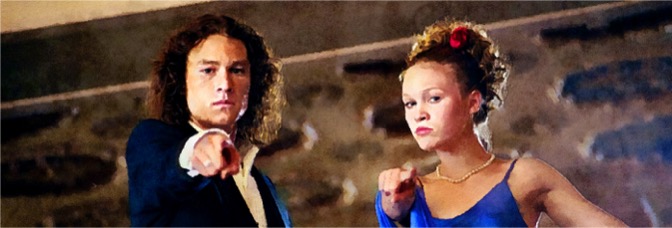
10 Things I Hate About You is from that strange period in American mainstream filmmaking when they knew you couldn’t make too many jokes about high school girls anymore, unless you establish at least twice they’re eighteen so it’s not technically illegal. There’s also the issue of Andrew Keegan’s sexual predator, who the film treats…
-
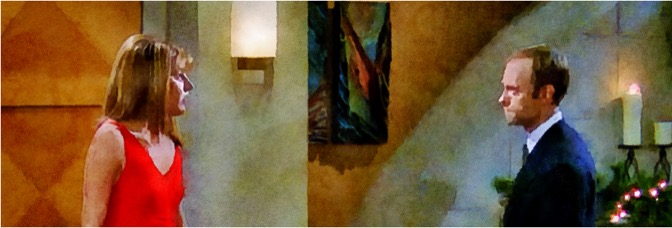
“Frasier” does indeed run into immediate problems with Jane Leeves finding out David Hyde Pierce has a crush on her (and has had one for quite some time). Leeves has her first moment of romantic interest—post finding out—and it’s when Hyde Pierce puts his jacket on her. They’re standing out on the balcony unraveling the…
-
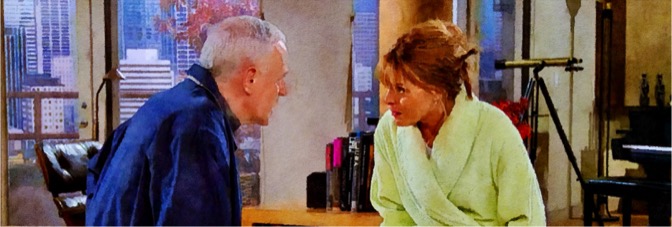
This episode is the first entry in a two-parter, but one of those loose sitcom two-parters where it’s just so they keep them together in syndication. Whatever comes after Back Talk will be inevitably different because, after over a hundred and seventy episodes, “Frasier”’s going to deal with one of its longest-running story arcs. Not…
-
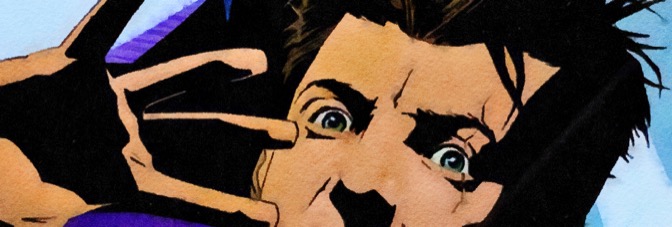
The whole issue doesn’t rest on the action sequences, but it’d still have been nice if penciller Michael Lark had broken them out differently. There’s this very anti-climatic car chase, foot chase, car chase, shoot-out sequence, and it should have been better. Though it also doesn’t matter because it’s just the red herring ending. Scene…
-

Scene of the Crime doesn’t exactly stall out this issue, but it definitely goes into idle. Not sure why I’m doing car references, possibly because of an ill-advised speeding car sequence, which artist Michael Lark visualizes too quickly. Our hero, Jack, has just been to a hippie commune where he’s gotten in trouble, a la…
-

I was going to say all writer Ed Brubaker needed to do to completely tie together all the San Francisco crime eras was a grandfather in a wheelchair in a greenhouse, but Big Sleep’s L.A. Scene of the Crime is all San Francisco, all the time; Brubaker knows what he’s doing too. This issue introduces…
-

In the twenty years since Scene of the Crime came out (and I last read it), a couple things have become more clear. First, protagonist and narrator Jack is a bit of a narcissist, and the reason he’s loveless is because he was a lousy, possessive boyfriend. The way he talks about the female characters…
-
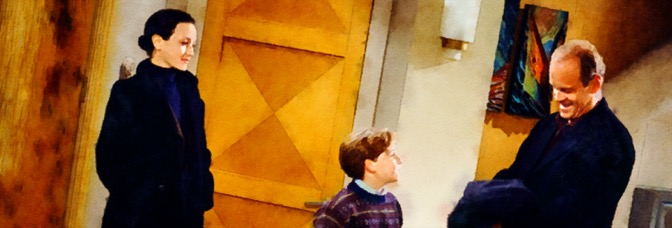
The Apparent Trap is another episode “Frasier” can only do because it’s been running seven seasons, and there’s lots of back story. Plus, guest star kid Trevor Einhorn has aged enough he can more fully participate in the episode. He’s not quite full supporting, but he’s closer than he’s ever been before. It’s a Lilith…
-
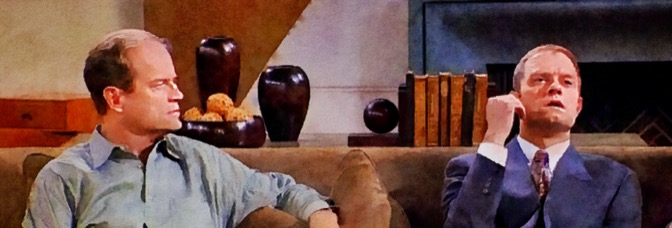
This episode has wonderful balance. It’s a “bigger” episode than usual, with a couple new big sets—a hospital waiting room, a doctor’s office—and it opens with Kelsey Grammer and David Hyde Pierce in a car. Everything’s going to mix barbed wit with sincerity, giving the episode a bittersweet quality. But first, Hyde Pierce needs to…
-
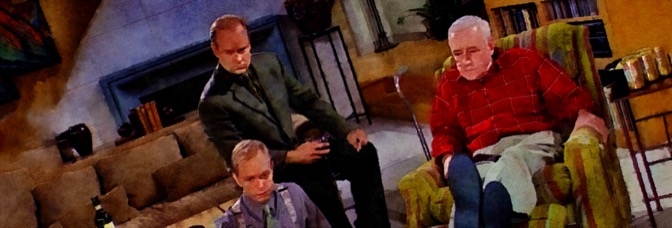
This episode’s a great example of how a long-running show (probably specifically sitcom) can benefit from that longevity. There are new things in the culture relevant to the show, which it can now comment on. In this case, “Antiques Roadshow,” or whatever they call it on Tsar. “Roadshow” started in 1997, “Frasier” started in 1993.…
-

What’s most impressive about Rivals is how “Frasier” can keep doing these episodes. The title refers to brothers Kelsey Grammer and David Hyde Pierce, who this time think they’re both interested in the same woman, only they’re both interested in different women and are confused. They won’t just talk to each other about it—though Hyde…
-

This episode’s a sequel to the previous season finale, a two-parter where one of the subplots had Peri Gilpin sad about dating and ending up in bed with Dan Butler. The story resolves with Butler leaving the radio station—fired for bad ratings—saving Gilpin from having to address her seemingly growing but decidedly unwanted feelings for…
-
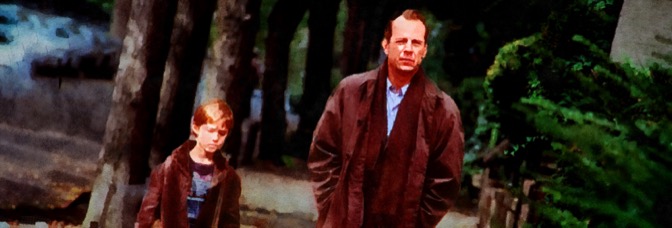
Setting aside the twists and reveals, The Sixth Sense is about three character relationships. There’s child psychologist Bruce Willis and troubled youth Haley Joel Osment, there’s Osment and mom Toni Collette, there’s Willis and wife Olivia Williams. The film opens with Willis and Williams celebrating him receiving an award for his work, which she thinks…
-
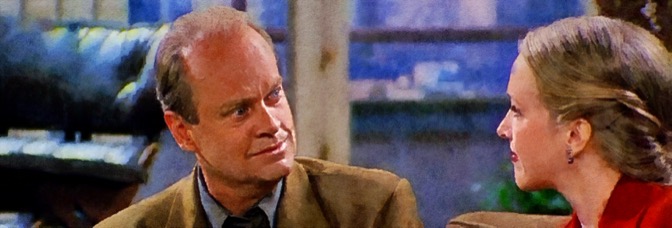
It’s as though “Frasier” heard me across time and made some immediate adjustments—it’s another radio station episode, but unlike last episode, it features a bunch of scenes for Kelsey Grammer and Peri Gilpin at work. It’s also got regular station guest cast (Edward Hibbert), and then station manager Tom McGowan’s practically a regular. There are…
-

It’s another new-to-“Frasier” writer credit this episode: welcome, Sam Johnson and Chris Marcil. I just realized the title, Radio Wars, might be a nod to the annual Bar Wars episodes of “Cheers.” There’s not much warring, though, mostly just Kelsey Grammer getting pranked. The episode begins with Grammer asleep in bed, a phone call waking…
-

This episode’s very funny, but often in a “the less you think about it” way. The script’s credited to Mark Reisman (his first credit on the show), and it very impressively gives almost everyone in the main cast a story thread. Except for John Mahoney, who gets a couple hilarious bits but not a thread,…
-
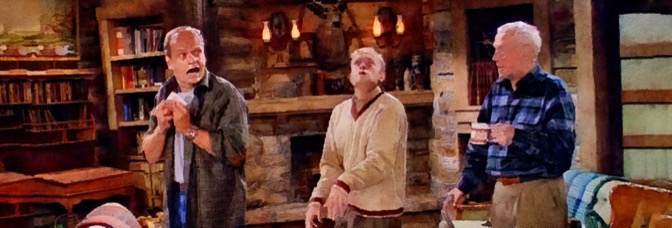
The season’s off to an excellent start with this episode, which also inadvertently shows how much “Frasier” has changed getting to season seven. First is with Kelsey Grammer directed episodes; Grammer’s first couple efforts didn’t have him around—I think he was entirely absent in one, and showed for the intro in the other—but he’s front…
-
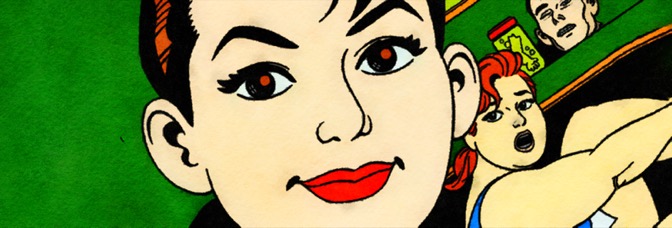
Once again, creator Jaime Hernandez surprises with Penny Century. This issue features the first appearance of Maggie’s husband, T.C. (short for Tony “Top Cat” Chase). However, that appearance comes with a big asterisk. The character doesn’t show up, just his face. Well, his head. See, the issue’s all a dream, and Maggie’s working out some…
-
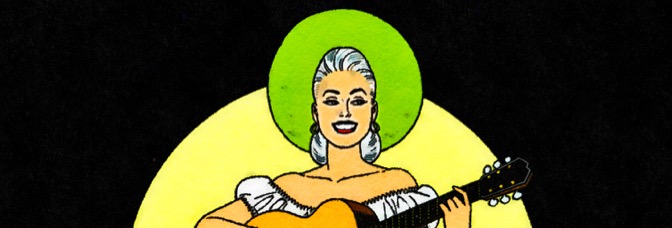
This issue’s distinctly creator Jaime Hernandez’s work, but some of the moves he makes remind entirely of brother Beto’s. The first strip, for example, is a first-person one-pager about Ray getting in a social faux pas at a party. Jaime shows half of Ray’s face in a reflection; otherwise, it could easily be an autobiographical…
-
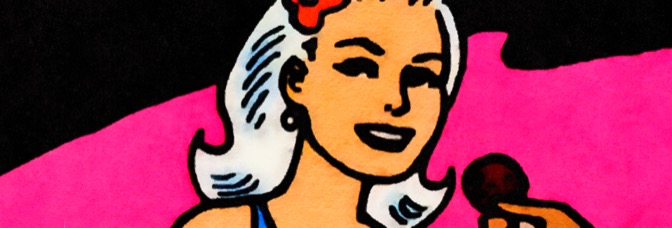
After the last issue’s full-length feature, creator Jaime Hernandez is back to the Penny Century anthology feel with this issue. The issue has two narrative arcs, split over five strips (plus a color strip and then another “To Be Announced”). The first and last strips are single-pagers, bookending and tying the arcs together neatly. The…
-
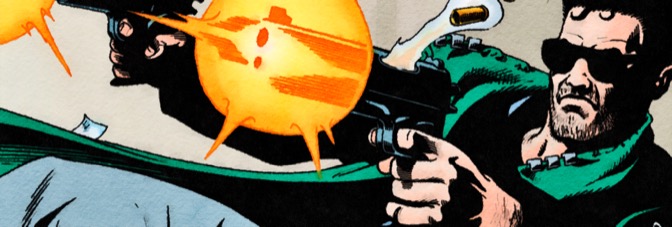
Hitman: Closing Time opens the only way it can (or should) following the previous collection’s gut-wrenching conclusion, which saw Tommy’s surrogate father, Sean, die protecting him. It starts with a Lobo crossover. And writer Garth Ennis spends the entire issue shitting on Lobo. It’s a done-in-one crossover with art from Doug Mahnke. The art’s perfectly…
-
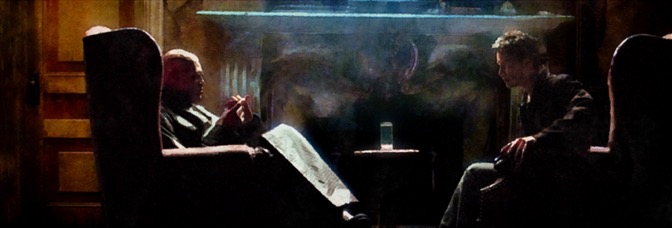
The Matrix starts kicking ass in the second half. The first act clunks along, introducing both Keanu Reeves’s plot and then the Carrie-Anne Moss and Laurence Fishburne one. The second act makes a lot of promises and stumbles delivering on them. There’s this big fight scene between Reeves and Fishburne, and instead of accelerating the…
-
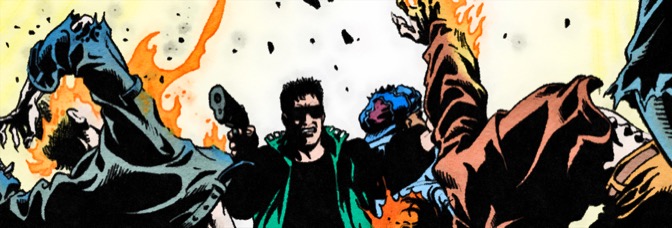
Back in the early days of comics collections—and I'm talking mid-to-late eighties, pre-Dark Knight Returns, pre-Watchmen—there were occasionally collections on themes. Hitman: For Tomorrow feels very much like a collection of Hitman comics based on the theme. It's writer Garth Ennis leaning in on taking Tommy and friends out of their comfort zones but into…
-
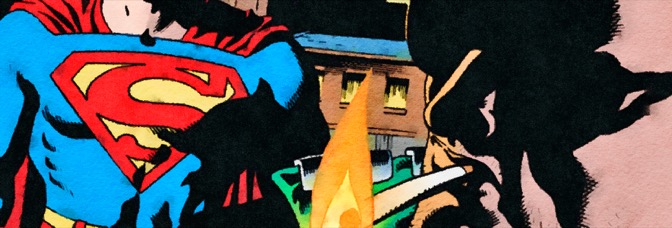
By the fifth Hitman collection, DC has given up on the six or eight-issue collection and just gone whole hog. There are fourteen issues in the Tommy’s Heroes collection. Two full story arcs, a couple done-in-ones (including the DC One Million crossover), and then a haunting two-parter to close it off. Writer Garth Ennis runs…
-
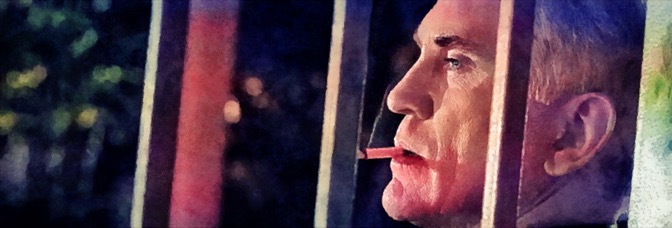
The Limey is all about the foreshadowing. It’s about flashbacks, flash-forwards, and flash asides, but the foreshadowing figures into all of those devices. It’s got a “twist” ending, which then informs previous scenes but not like figuring out Terence Stamp is a ghost or whatever. Instead, it’s knowing something about why he half-smiles—and only something,…
 The Stop Button