Category: 1995
-
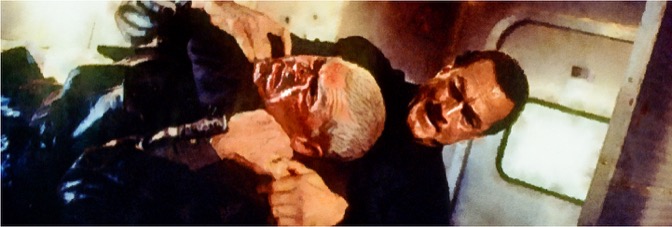
It’s never good when the worst thing about a Steven Seagal performance isn’t the Steven Seagal performance. Kidding. Sort of. And while he’s terrible in Under Siege 2: Dark Territory, he’s far from the worst performance. Stunt cast villain Eric Bogosian is much worse, for instance. As is Seagal’s sidekick, Morris Chestnut, who’s playing a…
-

It’s all hands on deck for this episode (except for Brenda Bakke), like everyone wanted a chance to work with guest stars Matt Craven and Richard Edson. Craven and Edson are in town to shake down the local business owners. They’ve got a couple more in their gang, doofus Jim Gloster and rapist Joseph Granda.…
-
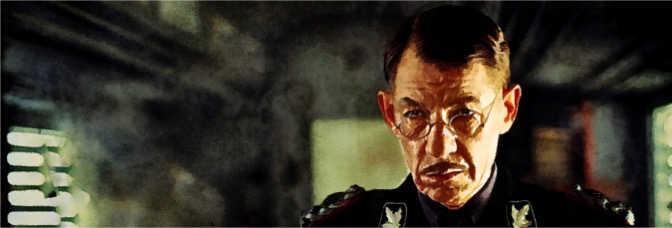
Richard III takes place in an alternate history where the British are five hundred years late with their royal wars, but still in the 1940s for technology and rising fascism. The film doesn’t update Shakespeare’s dialogue, so it’s the cast performing while dressed—increasingly—as Nazis. Except they’re British. Well, not Annette Bening or Robert Downey Jr.…
-

I’m not sure what iteration of “Make Bruce Campbell Happen” his guest appearance on “Gothic” fits in, but I was expecting more of a showcase. Campbell’s a state cop come to town at the behest of his sister (Derin Altay); her husband’s missing, and she’s convinced he’s been running around with Brenda Bakke. When sheriff…
-
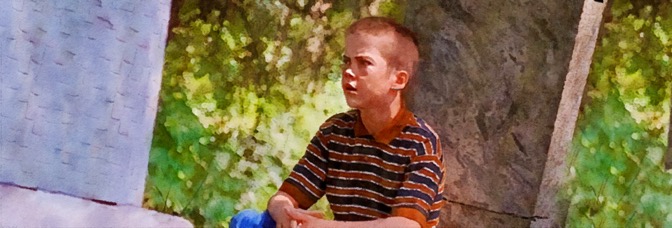
CBS didn’t air Potato Boy during “American Gothic”’s original run. It started the network shuffling the show order in earnest, presumably to make the show more accessible to new viewers. Since it’s television—network television—they somehow managed to skip a literal onboarding episode. Gary Cole narrates Potato Boy’s first act, clueing the viewers in on the…
-

This episode’s got five writers credited, apparently two different teams (Robin Green and Mitchell Burgess on one, Shaun Cassidy, Michael R. Perry, and Stephen Gaghan on the other). Guild arbitration or extreme fairness? Regardless, World works better than almost anything else with five credited writers; the episode’s all “Gothic”’s strengths, none of its… well, weaknesses…
-

Even in 1995, “American Gothic” knew not to cast an actual teenager as the fifteen-year-old Brigid Brannagh plays. It just didn’t know not to still ogle early twenties Brannagh as she plays that teenager. While, sure, it’s Southern Gothic, it’s also contorting itself to allow objectifying Brannagh, even though she’s in constant danger of rape…
-
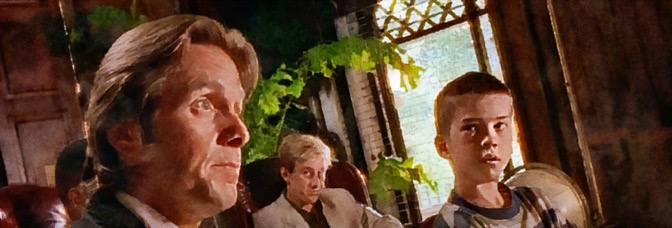
There’s a slight mea culpa feel to this episode, which is really Pilot: Part III. The show’s finally ready to set up the ground situation, for real this time, and it’s going to be more accessible. There aren’t any big CGI set pieces this episode, but there’s more with crows being sheriff Gary Cole’s evil…
-
Tree picks up immediately after the pilot, only it’s been however many months since they shot the pilot, and now they’re filming for fall airdates. Lucas Black and Sarah Paulson are both a little visibly older, Jake Weber’s got a completely different haircut, Paige Turco’s costumes are better, and Gary Cole’s even eviler. With the…
-

I was happier than I should be to discover executive producer Sam Raimi didn’t direct this pilot episode of “American Gothic.” Raimi and Rob Tapert’s Renaissance Pictures produced the series (for Universal and CBS), so I just figured Raimi directed the first one. But, no, it’s Peter O’Fallon. Instead of talking about Raimi being unable…
-

It’s easy to pick out the “best” thing in Copycat because it’s almost entirely atrocious. Christopher Young’s highly derivative score is lovely—it’s a mix between John Williams and then Aliens whenever Sigourney Weaver is in thriller danger. Thanks to the score, Copycat makes some interesting swings, like emotive, romantic music during the most inappropriate sequences.…
-
The best part of Casino isn’t my favorite part of Casino because the best part is James Woods bickering with Erika von Tagen. It’s mainly in the background, and it’s the only time anywhere in the film anyone shows any personality not expressly required for their scenes. Director (and co-screenwriter) Scorsese doesn’t believe in background…
-
I really wish I were keeping some kind of track of “Frasier” episodes. I’m half-assing the watch-through. I wasn’t sure if this episode was the first “Frasier” Christmas or not, but it turns out its the first one where we get the Crane family having Christmas onscreen. And find out John Mahoney is a Christmas…
-

Despite some very silly—and funny (well, not really Paul Mazursky’s call, it’s Paul Mazursky after all)—opening shenanigans, it quickly turns into a very dramatic episode. The opening antics involve station “Star Trek” nerd Patrick Kerr—weird how Paramount self-advertised its properties in the nineties—organizing a petition to get an homage to Peri Gilpin on “Trek.” It’s…
-

The episode opens at the coffee shop and it stands out because it’s the first time this season there’s been a coffee shop scene. Kelsey Grammer and David Hyde Pierce have a quick scene post “previously on” to talk about Grammer’s “tawdry” romance with boss Mercedes Ruehl. Ruehl then shows up, so exit Hyde Pierce,…
-

Mercedes Ruehl’s really funny. She’s been good on “Frasier” before and the casting is working out great, but this episode she’s occasionally really, really funny. Like they must’ve had this episode in mind when casting the part because she and Kelsey Grammer’s back and forth yelling is next level phenomenal. They’re yelling because Ruehl’s frozen…
-

It’s an apartment episode, very much an apartment episode; such an apartment episode, the apartment plays a vital role in the plot. The episode opens with the obligatory radio station scene, giving Peri Gilpin a chance to reminisce about the great cheese state of her birth with a caller (Brooke Adams) to Kelsey Grammer’s utter…
-

Mercedes Ruehl is back, initially as a quick foil for David Hyde Pierce and Kelsey Grammer. Hyde Pierce is visiting Grammer at work—there’s a brief, welcome Peri Gilpin eye-roll in Hyde Pierce’s direction—and they run into Ruehl. She quickly shows them both up, which is hilarious, and then seems to disappear–“Frasier” has these outstanding pivots…
-
After a couple professional episodes where John Mahoney and Jane Leeves are interactive scenery, Martin Does It His Way is an apartment episode. There’s a radio station setup—with some great work from Kelsey Grammer and Peri Gilpin—establishing Grammer’s aunt has died and he’s leaded to the lawyer’s to talk about the estate. Cut to after…
-

The episode opens on David Hyde Pierce in couples therapy—Milo O’Shea plays the counselor—are we finally going to get an appearance from Maris. And if we’re not, what are we getting in compensation. We get Kelsey Grammer. It’s a “Crane Brothers” team-up episode, complete with a list from dad John Mahoney to remind everyone of…
-

There are a couple big “it was the nineties” moments in the episode. Though, I haven’t watched sitcoms regularly in over a decade so maybe they’re still doing whole main plots about men (in this case Kelsey Grammer) not being able to work for women (here his new station manager, Mercedes Ruehl). But I’m fairly…
-
Dark Victory has three writers—Christopher Lloyd, Linda Morris, Vic Rauseo—except Morris and Rauseo are a team and Lloyd is a solo guy usually so the disjointed flow makes sense. It’s the season finale, it’s got to get to some kind of season finale moment, except it’s a sitcom and it doesn’t have a cliffhanger. I…
-

The Innkeepers is a great sitcom episode without necessarily being a great “Frasier” episode. It’s a really good “Frasier,” with the entire cast doing a great job—they just aren’t asked to do very much. John Mahoney spends a bunch of the episode doing his irate thing even after it isn’t making things funny anymore. He…
-

Agents in America: Part 3 doesn’t seem like it’s going to be a very big episode, but then the last third or so is very big scale. The first two acts(?)—see, I probably should have learned the structure of sitcom plots, I’m sure there’s proper terminology—but the first two-thirds is mostly at the apartment. The…
-
Writer Chuck Ranberg and Anne Flett-Giordano turn in one of the instant “Frasier” classics. It involves the show’s reliable standards—Maris jokes, the radio show, David Hyde Pierce’s physical comedy–and hits spectacular heights with all three, but most impressively the Hyde Pierce stuff. The episode ends with a fantastic sword fight with Hyde Pierce versus Brian…
-

I really wish I was keeping track of what “Frasier” writers wrote what kind of episodes, though I do know I wasn’t expecting a Crane boys outing episode from Steven Levitan. Or, at least, I would’ve expected it from other writers first. Levitan wrote an episode first season, but just the one. This episode, Breaking…
-

I figured I’d have remembered Don Seigel’s name from last season, if only for it confusing spell check, but I didn’t. I should have. His episode last season was great. This one’s pretty great too; it’s another SeaBea Awards episode, with Kelsey Grammer and Peri Gilpin sure they’ve got a chance this year if only…
-

It’s a quintessential “Frasier” if only because it plays with some very familiar, very ingrained snob tropes. Writers Elias Davis and David Pollock did another episode earlier this season—and The Club is their final contribution to the series, unfortunately—and have a great handle on the characters. The successful “guest” writers (i.e. not also an exec,…
-
Once again it’s a “Frasier” where it feels like they’re trying to one-up something, but they’re not actually trying to one-up anything. It’s just Kelsey Grammer trying out an extremely physical episode—extremely physical bits are mostly David Hyde Pierce’s forte (though Grammer’s had at least one good one this season already)—but after a certain point,…
-

I was kind of dreading this episode—the first season of “Frasier” immediately established the show’s differences from “Cheers” and made the need for a stunt cameo from a “Cheers” cast member superfluous. So waiting to the back nine of the second season to bring in Ted Danson, who was trying to recover from the blackface…
 The Stop Button