Category: 1988
-

Miracle Mile is an actors’ movie without any great performances. There are affable performances, good performances, (bad performances), but no great performances. Lead Anthony Edwards occasionally tries hard—it’s the end of the world, after all, he’s got to emote—but he’ll frequently hit a wall and start moving his mouth like a Jimmy Stewart impression will…
-

Even with the inexplicable cultural appropriation thread (yes, really) for the Terminator, this issue’s easily the best Terminator so far. Sure, they’re only on issue four—and on their third writer (Jack Herman takes over)—but it’s nearly okay. Until they decide to do “Terminator Meets Predator” only with Arnold as the bad guy… it’s got some…
-

Tony Caputo once again gets the guest writer credit—but he’s written two of the three Terminator comics, so how’s he a guest (maybe because, if you read the indicia, you see the original characters are copyright the first artist)? He also completely shuts down the story arc he started last issue. I mean, there’s still…
-

The credits for this issue say Tony Caputo (also NOW Comics publisher) is the guest writer. Except we’re on Terminator #2; it’s not like there’s an established team. Plus, penciler Thomas Tenney is new too… but not a guest. Tenney and inker Jim Brozman deliver possibly better art than the last issue, but it’s not…
-

If I knew there was a licensed Terminator monthly from the late eighties, I’d forgotten. I knew there was the Burning Earth limited (which concludes the NOW Comics license, with Terminator then headed to Dark Horse), but I didn’t remember there was a regular series. Though after one issue, it’s got squat to do with…
-

A Fish Called Wanda introduces each of its main characters during the opening titles, cutting from one actor to another, starting with screenwriter John Cleese. He’s a barrister. Then it’s Jamie Lee Curtis; she’s a vivacious American. Then Kevin Kline is a deadly but dim-witted American. Finally, Michael Palin. He loves animals, including his fish…
-

At first glance, it appears Fright Night Part 2 is the rare example of a film saved by a mullet. Lead William Ragsdale doesn’t have much more onscreen charisma than last time, but with his gloriously juvenile late eighties wavy mullet, his lack of appeal becomes charming. Or it may be another thing director Wallace…
-

Poltergeist III is about as thrilling as watching someone wash a window. Literally. Outside ostensible protagonist Heather O’Rourke and special guest star Zelda Rubinstein, no one from the previous films returns. The film opens with O’Rourke living in Chicago with aunt Nancy Allen, a yuppie recently married to Tom Skerritt, presumably a widower with a…
-

I wasn’t aware of Red Scorpion’s production history, which has original distributor Warner Bros. pulling out because it filmed in Namibia, under apartheid South African control at the time, as well as the investors and producers being pro-apartheid… you’d think Warner would’ve checked. You’d hoped Warner would’ve checked. And, now, if we can “but anyway”…
-
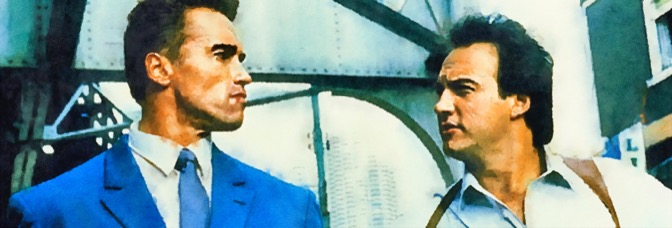
Walter Hill really likes to make movies about racist white cops (oxymoron, sorry, racist even for a movie) partnering with unlikely people and having big action sequences involving buses, huh? The racist white cop in this case is Jim Belushi, who’s never overtly racist (just overtly transphobic in a homophobic way—it’s the eighties after all),…
-

The surprise tragedy of Fresh Horses is Molly Ringwald could’ve been good in it. Even though she’s top-billed, she doesn’t get a scene without Andrew McCarthy until almost halfway through the movie—she’s the white trash object of his working-to-middle class sexual lust—but she’s not good in that scene. Actually, it’s her only scene without McCarthy…
-

At the end of Bad Dreams, as GNR’s Sweet Child of Mine starts up over the end credits… I thought, at least director (and co-writer) Fleming has good taste in music. Turns out he didn’t want the song and a studio exec with a better ear put it in the film. Bummer. It would’ve been…
-
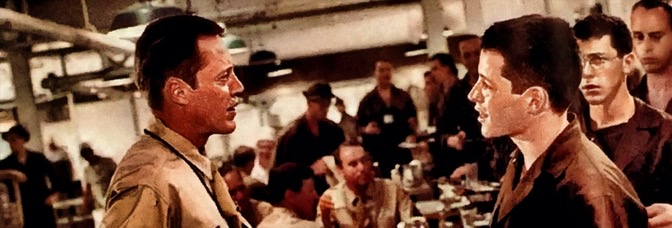
Uneven but charming tale of Matthew Broderick (an analogue for writer Neil Simon) and his time, in 1945, at Army boot camp in, you guessed it, Biloxi, MS. Simon’s adapting his stage play, which explains the stagey plotting; however, the film itself never feels stagey in the scenes, probably because director Nichols takes the whole…
-
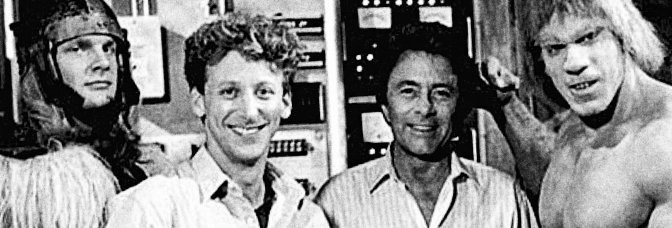
The Incredible Hulk Returns is severely lacking. It’s severely lacking pretty much everything. Despite being set in and filmed in Los Angeles, the movie looks generic and constrained–director Corea has a truly exceptional aversion to establishing shots. The interior shots often have a different visual feel. More like video (Returns was shot on film, but…
-

Love and Rockets #28–at least the Jaime stories (he has four)–almost read like an entirely different comic, just with the same characters and the same artist. The issue opens the only Maggie story. It’s set… sometime after the last issue’s events with her aunt, with Ray painting Maggie. Then he paints Danita instead. There are…
-

Stormy Monday is beauty in despondence. The film is set over a few days in Newcastle, where the local businesses have given up hope on any economic recovery of their own and instead are letting shady American businessman Tommy Lee Jones spearhead an “American week.” You get a discount for being American, there are U.S.…
-

Beto’s got two stories in Love and Rockets #27, neither Palomar-related, both more concentrated on the art. The first is a two-pager about traffic. Automobile traffic and the false promises of automobile ownership. There’s some really detailed art, much different than anything Beto’s done (at least lately), with an emphasis on patterns and panel layouts.…
-

Beto finishes up Human Diastrophism this issue; there’s a lot to talk about with it. A whole lot. But first Jaime, who does a very different Locas than he’s being doing lately. It’s about Maggie going on tour with her Aunt Vicki, who’s won back her wrestling belt and needs to defend it. Maggie’s along…
-

Before starting Love and Rockets #25, I kind of wondered if Penny would ever be back. Jaime’s been bringing back a bunch of the old Locas characters, but no Penny. Sure, her last appearance was problematic as heck and Jaime doesn’t really do the stylized stories she had, but it seemed weird she wasn’t back.…
-
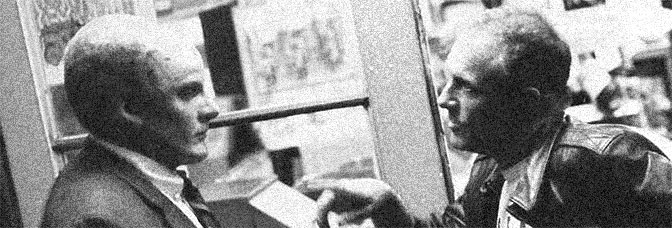
A film like Alien Nation encourages a lot of thought. For example, I think I’ve decided I want to say the film is badly directed (by Baker) while being poorly lighted (by Adam Greenberg). I already know I wanted to say it was atrociously edited. Kent Beyda’s cuts don’t just jump (there’s a car chase…
-

Waxwork has a distressing lack of charm. It ought to have some charm. The first act has its cast of young college students–whose college set seems to be a high school–speaking in some affected pseudo-fifties teen melodrama dialect. It ought to be sostaggeringmewhat charming. It’s not, but it ought to be. Most of the problem…
-
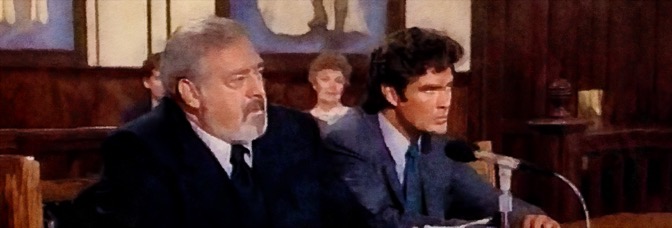
Poorly written, poorly directed PERRY MASON entry has Raymond Burr defending David Hasselhoff, which ought to have some kind of absurd value but doesn’t. Burr’s great (in lousy courtroom scenes), Hasselhoff’s atrocious (worse, it’s a try and fail not a don’t try and fail). Okay support from regulars Barbara Hale and William Katt. Hale’s not…
-

Perry Mason: The Case of the Avenging Ace is a domino effect of lame. Lee David Zlotoff’s script is really bad, but director Nyby is also really bad, and then some of the performances are really bad. Some of the performances a Perry Mason TV movie needs to be okay aren’t okay here. Avenging Ace…
-
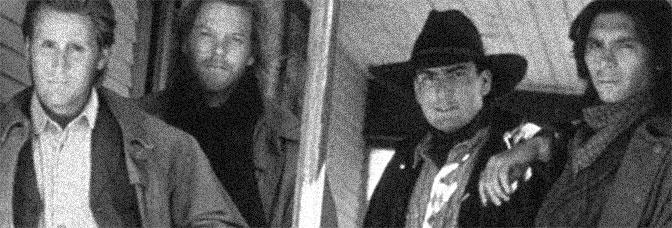
Young Guns is an Emilio Estevez vanity project, which was once a thing. Estevez lacks the screen charisma and acting ability, but it’s a confusing part. He’s Billy the Kid and he’s playing him like a manipulative but somehow still likable psychopath. For about half the film, John Fusco’s script can keep up with Estevez–director…
-
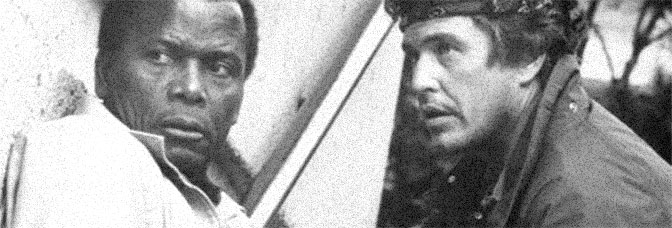
Shoot to Kill is an exceptionally bland action thriller. It shouldn’t be bland–there’s a decent concept to it. Kirstie Alley is a wilderness guide, cut off from the outside world, and one of her obnoxious fly-fishing white male character actors is secretly a killer. Who will it be? Richard Masur? Clancy Brown? Andy Robinson? Unfortunately,…
-

Above the Law is just about as slick as a film can be. It’s all thanks to director Davis. Even though Davis and star Steven Seagal co-produced, Davis has to overcome Seagal’s acting inability. So all credit to Davis. It isn’t just about maximizing the action, but about getting the plot to provide some interest,…
-

Maybe a third of They Live is amazing. The film has three distinct parts. The first, where Roddy Piper arrives in L.A.–Piper never gets a name and L.A. never gets identified, though director Carpenter obviously expects the viewer to recognize it and understand its use–is the best. It’s a Western, sort of. Piper’s the Man…
-

There are good things about Maniac Cop. Not many and director Lustig doesn’t know what to do with them, but there are good things about it. James Lemmo and Vincent J. Rabe’s photography is excellent. Lustig never asks them to do anything interesting, but they’re clearly capable of it. The stunts are also pretty good.…
-

The Dream Master has a really lame final scene, which is too bad since the second half of the film actually gets rather good. The script–from Brian Helgeland, Jim Wheat and Ken Wheat–is impressive for a couple reasons. First, it gives Lisa Wilcox a great hero arc across the traditional gender lines–she’s the nerd crushing…
-

The Beast has a lot going for it, so its failure to connect–which is wholly director Reynolds’s fault–is a bit of a disappointment. The second half of the film has an accelerated pace. While the whole thing takes place over a couple days, the second half is an odd combination of summary and real time.…
 The Stop Button