Category: 1986
-

Towards the end of the first act, Ralph Macchio and Pat Morita have a potentially great scene. The best friends have traveled to Okinawa so Morita can see his dying father (Charlie Tanimoto, in a less than nothing part). Morita’s sad, pensively looking out at the ocean, and Macchio’s got some perspective to share. Macchio’s…
-

River’s Edge hinges on a few things. First, Joshua John Miller’s performance. The film’s about a group of teenagers reacting (and not reacting) to one of them killing another and showing off the body. Miller is protagonist Keanu Reeves’s little brother, who emulates and identifies with his brother’s worst traits. Second, Jürgen Knieper’s score. The…
-
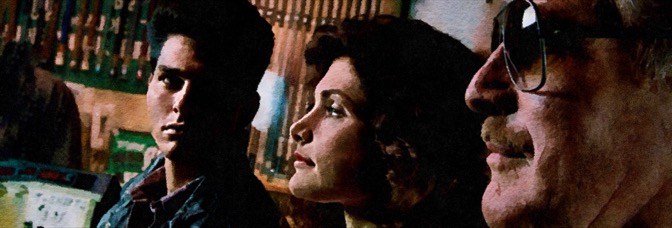
The Color of Money opens with a brief narration explaining the pool game variation nine-ball. Director Scorsese does the narration, which is the most interest he ever shows in the game of pool for the rest of the movie. The narration serves a straightforward purpose—it lets the audience know when to know the game is…
-
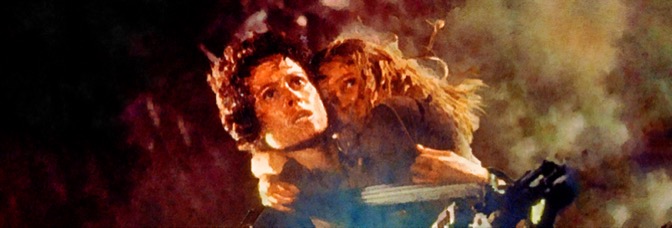
Thirty-six years after its release, recreating the original Aliens (albeit on home media) experience is difficult. Not only has there been a direct sequel, there have been multiple reboot sequels, and the extended, “special edition” version has been readily available for nineteen years now. I’m not ready for an Aliens canon deep-dive, but when did…
-

I begin talking about Little Shop of Horrors with a confession—I didn’t like it as a kid. I think I saw it a couple times on video, but a full decade before I was willing to give musicals a chance. Now, of course, I can appreciate the absolute glory of the film’s musical numbers, particularly…
-

Absolute Beginners, the David Bowie song, is so good Absolute Beginners, this Julien Temple directed musical film adaptation of Colin MacInnes’s presumably autobiographical novel would have to be singular to be better than the song. Okay, singular in a good way. Because I suppose Beginners, which Temple stages as a Technicolor stage production, is singular…
-
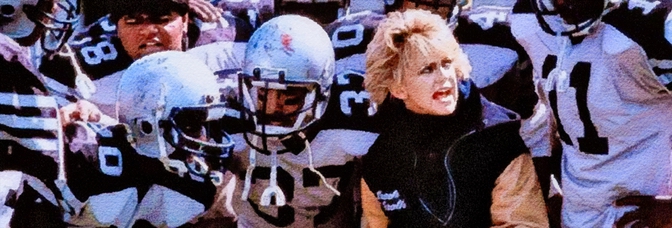
Initially middling–and very dated in rather cringe-y ways–comedy about high school track coach Goldie Hawn talking back to her male boss (a cartoonish, but great, Bruce McGill) and getting transferred to be a football coach in the (eighties mixed race) ghetto high school! Too bad her literally evil ex-husband James Keach is pissed off about…
-
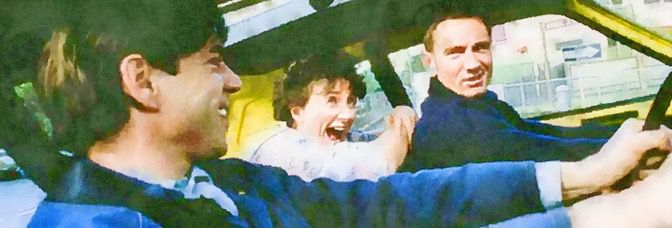
Charming comedy about an Autistic man (Colin Friels) who comes out of his shell in unexpected ways when he takes on lodgers John Hargreaves and Lindy Davies. Friels makes various contraptions–starting with model trains, then all the way up to his own version of a car. The script’s uneven, the pacing’s off, and director Tass…
-

It takes a while for anyone in Sid & Nancy to be likable. Even after they’re likable, it’s not like they’re particularly sympathetic. They’re tragic, sure, which is director Cox and cowriter Abbe Wool’s point, but entirely unpleasant to spend time with. The film has a bookend–Sid (Gary Oldman) being taken into police custody for…
-

The issue opens with the second part of Beto’s Palomar story. Luba is still stuck in a hole, daughter Guadalupe still hasn’t told anyone (or gotten her mom any food), the bruja has brought a plague to town–her baby’s skull is missing–and sheriff Chelo is down for the count. So Chelo enlists Tonantzin as a…
-

Love and Rockets #17 starts off with a Locas but split between Hopey and her brother, Joey, who’s been in the comic before but I don’t know if it was established he was Hopey’s brother. This issue is where a bunch of supporting characters start shit-mouthing Maggie (behind her back) about gaining weight. I remember…
-

I finally get my Carmen issue. Only not really. Carmen and Heraclio do get the cover, but the story ends up sticking more with him. It’s a slice of life bit, with Beto exploring their married day-to-day. Before I forget–the giant statue head makes another appearance on the outskirts of town–it’s interesting how Beto is…
-

It’s a dark Love and Rockets. It’s also a light issue, but then it’ll get dark. It does go from dark to light once, but not enough to not make the issue real heavy. Jaime starts with Locas. He starts it at the beach. Can’t get much brighter than the beach, even with Hopey and…
-
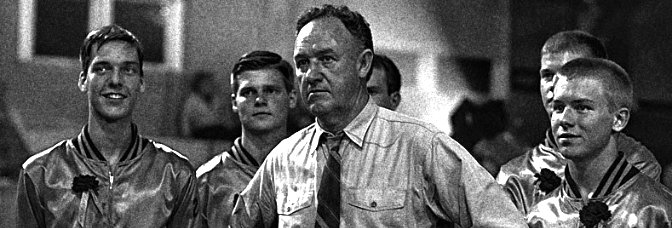
Hoosiers rouses. It rouses through a perfectly measured combination of narrative, editing, composition and photography, and music. In that order, least to greatest. There’s no way to discount Jerry Goldsmith’s score and the importance of his music during the basketball game montages. They’d be beautifully cut and vividly photographed, but they wouldn’t rouse without that…
-
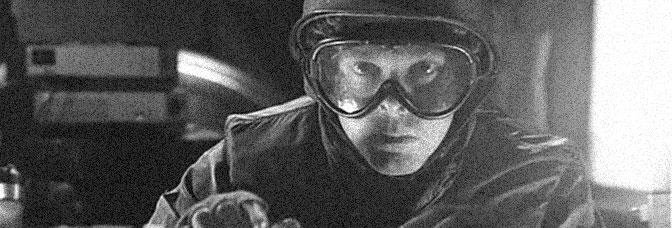
House has got technical failures, acting failures, plotting failures (sort of), but it also has the mystery of William Katt’s hair. In some scenes it’s the standard Katt blond, but in other scenes, it’s brown. Sometimes it’s dark brown. Sometimes it looks like a perm. And it never looks like a perm when Katt’s been…
-

The B.R.A.T. Patrol is about a group of kids on an airforce base who discover one of the MPs is selling military hardware to literal junk yard arms dealers. None of the adults believe them because it’s a “Wonderful World of Disney” movie and there are rules. There are limits and there are rules. B.R.A.T.…
-

TerrorVision is a masterpiece of pragmatism. Writer-director Nicolaou works the low budget to the film’s advantage–whether it’s the fifties sitcom nuclear family only with Mom and Dad swinging or how the monster from outer space is cute, even though it’s a disgusting space mutant, with the cuteness makes up for the limited special effects. Or…
-

There’s not much script structure like The Big Easy’s script structure. It’s an exceptionally constructed screenplay. The film’s great, but it all hinges on how Daniel Petrie Jr.’s script works. As previously introduced (whether onscreen or off) come back into the film, expanding on their original impression, as the relationship–okay, hold on, I’m getting ahead…
-

Flight of the Navigator works on a principal of delayed charm; eventually, it’s got to be charming, right? No, no, it doesn’t. The film’s a series of false starts. The only thing approaching a pay-off is Paul Reubens–voicing an alien spaceship–going into a riff on his “Pee-Wee” routine. It’s not even a good routine. Worse,…
-

There’s a lot of camp value to The Case of the Shooting Star. During William Katt’s investigation scenes, his clothes get more and more absurd. At one point he’s wearing a jacket with a tiger on it. Then he gets sidekick and flirtation partner Wendy Crewson, who wears really loud eighties pants, and it becomes…
-

So Perry Mason: The Case of the Notorious Nun. It’s not good. It is not a good TV movie. Even if the writing were better, Satlof is a lousy director. And Héctor R. Figueroa’s photography is quite bad. The lighting in the courtroom finale changes between shots. The editing is already graceless–more because of Satlof’s…
-

I’m having a hard time with this one. The From Beyond movie poster and VHS box scared the crap out of me as a kid. Even now, having seen the movie and knowing there’s nothing as visually creepy in the film itself, the imagery disturbs me. Villain Ted Sorel apparently having his face melted off.…
-

Gibson finally gets a story with content matching his style to my liking–lizard-men aliens who zap you and make your worst fears attack you so you lose your mind. Very fantastical stuff in a very fantastical setting–a housing block designed to be a maze, only its abandoned because no one could find their way around…
-

Director McLoughlin tries something new for the Friday the 13th franchise; he makes Jason Lives a monster movie. A really bland, not even slightly creepy and only once surprising, monster movie. It’s not notable for it failing to be a good monster movie, it’s notable because McLoughlin’s so sincere about it. McLoughlin, who also scripted…
-

The Fly starts with perfect economy. Director Cronenberg does not waste time with introductions or establishing shots–whenever there’s an exterior shot in the film, it comes as surprise, even after Cronenberg opens it up a little. There’s Jeff Goldblum, he’s a scientist, and there’s Geena Davis. She’s a reporter. The film conveys this expository information…
-

Every so often, Labyrinth plays like an episode of “Fraggle Rock” with special guest star David Bowie. Oddly, the film starts Bowie heavy but pretty soon he’s just popping in to remind the viewer he’s still around. His performance is terrible; his singing sequences are fine, especially how capably he acts with all the puppets.…
-
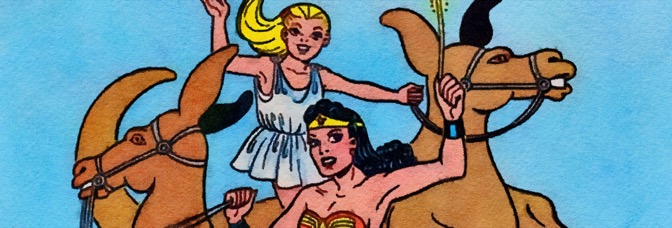
And here Busiek and Robbins run into a big problem. They’re doing a last pre-Crisis story and so there needs to be some transition. Well, needs is a strong word. They put in some transition, which the bookend system they’re using requires. And it’s a nice enough transition, it’s just not the right one for…
-

Someone–Busiek or Robbins or both of them–came up with the structure of this series and all of a sudden it becomes clear this issue and it’s fantastic. Legend goes from being a nice homage series to something wholly original. Unless the old Wonder Woman comics are as well-plotted, in which case they don’t get enough…
-

Right after I say Robbins doesn’t spend a lot of time on backgrounds… she spends a lot of time on backgrounds this issue. The difference is the setting. It’s a fantastical hidden city, not Washington D.C.–and, during the action sequence, the backgrounds do still fade away. So my observation seems about half right. There are…
-

How far can unbridled enthusiasm take something? Well, if The Legend of Wonder Woman is any indication, unbridled enthusiasm can go a very long way. Kurt Busiek and Trina Robbins have the task of saying farewell to the pre-Crisis Wonder Woman. It opens in the present, so having Robbins’s Golden Age-inspired art showing modern events…
 The Stop Button