Category: 1984
-

Milgrom spends the majority of the issue on Spidey and the Black Cat fighting a new villain, the Answer, who’s one of Kingpin’s henchmen. It all ties into the Black Cat getting her powers from Kingpin and… and… and I’m bored already. The first half of the issue isn’t terrible. I mean, the art’s weak.…
-

Here’s my issue… yes, Spider-Man has lots of human problems–his aunt’s pissed at him, he’s got girlfriend trouble, he’s got job trouble. He’s apparently the only superhero in New York when there’s a superpowered terrorist blowing up toy stores. The list goes on and on. But let’s look at these problems. Aunt May’s pissed he…
-

I don’t think I’ve ever read such an overwritten comic book. Mantlo’s endless expository narration is, no pun intended, incredible. It’s not well-written narration–it does get better after a while, once he’s done introducing guest stars (I’m pretty sure he retcons out Daredevil getting doused in radioactive goo). The story–if the issue has a story–is…
-

Where to start… I’m tempted to start with Rick Leonardi, who comes up with these great layered panels (or maybe Bill Anderson inked them to make them layered), but simply cannot keep any consistency when drawing people. Maybe he does all right when he’s got football helmets on them–it’s a football corruption story, luckily Peter…
-

It takes them a while–almost the entire issue–but Milgrom and Mooney eventually get a couple good panels in here. When I say good panels, I mean good close-ups. I wasn’t really paying attention to the art (it’s marvelously mediocre) as there’s so much else to get the reader’s attention. Like Peter Parker thinking crappy thoughts…
-

People used to read this comic on purpose? Like, they’d go to the store and buy it and want to read it? Maybe this issue isn’t the norm, but something tells me Milgrom’s writing isn’t going to be much better when he’s writing Spider-Man than when he’s writing the Black Cat. I mean, the issue…
-

Wow, Priest can write. I’ve liked his stuff, been impressed what he could do with Marvel superheroes, but this issue is just fantastic. Maybe because he… he writes thought balloons like they’re internal monologue and not declarative statements, not opportunities for expository shortcuts. He also should write Batman, because he borrows Batman and Jim Gordon’s…
-

Tom DeFalco really likes expository dialogue and thought balloons, not to mention narration. Peter Parker cannot shut up he’s talking to himself so much, then there’s the Black Cat thinking about recent events to catch the reader up. Strangely, the issue opens on this amusing exchange between Jonah and Robbie about the best way to…
-

I’d never read the Rocketeer. Back when I first learned about it, in 1990 or 1991, it was because Comics Scene had a feature on the movie. And I loved the movie (still do) but it never translated to me reading the comics. For a time, they were hard to find, but probably not back…
-

The best thing about A Nightmare on Elm Street is the font in the opening titles. It’s something sans serif and it’s slightly off and it looks good. To be fair to the movie’s reputation, I did jump twice, both times at the end; maybe because it was waking me up. As opposed to encouraging…
-

I wonder if the U.S. Army would like to get a movie like Tank out today. The movie’s politics are… well, they’re not hilarious, but they’re so blatant, it’s stunning. It’s a pro-Army film and an intensely anti-Georgia film. It likes Tennessee though. From Tank, a future cultural historian could surmise the residents of Georgia…
-

Greystoke ought to work. From the opening, it really seems like it might. It survives a massive narrative hiccup–switching perspective from young Tarzan to explorer Ian Holm. It establishes people in ape costumes as believable, sympathetic, feeling characters. It’s got beautiful cinematography, Hugh Hudson’s a fine director, and John Scott’s got one great score for…
-

I’m glad I’m not the only one who observed the pervasive misogyny in Purple Rain. Apparently, it’s a well-known feature of the movie. It’s constant from the start and frequently surprising in its intensity. At some point, that frequency wears down any reaction–the only intensifies over the running time. By the end, it’s worn the…
-

I remember The Terminator being a lot better. Even as it started–I think during the first chase sequence (Michael Biehn in the department store)–I thought about the great highway chase sequence at the end. Then, as things went sour during, I kept waiting for that sequence, sure it would bring things around. But it doesn’t…
-

It must have been Bette Midler’s former manager, Aaron Russo (Teachers‘s producer), who somehow confused Arthur Hiller as the creative force behind The Hospital. Teachers is very much like The Hospital, but in its stoic protagonist, the stoic protagonist’s ultimate choice in the end, and the strange hijinks. However, as is clearly evidenced by JoBeth…
-
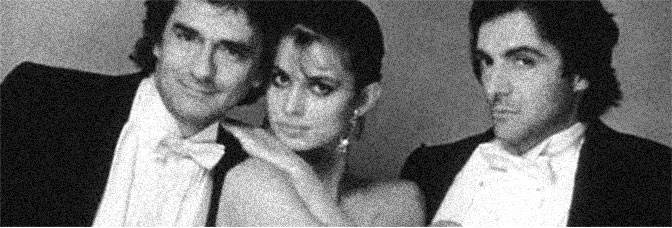
If I’d had to guess, I’d say remaking Preston Sturges and having it work to any degree was impossible. Unfaithfully Yours proves me wrong. Instead of doing a–no pun intended–faithful remake, this version is more geared as a Dudley Moore comedy. It’s not a stretch for Moore (though he does, eventually, get to do some…
-

I can understand Chinese people being upset with the stereotypes–Spielberg and company basically lift all the anti-Japanese stereotypes from early 1940s American films and apply them to the Chinese–but at least they’re only goofy and mischievous. The Indians in the film are downright evil. Temple of Doom‘s atrocious script (I suppose Willard Huyck and Gloria…
-
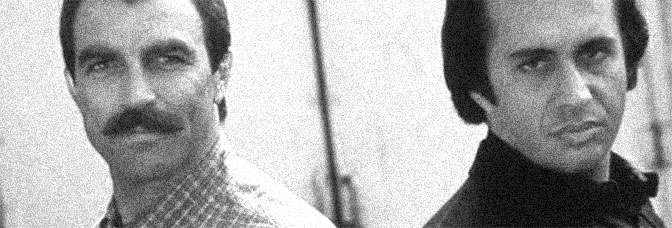
Given the star and the director, it shouldn’t be surprising Runaway is rather conservative. And, given the endless kissing montage over the end credits, it also appears to have been geared toward female viewers (but with Selleck, that one isn’t a surprise either). As science fiction, Runaway is very, very safe. It’s an unexciting safe.…
-

The Natural is a strange one. It’s a cheap success. The story is incredibly simple–you have the golden-haired hero and the evil monster who lives in the dark–and looking for anything more will leave one wanting. Even though the film taps into the baseball mythos, it’s superficial. The Natural is the superhero movie Robert Redford…
-

There’s something–well, actually a lot–missing from The Muppets Take Manhattan, but when I started the sentence, I was going to write “good songs.” None of the songs are terrible, but when the best song in the movie is the one to advertise the then upcoming “Muppet Babies” series… okay, I’m being a little mean… the…
-
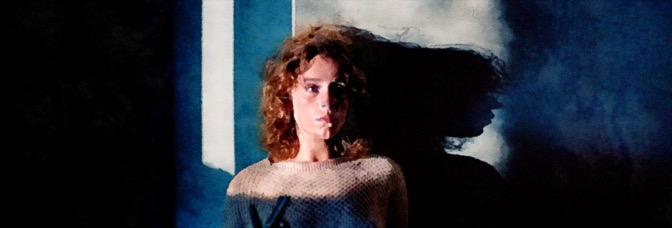
I’m pretty sure I saw the Blood Simple director’s cut twice in the theater. Seems like I did. The second time I helped a couple underage Coen fans get in, and I already knew the recut was a disappointment. I got the original cut from the UK, where it used to be available and might…
-

I think I figured out what makes Bruce Surtees’s 1980s photography so particular–he’s accounting for grain in film stock where there’s no significant grain (as opposed to, say, his films of the 1970s). Tightrobe has a muted cleanliness to it, which really doesn’t fit the story–cop who frequents prostitutes versus serial killer of same prostitutes.…
-
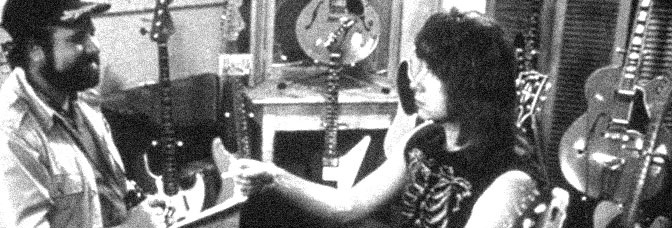
To be fair, I haven’t seen Spinal Tap in fifteen years, so when I say I remember it being funnier… well, I’m sure I used to think Caddyshack was funnier too. Funny even. Spinal Tap achieved, in the late 1990s, a mythic reputation among film and DVD geeks for a couple reasons. First, I suppose,…
-

On a few levels–like the one with the giant monster–Godzilla fails. On some other ones, like the production values, the acting, and the approach, it succeeds. It’s a peculiar film and it should have been better. Apparently, the Japanese film industry had some trouble in the 1970s and the Godzilla series took a nine year…
-

For well over an hour of Nineteen Eighty-Four, nothing much happens. John Hurt edits articles, writes in his journal, does his exercises, talks to people, meets a girl… I suppose the romance should have accelerated Nineteen Eighty-Four’s pace or gotten it moving, but it really didn’t. Instead, the film just continued on its gradual pace.…
-

Aged very poorly eighties teen comedy about Molly Ringwald’s sixteen birthday getting forgotten because of big sister’s wedding. Movie more belongs to Anthony Michael Hall (as a lusty nerd pal of Ringwald’s) and Michael Schoeffling (Ringwald’s dream guy). Likable performances from the cast; absurdly shallow hi-jinks–with racism, ableism, and terrible treatment of women; not unsuccessful.…
-
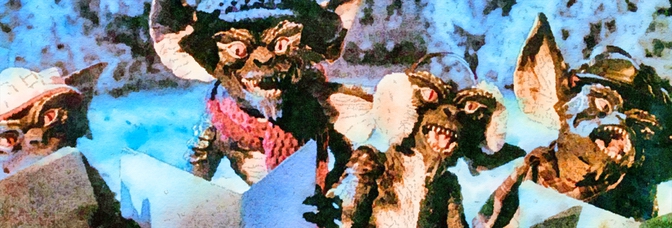
Amusing special effects spectacular about evil little monsters wrecking havoc on a small town at Christmas. Chris Columbus’s script is shockingly slight, but the acting, directing, and special effects offset that deficiency. Zach Galligan’s a great lead and Hoyt Axton’s excellent as his father. DVD, Blu-ray, Streaming.Continue reading →
-

Well-made but problematically scripted sequel has William Shatner and the gang gallivanting across the galaxy to try to resurrect a fallen comrade. Along the way, the Klingons (led by an enthusiastic but underwhelming Christopher Lloyd) go after Shatner’s kid (Merritt Butrick, back from II) and Robin Curtis (taking over from II’s Kirstie Alley). It’s a…
 The Stop Button