Category: 1984
-
It’s been long enough since I last saw Amadeus I forgot the narrative face-plant of the epilogue. The film objectifying the suffering of nineteenth-century psychiatric hospital “patients” is bad enough, but the way the film ignores it’s spent the second half of the nearly three-hour film away from narrator F. Murray Abraham… Well. It doesn’t…
-
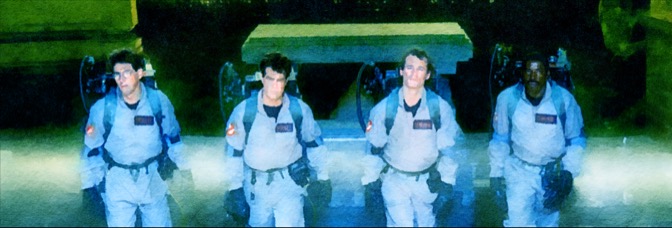
In the almost forty years since Ghostbusters’s release, the film remains unparalleled in terms of present-day, urban sci-fi action. The film’s a mix of crisp action comedy and a special effects spectacular, with Reitman’s direction toggling as needed and Elmer Bernstein’s score tying a beautiful knot. With the special effects, the film never isn’t grasping…
-

The Karate Kid runs out of movie before it runs out of story. The film’s been steadily improving on its way to the third act, culminating in a showdown between Jersey transplant (to L.A.) Ralph Macchio and his bully, William Zabka. There’s a lot of angst to the rivalry; they first tussled when “alpha” Zabka…
-

During The Element of Crime, it never seems like the mystery will be particularly compelling. The film and the detective’s investigation are compelling, but the mystery itself seems rather pat. A serial killer has been targeting young girls selling lotto tickets, earning the moniker the “Lotto Murderer,” and the police are stumped. So they bring…
-
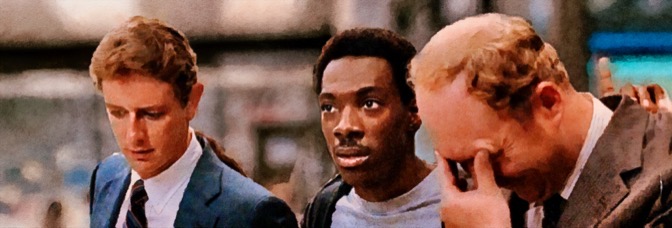
Beverly Hills Cop opens with a montage of Detroit street scenes. Kids playing, people talking, walking, Black and white. It’s beautifully cut—even at its most tediously cop action movie procedural, the editing is always glorious (though there’s lots of technical magnificence in Cop—and is well-done enough you even forgive the film for Glenn Frey’s The…
-

The only name I recognized during C.H.U.D.’s opening titles—after the more obvious names in the cast—was casting director Bonnie Timmermann. Timmermann’s an A tier casting director; C.H.U.D. is a B movie with a lower A movie cast (I mean, John Heard and Daniel Stern are both capable of fine work and they would’ve been at…
-

It’s Flashbeagle, Charlie Brown has to be seen to be believed… but also doesn’t need to be seen at all. The special is a Peanuts-riff on… Flashdance. Like, Snoopy saw Flashdance and has become inspired to go out dancing until dawn every night. Meanwhile the Peanuts kids are into dancing now too. Though their dancing…
-

Jaime opens Mechanics this issue with an eight-panel retelling of the story so far. At least the most relevant parts. They’re little panels too. Top half of the page. It’s beautifully done. Turns out the flashback panels are Race’s thoughts as he’s recovering. He’s survived the blast, no one knows about Maggie and Rena Titañon.…
-

Jaime gets a few more pages on Mechanics this issue and it changes the reading experience a bit. He has time to dawdle. This installment brings Rena Titañon in–it’s been a while since her last appearance (in present or flashback)–but also has time to give Hopey a whole subplot. And a whole other implied subplot…
-

Love and Rockets #7 opens with Mechanics and with this haunting image of Maggie in front of the sea, looking out of the page, quietly crying. The action immediately cuts away; Hopey and Penny (with a new haircut, colored like a skunk, and looking nothing like Penny) read a letter from Maggie recounting her latest…
-

The first story in Love and Rockets #6–Beto’s Heartbreak Soup Theater: The Mystery Wen–brings back some more of the Palomar cast. But after the jump-ahead Beto did with the Luba story. Wen is about grown-up accordion teacher Heraclio having a bump on his head and freaking out about it. He’s now married to Carmen (who…
-

Hopey gets to headline her first story in Love and Rockets #5. She’s been sidekick up until now. The story’s straight comedy, with Hopey tempted to return to her graffiti days; the fresh white wall across the street is proving too hard to resist. Maggie and Izzy just want what’s best for Hopey and best…
-

Despite being about an alien who crash lands on Earth and finds himself stranded in New York City, The Brother from Another Planet takes its time getting to being a fish out of water story. Even when it does, it’s more like a fish being carefully transported in a cup of water to maybe some…
-

Deconstructing Sheena could probably be its own intellectual pursuit. The film’s so many terrible perfect things in one. It’s inverted misogyny, it’s colonial racism, it’s misapplied camp. It’s bad acting from actors with no business in film so it’s this example of bad Hollywood trends. It’s also a notorious box office bomb, so there’s taking…
-

In his foreword, writer and publisher Bruce Jones talks about his goals for Somerset Holmes. It’s a lot of text and a lot of ego, but I think the point is he wanted to go to Hollywood and thanks to Brent Anderson’s amazing artwork, he was able to get there on Somerset Holmes. Though I’m…
-
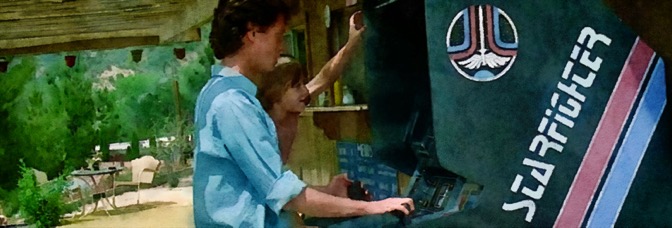
The Last Starfighter gets a long way on affability. Lead Lance Guest is nothing if not affable. Robert Preston plays an affable alien grifter. Dan O’Herlihy, completely covered in makeup, is affable as Guest’s alien co-pilot. And the whole concept of the thing–video game wunderkind Guest gets transported to outer space to fight a galactic…
-

For most of The NeverEnding Story, director Petersen’s ability, the special effects, and active lead Noah Hathaway keep the whole thing going. It’s a gorgeous looking film, with great photography from Jost Vacano and exceptional editing from Jane Seitz. Hathaway’s character, a boy warrior, gets a fantastic characterization–simultaneously sensitive and brave–he’s a fantastic protagonist. Except…
-

Dreamscape has a lot of subplots. The main plot barely gets any more time during the second act than the subplots. But I’m getting ahead of myself because I wanted to talk about the first act, which has Dennis Quaid getting reacquainted with mentor Max von Sydow. The film opens with this fast, fun action…
-

Electric Dreams is a very strange film. And not just because it’s about a computer brought to life by champagne and electric fire. Not even because said computer has the voice of Bud Cort. It’s strange because it has no interest in having a conventional narrative structure, both in terms of the screenplay and the…
-

If I tried really hard, would I be able to think of something nice to say about Firestarter? I was going to complement some of Tangerine Dream’s score–not all of it, but some of it–but it turns out it’s not so much a score as a selection of otherwise unreleased Tangerine Dream tracks director Lester…
-

There’s a strange effectiveness to The Ewok Adventure during Burl Ives’s narration. With his voice, with the lameness of the script, Ewok Adventure feels like a storybook come to life. Much of the movie is exquisitely produced, whether Peter Bernstein’s score, director Korty’s lovely photography or John Nutt’s editing, there’s a definite precision to the…
-

With the exception of Dolly Parton, everyone involved with Rhinestone seems nervous. Well, maybe not Richard Farnsworth. He seems impatient, like he can’t wait for his scene to be over. Top-billed Sylvester Stallone spends the first half of the film trying too hard, seems to relax, then finishes the film not trying hard enough. It’s…
-

Friday the 13th: The Final Chapter never tries to be scary. It tries to be gory… but not too gory. It saves the biggest gore moment for the last, when any number of the other ones throughout the film would’ve given Tom Savini better material. It’s supposed to be gory, but not too gory. It…
-

James Crabe’s photography gets The Karate Kid through the rough patches. The film’s incredibly uneven–Bill Conti’s score initially seems like it’ll be a plus, ends up being a minus, and the editing is strange. Director Avildsen, with two other editors, can’t seem to figure out how to cut the climatic fight sequence. Like many sequences…
-

Footloose isn’t so much awful as dumb and obvious. Some of it is awful–the scene where Kevin Bacon, fed up with the small town getting him down, just has to go to an abandoned mill and dance it out–that scene is awful. So are most of the courtship scenes between Bacon and Lori Singer. But…
-

Starman’s first forty or so minutes speed by–director Carpenter gets as much information across as quickly as he can to discourage the viewer from paying too much attention. There aren’t exactly plot holes, but there’s a lot of silliness in the script. For example, Charles Martin Smith–who’s perfectly good in the film–has an entirely pointless…
-

If Against All Odds had just a few more things going for it, the film might qualify as a glorious disaster. There are a lot of glorious elements to it, even if there aren't quite enough to make it worthwhile. Or even passable. Hackford's direction is outstanding. He's fully committed to Eric Hughes's terrible script.…
-

For such an “odd” movie, Repo Man is incredibly precise. Writer-director Cox has four or five subplots–depending on if Emilio Estevez becoming a repo man and his journey as one is considered the plot, as Cox downgrades it to subplot status about three-quarters through the picture. Sometimes these subplots become so intense they jumble–I had…
-
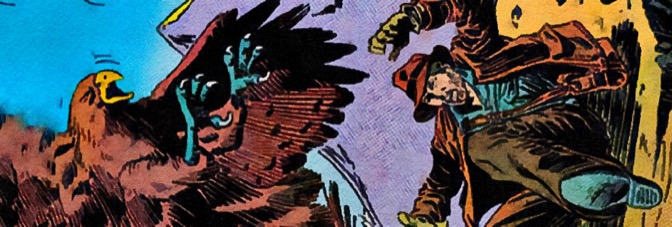
There are a bunch of inkers on this issue. They stay consistent until the finish, when it’s very obvious the inker has changed. The final inker changes Steve Ditko’s pencils so much, it barely looks like the same comic. Ditko doesn’t do a great job on Jones, but it’s really cool to see his old…
-

Splash has a strange narrative structure. The front’s heavy, likely because the filmmakers make a real effort to establish Tom Hanks as a listless young (well, youngish) man. Of course, Hanks is a listless man with an apparently great job as a produce whole seller, an amazing Manhattan apartment and limitless funds. Then the end’s…
 The Stop Button