Category: 1981
-

History of the World: Part I is funny about twenty percent of the time. The eighty percent of the time, it isn’t funny, it’s either because the jokes are too homophobic, sexist, racist, or punny. If you’re not laughing out loud, you’re ready to hiss. Since twenty percent doesn’t quite qualify as a mishmash, it’s…
-

Director Badham intended Whose Life Is It Anyway? to be black and white, which would probably help with the staginess. It’s a play adaptation. Badham handles the relatively big, busy cast well, but he doesn’t know how to shoot lead Richard Dreyfuss. Dreyfuss is playing a recently paralyzed sculptor who, after approximately six months, realizes…
-

There are a number of scenes in Under the Rainbow you probably wouldn’t have imagined had been put on film. Starting with Billy Barty playing a Nazi spy who accidentally hits Hitler in the balls because he’s a little person. When that scene began, I was thinking about how you don’t see a lot of…
-

Pennies from Heaven is about how being a woman—particularly in the 1930s—is awful because you exist entirely for male consumption. If not sexually, then as production. The film’s supposed to be about how life’s just unfair for dreamers, in this case lead Steve Martin, who’s just trying to make the American Dream work for him;…
-

Singular, sweaty modern noir about charismatic, hunky, and dim lawyer William Hurt having an affair with trophy wife Kathleen Turner much to the detriment of his career and relationship with closest friends, D.A. Ted Danson and cop J.A. Preston. It gets even more complicated after Hurt meets her husband–a perfectly icky Richard Crenna–and working on…
-

It’s Magic, Charlie Brown is the dramatically inert tale of Charlie Brown (Michael Mandy) turning invisible. It takes a while for him to turn invisible, with the first half or so of the special spent on a magic show. Magic opens with Charlie Brown demanding Snoopy go to the library to better himself. Because Charlie…
-
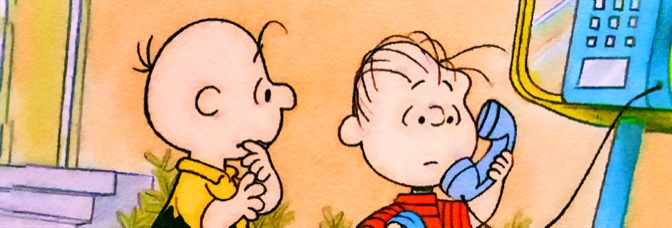
“Someday You’ll Find Her, Charlie Brown” is the cringe-inducing tale of Charlie Brown (Grant Wehr) and Linus (Rocky Reilly) stalking a girl Charlie Brown saw at a football game on TV. She was in a “honey shot,” which is already makes things cringe-y because these are eight year-old kids. Regardless of whether or not Charlie…
-

Madame X never has good pacing. The movie starts with Tuesday Weld on trial, in old age makeup. She refuses to identify herself, hence the title, and won’t even assist her lawyer, Martina Deignan, in her own defense. Weld’s completely passive in the scene. Robert Hooks’s prosecuting attorney closing arguments dominate the scene, setting a…
-

About a half hour into Scanners, the film starts to run out of its initial steam. Director Cronenberg (who also scripted) opens the film with some dynamic set pieces–lead Stephen Lack mind frying a mean woman, Lack on the run from goons, Patrick McGoohan chaining Lack down and torturing him (apparently), and Michael Ironside blowing…
-

The Great Muppet Caper is rather easy to describe. It’s joyous spectacle. The film has four screenwriters and not a lot of story. Instead, it’s got some fabulous musical numbers. Director Henson really goes for old Hollywood musical, complete with Miss Piggy doing an aquatic number. It also has a bunch of great one-liners and…
-

Halloween II is not always a crappy sequel set in a closed setting without any sympathetic characters. It is a crappy sequel set in a closed setting without any sympathetic characters. But it wasn’t always. Even though it gets off to a rocky start–the recap of the first movie is too abbreviated for unfamiliar viewers…
-

When director Miner finally does a decent sequence in Friday the 13th Part 2, it comes as something of a surprise. Amy Steel is on the run from the masked killer and, even though it’s stupid, it’s somewhat effective. Steel probably gives the film’s best performance (she’s still not any good) and Ron Kurz’s script…
-

The Funhouse is terrifying. Director Hooper opens the film with a dual homage to Halloween and Psycho and then proceeds to do something entirely different in the end of this film. Like those two films, he takes a while to get to the violent acts. He does, however, announce he’s going to terrify the audience…
-

Mad Max 2 might be the perfect example of pure action. Besides a couple extended dialogue moments–maybe the only times Mel Gibson’s protagonist gets to talk without Brian May’s music over him or just the fantastic sound effects drowning him out–it’s all action. It’s kind of incredible how far director Miller pushes the idea of…
-

If the first issue is any indicator, Bruce Jones’s Ka-Zar is a mix of Conan, Tarzan and Woody Allen. This issue is Ka-Zar roaming around, acting like a petulant teenager (even though he’s apparently late twenties) and thinking about his crazy life. It’s a rough life too. He starts the issue bedding Shanna of the…
-

Wow, what a truly awful comic book. Bryne inks himself here (I guess Joe Rubinstein) was busy and the results are unfortunate. The action lacks any punch and the bland faces have started, years earlier than I thought they would. It doesn’t help his rendition of the first Cap costume is silly. As for the…
-

What a bunch of trouble to launch a new Union Jack. I guess Stern gets to kill the original Union Jack (and Baron Blood) but the whole thing is just a setup for Marvel UK. Whatever. I’m being really harsh and I shouldn’t be. The issue’s not bad—except Cap running around in his outfit, shield…
-
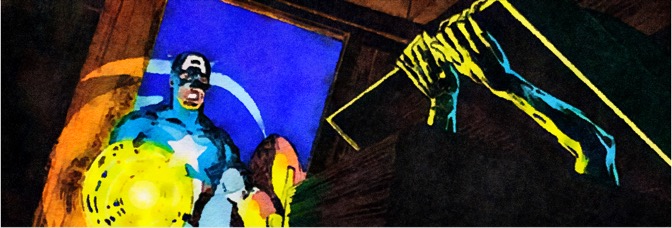
When Stern isn’t writing too much exposition, he really does a good job. I always forget during those exposition heavy issues. Cap heads off to the UK to help out the aged former Captain Britain with a vampire problem. Byrne gets to draw the English countryside. The selling point of the issue is really Byrne’s…
-

The issue opens with Len Wein’s nearly incomprehensible expository narration. While the comic is written almost more as a tie-in to the “Hulk” TV show and an introduction to Batman, one almost needs an English degree to figure out what Wein’s trying to say. But his plotting isn’t much better; in fact, it’s worse. At…
-
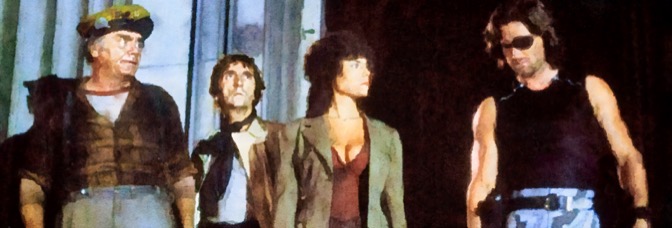
Man and boy, I’ve probably seen Escape from New York ten times. This viewing might be the first where I noticed the film’s quietness. Carpenter uses the relative silence to make the first third (even before Isaac Hayes shows up), the most memorable parts of the film. Some of that memorable quality has more to…
-

There’s a lot of good stuff about An American Werewolf in London–for example, Landis doesn’t have a single joke fall flat–but something about it just doesn’t work. Something Landis doesn’t do, as a director. I can’t quite put a label on it, since he does so many things well. Like the English setting. With Robert…
-
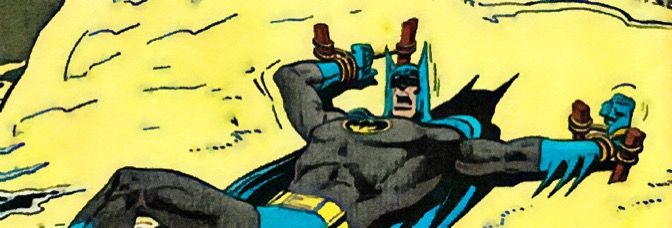
Conway really lays on the melodrama for his resolution to Bruce and Selina’s romance–Catwoman’s still too much in the picture for her to be able to stick it out–but it still works somehow. The major part of the story is Catman coming back for revenge on Batman and Catwoman. This issue might be the first…
-
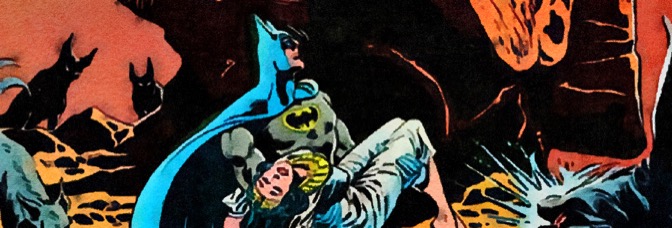
I’ve been trudging through Conway’s Batman comics the last few days–maybe the Irv Novick art on Batman is getting me down–so it’s nice this issue of Detective Comics is fantastic. It’s a completely absurd story about one of Bruce Wayne’s egyptologist friends going nuts and kidnapping Selina Kyle because he thinks they’re reincarnated Ancient Egyptians…
-

Conway’s promise of a Man-Bat story–the one he basically wasted the entire previous issue setting up–is not realized here. And I make that observation even with the issue having two fight scenes between Batman and Man-Bat and a bunch of flashback recapping his origin. It’s a silly story, requiring the reader to once again accept…
-
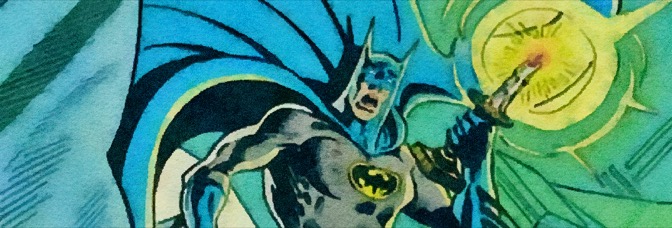
It’s the ghost of Wayne Manor! Actually, it’s just Man-Bat. It’s Bruce Wayne and Jim Gordon bickering! Actually, they’re both just upset about politics. It’s a guest appearance from Dr. Thirteen! A really boring one. Apparently, Conway wanted to do a Man-Bat story but also had an issue to fill. He pads this issue with…
-

The cover announces Gene Colan on art, so does the title page, so obviously DC wanted to sell him on the book. But then why did they put him with Gonzales on inks? It barely even looks like Gene Colan. All the detail in the faces, for example, is gone. Except in close-ups and those…
-

It’s a strange issue in a couple ways. Primarily because the Robin backup is some kind of life-affirming emotional origin of the character. It’s well-produced–Conway and Novick really make the reader pay attention to all the time shifts–and it’s trite and well-meaning. In other words, solid eighties mainstream work. Unfortunately, Novick’s art is better on…
-

Conway doesn’t do much with Gotham City this issue, instead it’s just Batman in pursuit of the villainous Manikin. Except, of course, it’s not clear how villainous the reader is supposed to find her. She’s a tragic villain–Conway doesn’t give her any resolution past surviving, but I suppose there might be an insanity defense in…
-

I know kids actually read comic books back in the eighties so Conway had to keep them in mind, but he’s got a story about a golden mannequin lady killing people… he didn’t need to open with a really obvious prologue setting up the character. He could have just revealed it all when he will…
-
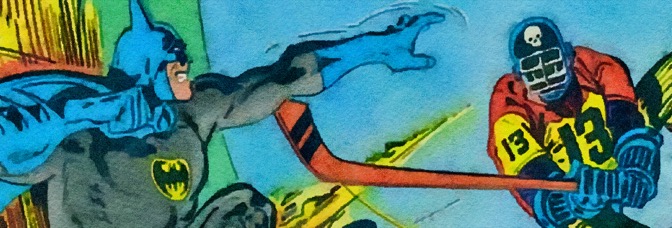
It’s sort of hard to believe Conway wrote both the terrible lead story and the mildly charming Robin backup. I mean, the Robin story–Dick solving a mystery at the circus–has it’s problems, like Conway keeping crucial information until the last scene so as to explain all the problems away… but at least he’s trying. The…
 The Stop Button