The Stop Button
blogging by Andrew Wickliffe
Category: 1973
-
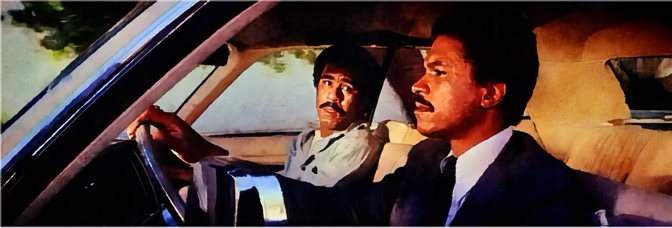
Hit! is multiple movies all at once. It’s a heist procedural, with Billy Dee Williams putting together an unlikely crew of experts to take out the Marseille heroin syndicate. It’s a rogue secret agent movie—Williams’s boss, a profoundly under-cast Norman Burton, doesn’t want him showing up the U.S. government by taking out the bad guys.…
-
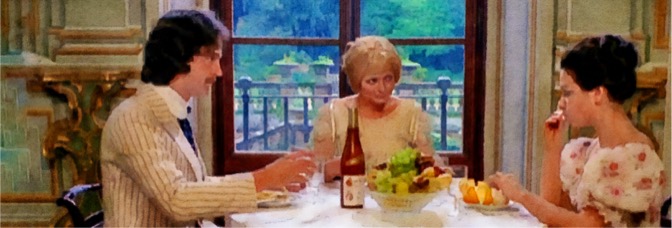
Until Death Smiles on a Murderer gets so inane it’s exasperating, at least the music (by Berto Pisano) isn’t terrible, and the editing (Piera Bruni and Gianfranco Simoncelli) is excellent. I don’t think either of them get worse once the rest of the movie does, but at that point, the film’s so bad it’s not…
-
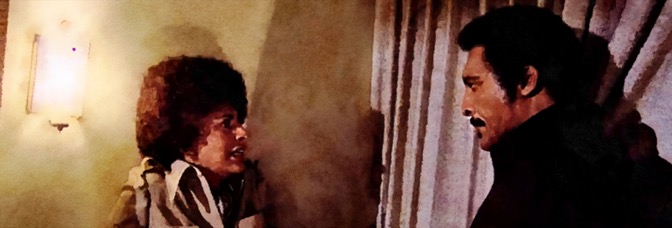
Scream Blacula Scream has a dreadful moment during a crucial sequence, and even though the film takes the hit, it somehow can build up almost enough goodwill—in mere seconds—it could easily succeed. The ending’s a little too confused, though, with a very questionable end credits song and design. But the film’s excellent throughout, surviving a…
-

Don Perlin makes his first appearance in the Werewolf by Night credits, and I felt the tinge of inevitability. He’s inking Gil Kane’s pencils; about the only okay thing ends up being Wolfman Jack. Kane and Perlin’s regular people are pretty bad, Perlin’s fault, but Kane’s layouts for the action aren’t very good, not Perlin’s…
-
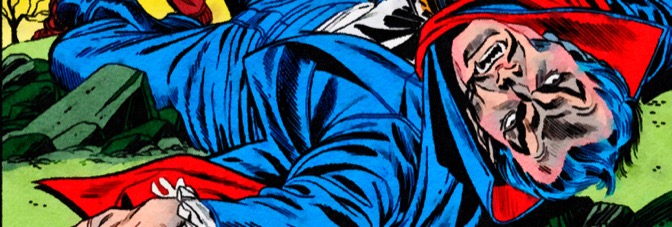
It only took fifteen issues (plus some Dracula Lives), but I finally get my Marvel Comics Dracula origin details. The issue’s somewhat coy about the revelations, starting with an incredibly entertaining sequence where Dracula’s journaling. A record must be kept of his thoughts and so on, as he’s Dracula. It ought to be obnoxious, but…
-
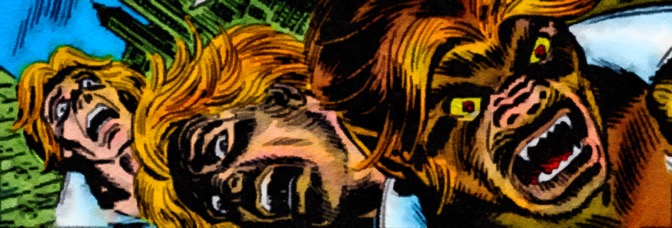
It took Marvel until Werewolf #11 to get Marv Wolfman writing the book. Just the credit alone is worth it, which they seem to get—the credit reads: “finally a Wolfman written by a Wolfman.” Wolfman does get to create a new villain—The Hangman; I’m pretty sure he goes on to more in Marvel. The Hangman’s…
-

There are two ways to read this comic. I mean, there are many other ways, but in terms of the vampire hunters—either writer Marv Wolfman and editor Roy Thomas are missing some obvious plot points, or the vampire hunters are just a little dopey. The "little dopey" fits more. Like, when they've killed Dracula and…
-

I know people buy Marvel superhero comics in Marvel comics. Still, when a kid’s floppies get knocked from his hands during Sarnak the evil sound engineer’s attack on Century City, and the kid wishes Spider-Man or Thor were here… it feels like he’s talking about his comic book heroes. Otherwise, wouldn’t someone just be whining…
-

There aren’t any pages of the Dracula movie stills with new dialogue. There are still some movie stills with accompanying text, but it’s not for laughs. It’s a welcome change to Dracula Lives, though the pages instead seem to be going to somewhat middling text material. But first, the comics. Writer Marv Wolfman contributes another…
-
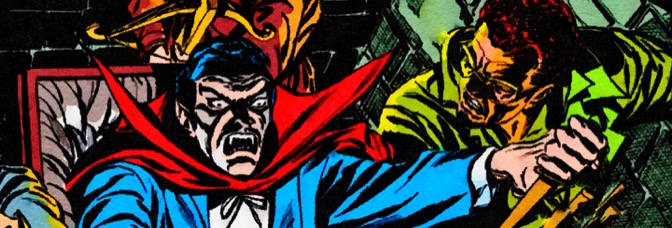
It’s only taken a dozen issues, but Tomb of Dracula finally lets the vampire hunters get the upper hand. They get there the same way Dracula usually does—the writer surprising both the reader and the targets. The move isn’t quite a twist—it comes as a hard cliffhanger—and it’s nice to see writer Marv Wolfman mixing…
-

For a while, I thought artist Tom Sutton would be Werewolf by Night’s return to art form. Or at least getting closer to it than it’s been since they started putting consecutively worse inkers on Mike Ploog, then lost Ploog altogether. Sutton’s probably the most successful since then, but he’s not good. The first sequence…
-
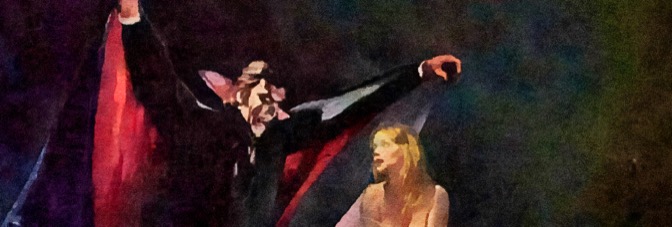
There’s a thirteen-page Neal Adams warlord Dracula comic this issue, and I don’t understand why it’s not a bigger deal. Like, it’s gorgeous. Of course, the other stories have good art, too… well, the Gene Colan and Dick Giordano one, but the Adams one is kind of an immediate classic. I started reading Dracula Lives…
-

You know, maybe I’m overthinking the writing on Frank Drake. Maybe he’s just a shitty racist who doesn’t Taj for being Indian. It sure seems like it. Especially after he has a “quaking in his boots” moment before Blade shows up and saves his ass. Tom Palmer’s back inking Gene Colan this issue, which is…
-

Did Marvel have a market research department in the seventies? Was there some editorial edict to make Werewolf by Night aim younger? Despite being about a teenager who just turned eighteen and presumably feeling the weight of adulthood (legally, anyway), protagonist Jack Russell isn’t. Since the comic only ever shows him on his werewolf days…
-

Dracula Lives offers a considerable bang for its six-bit cover price. There are three new Dracula features and three old Marvel (from the Atlas days) reprint strips. The reprints are from black and white horror comics and perfectly match Lives’s format. There’s also a Marv Wolfman article covering Dracula movies; Wolfman doesn’t contribute a script…
-

Jack Abel’s inking Gene Colan again, but the issue pulls through all the same. The art’s better than last issue, particularly on Dracula. The writing’s better too, but actually good, as opposed to just not the worst Abel can screw up Colan. There are some particularly great pencils Abel trashes this issue too. With better…
-

Well, they found the worst inker (so far) for Gene Colan—Jack Abel. But then they had to one-up it with a letterer so bad the comic’s visually unpleasant to read. Denise Wohl’s the letterer (credited as D. Vladimer, presumably because you can’t have too many girls working on a book). This issue features the first…
-
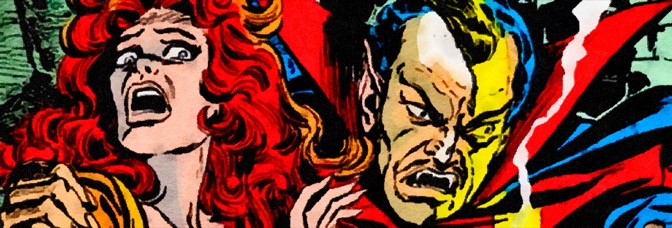
This issue starts with one of Tomb of Dracula’s most potent scares—Vince Colletta will be inking Gene Colan this issue. Beware all who enter. That said, it’s not as bad as I thought it’d be. Yes, Colletta ruins a bunch of panels, and he can’t do the shadows, but—at the very least—the art does have…
-
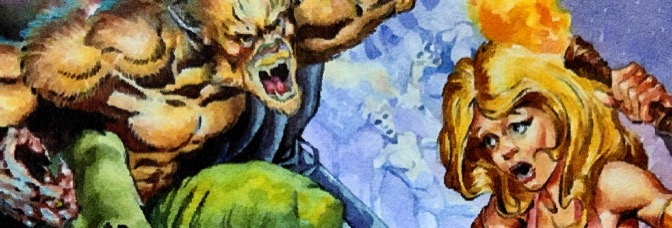
Apparently, somewhere in between issues, Jack sat down with sister Lissa, and they had the “your brother’s a wolfman” talk because she knows it in this issue and it’s old hat. If it were a better comic, I might be disappointed, but so long as they don’t pair Lissa off with forty-something Buck Cowan… I’m…
-
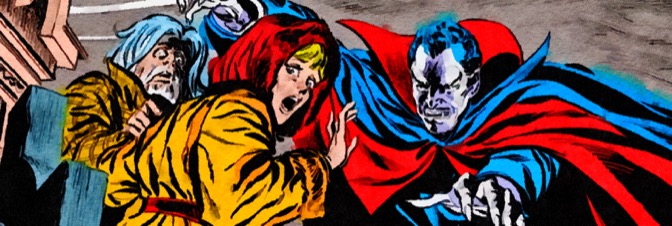
Oh, no, Tom Palmer’s not inking Gene Colan this issue, and they got Ernie Chan to do it instead! While I suppose Chan’s inks could be worse, it’s a profound downgrade in the art. During the human vampire hunter stuff, it’s reasonably okay—if chunky-lined. During Dracula’s vampire plot? It’s just wondering what it would’ve looked…
-

Writer Marv Wolfman arrives with a bang… or a howl. Wokka wokka. The difference is immediate. Wolfman’s got his purply exposition, but it’s purposeful. There are lots of nice echoes between lines; the style’s right for the book, which has Dracula returning to London, going out for a snack, and surprised to discover his intended…
-
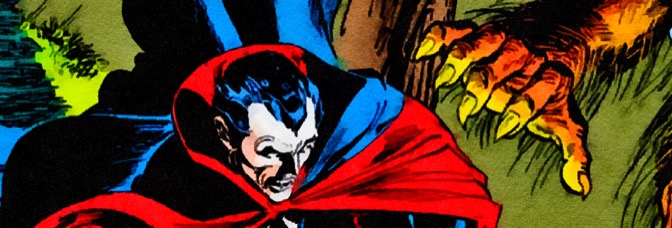
If I remembered this issue closely resembles an early Swamp Thing comic in the Wein and Wrightson era, I’d forgotten. Except Swamp Thing #4 went on sale over three months after this issue of Tomb, so that Swamp Thing resembles this issue, not the other way around. No spoilers, but it involves the guest monster…
-
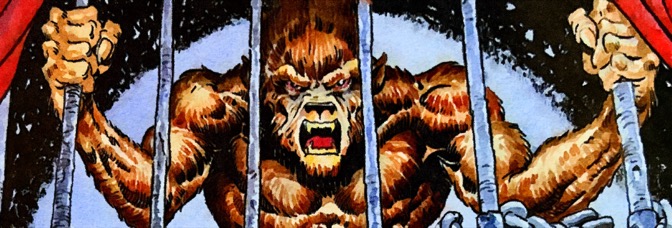
Frank Bolle’s not the best inker for Mike Ploog’s pencils, but he’s far from the worst. This issue’s got some fantastic panels, even with Bolle muting the Ploog faces. Most of the art’s at least good, if not better, with only one wanting page when writer Len Wein introduces the cop who’s figured out there’s…
-

Artist Mike Ploog is back to inking himself, and it is glorious from the first page. There’s even a recap of the previous issue, so everyone can see what they missed not having Ploog ink himself. The recap also burns some pages for writer Len Wein, who’s got the somewhat inglorious task of picking up…
-

It’s a better issue than last time but still far from the Werewolf heights. The issue’s enough to stop the free-falling, though; if only Marvel gets someone who can ink Mike Ploog’s pencils. Frank Bolle does the job here, and, while better than Frank Chiaramonte, he’s still not great. The werewolf at least looks scary,…
-

Oh, no, is Werewolf by Night going to run off the rails this early? I’m hoping it’s just Gerry Conway burning out on the writing, though the Frank Chiaramonte inks ruin the Mike Ploog pencils too. Actually, the final art’s so de-Plooged, I wonder if he even finished the pencils. There’s occasionally effective art, mostly…
-

The extended director’s cut of The Exorcist runs ten minutes longer than the theatrical version. The last time I saw the theatrical, I thought the movie needed some more time to figure itself out. Turns out I was wrong. The ten extra minutes just make it sort of tiresome. Like, the third act of the…
-

With forty minutes left in its way too long 124 minute runtime, Magnum Force starts getting real tiresome. The film’s already gone through multiple set pieces, with the Clint Eastwood ones pointless to the narrative but apparently what screenwriters Michael Cimino and John Milius think is character development, while the ones related to the a…
-
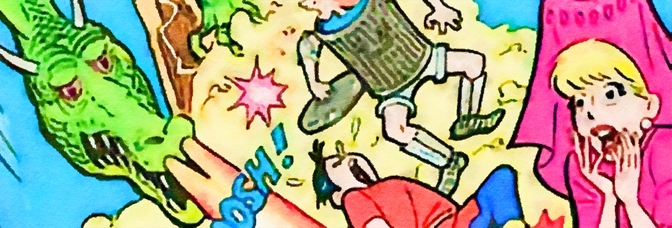
Archie’s Parables is Christian comics propaganda from the 1970s and is a great example of why it never would’ve occurred to me to read an Archie comic before, what, 2010 or something. But Parables, courtesy Spire Christian Comics and creator Al Hartley. Though using the word “creator” for Hartley is… a lot. Despite both writing…
-
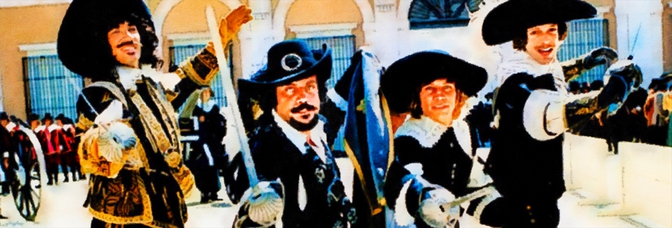
All-star adaptation relies almost as heavily on laughs as on action, with Michael York’s D’Artagnan simultaneously gymnastic and clumsy in his sword fights; he’s just come to Paris to become a Musketeer and, while delayed from that goal, finds camaraderie with all-ready Musketeers Oliver Reed, Richard Chamberlain, and Frank Finlay; he also finds romance with…
 The Stop Button